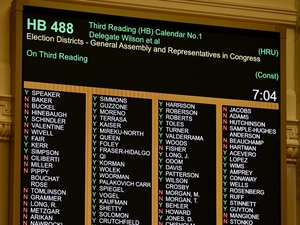
Behind the lines: How mid-decade redistricting is playing out
President Donald Trump is still pushing Republican-led states to redistrict their congressional maps to help the GOP maintain control of the House of Representatives after the 2026 midterm elections.
It led to an unusual burst of mid-decade redistricting in some states, such as Texas and North Carolina that have passed new maps increasing a GOP advantage.
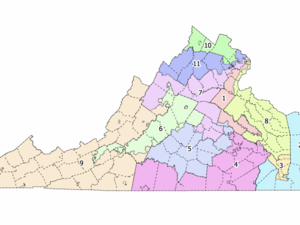
Democratic-led states California and Virginia are pushing for redraws of their congressional maps to counter them.
Meanwhile, Maryland state legislators are at an impasse on whether to change their maps, after a House-approved redistricting plan got stalled in the Senate.




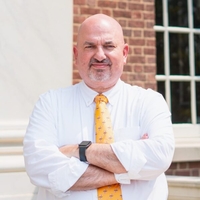

In Episode 15, Maryland Matters reporter Bryan Sears will break down on what’s going on in Annapolis.
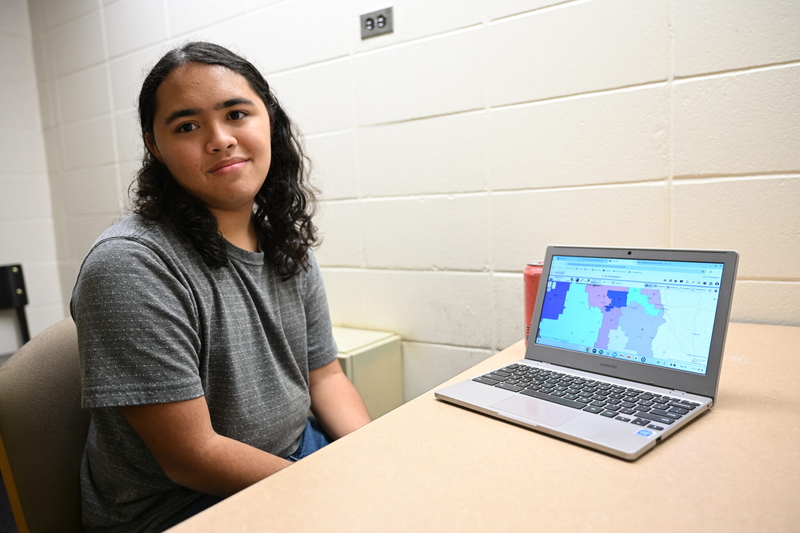
Over in Alabama, they’ve enacted new state Senate maps drawn by an unexpected mapmaker — a college freshman.
You’ll meet Daniel DiDonato, a student at the University of Alabama and a cartographer.
Finally, Evening Wrap newsletter author Danielle Gaines shares the top stories she’s watching.
Episode produced and edited by Mallory Cheng. Music for Stories From The States composed by David Singer.
Got questions? An episode idea? Email us at [email protected].
Subscribe to Stories From the States on Apple Podcasts, Spotify and Youtube.
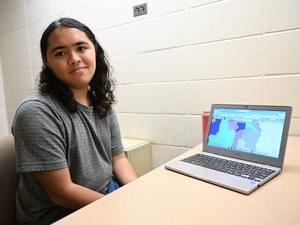
Photo: Daniel DiDonato, an 18-year-old student at the University of Alabama, working on a state Senate district map in a common study area in Martha Parham Hall in Tuscaloosa, Alabama, on Nov. 20, 2025. DiDonato created the map that a federal judge ordered to be implemented for Alabama's 2026 and 2030 elections after ruling that the Montgomery-area districts violated Section 2 of the Voting Rights Act. (Anna Barrett/Alabama Reflector)
Stories From The States is a production of States Newsroom, the nation’s largest state-focused nonprofit news organization, with reporting from every capital. At this pivotal moment in American democracy, our veteran journalists from all 50 states are reporting the consequences of government decision making. By zooming into one story each week, Stories From the States contextualizes and gives a human voice to what is happening now.
Transcript was created using an automated software.
Chris Fitzsimon
This is Stories From The States. I'm Chris Fitzsimon. Here at States Newsroom, we know there's a lot going on around the country, in every state capital. Thanks for being here today. We're talking about a redistricting battle on the East Coast, and a decision on a state senate map in the south. Maryland is one of the latest place...
Transcript was created using an automated software.
Chris Fitzsimon
This is Stories From The States. I'm Chris Fitzsimon. Here at States Newsroom, we know there's a lot going on around the country, in every state capital. Thanks for being here today. We're talking about a redistricting battle on the East Coast, and a decision on a state senate map in the south. Maryland is one of the latest places debating whether or not to redraw their maps. Recently, Democrats in Maryland's neighboring state of Virginia released their revised congressional plan. They did this to counter President Trump's efforts to redistrict Republican controlled states to give the GOP an edge in this year's election. As election related deadlines are quickly approaching, Maryland has to decide what to do next. Meanwhile, in Alabama, they're using a new state Senate map drawn by an unexpected map maker.
Daniel DiDonato
I think it's really important that we as citizens like understand how the lines are drawn and why.
Chris Fitzsimon
Coming up in a moment, we'll visit both states to find out the latest on these unusual redistricting tribulations.
Chris Fitzsimon
Democratic states like California and Virginia are pushing for redraws of their congressional maps to counter the redistricting efforts of GOP states like Texas, North Carolina and Missouri. Maryland is one of the places in the midst of deciding whether or not to take part in the national redistricting battle. If they passed the plan, they could help counter the mid decade redistricting efforts from GOP led states. Maryland's Democratic Governor Wes Moore, has been vocal in supporting going through with the process, but some Republicans and even some Democrats don't seem to be on board. To help us get a sense of what's going on in the Maryland State House is Bryan Sears. He's a reporter at Maryland Matters, an outlet with States Newsroom. Bryan, thanks for being here.
Bryan Sears
Thank you for having me.
Chris Fitzsimon
Well, first of all, bring us up to date. This has been going on quite a while, and it's it strikes me reading your coverage that it's for people who aren't familiar with Maryland politics, sort of an interesting intra party battle there.
Bryan Sears
So this is a discussion that has been going on. If you go back to November, when the governor impaneled a redistricting advisory committee to begin this process. This goes back to pre Thanksgiving, and we have finally gotten to the point at the beginning of the 90 day session, which started in January, of having a bill that moved very quickly through the house, as expected, with a super majority of Democrats who who favored the bill and sent it to the Senate, where senate president, Bill Ferguson and his 34 member Democratic caucus remain fairly staunchly opposed to this. He's he's been very vocal and taking a lot of the pointed criticism aimed at him. As it stands right now, this bill sits in a rules committee where, if all things stay the same, it's unlikely to get out.
Chris Fitzsimon
So tell us what the bill does. How would it change the districts there?
Bryan Sears
So what the bill essentially does is take Maryland's eight congressional districts, which are currently a 7-1 split in favor of the Democratic Party, and it. The governor says it makes them more fair. He has been not enthusiastic about responding to our repeated requests for him to define his term, but what this bill does is it changes a district that favors Republican Andy Harris, who's the current, the current seat holder in the first congressional district, and it flips it to an advantage for the Democratic Party, which could make it, in theory, an 8-0 map in Maryland.
Chris Fitzsimon
And where is that district? Generally.
Bryan Sears
This. This district goes from the eastern shore of Maryland, just below sort of Delaware and west of the Atlantic Ocean, up over the Chesapeake Bay into Cecil Harford County and part of Baltimore County.
Chris Fitzsimon
Okay, thank you. And so did this all start in Maryland when Trump called on Texas and Texas started doing its thing? Is that what in so many places spawned this whole effort to change districts in the middle of the decade?
Bryan Sears
When Texas began its process and started contemplating its process, there were two lawmakers, one in the house, one in the Senate, that began to have conversations publicly about doing this. It didn't sort of really catch fire in Maryland until Texas and then California actually change their maps mid cycle, and then Maryland, and Maryland Governor Wes Moore, at that point, really started to get serious about doing it and forming this advisory panel to take a look at these districts.
Chris Fitzsimon
Yeah, it's interesting. Obviously your neighbors in Virginia have unveiled a much more Democratic map. Is that having any bearing on the folks there in Maryland?
Chris Fitzsimon
If you talk to the people in Maryland, they say, No, that Maryland is, you know, Maryland is doing what Maryland sees as necessary. If you talk to senate president, Bill Ferguson, Ferguson points to what a lot of other states are not doing, other other Republican states who have, who have held back. And his concern is, is that in addition to all of the very specific Maryland concerns about the legality of the maps and what the courts may or may not do here in Maryland, that Maryland by redistricting, could trigger other Republican states to get involved and very easily flip additional seats Republican and this could have a counter effect to what folks who are redistricting proponents want to see.
Chris Fitzsimon
Yeah, what? And what is Ferguson's main objection, that it would trigger more states, or does he have a philosophical issue with doing this? Is he a Is he one who supports an independent process? Or what does he fall on that spectrum?
Bryan Sears
So the senate president comes at this from a legal perspective, and also as someone who served on the previous redistricting legislative redistricting commission, and in 2022 there was a map that had been passed by the General Assembly that essentially looked fairly similar to the one that we're looking at that's that's stuck in the Senate, and it created an 8-0 scenario for Democrats that got struck down by an Anne Arundel County Circuit Court judge who had a fairly novel reading of the Maryland constitution. At that point, the legislature and Hogan cut a deal that resulted in the the lawsuit being withdrawn, and also the state not challenging the lawsuit in a higher court, so it didn't become a precedent. But Ferguson maintains that there is the real possibility that the state's highest court could revisit not only that map, but how the state is doing redistricting in general, and perhaps make a map that is, you know, 6-2, plus one, that's that's fairly competitive, and could yield a third Republican. And he says the risk is just too great.
Chris Fitzsimon
I've been really struck following this in not just in Maryland, but around the country. And sort of the good government folks who are, I don't know how you would describe them, pro democracy, good government, common cause. Kind of folks who have long held that we need independent redistricting commissions. It's happening, and it's happened in Iowa and a couple other places to get the politics out of it, are sort of in an interesting position, which is, you want fair districts, but you can't unilaterally let one party change all the districts to have an advantage. Is that? I mean, is that a real debate in Maryland? Is that what Democrats are saying?
Bryan Sears
It is a debate that has happened. I would go back to the previous administration and the two terms under Republican Governor Larry Hogan, who for eight years was key proponent of independent redistricting and even established a commission that produced its own map, which the General Assembly quickly struck down. This topic came up during debate in the House, and Democrats who are backing this redistricting bill in the House basically said that that's a that's a nice idea, but that's something that should be taken up at the federal level.
Chris Fitzsimon
Although I guess it's worth noting or discussing that the US Supreme Court has ruled basically that that redistricting for partisan reasons is constitutional.
Bryan Sears
It is. But in Maryland, one of the things that was looked at was not just the partisan nature of it, but also portions of the Maryland constitution that require that state legislative districts are required to be compact and contiguous and abide by to some degree, jurisdictional boundaries that has only been used when we've done redistricting for Senators and for state lawmakers. This judge found that the language was broad enough that she believes it also includes congressional districts. It's a it's a ruling that we've not seen in Maryland before. And while proponents of redistricting believe that ultimately, Lynne Battaglia's ruling would not hold, Ferguson believes that, again, that there's, there's a great risk to it not only holding up, but that the court step in and draw their own map.
Chris Fitzsimon
Does the governor have any additional leverage here? I mean, obviously legislators in power like Ferguson have a, you know, have a lot of say in what happens in their chambers. Is there anything that more could do or will do?
Bryan Sears
Look, I think the the governor is, is attempting to do all that he can. I mean, he's been very public. He's going on every national program he can, and calling out the senate president and demanding a debate and a vote. He also created a slate that he and his his campaign committee say is designed to support Democrats who are more supportive of his agenda. They wouldn't specifically say that this was tied to redistricting. There's some other issues that he's that he's taken some losses on that I think he would like to reverse, but one certainly has to believe that redistricting would come into play. And it's interesting to note that Senate President Bill Ferguson now suddenly has a challenger in his district, running as a Democrat, who, interestingly enough, has gotten some donations from key members in the governor's office.
Chris Fitzsimon
So that's not a coincidence. Most likely.
Bryan Sears
Look it's, it's worth noting. I mean, I'm, I'm going to take a step back and perhaps not put an editorial bent on that, but, but it's certainly something worth noting.
Chris Fitzsimon
I know you, we don't, none of us really know, but I'm always interested when we talk about redistricting on any level, what we should do, or what has been done, or what it is, do voters, you think, in Maryland really understand what's at stake. It always feels one step removed, even though it dramatically affects, you know, who voters can choose.
Bryan Sears
In my 25 years of experience in the statehouse, I would, I would say that there is a contingent. You know, Maryland is the there's 6 million residents in Maryland, and my guess is is not all of them are hyper tied into this argument of redistricting. And so it's probably a subset of a very politically active group that is paying attention this, and for most Marylanders going about their daily lives there. You know, I think the Senate President, to some degree, is right when he says that most Marylanders going about their daily lives are probably more concerned about their electric bills and affordability issues, the governor counters that the legislature and the governor's office can walk and chew bubble gum at the same time and and focus on both affordability and redistricting.
Chris Fitzsimon
How does this affect the upcoming elections there? You mentioned there's a challenger to Ferguson. Now, are there other electoral implications in the in the legislative elections there?
Chris Fitzsimon
I think some of that is yet to play out. One of the things that definitely could happen is if this bill were to come out of rules and get passed, depending on the timing of it, it really could affect when Maryland holds its primary election, and could set back primary election. But filing deadlines. The filing deadline currently, as it stands, is February 24.
Chris Fitzsimon
And finally, obviously, you know, better than most, that Governor Moore has his name is bandied about on the national scene. Does, does some of this play into his the perception of either his effectiveness or his ineffectiveness, or his sort of, you know, Democratic relationships, if he has a higher aspirations.
Bryan Sears
When you talk to the governor, he maintains that he is not running for president, but his name comes up a lot, and so you certainly have to take that into consideration. And I think one of the things that you have to look at is, you know, in states like California, where Governor Gavin Newsom, you know, who is also mentioned in the same breath as someone who's running for president was able to get a redistricting plan through with a super majority Democratic legislature. It certainly sets itself up as a potential for a comparison and rest, if you're looking at candidates on the stage.
Chris Fitzsimon
Well, Bryan, thanks so much for all your coverage, and thanks for being with us, and we will keep reading. Thank you very much.
Bryan Sears
Thank you for having me
Chris Fitzsimon
To stay up to date on what's happening in Maryland. You can go to news from the states.com. While they're deciding what to do on redistricting in Maryland. Over in Alabama, they've decided to use new state senate maps drawn by an unexpected map maker.
Daniel DiDonato
I wanted to be a part of this process that Well, ultimately, will affect how Alabamians vote at the next election.
Chris Fitzsimon
Coming up, we'll chat with a young cartographer behind the newly adopted maps.
Nelle Dunlap
At a time when the federal government is making drastic changes to public policy and pushing so many programs back to the States, it's hard to know what it all means for you, your family and your community. Our Evening Wrap newsletter from state snooze room keeps you up to date on what your elected officials are doing or not doing to manage the fallout. You can sign up by going to statesnewsroom.com/subscribe.
Chris Fitzsimon
Back in August of 2025 a federal judge ruled that Alabama State Senate maps violated section two of the Voting Rights Act and ordered that new district lines be redrawn around Montgomery. The judge appointed the same team that redrew the state's congressional districts in 2023 and a special master submitted three maps. One of the maps was drawn by Daniel DiDonato. Ultimately, the judge ordered that the Alabama State Senate use Daniel's map. Now it's being adopted for the 2026 election cycle. Joining us now is Daniel DiDonato, a student at the University of Alabama and a cartographer. Daniel, thanks for being here with us.
Daniel DiDonato
Hi there. Thank you for having me on.
Chris Fitzsimon
Well, I have so many questions, but first I want to know, how in the world did you get in the map drawing business?
Daniel DiDonato
Well, I can't say it's a very for me. I can't really say that it's a business I had gotten myself into I just know that redistricting is something I enjoy. Map drawing is something that I have a passion for. I just know that it's something I care deeply about. And this particular time, I saw that the cases were proceeding in the news, and I decided to do something about this.
Chris Fitzsimon
I saw you describe somewhere as a cartographer.
Daniel DiDonato
I describe myself as a cartographer.
Chris Fitzsimon
Have you always been a cartographer? Usually, I'd be kind of reticent to call myself a cartographer, but it feels like that at a map I have kind of is the law. I If you can, if you can say that, I feel like I can say that now.
Chris Fitzsimon
I want to ask you some more about your maps. But so when did you develop this interest? Were you interested in redistricting in high school? Or how did you start getting so interested?
Daniel DiDonato
At the very least, it's always something that interested me out of like, the rear view mirror. But like in high school is probably when I came to, like, understand it the most, and saw it as something that, like, I care about.
Chris Fitzsimon
So why do you why do you care about it? What do you tell your friends that that? Why do you tell them that you're interested in doing this?
Daniel DiDonato
It's a passion, but I guess it can best be reduced to nothing shapes an election quite like how the lines are drawn, and those lines are important. I think it's really important that we as citizens like understand how the lines are drawn and why, and that's something I just care deeply about.
Chris Fitzsimon
I think most people understand maybe redistricting. Some don't, but most do. But when you actually comes down to doing it, how did you get interested in looking at the data, drawing the lines yourself, coming up with ideas and alternatives. What was going through your mind during that process?
Daniel DiDonato
For all for this case, specifically, I'd say that when it became clear that that the court would ultimately have to enact a new map, as opposed to a state legislatively enacted one. I realized that this was an opportunity. I wanted to be able to send in a map to the court that I worked hard on, and I wanted to be to be able to shape this process that affected my state, and I wanted to be a part of this process that Well, ultimately, will affect how Alabamians vote at the next election. I really wanted to be a part of that.
Chris Fitzsimon
Did you tell anybody you were doing this? Did you work with anybody? Did you get any ideas from anybody else?
Daniel DiDonato
I mostly, I mostly socialized with, like, a few friends of mine about it as like as I was drawing the maps, I solicited like, some input from like, like, internet strangers, but I can't say I got really any advice back.
Chris Fitzsimon
And did you do did you do this on your computer in your dorm room?
Daniel DiDonato
Yes, I did this all pretty much in my on my laptop. I did it in, like, either in my dorm room or in a small, like, study room, just right, just down the hallway for me in my dorm.
Chris Fitzsimon
Yeah, did other students there know what you were working on?
Chris Fitzsimon
No, absolutely not.
Chris Fitzsimon
What happened when you submitted the map? How did the process work? So you you submitted a map, and then when did you hear? How did you find out that your map was going to be selected?
Daniel DiDonato
Okay, so I submitted my maps on the evening of October the ninth. The court like had set like in the Special Master eye, they set a time frame for the process. So after my map was filed, everybody, all the parties, had like until the 15th to file public comment on all the plans that were proposed to the special master. And it just so happened that when the October the ninth deadline came and passed, nobody else had submitted a map, other than the plaintiffs through their experts in me a member of the public. I'll note that I was like anonymized this entire time because federal privacy rules for minors and like the federal judiciary, so I was proceeding under my initials instead of my full name, because here in Alabama, the 18 year olds are still minors. The age of majority is 19, so the public, well, mostly, primarily the parties, but anybody has an opportunity to respond to the plans that were proposed to the special master. And the state objected to my plans as being racially Gerry racial gerrymanders, and the plaintiff said that the plans failed to provide the required remedy that the court identified everybody kind of waited until October the 23rd I'm pretty sure, 23rd 24th when the special master handed down his report and recommendation, basically recommending to the court two plans of his own, plus a third plan that he added, because he was ordered to send in three plans, and because he wanted a means To compare his plans to my plans. He saw my plans failed to fully remedy the Section Two violation of the Voting Rights Act, and he wanted like a means to like show that his plans fully remedy the Section Two violation in a way that might not and then ask the court to adopt a plan one or two, and then the parties that had an opportunity to like reiterate their positions, the plaintiffs encouraged the court to reject my plan and pick one of the special masters plans. The State objected to all three, but they found mine the least objectionable, because it was the least change from the previous districts, and the court eventually held a hearing on it, and a few days later, like a week or two later, and the court came back with its decision, saying that this was the afternoon of November the third, November the 17th, and the Court issued its decision, explaining why they had to pick my plan. And I found about this the next day, at 9am when I woke up to go to a class that I think is too ungodly early, and a friend of mine had sent me a notification saying that like he was speechless, like he just said the map, and then he sent me to a news article about the whole story. And I was like, both of us were just flabbergasted. I'd rather not say what I initially said here on the podcast, but...
Chris Fitzsimon
I can imagine, I can imagine. So what did you So you went to that ridiculously early nine o'clock class knowing that your maps had been adopted. What was that like? What class was that?
Daniel DiDonato
My introduction to American politics, class. I love the class. I just hate that. It's at 930 it's like a 20 minute walk from my dorm.
Chris Fitzsimon
So you drew a map that was accepted by the court, and then you went to a class on American politics.
Daniel DiDonato
Yes, I have to get my credit hours somehow.
Chris Fitzsimon
Well, it seems like you should get them for drawing the map. I wonder, what are you going to do now? Like, what's next? You're a freshman. Do you know what you're going to major in?
Daniel DiDonato
I'm majoring in political science. Political Science has always been my long term plan. Right now I'm trying to figure out how, like, I can parlay this into new opportunities and the like.
Chris Fitzsimon
And so what's been the response when you've had some media coverage, including in the Alabama Reflector, States Newsroom outlet there, what was the response from folks around the state or your family? What happened when all this became public?
Daniel DiDonato
It appears that, like, the consensus looking at the story from inside Alabama politics is that it's definitely unusual. I had a reporter tell me that he hadn't quite seen anything like this in like, his years of like covering voting rights, there's a fairly positive response to me personally, I guess my family thinks it's quite the achievement.
Chris Fitzsimon
So yeah, have you heard from any politicians?
Daniel DiDonato
No, sadly, not.
Chris Fitzsimon
I would think the Governor or someone would reach out to a college freshman who could draw a map that the court would adopt.
Daniel DiDonato
I guess that, like these maps being drawn were a subversion of everyone's expectations. I don't think any of the politicians here in the Alabama began this process thinking the court is going to have to draw these new maps because the legislature is not going to. We're going to end up stuck with maps drawn by an 18 year old student. I didn't think that was a decision making any going on in anyone's head, but I just know that I surprised. It surprised me too.
Chris Fitzsimon
So were you thinking about politics? I mean, were you did your own politics sort of influence the map you drew, or were you just trying to draw one that you thought was fair and that the court might adopt?
Daniel DiDonato
I identify as a partisan, but I did not let my partisan affiliation or my political beliefs influence how I drew the maps. I went into this with the sole goal of drawing proposed remedial districts that fully remedied the identified violation of Section two of the Voting Rights Act, and plans that left as much intact over from the previous enacted plan, as opposed to any proposed remedial plan that would have changed more as special masters, other plans did. I did not let partisanship determine this process, nor were districts drawn on the basis of partisanship.
Chris Fitzsimon
And just to be clear, you didn't receive any compensation, or nobody hired you to do this. This was all on your own.
Daniel DiDonato
Absolutely not. I wish I could have received compensation for this, but I'm enjoying the publicity. It'll suffice.
Chris Fitzsimon
Well, Daniel, thank you very much for engaging so much in the political process and being with us. I know you're you're a little under the weather. We appreciate you talking to us.
Daniel DiDonato
All right. Thank you so much, sir.
Chris Fitzsimon
To stay up to date on the latest redistricting news. You can always visit newsfromthestates.com. Coming up shortly, producer Mallory Cheng and Evening Wrap newsletter writer Danielle Gaines will chat about the top stories of the week. And one last thing.
Moses Esheit
Hi, it's Moses Esheit, product associate at States Newsroom. At States Newsroom, we believe journalism should be fair, fearless and free, with reporters working on the ground in all 50 states and Washington DC, we provide non partisan coverage of all the state issues that matter most to you. You can subscribe to our work by going to statesnewsroom.com/subscribe.
Danielle Gaines
It's producer Mallory Cheng here with our Evening Wrap newsletter writer Danielle Gaines to see what we cover this week here across the states, what she's looking out for and my personal favorite one last thing. Hi, Danielle.
Danielle Gaines
Hello Mallory. How are you?
Mallory Cheng
Good. It feels weird to be behind the mic and not on the Zoom call with you guys and just listening to your conversation with Chris. So this week, as always, there's always a lot of stuff in the news. But what's a story that caught your eye?
Danielle Gaines
Yeah, one of the things that I've really been reading about this week is this big fight over a big bridge in Michigan. So it's a bridge that connects Detroit to Windsor, Ontario, Canada. It's the Gordie Howe Bridge, and it would be the second international connection between Detroit and Windsor, and it's been under construction since 2018. It was slated to begin operating this year. And if you haven't heard, the president posted a long post on Truth Social threatening to block the opening of the bridge. He said that it would not be able to begin operations until the United States is, quote, fully compensated for everything we have given to Canada. And he wanted some stake in the assets of the bridge, some say, a cut of the tolls. So Democratic Governor Gretchen Whitmer has responded, underscoring the importance of the project, noting that Canada has, in fact, mostly paid for the bridge that was in exchange for being able to collect the tolls once it opens and it's it's been an ongoing fight, and the real like wrinkle in all of this is that the other bridge that connects Detroit with Canada, the Ambassador Bridge, is owned by the ultra wealthy Moroun family, and they have been lobbying the White House about this second opening, which obviously would have a financial impact on them. They are major Republican donors. They have fought this second bridge in court for many years, so this is kind of the latest in their efforts to thwart this process. And it all comes, by the way, as you know, our DC Bureau covered that the US House and a little bit of a surprise bipartisan vote, voted against the president's ongoing tariffs against Canada. So there's a lot going on. There a lot to watch.
Mallory Cheng
When you mentioned that bridge, I was like, I have accidentally gone on that bridge before being in Detroit sometimes. But what's a story that you're watching out for this upcoming week?
Danielle Gaines
Yeah, again, sticking with the US House, sticking with our DC Bureau, which does an amazing job, the US House passed legislation this week that would require members of the public to produce a passport or a birth certificate to register to vote. This is something that could have a big impact on the midterm elections in November. You know, Republicans call the bill the SAVE Act, the safeguard American voter eligibility act. Democrats and other people who are opposed to the bill say that it's the equivalent of a show your papers law, and that it will disenfranchise many, many Americans who don't have access to their birth certificate or whose names have changed since they received their birth certificate. 146 million Americans don't have a passport, which is a way that you could be registered. So there's a big question of the effect that it could have on voters and voter turnout in the midterm elections. It does still have to go to the Senate, but this is kind of following in a string of actions that have happened with President Donald Trump, you know, pushing for mid decade redistricting and advocating to nationalize elections that have people concerned.
Mallory Cheng
Yeah, what's the possibility, if we know it, will get passed in the Senate? Is that something we know right now?
Danielle Gaines
Well in the Senate, key vote, Senator Murkowski from Alaska has said that she is not on board and won't support the legislation. There is not a precise timeline so far on when the Senate could consider this
Mallory Cheng
Okay. Okay. And now on to one last thing, to just as a palate cleanser to get us through this week. So what's on the docket?
Danielle Gaines
Yeah, so one last thing is our segment in the Evening Wrap newsletter, where I like to think of it as like cocktail chatter. So it can be weird, wacky, heartwarming, just kind of a story that you'd want to pass on to someone else. So Chris loves when I have a heartwarming one. So I have a heartwarming one today, and I love when I have a wonky one. And so this is the best of both worlds. It is heartwarming and ultra wonky. So in Nebraska's capital city Lincoln, they are undertaking this effort to send Valentine's. It's called the love your neighbor project, and 750 Valentines were collected and are being shared, particularly to immigrant neighbors right now. And it is part of an effort that the city has to become a quote, unquote, certified welcoming community. And so it that's the designation. It is currently achieved by 39 cities and counties in the United States. It is from an Atlanta based nonprofit called welcoming America, and they have created policies and programs that reflect a commitment to including people of all backgrounds in civic events. And so Lincoln is a certified welcoming community. They have a four star rating, which is very rare. I think nobody has achieved a five so far. And it was just a really interesting little story, especially in Nebraska right now, there's a lot of things going on within the immigrant community, and so seeing all the little Valentines spread out was really cute and colorful.
Mallory Cheng
That's sweet. I hope more cities and towns can be a part of welcoming America that way.
Danielle Gaines
Yes, I agree.
Mallory Cheng
Well, Danielle, thank you so much for being here on the podcast as always, and also indulging me on a very heartwarming one last thing. So thank you so much
Danielle Gaines
Absolutely. Thank you Happy Valentine's Day.
Chris Fitzsimon
Thanks for listening to Stories From The States. I'm Chris Fitzsimon. Mallory Cheng produced and edited the podcast. David Singer produced our theme music. A special thank you to Anna Barrett from the Alabama Reflector. If you liked what you've heard today, please leave a rating and review. It means a lot to hear what you think about the podcast. To stay up to date on the latest episodes. Subscribe now to Stories From The States, a podcast from States Newsroom available wherever you listen to podcasts. We'll talk to you soon.