GOP lawmakers propose SNAP penalties while food aid backlogs leave families in distress
Feb 09, 2026 | 11:45 am ET

Description
Photo via Getty Images
The state’s food assistance program for low-income Arizonans is already facing deep cuts and administrative burdens due to changes in President Donald Trump’s so-called “Big Beautiful Bill,” and legislative Republicans want to add to it.
Several Republican-backed bills introduced in the Arizona legislature this year would put more restrictions on the Supplemental Nutrition Assistance Program, formerly known as food stamps.
House Bill 2206, sponsored by Rep. Nick Kupper, R-Surprise, would require SNAP to get its payment error rate below 3% by 2030, or face financial penalties.
The Arizona Department of Economic Security is already working to get the error rate below 6% before penalties in Trump’s One Big Beautiful Bill Act kick in. In 2024, Arizona’s payment error rate was 8.8%. The national average was 10.9%
If the rate is still above 6% in 2028, DES will have to cover about 5% of SNAP benefits, which are currently fully funded by the federal government. That would cost the state around $140 million. House Resolution 1, as the One Big Beautiful Bill Act is officially known, will also require Arizona to cover 75% of the administrative costs for SNAP, which are currently split equally between the state and federal governments.
The Joint Legislative Budget Committee estimated that change means Arizona would have to spend an additional $33 million in 2027 just to administer SNAP, and $139 million in 2028 to maintain current program support. Expanded work requirements in HR1 will increase administrative costs at DES and push people off the program who qualify but who can’t provide the required documentation.
Kupper’s proposal would cut another 10% from DES’s budget if it fails to implement a corrective action plan to bring the payment error rate under 3% by 2030.
“In my 20 years in the military, I’ve seen plenty of fraud, waste and abuse,” Kupper said during a Feb. 2 House Health and Human Services Committee meeting. “I would like to do what’s possible to try to stop that here in this capacity when I didn’t have the same capacity in the military.”
Kupper says that pushing the rate from 6% down to 3% would save taxpayers $80 million. The requirements in HR1, coupled with irregularities due to the government shutdown that impacted SNAP payments in October and November, are both expected to increase payment error rates.
SNAP’s payment error rate includes over and under payments of benefits, which are mostly due to administrative errors and incorrect application of eligibility rules.
“For anyone who says, ‘Oh, 3%’s impossible,’ there are dozens of states that have been below 3% over the past two decades,” Kupper said. “So, this is not impossible. This is something very doable. And I put teeth in the bill, because people don’t really tend to get off their butts unless there’s something kicking them in it.”
Data from the U.S. Department of Agriculture shows that Kupper’s claims are not true.
Several states over the past 20 years have, at times, had error rates below 3% but none of them sustained those rates over the course of those two decades. Since 2003, the earliest year for which the data is available online, Arizona has never had an error rate below 3%.
Between 13 and 20 states had error rates below 3% from 2009 to 2014, with Florida consistently under 1% during that time. But in 2015, USDA established new procedures for states to report their error rates after it discovered that many of those rates were inaccurately low, due to mistakes as well as intentional under-reporting.
At the time, the federal government gave incentives to programs that had low error rates and penalized them for higher rates, which fueled under-reporting. Additional reporting changes that pushed up error rates were implemented in 2022.
Tim Puglisi, a lobbyist for the Foundation for Government Accountability Action, praised HR2206 and its mirror, Senate Bill 1333, during committee hearings in both chambers.
The Foundation for Government Accountability is a conservative Florida-based think tank, largely funded by the billionaire Uihlein family, that has been on a nationwide crusade against SNAP and Medicaid for the past decade.
“Arizona has a reputation for not settling for average,” Puglisi said during a Senate Health and Human Services meeting on Feb. 4. “Right now, high error rates will drain the general fund in just a few years.”
Puglisi doubled down on Kupper’s claim that a 3% payment error rate was achievable, pointing to the averages in the 2010s when USDA found that states were intentionally underreporting errors to avoid being punished.
Kupper speculated that the increased error rates were due to a COVID-era hangover, after SNAP requirements were loosened during the public health emergency.
The Department of Economic Security’s efforts to reduce the error rate have had consequences for Arizonans seeking benefits.
Kathy Burr, a lobbyist for DES, said during the Feb. 2 hearing that staff reductions over the summer due to cuts from HR1, and a shift of other staff to lowering the error rate, has made for frustration and long wait times for new applicants.
“They are so backlogged on applications right now that families that should be receiving the services are not,” said Rep. Alma Hernandez, D-Tucson. “What bills are we actually moving to help people like those residents in our communities that do qualify and have not been given the help?”
Hernandez said she recently visited the home of a constituent who called her office asking for help because she and her husband who both work can’t make ends meet, and were waiting for their application to be processed.
“Her family was in clear, clear, clear distress, because there were five children involved,” she said.
Hernandez ended up giving the family some money to help them get by, she said, but that’s clearly not the answer for the rest of the people who are struggling to pay for groceries while waiting to be approved.
Rep. Matt Gress, R-Phoenix, laid into Gov. Katie Hobbs and her administration for laying off DES employees in the summer, only to bring them back in the winter because of the backlog of applications.
“Representative Gress is ignoring the facts,” Liliana Soto, spokeswoman for Hobbs, told the Arizona Mirror in a written statement. “DES implemented staffing reductions for SNAP and UI (unemployment insurance) in response to reductions in federal funding and increased costs. The workload challenges that DES has experienced recently for SNAP are a direct consequence of HR1, as the Department has taken the difficult yet necessary steps to reduce Arizona’s Payment Error Rate for SNAP.”
In December, Hobbs announced she was putting $7.5 million in federal American Rescue Plan Act money to bring back temporary staff and to purchase technology to reduce the backlog. Gress said he didn’t understand why Hobbs didn’t use that money in the summer and claimed that Hobbs hadn’t outlined a clear plan for implementing the changes required by HR1.
Soto said that wasn’t true and that DES had provided legislators with an overview of its plans, including more training and restructuring of staff to better handle the workload. It also requested waivers from the federal government to prevent incorrectly reported information from SNAP recipients and numbers from during last year’s government shutdown from impacting its payment error rate. The former request was declined while the latter is pending a decision.
“This is more baseless speculation from Representative Gress, who is more interested in scoring political points than defending Arizonans from Washington politicians who are ripping away food assistance from vulnerable Arizona families,” Soto said.
Both HB2206 and SB1333 were approved along party lines by the Health and Human Services Committees. They will next head to the full House and Senate for consideration.
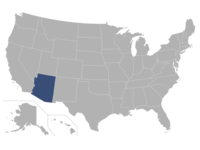
Phoenix, AZ