Looking into one of ICE’s biggest contractors: CoreCivic
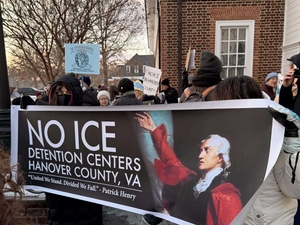
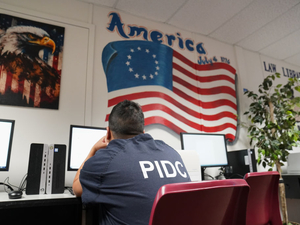
For years, private prison companies have been a key partner to U.S. Immigration and Customs Enforcement as the government carried out its immigration agenda. In the past year, they’ve been rapidly expanding, though they’re also facing pushback in several states.
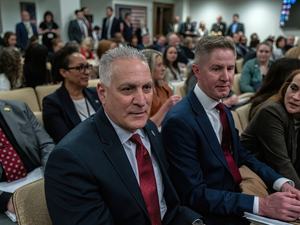
One of the biggest private prison companies in the U.S. is CoreCivic, whose pockets have gotten substantially deeper since President Donald Trump began his second term. With larger projected revenue, CoreCivic is expanding its operations.
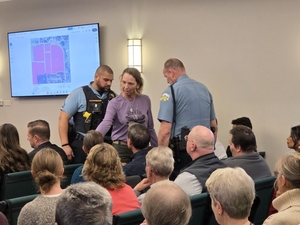
One place they’ve been eyeing is in Leavenworth, Kansas, where they’d like to reopen the Leavenworth Detention Center, which was closed in 2021.
They’re meeting fierce opposition, though, as many former CoreCivic corrections officers and community members are speaking out against it.






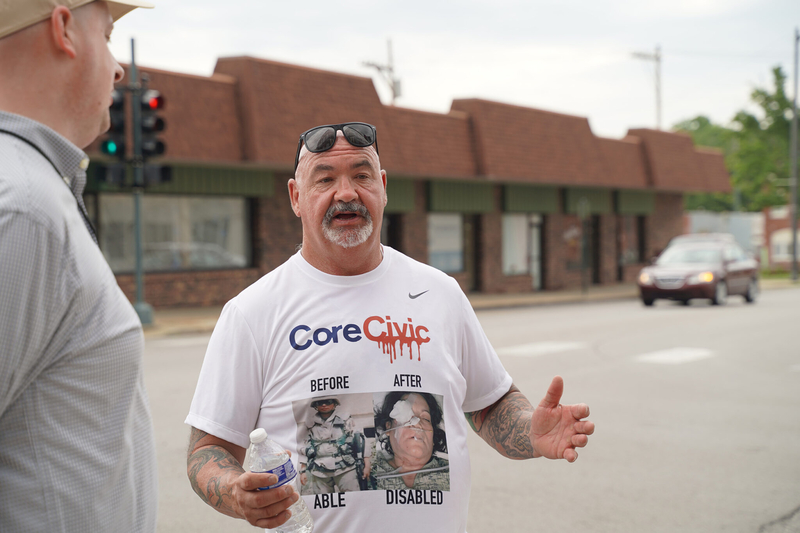
In Episode 14, you’ll hear from William Rogers. He is a former employee of CoreCivic and has become a grassroots advocate speaking out against the Leavenworth Detention Center reopening.
Meanwhile, CoreCivic is facing hundreds of lawsuits across the country that accuse the company of failing to keep detainees safe. Most notably, Tennessee's largest state prison run by CoreCivic is drawing scrutiny from state officials who are questioning how the company handled a June 2025 riot at its Trousdale Turner Correctional Center.
Tennessee Lookout reporter Sam Stockard will help explain how entrenched CoreCivic is in the Volunteer State.
Finally, Evening Wrap newsletter author Danielle Gaines shares the top stories she’s watching.
Episode produced and edited by Mallory Cheng. Music for Stories From The States composed by David Singer.
Got questions? An episode idea? Email us at [email protected].
Subscribe to Stories From the States on Apple Podcasts, Spotify and Youtube.
Photo: William Rogers, who worked at the Leavenworth CoreCivic facility from 2016 to 2020, speaks about his experience at the facility. Rogers wore a graphic shirt with images of injuries sustained by corrections officers while employed by CoreCivic. (Natasha Torkzaban for Kansas Reflector).
Stories From The States is a production of States Newsroom, the nation’s largest state-focused nonprofit news organization, with reporting from every capital. At this pivotal moment in American democracy, our veteran journalists from all 50 states are reporting the consequences of government decision making. By zooming into one story each week, Stories From the States contextualizes and gives a human voice to what is happening now.
Transcript was created using an automated software.
Chris Fitzsimon
This is Stories From The States. I'm Chris Fitzsimon. Here at States Newsroom, we know there's a lot going on around the country, in every state capital. Thank you for being here. Today, we're talking about one of the biggest private prison companies partnering with ICE, CoreCivic. CoreCivic contracts with ICE to build and run de...
Transcript was created using an automated software.
Chris Fitzsimon
This is Stories From The States. I'm Chris Fitzsimon. Here at States Newsroom, we know there's a lot going on around the country, in every state capital. Thank you for being here. Today, we're talking about one of the biggest private prison companies partnering with ICE, CoreCivic. CoreCivic contracts with ICE to build and run detention centers and to transport individuals in custody. Those are the same people that own and run the Texas detention facility where five year old Liam Ramos was confined, the young boy who was detained by ICE in suburban Minneapolis. Now the company's pockets are getting deeper. The Tennessee Lookout reports that from July to September of 2024, CoreCivic generated $140 million in contracts from ICE over that same period in 2025 revenue increased to $215 million with all the new money from ICE contracts. They're trying to increase operations. Over in Leavenworth, Texas, CoreCivic is trying to reopen one of their facilities and turn it into an ICE detention center. They've faced some bureaucratic roadblocks, but could hear from the city if they can move forward. There are mixed sentiments there in Leavenworth about the reopening, but a growing number of people are speaking out against it. We'll hear from a former Leavenworth Detention Center corrections officer on why he is against the reopening. But before CoreCivic got more entrenched in the business of detaining immigrants, they face some criticisms of how they manage their prisons. The company is facing hundreds of lawsuits that accuse the company of failing to keep detainees safe. Lawsuits have been filed against CoreCivic in states like Arizona, California, Colorado, Florida, Georgia and Kansas. Most notably, Tennessee's largest state prison run by CoreCivic, is getting attention from Tennessee officials for how leaders at the prison handled a riot. Joining us now is Sam Stockard. He's a reporter for the Tennessee Lookout who has been covering CoreCivic. Sam, thanks for being here.
Sam Stockard
Sure. No problem.
Chris Fitzsimon
Well, first, give us some perspective on CoreCivic. I remember back in the day it was Corrections Corporation of America and was trying to expand all across the south, including in North Carolina. Give us sort of a snapshot of what we're dealing with here.
Sam Stockard
Well, they took on the name CoreCivic because they needed a little bit of a rebranding, from what I understand, but they've still been under fire for 10 plus years after a pretty bad audit roughly 10 years ago that showed just vacancies at key spots, constant turnover, so lawmakers have sort of held their feet to the fire a little bit, I wouldn't say, just tons. They're now, I believe, up to about $234 million in state contracts, and there could be getting about 17 to 18 million more under the budget that the Governor proposed, and that's that comes straight from the Department of Corrections, which calls them a partner with the state. It it sort of came to a head when they had the riot at Trousdale Turner. It's in Hartsville in Trousdale County, which is a small county not too far from Nashville, and the Senate Corrections Committee is wanting them to put camcorders on the guards they're getting running into some opposition from the Department of Correction commissioner who thinks they're ineffective. The senators are telling me that that CoreCivic promised to pay for the cameras, they're sort of saying, 'Well, I don't know that we did or not,' but I've been assured. In fact, I was told they did say that.
Chris Fitzsimon
I want to jump back one second to get into more about what happened at Trousdale, but just reviewing my meager knowledge of this and then doing some reading about yours and others reporting. This is a it's not your normal contractor. This was a very politically connected company for a long time, and had sort of roots and with former governors and family members. So this is not your typical state contractor.
Sam Stockard
No, it's not from what I can recall. It was founded back in the mid 80s. Some of the Republican Party leadership helped found the company. And I mean, they've had deep pockets for years, and looks like they're getting a little bit deeper. And of course, now they've got business all over the country. And of course, they got the contract for that federal detention facility right outside of Memphis, in the Mason community.
Chris Fitzsimon
So how big? Just to give us some perspective, how big a player are they in the Tennessee corrections field? I mean, they're, you mentioned that the state considers them a partner.
Sam Stockard
Oh, I mean, they're the only one. I mean, I've often said, Well, why don't they put these out for bid? And, you know, see what happens. See if they can get a better contractor. But I don't know that there's anybody else who's who's even capable of bidding on it. And, you know, they give a lot of money to lawmakers, and their former president talked about running for governor last year, and he still could. I don't know that he's going to but apparently the new president, Patrick Swindle made a little bit of an impression on the senators when he showed up at the committee meeting back in December. They I think they liked being able to talk to the guy face to face in a public meeting. And that and that left an impression that kind of benefited CoreCivic.
Chris Fitzsimon
Yeah, what happened in Trousdale?
Sam Stockard
For what I can gather, of the inmates refused to go back in their cells. They gained access to an outside yard. Set fires there. There were some people injured. I believe one of the guards was stabbed, but then I've been told that, 'no, it wasn't really a riot'. It was...
Chris Fitzsimon
Yeah, sounds like a riot.
Sam Stockard
I'm not sure how you classify. I'm not sure who's got the real I'm not sure who's got the real definition of a riot. But when people get hurt, and including a prison officer that you know it's, it's pushing toward a riot anyway.
Chris Fitzsimon
And you, you referenced it so that that obviously got some lawmakers attention. I feel like it for the listeners. It's that there's this whole issue of CoreCivic just in general, in Tennessee, it's connections, it's problems, the whatever we call this at Trousdale. And then you layer on top of this now the push to have more ice facilities. So can you talk about sort of their entry into this? Or maybe, I guess, they've already been in it, but the renewed emphasis and all the money funding detention facilities?
Sam Stockard
Well, they use a loophole in state law that allows the state to contract for only one prison with a private company. You know, they they run four state prisons. For the other three, they contract directly with the community, and they, they're doing more or less the same thing in Mason even though it's not state prison, it's a federal facility. It's got about 600 beds, and just found out they have 99 adult, non criminal people there. That would lead me to believe that they're probably there on immigration charges, because that's a civil that's a civil deal, and then 26 criminal adults with criminal charges. So there are about 125 people there, doesn't sound all that lucrative. They don't even, they're not even close to filling it, filling up the place. I was told by one state lawmaker who's not really enthused with what he calls the 'occupation of Memphis'. And he said that there are a lot of people from Memphis who are staying in the in the detention center in in Mason. So I guess it's easier to just take them 30 miles up the road.
Chris Fitzsimon
So do we think that? I mean, is CoreCivic in line do you think to get more, build more of these attention facilities? Has there been any talk of that in Tennessee?
Sam Stockard
No there, there hasn't been any discussion about that that, I guess the Feds built that one, there has been some talk about the possible need to build another prison because of the changes in sentencing laws and so forth in the last couple of years, and the fact that you know you change, you make the sentencing law stricter, and you keep people in prison longer then you're probably going to need you might have to build another prison. So then you come to the situation, well, who's going to run it? Is the state going to run it? Are they going to bid it out to CoreCivic?
Chris Fitzsimon
Yeah, I was reading, uh, one story about the the perception that CoreCivics lobbyists, or folks who are connected, actually benefit when laws are tightened, because that it gives them more business, in effect. And if they were, they were trying to say that they don't have any input into or they don't try to weigh in on criminal justice matters at the legislature. But it does seem like they're around a lot.
Sam Stockard
Well, I mean, their lobbyist is there every day. I talk to him about once or twice a week. So he's he's in there bending somebody's ear or he's not gonna get paid.
Chris Fitzsimon
Yeah, so what do you what do you think is going to happen, as the lawmakers are looking into as a result, whether it's a Trousdale situation or all the other lawsuits? I mean, is there a push for more accountability for CoreCivic what would you say the mood is in the in the capital there?
Sam Stockard
Well, the the fact that a couple of Republican lawmakers passed a bill last year that requires the CoreCivic to lose some of its prisoners if death rates at their prisons reach a certain point above the death rate at the comparable state prison. So somebody's got to come in there and do some. Some math work or something, and and decide whether the death rate is too high. I don't know that I'm the one to do it, and then they would lose prisoners, and then that that would cut into the amount of money that they receive from the state, and so forth. So it is interesting that Republican lawmakers are taking a new look at how CoreCivic operates. And then you've got the the Senate Committee on Corrections, which is pretty much run by Republicans, saying, well, 'we need this pilot project for cameras on guards to make sure we know exactly what's going on. And then if somebody's lying, we know who it is', but the Correction Commissioner says, 'No, I'm building this new fancy center that's going to be have cameras looking in everywhere, and we can do it in real time' and on and on and on. And he doesn't like the idea of body cams. Says their potential violation of privacy, etc.
Chris Fitzsimon
I've always been confused about if something terrible happens at a prison is the is CoreCivic on the hook and the state, or how does the liability work in those situations?
Sam Stockard
Well, you know, I don't know that I'm going to say, I'd say, I would say both of them are on the hook, and they're kind of acting like they are both on the hook, because after the riot, or what was called a riot, the state changed the prison makeup, nobody under 50. Apparently, they took out a lot of gang people, and then core civic completely revamped their management structure, which apparently wasn't very strong, and they're given CoreCivic $3.5 million in the next fiscal year to bring their officer pay up.
Chris Fitzsimon
I'm just it's sort of startling, as an outsider listen to all this, how closely the state and CoreCivic are connected.
Sam Stockard
Well, they're tight, very tight. I mean, this is a 40,40, year old marriage.
Chris Fitzsimon
Well, we really appreciate you helping us try to understand and wade through all this. And thanks for your great reporting.
Sam Stockard
All right, Chris, sure thing.
Chris Fitzsimon
One of the places CoreCivic is eyeing to open another facility is in Leavenworth, Kansas, a city of roughly 37,000 people, they're trying to reopen a closed prison as an ICE detention facility. Some community members don't want that to happen. Coming up in a moment, we'll hear from a man who used to work for the company and why he thinks it's a bad idea to reopen the facility.
Moses Esheit
At a time when so many communities are losing their local news outlets. States, newsroom is filling a gap. We are now the nation's largest state focused nonprofit news organization with reporters based in every state capital and Washington DC. But we can't do it without your support. Your contributions allow us to produce award winning journalism and deliver it to you for free. No pop ups, no pay walls. This is a crucial time to support local journalism, and every bit helps to give go to statesnewsroom.com/donate.
Chris Fitzsimon
Leavenworth, Kansas, sits right outside of Kansas City. It's home to one of the oldest federal penitentiaries, and where President Donald Trump won more than 60% of the vote in 2024. The city was also home to a federal prison run by the private company CoreCivic the company operated the prison in the city for more than two decades, but it was closed in 2021. U.S. District Judge Julie Robinson in 2021 described the facility, with its routine violence and lengthy lockdowns as, quote, an absolute hell hole. Now, CoreCivic is trying to reopen their shuttered facility as an ICE detention center, but they're facing massive roadblocks. The city of Leavenworth had sued CoreCivic for attempting to reopen without a permit and violating city ordinances, all while community members across the state loudly protested against them returning. CoreCivic is now complying with the city's request. A Planning Commission recently voted to approve CoreCivic's special use permit that's now on the way to the city council, many residents and city officials want the facility, but a growing number of community members are still vocally against that move. One of them is William Rogers. He's a former employee of CoreCivic and has become a grassroots advocate filling out Kansas open records requests and tracking down building permits and emails as he fights to stop the company from reopening the facility. William, thanks for being here.
William Rogers
Oh, thank you. Thanks for letting me. Let me be on your show.
Chris Fitzsimon
Well, first, tell us about Leavenworth, Kansas, for folks who don't know, give us a set the scene for us there.
William Rogers
Well, Leavenworth County, Leavenworth, Kansas is a... you know, a lot of people say it's known for his prisons, and they do have several prisons. I like to think of it as a military town of. Military has quite the history up there, so has a little bit of that. It's kind of still that small town feel. I think what's interesting is Leavenworth County butts up to the most diverse county in the state of Kansas, which is Wyandotte County.
Chris Fitzsimon
Well, how did you start working at CoreCivic there?
William Rogers
Well, quite frankly, I needed a job. I had worked for a nonprofit. We was on a three year grant. I knew that I was on a three year grant, and I needed a job, and I applied, and did not think they would would hire me. I had absolutely zero experience with any any of that kind of work, and I quickly found out with CoreCivic they got two major requirements to get a job. There is one, you have to, there's no doubt, you have to pass the background check. And the second one is you just got to be breathing. If you pass those two, you're going to get hired.
Chris Fitzsimon
So that experience, I want to ask you about that in a minute, but that has led you to sort of be leading this effort to stop them from reopening this. What? What? What What is it about this that troubles you so much?
William Rogers
I think for me, I started this, and it was just at a local meeting, I told a story that that still haunts me to this day of a young man named Dillon Reed, 29 years old, died on Thanksgiving Day, 2018.
Chris Fitzsimon
He was an inmate, right?
William Rogers
Yes, yes, an inmate. And he was a good kid. He just take he had a drug and alcohol problem, and on that day, we failed to monitor him as we were, as policy dictated, and because of the direct result of that, Dillon Reed died. I think for me, I had never really seen death like that. I did CPR on him, and we weren't able to get him to come around and and, and that weighed heavy on me. And so I started this for Dillon Reed. But then as as you know, there's others, the young man that I cut down that had hung himself and again, did CPR and was unsuccessful. You know, I think when you see that, and these are preventable, I carry guilt for being a part of the system. Am I weak for it? I don't know. Maybe I'm not as strong as others. Maybe I was never cut out to be an officer, but it's where I'm at now, and the things that I've seen and and the things that these these individuals were supposed to get, that they were not getting the most basic of things. You know, people say, 'Well, they're inmates, that's that's how they act'. No, that's not, that's not true. That's not how they act. But when you do not give them the most basic needs, how do we expect them to act? What are, what are they to do? I don't know what that answer is, but I know the CoreCivic wasn't giving them the most basics.
Chris Fitzsimon
Well, was it? Was it a question of, they didn't want to they were understaffed. You were there as a corrections officer, did you not have ...was there? I guess I'm trying to figure out. Why was that the case?
Chris Fitzsimon
Yeah, and that's great question. You know, I was at a meeting, and the employees or people that wanted to reference the struggles, of course. You know, it's across the nation. Everybody wants to blame the downfall on on COVID every everything today or back then, it was problem of COVID. But you got to understand the Department of Justice audit on CoreCivic was in 2017 which noted the problem of staffing issues that when it went way back, so it wasn't COVID. So I think when they, when they when they run short on staffing, do they want to staff it? Right? Man, that's a great question that I really can't answer. All I can tell you is that we were so short staffed, and this wasn't because of COVID. This, it went way back, and then things start to happen, and then they're not getting their medical care, they're not getting their most basic needs, they're not getting their phone calls, they're not getting their recreation. So you're literally putting 40 to 80 individuals in a pod, and they're kept in there. They have no they have nowhere to get these resources, nobody to give them to them, because who's going to get them to them. As an officer, I was directly tied with security. My job wasn't to help them get phone calls. I didn't know how to do it. Let me say that first. I didn't know how to get them their PIN numbers for their commissary or or any of that stuff. I even if the the uniforms were next door, I they wouldn't allow me to go get them a uniform if they needed it, or a blanket or whatever so and the counselors, they were so short staffed, they pulled the counselors out, the ones that did take care of those needs, and they would send them off somewhere else, so the inmate might not see their their counselor for weeks on end, and so they're not getting their most basic things. I think that's really key here. You have to treat them like humans. I never asked, nor did I care. It wasn't going to help me be a better officer to know what they were there for, right? You could be there for murder or on a simple parole violation. Knowing either one of those didn't help me be a better officer. My job was security.
Chris Fitzsimon
So a judge has found, I guess, that quote about it was sort of a hell hole, but the company has sued some people who have gone after them. I wonder, Are you like, worried about playing this role in this, in this battle?
William Rogers
Yeah, well, they, you know, we received a notification from them for talking out for saying particular things that they would take legal action. Absolutely. Am I concerned? Sure, you know, who wants to go up against a billion dollar company, but also, there's not anything that will silence me. And I tell the truth. I pull open records. I'm factual, I talk I've talked to families and loved ones across the nation, inmates across the nation, and former employees. CoreCivic does not want anyone to know what goes on inside those facilities. They don't want it. When I got stabbed, I said, 'Hey, can I make a police report? Oh, there's no, really. There's no need to' that should tell you everything you need to know.
Chris Fitzsimon
Were you stabbed by an inmate?
William Rogers
Yes, yes. During a cell extraction, we went down there. He was an inmate that I took down a prior, year prior, when he saw me, what we call suited out. He said, 'I'm gonna, I'm gonna, I'm gonna effing kill you, Rogers'. And I mean, I give him credit. He wasn't lying. He tried. So when we made, we made entry, he stabbed me. You know, think about my good friend Marcia Levering. What really irritates me about this reopening is that during the last year, they've been doing PR stuff throughout Leavenworth, and they gave a $10,000 to the VFW and $10,000 to the American Legion, and they send a warden out there, and they do a great photo op with the check and things. And don't get me wrong, those are great organizations, but I think I'm about them doing that, and this is what they really think about veterans. Let me just say this. Marcia Levering, United States Army veteran of seven years, served a tour in Iraq. I trained her few days when she was in during the cycle of training, and she I knew she was going to be a good one, and she promoted up quickly. And because of short staffing, they were running at least 50% short on staff. That day, they had a girl over there that hadn't been through training, didn't have her OC card. By OC, I mean spray, her only defense, she couldn't carry spray. So we were short staffed. They still stick her on the floor. A guy running control accidentally opened a door. Inmate came out, he threw hot water and levering his face, and he started to stab and beat her to near death. She is has had 16 surgeries to date. She's permanently disabled. She recently has had to sell some furniture to pay her utilities, and when I spoke to her a month or two ago, she thought her only option was going to be to go and live in a homeless shelter. So let's think about this CoreCivic says they care about veterans and says they care about their detainees. And if they would do an employee like that, a veteran like that, then what do they what do you think they think about the detainees, right?
Chris Fitzsimon
So, so you're you're worried if they reopen this, this time with ICE detainees, that the same thing will happen that was happening when you were working there.
William Rogers
Absolutely, there's no doubt my mind. If, course, if it can do better, why are they not doing better in California, in New Mexico, in Arizona, in Texas, in Tennessee?
Chris Fitzsimon
I'm sure people ask you all the time, which is, and you referenced it early on. I'm not this is not my feeling. But some people will say the problem is the people who are in prison, not the people who run the prisons.
William Rogers
No, again, I will go back to this. Yeah, they're there for a reason, right? I absolutely agree. But let me be very honest with you, when I went to work for that facility, I, like many people in America, I thought this is going to be the worst of the worst. These people are just scum of the earth. Was that the farthest thing from the truth. What I met were guys that had made a mistake. I guarantee you, 85% of the individuals that I met I would have hung out with on the street because they were in there, they were clean, they weren't on drugs, and they were just normal human beings that like to talk to me about sports or what's going on in the world. They watch the news like we do. They're good people, but they're in an environment set up by CoreCivic that is horrendous, horrendous.
Chris Fitzsimon
What's your ultimate goal? What would you like to happen? Obviously, you want this facility not to reopen.
William Rogers
Absolutely. But, you know, I was hoping that this agreement, by going to a special use permit, would create a really a good oversight system. And we still have hope with that, with the Commission, it still has to go before the commission, but you know, I'll give you an example. One of the things that in the agreement is that a representative of the city can go into the facility, but they have to give like a two day written notice. Well, here's the problem. When I worked there, CoreCivic would have an audit coming, and we would know a week or two weeks away when that person was going to be there, right? So they would have the inmates, painting, cleaning, and the day that they came, every position, every post, with of a sudden, be filled with overtime or whatever. And to have true oversight, there should be no notification that we're coming. You should just be able to show up, whether it be the weekend, the holiday, and at night time, during chow time, and see what's really going on. And secondly, if you have somebody from the city, they've got to know about the facility, they got to have an understanding of the facility, to know what's what's right and wrong. My goal is to, is to bring knowledge to this problem. And I realized when I started this again, it was just for Dillon Reed. But then I thought, I wonder if, CoreCivic in Leavenworth is just one bad facility. Maybe they have troubles there. And I sort of started to research the company and started to do more open records and look at different things across the country. CoreCivic they just have a lot of failures everywhere. And then that goes back to this that we talked about the government, of the failure of the failure of the government themselves. Think about the government, or think about yourself. If you went out to dinner at a restaurant you had bad service you might try it one more time. You have bad service again. You're not going back. So why does the government keep going to core civic to do this? They failed. They failed over time and time again.
Chris Fitzsimon
Well, thank you. I really appreciate you talking and tell, telling, talking to us and telling us your story, and she adding some light on all this. Thank you very much. Absolutely. We called CoreCivic for a response to the allegations about the company, and a spokesman responded with a statement blaming staffing issues due largely to the COVID epidemic, for many of the problems at the Leavenworth facility. He says the company is now receiving many applications for its planned reopening as a site for detainees. The statement also says CoreCivic plays no role in decisions about detainees held under immigration laws and that its responsibility is to care for each person while they await their legal process. More than 100 lawsuits were filed against the company or its employees in 2025 alone. So many of those issues will ultimately be decided by the courts. To stay up to date on the latest CoreCivics news in Kansas, Tennessee, or in your state, you can go to newsfromthestates.com. Coming up shortly, Evening Wrap newsletter writer Danielle Gaines will join us with the top stories she's looking out for, and with one last thing.
Nelle Dunlap
Hi, it's Nelle Dunlap, product and engineering director at state's newsroom. At state's newsroom, we believe journalism should be fair, fearless and free, with reporters working on the ground in all 50 states and Washington DC, we provide non partisan coverage of the state issues that matter most to you. You can subscribe to our work by going to statesnewsroom.com/subscribe.
Chris Fitzsimon
Now it's time to check in with Evening rWap newsletter writer Danielle Gaines, as we do every week on Stories From The States. Danielle, how are you?
Danielle Gaines
I'm great. How are you? I am doing well.
Chris Fitzsimon
Okay, what about this week? What? What caught your eye? Tell me what's on your mind.
Danielle Gaines
Yeah, well, Chris, you like a lot of people, might be seeing your electric bill go up and with you know, only ever increasing electric demand on the horizon. It's becoming an urgent issue for lawmakers all across the country. So Stateline reported that we're seeing states considering laws that would deal with electricity and data centers, something we're hearing all over the country, for instance, laws that would charge data centers different electric prices than other industries because of the way that they specifically drive up costs. And then we're also seeing lawmakers and state officials increasingly showing concern about the management of their regional power grids and their regional utilities. So we had back to back stories this week from New Hampshire and Maryland. In New Hampshire, the Executive Council, which is like a statewide contracting board or spending oversight board, approved a study to look at the feasibility of separating from their regional grid. And then in Maryland, an influential environmental lawmaker has sponsored a bill to remove that state from its power grid, PJM, which is a much broader, bigger power grid. And then just recently, the Kentucky Attorney General came out and urged regulators there to reject a rate increase requested by Kentucky Power, saying that the investor owned utility reliably turns a profit, while rate payers are having trouble paying their bills.
Chris Fitzsimon
I guess it's the affordability theme that has been our word, or whatever, that has become so prevalent in our politics, and the at the state level are trying to address it in some way.
Danielle Gaines
Yeah, and it's affordability one way or another, on the electrical grid issue. It's really interesting because New Hampshire and Maryland are. Coming at it from different directions. New Hampshire is actually concerned that prices might be going up because of renewable energy costs in other states which they don't really support. And Maryland is coming at it from more of the direction of affordability, of reliability, of future planning.
Chris Fitzsimon
Fascinating. So what about something coming up?
Danielle Gaines
Well, I'll be watching federal funding for sure. We had a brief partial federal government shutdown, and the deadline for that is already coming right back up, Friday February 13th.
Chris Fitzsimon
Friday the 13th.
Danielle Gaines
Friday the 13th, and the very serious sticking point, of course, for federal the federal funding issue is immigration enforcement. And congressional Democrats have demanded changes to federal operations, particularly in light of the fatal shootings in Minnesota and elsewhere as part of the Department of Homeland Security funding, they want immigration agents to not wear masks, to wear body cameras, to not do roving patrols, to not detain people in so called sensitive places, to not detain or deport citizens. And they have a list of demands that lawmakers will be working through.
Chris Fitzsimon
Yeah, that's going to be something that debate. Okay. So what about one last thing to leave us with?
Danielle Gaines
Yes, well, when I was a reporter and editor at the Maryland State House, one of my favorite days of the year is when all of the little beagles would come into the state house. So that happened this week in Indiana, and it is part of a continued push by animal advocates across the country, where they are seeking state bills that would allow for the adoption of research animals after they are done with their work in honestly helping to provide us with safe products in our lives.
Chris Fitzsimon
Plus it makes the capital a lot more pleasant, I should say, a lot happier place for that day.
Danielle Gaines
Exactly. And I mean, I've seen them lobby. They are so, you know, persuasive Beagles are real cuties.
Chris Fitzsimon
It would be hard to disagree with a beagle. Well, thank you. Danielle, as always, we appreciate it. Thanks for listening to Stories From The States. I'm Chris Fitzsimon. Mallory Cheng produced and edited the podcast. David Singer produced our theme music. And a special thank you to Morgan Chilson from the Kansas Reflector. If you liked what you've heard today, please leave a rating and review. It means a lot to us to know what you think about the podcast, to stay up to date on the latest episodes. Subscribe now to Stories From The States, a podcast from States Newsroom available wherever you listen to podcasts. We'll talk to you soon.