Gambler who alleges he was drugged at MGM Grand seeks more answers from workers
Jan 15, 2026 | 8:00 am ET
Description
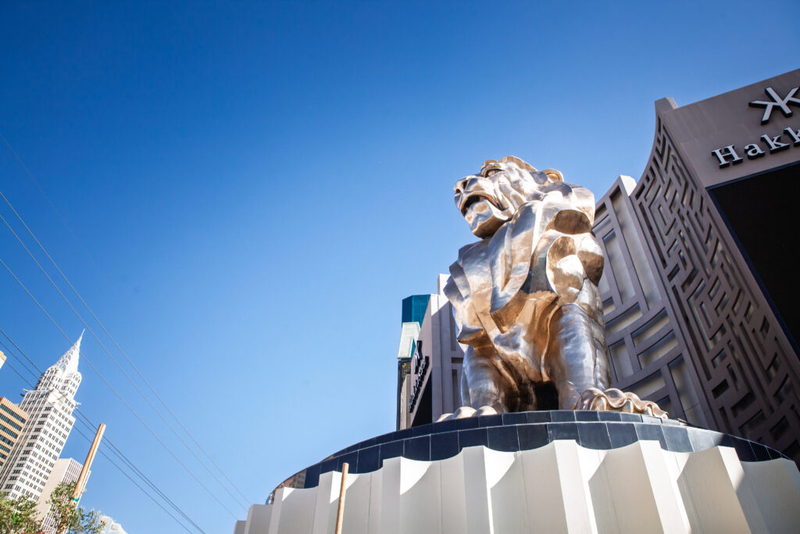
A California businessman who is suing MGM in federal court claims he was drugged with ketamine while playing blackjack in the MGM Grand Mansion, an enclave for high rollers. (Photo: Getty Images)
A high roller who alleges he was drugged while gambling at MGM Grand in 2021 will be permitted to question five hotel employees who may have potential knowledge of evidence, even though the period for taking depositions has expired, Federal Magistrate Elayna J. Youchah said during a hearing Wednesday, in a reversal of her previous denial.
“We are here today because, candidly, sometimes I think too much,” Youchah told attorneys for MGM Grand and Dwight Manley, a California businessman who is suing the casino giant in federal court. Manley claims he was drugged with ketamine while playing blackjack in the MGM Grand Mansion, an enclave for high rollers.
He alleges MGM executives took advantage of his drugged condition by increasing his longstanding $1 million credit limit to $3.5 million in the course of an afternoon, despite erratic behavior witnessed by his friends and acknowledged by his longtime casino host, according to court documents. In his suit, Manley contends that credit extensions exceeding a gambler’s previous limit are granted in small increments, not millions of dollars at a time.
The gambler has purchased billboards seeking information from witnesses and offering a reward.
Attorney Lawrence Semenza III, who represents MGM in the suit, called the litigation “a fishing expedition.”
MGM, according to legal filings, suggests Manley was trying to get out of paying his gambling debts. Manley counters in pleadings that he paid his host $560,000 on the plane ride back to California. He also made no effort to stop payment when MGM deposited his markers, according to the lawsuit.
Manley’s attorney, Paul Hejmanowski, has 60 days to complete the depositions, the judge ordered.
Responsible gambling?
After a few hours gambling on Dec. 10, 2021, Manley felt “disoriented and ‘out of it,’” according to the lawsuit filed against MGM. At about 4 p.m., according to a video log composed by MGM, a cocktail server brought Manley his fifth drink. Within minutes he shattered an ashtray, cut his hand, and was bleeding on the blackjack table.
Manley – described by his then-girlfriend (now wife) in her voluntary statement to police as “a heavyweight, i.e., not a lightweight” when it comes to drinking – “does not recall cutting his hand, did not feel any pain, and was unaware that he was bleeding,” the lawsuit says.
According to the video log from MGM, within minutes Manley began playing again at a different blackjack table.
Manley, in his police report, says he was told that “my casino host informed my three friends in the bar area that surveillance advised her that I was acting erratic. At no point, other than temporarily when my hand was bleeding, did MGM do anything to stop my play. To the contrary, MGM increased my credit limit by $2,500,000.”
“I may want to fly home tonight,” Manley, who flew to Las Vegas on an MGM plane, texted his casino host the morning after he was allegedly drugged. “I think someone must have spiked a drink.”
Manley’s casino host, Vanessa Reboton, in a text message, suggests Manley get intravenous hydration.
“At no time did anyone from the MGM suggest that Dwight should see a doctor or have a blood draw done to test for drugs,” according to Hejmanowski.
Later that day, Reboton told Manley she had requested tapes of his play from casino surveillance.
“It is my belief that the video evidence will demonstrate that Mr. Manley was visibly impaired, could not balance himself, and fell multiple times,” Manley’s initial attorney David Chesnoff wrote to MGM legal counsel Ashley Eddy three days after the incident. “During the above stated time frame of Mr. Manley’s visible impairment he executed several casino markers in amounts that exceed his traditional gambling history with MGM Resorts International.”
In a voluntary statement to the Nevada Gaming Control Board, Manley said his credit limit “has been $1,000,000 for approximately ten years.”
Under Nevada Gaming Regulation 5.011, permitting a person who is visibly impaired by alcohol or any other drug to gamble or be served complimentary drinks “is inimical to the public health, safety, morals, good order, or general welfare of the people of the State of Nevada, or that would reflect or tend to reflect discredit upon the State of Nevada or the gaming industry,” and is grounds for disciplinary action.
In Oct. 2022, gaming agent Terry Ochal notified Manley his case “has been approved by supervisors” for review by legal counsel.
“I can’t imagine a victim has to be further harmed by having to be in the dark like this,” a frustrated Manley responded.
“…as I explained in our first conversation, in an NGCB Regulation case you are considered a witness, not a victim,” Ochal told Manley. “The case itself is between the Board and the licensee.”
Gaming regulators have taken no disciplinary action against MGM.
Company town?
Manley, in his pleadings, implies that Las Vegas is run by casino companies, and that Metro does their bidding. Both Metro and MGM, he suggests, skimped on their investigations of the alleged drugging.
The gambler submitted a police report to Metro in March 2022, along with a drug test that revealed the presence of ketamine in his hair. Ketamine is a powerful drug used to sedate animals. The test detected no other narcotics.
Two lie detector tests arranged by Chesnoff, and turned over to Las Vegas Metropolitan Police, determined Manley was not deceptive when he asserted he did not use drugs while gambling and has not in the past.
Metro, according to a deposition in the case, closed its investigation without interviewing the bartender who mixed the drink the gambler suspects left him incapacitated.
The bartender, Jerilyn Koch, testified in a March deposition that she was interviewed once by the Nevada Gaming Control Board about the allegations, but never by police, or by MGM.
MGM did not respond to requests for comment on their internal investigation protocol. Metro declined to discuss its probe.
Manley’s casino host, Reboton, testified in deposition that she also was never questioned by Metro or her employer.
Reboton, Hejmanowski said, acknowledged to others shortly after Manley left the casino that he was “wasted or drunk,” raising questions about why he was granted more credit.
Metro has also withheld casino video which purportedly shows no wrongdoing, claiming it is evidence in the case, which is closed.
“I have received and reviewed video footage that was provided by MGM,” Det. Justin Adkins told Manley via email in August 2022. “In the footage there wasn’t any evidence that proved an employee did any illegal acts.” Adkins added he was closing the case.
“I am really shocked that only watching the tape is the depth of this investigation,” Manley responded in the email, adding “Ketamine mixed with alcohol is a deadly combination, which could have easily killed me.”
Metro declined to provide the Current with the video, reiterating its claim that it is evidence. A video that lacks images of a criminal act is generally not considered evidence, according to legal experts. Evidence, they say, must be impounded.
Las Vegas, NV