SC governor’s last budget continues push to raise teacher pay, keep tuition steady
Jan 13, 2026 | 5:00 am ET
Description
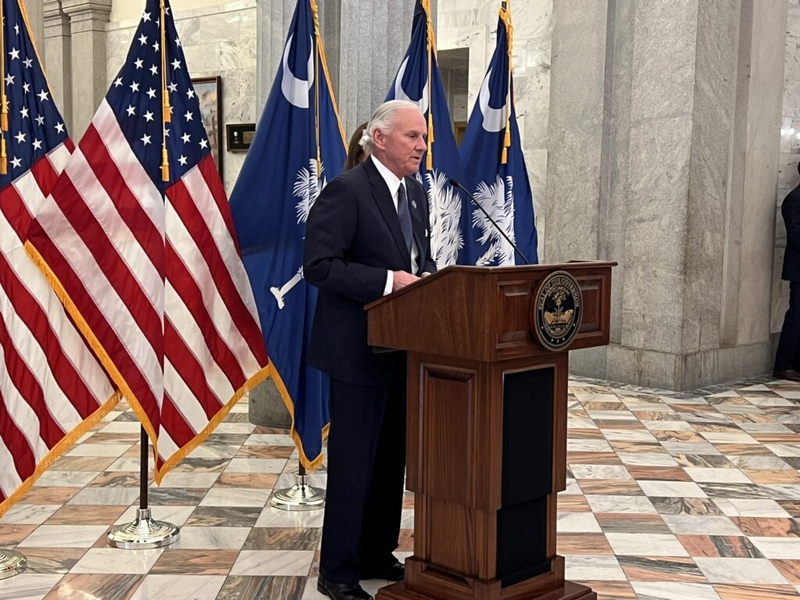
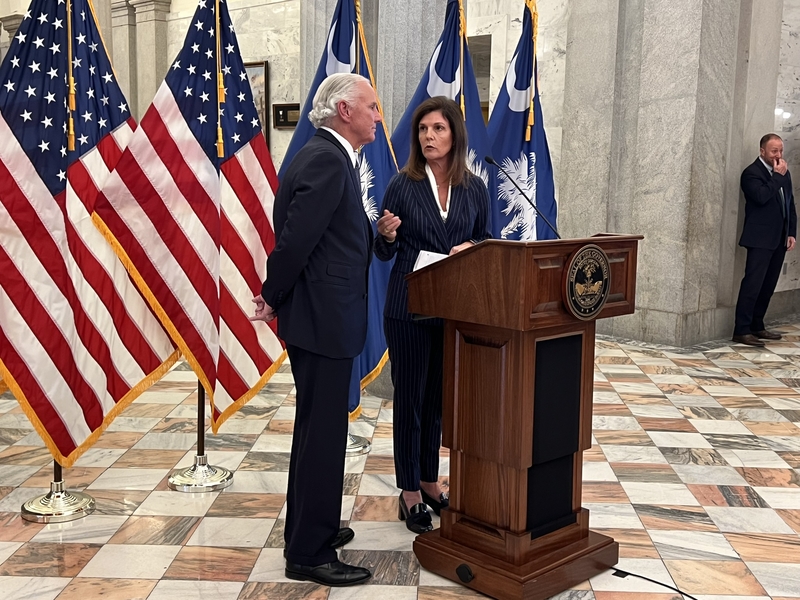
Gov. Henry McMaster releases his 2026-27 budget recommendations at the Statehouse in Columbia, South Carolina, on Monday, Jan. 11, 2026. (Photo by Seanna Adcox/SC Daily Gazette)
COLUMBIA — Raising teachers’ salaries by $2,000, ensuring all students can eat breakfast for free, and expanding 4-year-olds’ access to full-day kindergarten are among Gov. Henry McMaster’s recommendations for the 2026-27 budget.
The roughly $16 billion proposal he released Monday marks the last of his 10-year tenure. The 2026 session that kicks off Tuesday marks his final chance to persuade the Legislature to meet his longstanding funding goals, continue priorities they’ve approved in the past, and pass items they’ve ignored.
The governor’s executive budget is only a proposal. McMaster has had more success with his recommendations than previous GOP governors, largely because he works with legislators through the process. The latest revenue predictions by state forecasters provided an additional $2.5 billion to spend or save in the fiscal year that starts July 1.
The release of McMaster’s entire plan came a week after he previewed his request to spend $1.1 billion of that additional money on roadwork to counteract inflation that’s driving up construction prices.
SC governor asks legislators to spend $1.1B more on roadwork as inflation drives up costs
Teacher salaries
The additional $150 million he suggests putting toward teacher salaries would set the pay floor statewide at $50,500 for teachers’ first year in the classroom. Four years ago, he set a goal of reaching $50,000 by 2026.
“Well, it’s 2026 now, and we’re almost there,” said the Republican governor, noting teachers’ minimum starting pay was $30,113 when he took office in January 2017.
An additional $2,000 boost this year would represent a 68% increase over a decade. The governor’s recommendation would boost state-funded minimums by $2,000 across the so-called teacher salary schedule, which pays teachers according to their years in the classroom and level of college degree.
Most school districts use local property taxes to pay more. Charleston County pays the most, with teachers there starting at nearly $67,400 this school year, followed by Beaufort County, where the salary floor is about $60,100. On average, the minimum starting pay across all districts is already $50,430, according to an analysis of districts’ salary schedules.
Under the increased flexibility that legislators gave local officials several years ago, only the 21 school districts that pay the minimums would be required to increase salaries by the full $2,000. The other school districts could use their share of state aid however they choose, but districts generally have used it to keep boosting their pay scales higher as they compete for teachers.
Free breakfast
McMaster pointed to Arkansas in pitching another recommendation: Last year, that GOP state began providing free breakfast for all K-12 children in public schools, regardless of their parents’ income.
South Carolina should too. Children who start their school day with a meal can better concentrate and pay attention in class, McMaster said.
Roughly 60% of South Carolina’s public school students live in poverty. Many schools already offer free meals to all students under a federal program.
Extending that to every school for breakfasts only — not lunches — is expected to cost $8.7 million, according to the state’s fiscal experts.
Since 2018, legislators have encouraged participation in the federal program for universal cafeteria meals but balked at using state taxes to close any gaps.
McMaster would eventually like for lunches to be free too. But his office did not have estimates on that cost.
Asked about Republicans’ prior opposition to the idea, he said, “We’re trying to fill their minds. We ought to fill their bellies so we can fill their minds more easily.”
Universal 4K
The GOP governor said the state should also make full-day preschool available to all 4-year-olds regardless of their parents’ income.
“We should go to universal. We will one day. I think it’s just a matter of time,” he told reporters. “The more you help the younger children, the more you help them up to where they can learn, the better they’ll be. I’m hoping it won’t be long before 4K is universal.”
But completing that goal would have to come under a future governor. His budget recommends spending $10 million to expand access in private preschools to the children of parents making up to 300% of the federal poverty line. For a family of four, that’s $96,450, according to the latest federal guidelines.
His proposal comes 20 years after the Legislature created a state-paid, full-day program for 4-year-olds in response to a Circuit Court ruling that the state did not do enough to help poor children succeed. Legislators initially limited the program to at-risk children in districts that sued the state 13 years earlier. Eligibility wasn’t expanded statewide until 2021, though legislators didn’t require school districts to participate.
In South Carolina’s dual 4K system, the state Department of Education oversees public school programs, while First Steps — a separate agency tasked with preparing children for school — oversees state-paid classes in approved, private schools and child care centers. Parents can choose either option, where slots are available.
This year, 18,411 children are enrolled statewide, a 30% increase since 2021. Just one district, Greenville County (the state’s largest), continues to opt out, according to the governor’s office.
Private centers have nearly 1,900 unfilled slots this year, according to First Steps. McMaster believes making more parents eligible for the program would fill them. The state’s education oversight agency would determine availability in public schools.
“I believe that is the key to the future,” he said of the 4K program.
Other scholarships
Under his proposal, more students in kindergarten through college would also qualify for state-paid scholarships.
The law McMaster signed last year to reinstate K-12 scholarships for private tuition requires the Legislature to fund at least 15,000 slots for the upcoming school year. Both McMaster and state Superintendent Ellen Weaver recommend providing 20,000 scholarships instead, which would double this year’s enrollment cap and cost an additional $61.4 million.
The scholarship itself will rise from $7,500 this school year to $7,634 in 2026-27, as per the law’s required annual adjustments.
New additions in McMaster’s budget request include $15 million for Meeting Street Scholarships, expanding on a privately funded program started by Charleston businessman and philanthropist Ben Navarro. The state aid would not replace what he and other private donors have funded since 2020. Instead, more high-achieving, low-income students statewide could go to college for free, according to McMaster’s office.
The program provides each participating student up to $40,000 over four years to cover tuition, housing, food or other expenses not covered by federal Pell grants and other scholarships, allowing them to earn a degree without racking up debt.
College spending
For all in-state students, McMaster wants public colleges to keep tuition rates frozen for a seventh consecutive year. His budget recommendation would collectively provide an additional $39.2 million in exchange for that guarantee. His office’s formula for divvying out that money rewards colleges with higher numbers of South Carolina high school graduates.
Last year, college presidents sought permission to raise tuition through a staggered system that would keep rates steady for students while they’re in college, while allowing rates to increase with each freshman class. McMaster promised to veto the idea, and legislators squashed it.
$2.3B more sought by SC colleges includes extraterrestrial request
“We have to educate our young people and college tuition is getting so high, some can’t go,” he told reporters.
As for college construction requests, McMaster recommends providing $115 million to the Medical University of South Carolina for a top-tier cancer hospital. That’s about a third of what the college is asking for the project.
MUSC estimates that new cancer cases in South Carolina adults will rise 18% between 2023 and 2028, then jump by 30% over the next 15 years.
“That’s a lot of cancer. That’s a lot of worry,” McMaster said. “If you catch it quickly, it’s better. Everyone, don’t forget to have your checkups regularly.”
The hospital will “deliver best-in-class cancer care and cutting-edge clinical trials for all South Carolinians,” reads his executive budget.
That’s the only specific college construction project his budget would fund. All colleges and universities would get a share of $82 million for maintenance, renovations or new builds. Technical colleges would split $40 million total. Each college would decide how to spend their share.
McMaster renewed his request for a study of South Carolina’s 33 two- and four-year public colleges. He wants the state’s employment agency to contract an independent analysis of the state’s higher education system. Legislators have ignored that request since he first recommended it in 2024.
Other highlights of Gov. Henry McMaster’s executive budget proposal:
Tax collections
- $107 million reduction to the state income tax to further reduce the top marginal rate to 5.9%
Other education requests
- $95 million for Workforce Industry Needs scholarships at technical colleges
- $50 million for instructional materials
- $20 million for a third round of K-12 school safety grants
- $15 million for summer reading camps for primary students not reading on grade level
Health care
- $203 million to maintain Medicaid’s existing coverage
- $47 million for foster care services, including payment increases for foster parents
- $37 million to cover insurance premiums increases for state employees
- $34 million to cover the state’s increased administrative costs for SNAP required by the federal government
- $25 million to upgrade the Department of Social Services’ decades-old SNAP eligibility computer system to reduce errors
- $5 million to the Children’s Trust of South Carolina to roughly double home visits to 6,000 mothers
Economy and tourism
- $25 million for state parks maintenance
- $11 million to renovate and operate state Welcome Centers
- $4 million for beach renourishment grants
Law enforcement
- $45.4 million to give all first responders a $2,000 income tax credit. (This is a repeat of an ignored request.)
- $35 million for an equipment grant program for county sheriffs, overseen by the state Department Public Safety
- $10.7 million for state law enforcement pay raises and additional officers
Columbia