The struggle inside and outside of data centers
With the rise of AI development, tech companies are investing billions to build massive data centers.
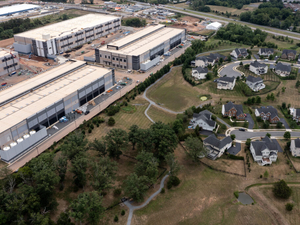
Virginia is home to over 500 data centers and counting. State officials there say their construction will boost local economies and create long-term jobs.
One former data center technician in South Carolina doesn’t agree.
And anxious residents are pushing back against the projects worried they could harm drinking water, spike electricity rates and bring noise pollution.






In Episode 10, you’ll meet Shannon Wait. She was a temporary worker at one of Google’s data centers in Berkeley County, South Carolina.
While there, Wait spoke out against the unfair labor practices, but was suspended. She filed a case with the National Labor Relations Board, and won.
Now she’s a senior organizer at Alphabet Workers Union-CWA and a data policy advisor at TechEquity speaking out against the working conditions inside the facilities.
Northern Virginia has especially been seeing a boom in construction, but as more buildings are planned for Southern Virginia, residents are growing concerned about how this will hurt their water and wallets.
There aren't any statewide data center regulations, so localities are putting their foot down.
You’ll hear from the Virginia Mercury’s Energy and Environment reporter Shannon Heckt who has been covering this.
Finally, Evening Wrap newsletter author Danielle Gaines shares the top stories she’s watching.
Episode produced and edited by Mallory Cheng. Music for Stories From The States composed by David Singer.
Got questions? An episode idea? Email us at [email protected].
Subscribe to Stories From the States on Apple Podcasts, Spotify and Youtube.
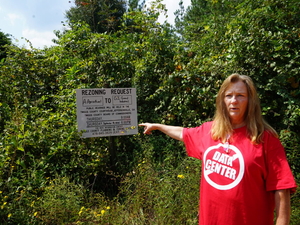
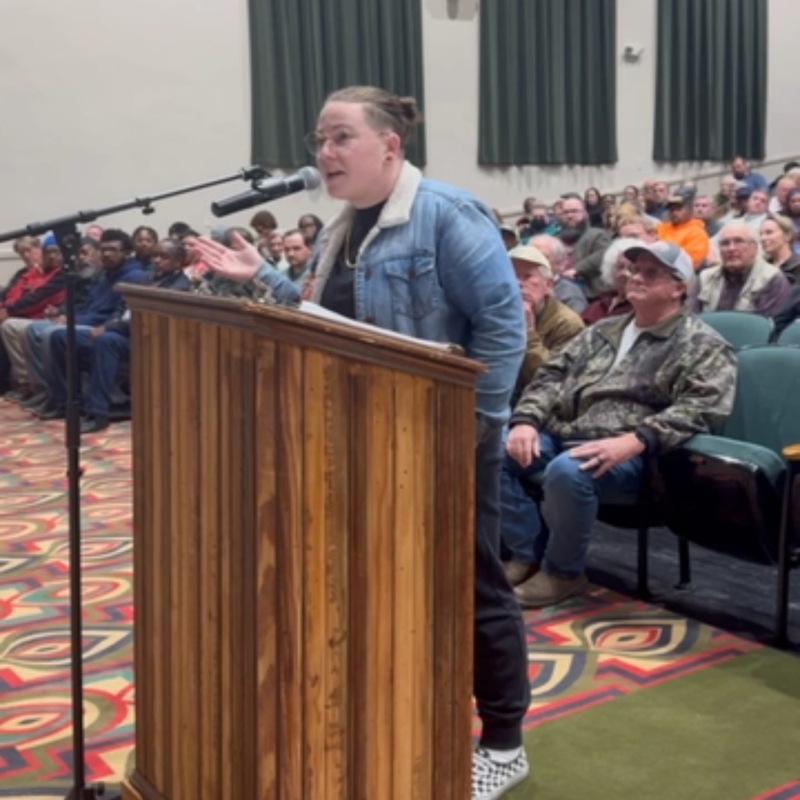
Photo: Shannon Wait speaks at a Colleton County public hearing for a proposed 860-acre data center campus proposed for South Carolina’s Lowcountry. (Photo courtesy of Shannon Wait)
Stories From The States is a production of States Newsroom, the nation’s largest state-focused nonprofit news organization, with reporting from every capital. At this pivotal moment in American democracy, our veteran journalists from all 50 states are reporting the consequences of government decision making. By zooming into one story each week, Stories From the States contextualizes and gives a human voice to what is happening now.
Transcript was created using an automated software.
Chris Fitzsimon
This is Stories From The States. I'm Chris Fitzsimon. Here at States Newsroom, we know there's a lot going on around the country, in every state capital, and we want to thank you for being here. Today we're talking about data centers, the buildings house rows of computer servers seemingly going on forever. Whether we consciously...
Transcript was created using an automated software.
Chris Fitzsimon
This is Stories From The States. I'm Chris Fitzsimon. Here at States Newsroom, we know there's a lot going on around the country, in every state capital, and we want to thank you for being here. Today we're talking about data centers, the buildings house rows of computer servers seemingly going on forever. Whether we consciously know it or not, every time we're streaming a show, using chatGPT or even listening to a podcast like this one, you're interacting with a data center. Now, with the rise of AI development, tech companies are investing billions to build even larger structures. Northern Virginia has been seeing this boom for a while. Anxious residents, though, are now pushing back against the projects worried they could harm drinking water, spike utility rates and bring noise pollution. Now, localities there are also putting their foot down. But what is it like to work inside of one after it's all built? In a moment, we'll chat with a former data center worker based in South Carolina.
Chris Fitzsimon
Data centers are being built left and right in our country. The giant buildings house massive servers, cooling systems and additional equipment to ensure continuous round the clock operations, but the machines still need people to make it all run. Many localities have touted economic benefits of building these massive data centers, including job creation. Large scale data centers could create thousands of short term construction jobs, but those who work inside the facilities after they're built often feel that data center jobs aren't quite all they are cracked up to be. Joining us now is Shannon Wait, who worked as a temporary worker at one of Google's data centers in Berkeley County, South Carolina. Now she's a senior organizer at Alphabet Workers Union. Shannon, thanks for being with us.
Shannon Wait
Thanks, Chris. It's great to chat with you about this very pressing issue.
Shannon Wait
Well, I think everybody in the country has heard the term data center. Many communities have heard that their political leaders want to build them. There's talk about it all over the place. Can you just first tell us, from a worker's perspective, what what is a data center like? What does it do?
Shannon Wait
Yeah, so when I started working at the data center for the first time, I actually didn't have any technical experience, aside from troubleshooting cell phones, because I worked in cell phone sales, and when I started working at the data center, you know, I learned as I went and I found the work very fascinating. I was, you know, fixing motherboards. I was swapping out GPUs. It was also, you know, able to refresh some of those cooling systems, doing a lot of cabling, some networking, some pretty basic stuff, but it's technical, and you need to be able to do that work for a long period of time. And when I was working in the data center, initially, was very fascinated to be there, because what Google and a lot of these major tech companies do, such as Meta, Amazon. They create really cool facilities with these amenities that you see to lure people into wanting to work there. But, you know, one of the things that quickly became evident to me was how expendable I was because I was a temporary worker for a staffing agency making $15 an hour with no benefits, tempted out for three months at a time. And so that is when I guess those rose colored glasses came off a little bit at the data center.
Chris Fitzsimon
Yeah, I want to ask you more about your that part of it. But just one more question, maybe, about folks who have never been inside. So when we see them drawn up, or we see, you know, renderings, or whatever, these are huge facilities, right? How many people are in there? Sort of, what does it give us, take us inside that when you walk in the door.
Shannon Wait
The kind of picture that I can paint is, if you think about when you go into a Super Target or a Super Walmart. Those are really huge buildings. The data center floor is about the size of one of those. On the campus that I worked at, there were approximately 12 to 15, maybe more data center floors that you could choose to go work on the servers at. So thinking about a couple of stories high, multiple buildings and just the data center floor, not even the cubicle area, not even the hallways or the external infrastructure the size of a Super Target. Rows and rows of servers. Nobody is around. It's very common to be on the data center floor and not see another single person.
Chris Fitzsimon
Well, is it loud in there are, there are the machines running. I guess they are. Is there a noise issue?
Shannon Wait
Yeah so, you know, some of the, especially some of the older buildings, did have these. You know. Noise issues, where you would have to wear extra special hearing protection, not just the standard noise canceling headphones, and some of the machines themselves, especially as the machine learning, which is what before AI, was the hype word — that was the buzzword. When machine learning came on the scene, those machines, their decibels were rated to be as loud as a jet engine, airplane, jet engine. So imagine you're standing next to that without hearing protection or even with it, and it's not adequate. You know, you're standing for long periods of time next to a machine that loud, that can really have an impact.
Chris Fitzsimon
And what about the working conditions you mentioned? You didn't see people a lot if you were walking down one of what I imagined in my mind, or just rows and rows of these sort of machines or boxes, for lack of a better word, what was it? What was it like to do that every day?
Shannon Wait
Yeah, it was very common not to see anyone there. So you know, if you're listening to music and you're dancing in the aisles, something like that, while you're doing your work. You know there's no one that's gonna see that. So sometimes you might see like one other person on the data center floor, if there's a lot of cases of a high priority on that floor that day. But you just think if I saw one person, two people around saying hey to them, you know, it's very loud in there, and then going about my way and doing work, and that was just very common to be so isolated.
Chris Fitzsimon
Were a lot of your colleagues also temporary or contract workers?
Shannon Wait
Yeah so sometimes you would come in with a cohort of other temporary workers, and you'd start learning from other temporary workers how to do the job. And at the time that I was employed there in 2019 there were Google direct employees doing that same job. By the time you know 2020, 2021, rolled around, most of the Google employees on my team were moved out of that team and backfilled with temporary workers. So it was at that point that I saw this, I guess, writing on the wall that they're temping out all of this work for lower pay, less benefits, higher degree of exploitation. You know, it's easy to lay off temporary workers, and you know, when I saw that starting to happen, I became very concerned.
Chris Fitzsimon
I'm sure you've seen all the publicity about data centers around the country, and the jobs are one of the things often mentioned. But we don't know for sure. But it does seem like oftentimes when you hear a job announcement, we don't know if those are contract jobs, temporary jobs, full time jobs, what the salary is. It feels like we should take that with a grain of salt, I guess.
Shannon Wait
Yeah, I was looking at Google's data center in Berkeley County's website exclaiming that over time, they've had 900 plus jobs on campus. And I know for a fact, based on my own experience and my own research, my own organizing, that probably 80% of those jobs sourced the construction jobs are only going to be there as long as the expansion and the development is there, and the people who are left to work inside the data centers, we call it the golden egg. If you're going to get Google, if you're going to get hired at Google, and very few people get that golden egg, right?
Chris Fitzsimon
Is that what drew you to apply in the first place? That sort of the possibility of a full time job with a company that everybody's heard of?
Shannon Wait
Yeah. I mean, you hear about companies like Google and Facebook, and you see movies like The Social Network and The Internship, and it just looks cool, aside from, you know, the C suite drama that goes on in movies like that. And really what the reality is, somebody is crying on the data center floor because they can't buy Christmas presents for their kids because their contract has not been renewed, and it comes up on January 1. You know that is the typical story that you hear about people doing the work at Google and other tech companies data centers. You, you see far less the people who are actually living the luxurious lifestyle these companies where they're engaging with those amenities and other things that the company brags about.
Chris Fitzsimon
Yeah, you mentioned the amenities at the beginning. Were there amenities in the data centers?
Shannon Wait
Yes, but it also is who is entitled to those amenities, and when that is an even bigger question.
Chris Fitzsimon
What do you mean? Do you mean by amenities in this case?
Shannon Wait
At Google, they have cubicles, and in those office spaces, there will be video games set up, maybe an old style arcade game or PS five attached to a TV on the wall. Maybe a pool table, ping pong table, foosball table, whatever. Free, you know, ice cream in a freezer somewhere, things like that. But if you are not employed by Google, you are not enjoying those amenities unless you're off the clock, which is very minimal time for temporary and contract workers, and if you're a construction worker, you're not even allowed to go inside the facility to enjoy these amenities period. You don't have badging access for that, right?
Chris Fitzsimon
So your situation, you decided not to, was your your contract run out, or you decided you wanted to become an organizer. Or how did your own personal story evolve?
Shannon Wait
So while I was working there, you started realizing this is a precarious situation, and it's not okay. So I started talking to my co workers, trying to figure out, you know, when are their contracts up? When is a Google quote, unquote, head count coming around so that we can apply? And I start realizing that they're temping out the entire team. And talking to my co workers. This isn't right, so I go on Facebook, I make a post about the different layers of employment at the Google data centers across the country, and somehow it got back to management, and the claim from management was that I violated our non disclosure agreement, which specifies you can't discuss proprietary information. However, we have a right to discuss our pay and working conditions with anybody inside and outside the company, and that is what I was doing. So we filed unfair labor practices around my suspension, because that's what happened. They suspended me for this post, and during their course of time that I was suspended, they were forced by the National Labor Relations Board to remedy my suspension, bringing me back with back pay and posting a notice on the wall that says you're allowed to discuss unions, organizing, pay, working conditions, etc, and both Google and the staffing agency had to post this around the workplace. So it was after that that I started getting involved officially in organizing as an organizer Alphabet Workers Union CWA, and over the past five years, it's been such a journey organizing people inside data centers and adjacent to data centers in the AI training workplace.
Chris Fitzsimon
What would you want the public to know? A, about data centers, just in general, because we hear so much about them, and then B, what it's like to work there, or what you should know about the workers?
Shannon Wait
Yes, so I would like to say that you know, even if data centers are necessary, and the rapid expansion in the hype is true, the standards must match that quote, unquote, desire or need and the profit margins that these companies are reaping from data centers. So you know, the standards definitely should meet a certain threshold. As far as the labor goes, the pay should be three times the amount of the median rent in the area. There should be direct employment with job security, and also, they definitely need to be held accountable for how data centers are impacting local residents' utility rates, and they need to be held accountable when it comes to the environment. So I'm not trying to say, stop building data centers forever, but I am trying to say these companies are ripping us off.
Chris Fitzsimon
Thank you for sharing your story and your experience there, we appreciate your time.
Shannon Wait
Well, thank you so much, Chris.
Chris Fitzsimon
Across the country, residents are grappling with what happens when a data center project is being planned in their community. According to reporting from the Pew Research Center, the United States has over 4,000 data centers, including operational sites and those under development. A third of all data centers in the U.S. are in just three states, Virginia, Texas and California. Many people like Shannon are worried. There's growing concern from residents pushing to regulate data centers to protect their environment and prevent their utility bills from rising even more. That's the case in parts of southern Virginia, that state has the most data centers in the country, and that number is only growing. As of this recording, Virginia does not have any statewide regulation, but localities are now creating their own standards. In a moment, Virginia Mercury Energy and Environmental reporter Shannon Heckt will share how communities are doing that
Nelle Dunlap
At a time when the federal government is making drastic changes to public policy and pushing so many programs back to the States, it's hard to know what it all means for you, your family and your community. Our Evening Wrap newsletter from States Newsroom keeps you up to date on what your elected officials are doing or not doing. To manage the fallout, you can sign up by going to statesnewsroom.com/subscribe.
Chris Fitzsimon
The state of Virginia has the most data centers in the entire country. To put that in perspective, 70% of the world's internet flows through data centers in Virginia, those energy hungry facilities have brought business, but communities are seeing the impact of the electricity and water usage at their utility bills, and many residents aren't happy. However, many residents are pushing for regulation of the new structures, while local officials are balancing the economic opportunities and challenges. Joining us now is Shannon Heckt. She's the Energy and Environmental reporter at the Virginia Mercury who has been covering all this. The Virginia Mercury is, of course, a States Newsroom outlet. Shannon, thanks for being here.
Shannon Heckt
Hey Chris, thank you.
Chris Fitzsimon
So first of all, I think it's a startling statistic that a lot of people wouldn't realize. Why does Virginia have so many data centers?
Shannon Heckt
Yeah, so we're sitting at about over 560 data centers statewide, and a big part of that is because the state saw that industry coming to the U.S. and really exploding, and so they got onto it very quickly and created a tax incentive for these businesses to come here. So especially in Northern Virginia, near D.C., that's where we see the largest clusters, where those counties really got behind that very early.
Chris Fitzsimon
Wow so it was actively, I mean, it sounds like the state was actively recruiting them. They just didn't just select Virginia.
Shannon Heckt
Yeah, they definitely were, especially under Governor Glenn Youngkin, he has been really pro business and trying to bring the data centers here, because they just bring, you know, millions of dollars to the counties where they reside, and especially as they are creeping out of Northern Virginia towards more towards Richmond and southwest, which is much more poorer part of the state, those counties are seeing dollars that they have never even imagined come into their their local budgets.
Chris Fitzsimon
And I assume that's from property taxes?
Shannon Heckt
Yeah, and sales and use tax. And you know the there was a study done by a state agency that Virginia loses about a billion dollars a year through these tax credits and everything to the data center industry.
Chris Fitzsimon
Wow well, what about jobs? I guess there's, it feels like a mixed bag. I didn't realize when we talked to a person who had worked in one it's not like there are hundreds of people working in each data center.
Shannon Heckt
No, really, the majority of jobs that come from data centers is through building them. So there's lots of construction jobs that happen, but typically it only takes about a dozen or so people to run them full time.
Chris Fitzsimon
Since you've been doing this reporting, when you're driving around, you live in Virginia, obviously, do you see them? I mean, are they giant structures on the side of the road that you can tell are data centers.
Shannon Heckt
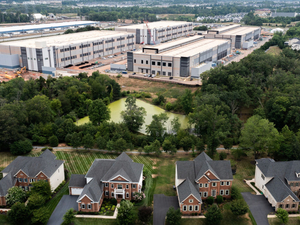
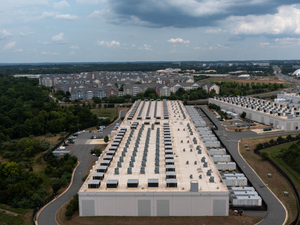
Yeah, absolutely. Where I live in Richmond, they're not here as much, but I've driven through Loudoun County, which is where they have the largest concentration of them. And it's like driving on another planet. It's all these, you know, completely square, windowless warehouses that have these big corporation names on them. And you're there's just they're stacked on top of each other up there, basically. So you definitely become aware of them right away.
Chris Fitzsimon
So what about the impact on the consumers? I know that's been a big part of your reporting, and when what people are worried about, people are worried about utility bills, is that, is that a real thing?
Shannon Heckt
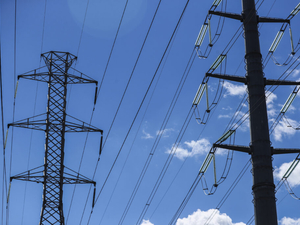
Yeah, so that's a major thing here in Virginia, because we're one of the states that imports the most energy in the country, or at least through the PJM regional grid transmission. And so since there's so much power demand from largely these high load users, which is data centers and also manufacturing and such, our utilities are having to build more power infrastructure in order to meet that demand, so that we don't experience grid unreliability. And so it costs money to build gas plants, solar plants, solar farms, rather and, you know, SMRs are something we're exploring, but that all costs a lot of money.
Chris Fitzsimon
Sorry, what's an SMR?
Shannon Heckt
A small modular reactor. So it's nuclear power. There's, there's none operating in the U.S. yet, but a lot of lawmakers are getting very interested in that as a method that has less carbon emissions than coal and gas. But maybe a lot more conservative folks maybe are able to stomach that a little bit more than the renewables that we're seeing. They think it's more reliable.
Chris Fitzsimon
What about the environmental impact been another bone of contention.
Shannon Heckt
Yeah, so these data centers use tons and tons of water to cool them, because, you know, to run these high powered computers, they get hot and they need to be cooled down. So they use water to do that, and it's millions of gallons, and on top of it, building the power infrastructure to meet that energy demand that also includes fossil fuels just outside of Richmond. Dominion Energy, the biggest, you know, utility here in the state is building a peaker gas plant just outside of city limits. And part of that is to meet this demand. And so obviously that's more emissions in the air that people be breathing.
Chris Fitzsimon
Well, what I know some folks in Virginia aren't happy about this development. What are citizens doing? I guess, specifically, what are counties doing? Who are interested in maybe regulating these centers?
Shannon Heckt
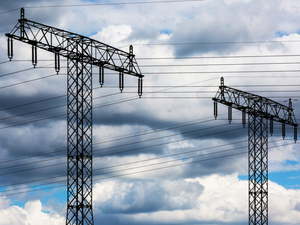
Yeah, so, so many more of the counties are trying to create their own ordinances, because there's no statewide mandate or regulation really. Of you know how far away a data center needs to be from homes. You know, how loud are they allowed to be? Things like that? Because Virginia has what we call the Dillon Rule, and so they try to very seriously respect the locality's authority. And so counties have been kind of left to their own devices to make their own rules. And so that's why, in some you see the data center stacked on top of each other. In other counties, it's much harder for them to come there, so they'll create what we call technology overlay districts, usually, which are spaces that are already zoned to be industrial or commercial. They'll be usually farther away from residential areas, and that allows the data centers to apply by right. So they don't have to have a conditional use permit. That takes a lot more county votes and public hearings, which the public has started coming out to these permit hearings in droves. There'll be hundreds of people. They don't want it. Whether it's the data centers or the transmission lines that have to bring the power to these things, the community members are really starting to wake up to it.
Chris Fitzsimon
What do community leaders say when they go to these public hearings? What's their opposition based on? Is it the things we've talked about?
Speaker 1
Yeah, a lot of the concerns across, whether it's a more rural county or more urban, people are worried about that water use. They're worried about the view shed really, because these things aren't really attractive, and they don't really want them with their bright lights and their diesel generators to be running in their backyards, basically. And a lot of that too is and they're also becoming aware of why their utility bills are going up, and it's because we need this energy infrastructure. And I think a lot of people are saying, hey, let's slow down. And in the more rural areas, they want to maintain that rural aspect. If it's a more farming community, they don't want to have this, you know, industry here, making it more commercial and having these warehouses. They want to stay agricultural. And so that is also another aspect that you have to consider.
Chris Fitzsimon
I guess a lot of them are already built and operating. Is the battle over maintaining those or adding more, or where do we stand? Do you think in Virginia?
Shannon Heckt
We continue to see applications all the time, and they're just going up like it's nothing. And so even though we have so many already, Virginia is still very attractive for this industry to come here, and especially as they're creeping down into the more rural counties, it is fascinating to see how the county board of supervisors are going up against their own constituents a lot of the time, because the board of supervisors are saying, 'Hey, we can get life changing funds for building parks and schools and roads, all these things that we haven't been able to do because, you know, we're a lower income county, but you have to deal with having this data center here. So how are we going to do that?' So I've sat in on a few counties such as, you know, Goochland County here in more central Virginia, where they're like, 'look, this money could be incredible. This is a good industry. We're open for business'. But the residents are saying, 'Please don't bring this here.' But you know, most of the time these districts are created, and a lot of the time these these data centers are approved. But I have seen some companies, including Amazon, pull some due to so much community backlash on them.
Chris Fitzsimon
Has this become part of the political and election debate now, when people are running for office in Virginia, is this a live issue?
Speaker 1
Yeah. I mean, we just had our gubernatorial election here in Virginia, and voters really spoke loud and clear that the utility cost issue is the number one issue, really is, you know, the cost of living. You know, whether it's our groceries or what have you, that is what people are worried about. And here in Virginia, our utilities continue to go up, and people know that that is connected to the data center industry. You know, there's other factors as well, but you know that is something that a lot of the general public is aware of. And so, you know, these politicians are trying to balance that cost concern, but also keeping Virginia pro business, having industry come here because we we want to have business, we want to have jobs and those tax dollars, right?
Chris Fitzsimon
Like you mentioned, Virginia recently had a gubernatorial election. What has the newly elected Governor Abigail Spanberger said?
Shannon Heckt
She has been, she's not necessarily like pro or against or anything like that. With data centers. I think it would be political suicide to really come out on one side or the other, because it is such a major industry here. But she has talked about, energy efficiency is one of her top priorities for going into this legislative session that she has shared thus far. And so she wants to look at, do we have to build as many transmission lines as we the utilities think they do, or are there ways for data centers to use? Power or what have you. So there's a lot of very broad conversations of like, okay, well, with what we have now can we reduce all this power or find ways for data centers to chip in a little bit more for this power use? But there's no hard decisions yet.
Chris Fitzsimon
As of us recording this conversation, Virginia's legislative session begins in a few days, do you think that there'll be legislation about data centers? Is that something the state lawmakers are going to get involved in?
Shannon Heckt
Oh yeah. So we still are waiting for the full tranche of bills to be filed, but some that we're already seeing is one of them wants to encourage our state corporation commission, which regulates the utilities, to have more of a say in these high load users, which are over, I believe, 25 megawatts, which is our generally data centers, to go through another review process to make sure that the state has the energy infrastructure to even serve them at all, or be able to get it online in a reasonable amount of time. Because the utilities are they're they're duty bound to serve any customer that asks. Basically they can't say no. They also want to have the data centers go through more environmental checks and studies to see, like, what the sound decibels will be, how much emissions would be coming out there, generators, water, runoff, all those things. So they want to have more checks than are already going on, and it seems that the governor elect would be open to that sort of thing. Governor Youngkin vetoed very similar bills, so I'm expecting them to to get more positive response, but I'm not sure I can't be in spam burgers brain if she, you know, wants to tango with the industry like that.
Chris Fitzsimon
Well, we will check back with you. So much for being with us. Very interesting. Thanks a lot.
Shannon Heckt
Thank you.
Chris Fitzsimon
Coming up shortly Evening Wrap newsletter writer Danielle Gaines will join us, as always, with the top stories she's looking out for and with one last thing.
Moses Esheit
Hi, it's Moses Esheit product associate at states newsroom. At States Newsroom, we believe journalism should be fair, fearless and free, with reporters working on the ground in all 50 states and Washington DC, we provide non partisan coverage of all the state issues that matter most to you. You can subscribe to our work by going to statesnewsroom.com/subscribe.
Chris Fitzsimon
Okay, now the best part of the week, we check in with Evening Wrap newsletter author Danielle Gaines to find out what's been happening this week, what she's looking forward to, And then always the much anticipated one last thing,
Chris Fitzsimon
Danielle, how are you?
Danielle Gaines
I am, great. How are you?
Chris Fitzsimon
I am well, so tell us what caught your eye this week.
Danielle Gaines
Yeah. Well, so we've got the ever continuing debate about immigration and the deportation crackdown by the Trump administration, and so part of that is kind of these increased surveillance efforts by the federal government and Stateline wrote this week that as legislatures are ready to start convening all over the country, there is an effort in both left leaning and right leaning states to curb the use of some surveillance technologies. So there have been really high profile fights by liberal states to restrict the Trump administration's access to various databases, voter databases, benefit databases, but what's really taking off is this concern about surveillance cameras and license plate readers. So last year, a couple of states conservative states, Arkansas, Idaho, Montana, enacted laws to protect that data that's collected through those license plate readers. They joined some liberal states that have already specifically blocked Immigration and Customs Enforcement from accessing driver's license data, and you're seeing more cities stop their contracts for some of these automated license plate readers.
Chris Fitzsimon
Right, it's interesting. It went from sort of red light cameras to license the license plate readers and toll roads and airport exits, and there's a million places you don't even think of.
Danielle Gaines
Yeah, these, these cameras are, you know, they're mounted on street lights, police cars. They can be hidden in construction barrels. They're kind of all over the place and saving a lot of data for a very long time.
Chris Fitzsimon
Well, what about something that's coming up?
Danielle Gaines
Yeah, once again, I'm kind of watching the negotiations over the troubled Colorado River. So this, of course, is the Western River that provides water to several states, Arizona, California, Nevada, Colorado, New Mexico, Utah, Wyoming, but it also obviously provides water to vast reservations for American Indians, and so the seven states that are negotiating over the future of the river and the water rights have been deadlocked for years. We've got a little bit more than a month before the federal government will step in with its own plan, and the Nevada current ran a story about efforts by. The Ute Indian Tribe and other Native leaders to have a greater role in this decision making process.
Chris Fitzsimon
Interesting. And now I know folks want to know what the one last thing is.
Danielle Gaines
You know, I don't know about you, but my Christmas tree is still up, especially when I travel for the holidays, I just can't take it down right away. So we had this great story in Rhode Island about how Christmas trees are creating new river banks there. For several years, they've had a program that there are continuing, and the state will collect your Christmas trees. It's called the trees for trout program. They bundle them together in a certain way and put them into rivers called revetments, and then the revetments eventually capture enough sediments and create habitat that it grows the river bank outwards, and it helps with erosion. It helps with fish populations. And it was just a really interesting little story.
Chris Fitzsimon
Well, that is fascinating. What a nice end, in a way, to the holiday season.
Danielle Gaines
Exactly? Yeah, it can carry on.
Chris Fitzsimon
That's right. Well, Danielle, as always, we you appreciate your time. Thank you.
Danielle Gaines
Thank you.
Chris Fitzsimon
Thanks for listening to stories from the States. I'm Chris Fitzsimon Mallory Cheng produced and edited this podcast. David Singer produced our theme music. If you liked what you've heard today, please leave a rating and review. It means a lot to us to know what you think about the podcast, to stay up to date on the latest episodes. Subscribe now to Stories From The States a podcast from states newsroom available wherever you listen to podcasts. We'll talk to you soon.