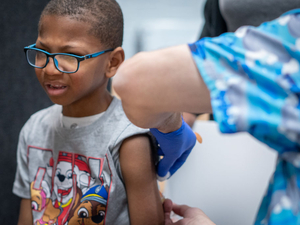
Who decides what vaccines a child should get?
As childhood vaccination rates fall, several diseases once considered eradicated are back and spreading, most notably measles and whooping cough.
The Centers for Disease Control and Prevention has been vocal in changing vaccine recommendations for children, particularly calling for restrictions on COVID-19 and Hepatitis B vaccines. It’s all despite the CDC’s own data showing they are safe and effective.
Some Democratic-led states are banding together to create their own health coalitions to combat reversal of the CDC’s decades-long recommendations and provide clear information to their constituents. While others, mostly Republican-led states, are trying to eliminate vaccine requirements for children.


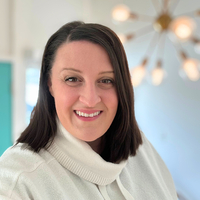
In Episode 7, Oregon-based Dr. Lisa Reynolds shares how her state is reacting to the confusing and polarizing information from the CDC. Dr. Reynolds is also the Oregon State Senator for District 17.
Then, we’ll head over to Florida, where Governor Ron DeSantis and state Surgeon General Joseph Ladapo are pushing to end vaccine requirements for public schools and daycare. Christine Sexton, a senior reporter at the Florida Phoenix, will give us the rundown.
Finally, Evening Wrap newsletter author Danielle Gaines shares the top stories she’s watching.
Episode produced and edited by Mallory Cheng. Music for Stories From The States composed by David Singer.
Got questions? An episode idea? Email us at [email protected].
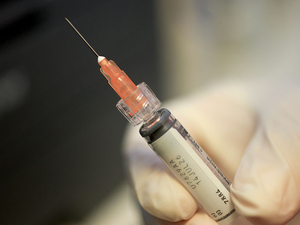
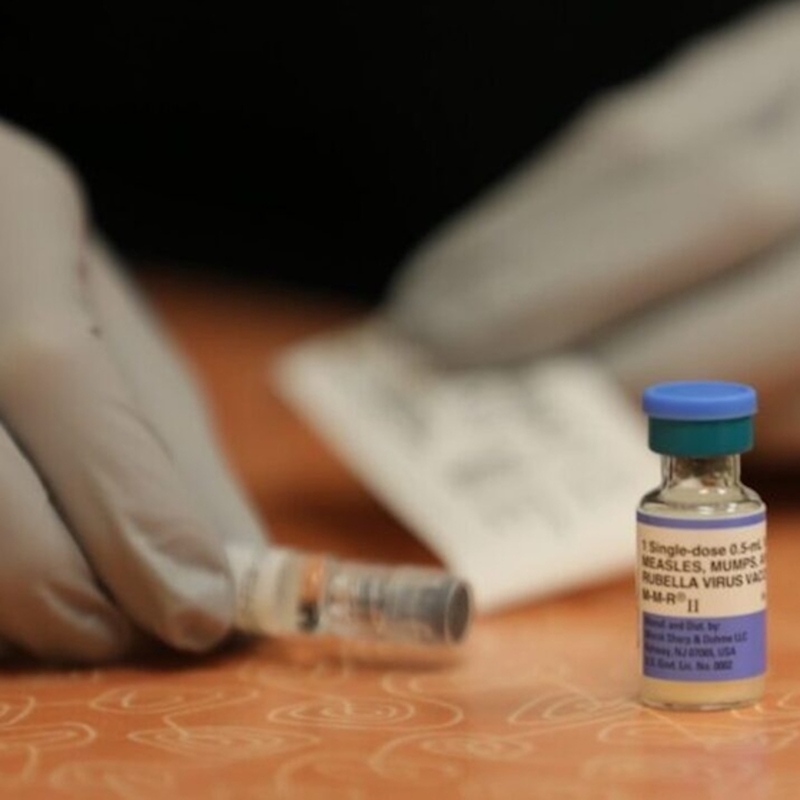
Photo: Photo of a single dose of the MMR vaccine. (Joshua Haiar/South Dakota Searchlight)
Stories From The States is a production of States Newsroom, the nation’s largest state-focused nonprofit news organization, with reporting from every capital. At this pivotal moment in American democracy, our veteran journalists from all 50 states are reporting the consequences of government decision making. By zooming into one story each week, Stories From the States contextualizes and gives a human voice to what is happening now.
Transcript was created using an automated software.
Chris Fitzsimon
This is Stories From The States. I'm Chris Fitzsimon. Here at States Newsroom, we know there's a lot going on around the country, in every state capital, so thanks for being here. This week, we're talking vaccines, specifically ones for kids. The Centers for Disease Control and Prevention changed its guidance around shots related...
Transcript was created using an automated software.
Chris Fitzsimon
This is Stories From The States. I'm Chris Fitzsimon. Here at States Newsroom, we know there's a lot going on around the country, in every state capital, so thanks for being here. This week, we're talking vaccines, specifically ones for kids. The Centers for Disease Control and Prevention changed its guidance around shots related to COVID 19, Hepatitis B and MMR, that's measles, mumps and rubella, just to name a few. With these revised national guidelines, each state is choosing a different route. Florida's governor has been outspoken in removing vaccine requirements for K-12 students. We'll check in with a Florida Phoenix reporter about how that's all playing out. While some states along the west and east coast form their own health coalitions to counter the Trump administration's recommendations.
Dr. Lisa Reynolds
To have someone like RFK Jr leading our national public health and frontline health responses is just egregious and dangerous.
Chris Fitzsimon
Today, we're heading to Oregon to chat with a pediatrician and state senator on what she's seeing in her practice.
Chris Fitzsimon
The CDC has recommended narrowing the agency's Hepatitis B immunization guidance for newborns. For decades, the recommendation has been getting the Hep B shot within 24 hours of birth. Now it's changed to waiting to at least two months of age. It's not the first time the federal agency has created confusion and polarized guidance around vaccines. Some states are combating this national CDC recommendation scheme, creating their own health coalitions to help constituents get clear information. Oregon is one of those places. They're part of the West Coast Health Alliance. Joining us now is a doctor working in that state. Dr Lisa Reynolds, is a pediatrician based in Oregon, and is also an Oregon State Senator for District 17, which covers Multnomah and Washington counties, encompassing much of northwest Portland and suburbs of Beaverton. Dr Reynolds, thank you for being here.
Dr. Lisa Reynolds
Thank you so much for having me, Chris.
Chris Fitzsimon
Well, you have an interesting perspective, both as a lawmaker, a public official, and obviously, as a pediatrician. Before we get into some specifics, did you ever think when you were running for office or when you were in medical school that we would be debating this sort of dramatic changes in vaccine policies overall in the United States?
Dr. Lisa Reynolds
No, Chris, I mean, I've been a pediatrician for 30 years now. So I've seen new vaccines come online. I, you know, I'm old enough that I've seen diseases that are now essentially or have been somewhat eradicated by vaccines. It's, you know, one of the marvels of modern medicine. I was incredibly impressed with the speed with which the United States helped in the development of the COVID vaccine. So no, I find this really shocking.
Chris Fitzsimon
Can we just, I guess we'll just jump in with some specifics. What about the Hepatitis B first of all. What do you make of those changes, at least in guidance?
Dr. Lisa Reynolds
Yeah, I think you said it really well that this is all part of an effort to sow doubt in our vaccine system and create confusion. And we know what that what the result of that is, is people being un immunized or under immunized. In particular, the hepatitis B vaccine has been an incredible success story. Since we started vaccinating newborns, we've seen a 99% decline in childhood cases of hepatitis B.
Chris Fitzsimon
99%?
Dr. Lisa Reynolds
Yes, yes, yes, actually, 99% drop in acute hep B infection since 1990 and it's the world and it's the world's first anti cancer vaccine. And when the newly constituted Advisory Committee on Immunization Practices, or what we call ACIP, which is part of the Centers for Disease Control, came out with their changes. You know, 10 days ago or so, they had absolutely no science or evidence they cite. They cited no reason to delay that from birth to two months of age. They also added another recommendation, which is to do frequent blood tests for Hepatitis B antibodies in a in a baby's bloodstream to guide future vaccine doses, and that too, has no basis in science. So again, sowing doubt and confusion on a vaccine when when given at birth, goes a long way to protect babies from liver disease and death.
Chris Fitzsimon
And then I think one that people may have heard about even more, just in general, in states like Utah, South Carolina, they're actually quarantining children because of the measles outbreak, which is starting to happen. Another one that I think most folks thought we were past that.
Dr. Lisa Reynolds
Right. You know, in the year 20 00 the U.S. had received the status of we had eliminated measles. There had been no local transmission for 12 months in the United States in the year, 2000 obviously, that has really changed. 1900 cases here in the US this year alone, with three deaths, two of whom were children. And you're right. The latest outbreak is in South Carolina, which not only has sickened 100 people and hospitalized several people, but it's wreaked havoc there. An unvaccinated person who's been exposed to measles has to quarantine for 21 days, and there have been school children who've had several rounds of quarantine. So disrupting learning, disrupting holidays, or the holidays may be obviously fueling this outbreak. So again, an amazing success story, which we have now completely backtracked on, and it's really unfortunate.
Chris Fitzsimon
And now putting on your hat as a public official, an elected official, a state senator in Oregon. You you are in a state where the leadership of the state, and it feels like there's a majority that that is pushing back on this, is joining with other states. So wanted to ask you about that.
Dr. Lisa Reynolds
Yeah, so you know, in the aftermath of the about face on covid vaccine recommendations by ACIP. I believe that was September. A group of Western states started with Washington, Oregon, California, and then Hawaii jumped in with us too, which is great. Formed the West Coast Health Alliance, basically made up of the governors and the health directors from those states, and they decided to really look at the science. They they were following the recommendations of the physician groups, the American Academy of Pediatrics, American Academy of Family Practice Doctors, the American College of OBGYNs and the Infectious Disease Society of America, and they decided to come up with their own recommendations for COVID vaccines, which then made it unnecessary for people to, for example, get prescriptions before they Got a vaccine in the pharmacy, which was incredibly disruptive, both to patients and I'll admit, also to our clinic. So really proud of that, I will say, as it was kind of unfurling, it felt slow at the time. Then all sudden it happened. And then it was really gratifying that when I think it was Friday, December 5, when ACIP came out with their changing the first dose of hepatitis B, later that same day, the West States Health Alliance came out saying, 'No, we are still going to adhere to the recommendation of a birth dose of hepatitis B'. So that was a really quick turnaround, and that has implications for insurance coverage. And hopefully we'll continue to give patients some, you know, some confidence in what has been a safe and reliable and life saving vaccine.
Chris Fitzsimon
You must have colleagues in states that aren't part of that alliance. I just wonder what happens in states that don't, that aren't part of the West Alliance, or might have a governor who agrees with the CDC new leadership?
Dr. Lisa Reynolds
Yeah, I mean, my pediatric colleagues in particular, across the country, but also my legislative colleagues are just beside themselves. And you know, we're seeing it play out in South Carolina. We're seeing what Florida is considering. And we just know that when herd immunity, you know, when we have less than 95% of a population, I think about a third grade classroom, for example, that is vaccinated against communicable diseases. You know, we're going to see outbreaks, and those outbreaks are going to lead to morbidity like complications and poor outcomes and actually death. And it really puts certain populations at harm, those kids who may already have some sort of immune disorder, like kids who are on chemotherapy or who have brittle diabetes. So it makes it that in some states there might be kids who don't feel safe going to school, and it doesn't feel like our zip code should dictate the public health safety of you know, in particular, our school system and our daycare centers.
Chris Fitzsimon
You mentioned the COVID vaccine. I know there have been folks against vaccines for a while a certain segment of the population, but it felt like that exploded during covid. It became a political issue, not a science issue, and I wondered how much of what we're going through now is a result of the of what happened during COVID, do you think?
Dr. Lisa Reynolds
Oh, it's 100% it's a straight line through just undermining trust in healthcare providers, in scientists, and what I'm seeing in my practice is a lot of families who are very much pro vaccine, are opting out of the covid vaccine. There was a time when I would argue a little more with them, but I've just kind of, I'm like, Hey, I'm going to take what I can get with this family, right? You know that they're still, for the most part, pro vaccines. I am going to start publicizing a report that came out from the CDC that showed from a period of August 2024, to September of 2025, children who had been vaccinated against covid got a marked decrease in visits to urgent cares and emergency rooms. It was 77% in zero to four year olds, and 50 some percent in five to 17 year olds. So the vaccine clearly works. I've been worried about long covid in kids. We don't see it as much as we see it in adults, which is another reason why I think it's important to vaccinate kids against covid. And of course, kids are around grandparents and things like that, so I continue to think it's a really important vaccine. But you're absolutely right, Chris, the the toothpaste is out of the tube in terms of people having a distrust around covid. You know, I will offer that there was changing guidelines and narratives around covid as the pandemic was unfurling. I was watching it firsthand, but I was really proud of how we would course correct when we realized we didn't have to wipe down groceries. But other people saw it as, oh, the scientists just don't know what they're doing.
Chris Fitzsimon
Yeah, it's as if science can't evolve as we learn more.
Dr. Lisa Reynolds
Right.
Chris Fitzsimon
I thought that was, I was, I was spraying my mail for the first few days. I was so worried. And then I guess, you know, in a bizarre way, it looks as if the whole technology behind the COVID vaccine, the mRNA technology, is being questioned and research in that area being stopped. What implications does that have for public health?
Dr. Lisa Reynolds
I mean, the mRNA vaccine was amazing, you know, the the warp speed. I mean, I I still remember, it was around New Year's that I got my first dose of code vaccine. I was on the priority list as a health care provider, you know, so to go from lockdown in mid March to a vaccine at the end of December was was phenomenal, and mRNA technology helped make that happen, and it will help make it happen the next time we are faced with a similar pandemic, which I think is is inevitable in our in our warming and growing world, I have not seen the science that dictates that we should be abandoning them.
Chris Fitzsimon
Yeah, I remember getting my vaccine. I was in line here. I live in Chapel Hill, North Carolina, so it's an area with a lot of medical professionals, and there was this massive effort to get folks vaccinated. I was volunteering there, and it felt like, for the first time in a long time, there was this big, giant sense of community around a public purpose. And then it just felt like, months later, around the country, it was dissolved into some bizarre polarization, which I still can't understand.
Dr. Lisa Reynolds
I hear you. I hear you. I live near a hospital here, and I remember hearing the, you know, the pots and pans at 7pm every night. And it was really, it was really touching, you know, because early in COVID, I, you know, we didn't have masks, right? And I was really worried that I too might become infected. I wasn't hospital based, so I was in a safer situation, but it was really rewarding to feel like we were part of the, you know, the front lines, and to have that all kind of turn on on health care providers. I haven't felt that that too much in my practice. I have a pretty close knit clinic and community, but, you know, it's, it's, it's, it's distressing, for sure.
Chris Fitzsimon
And finally, just as, again, as your sort of elected official and a person who has a lot of impact, impact in public policy in your state, but also a state that can influence others, what are your what's your hope for the future? Where are we headed? I mean, is there a way to turn this around? Are we headed down this road that we and we can't stop the careening?
Dr. Lisa Reynolds
No, I think, I think we can stop the careening. I think people can be smart and thoughtful if given the right information. So I think there'll be a lot of exam room conversations with families. But I do think we are going to need an administration change to have someone like RFK Jr leading our national public health and frontline health responses is just egregious and dangerous to have people who don't have a science based approach to decision making on the advisory committee and Immunization Practices is is very dangerous, and that's, I think, what it's going to take. But I am hoping, as I mentioned, I feel like I have pretty good relationship with most of my patients. I'm choosing which things to really address and focus on with them, and hoping we can change one mind at a time. You know what's happening in Oregon also right now is we're seeing a big uptick in whooping cough cases and pertussis cases, the highest number of cases since 1950 and they're tracing it back to not all women are getting their whooping cough vaccine during pregnancy, nor family members surrounding newborn. So I'm starting to have those conversations again with people. I kind of thought, oh, we have that covered, so we'll be just trying to have these gentle conversations and be a curious listener as to people's concerns about what's going on.
Chris Fitzsimon
Well, thank you so much for what you're doing, and thanks for your perspective. We appreciate you being with us.
Dr. Lisa Reynolds
Thank you very much. I appreciate you covering this topic.
Chris Fitzsimon
Across the country. There have been major measles outbreaks in states like South Carolina, Utah and Texas, and as Dr. Reynolds said, also a rise in whooping cough. To stay up to date on the latest health news in your state. You can always go to news from the states.com. Coming up. We'll talk to a Florida Phoenix reporter about what's happening with vaccines in that state. We'll be right back.
Moses Esheit
At a time when so many communities are losing their local news outlets. States newsroom is filling a gap. We are now the nation's largest state focused nonprofit news organization with reporters based in every state capital and Washington DC. But we can't do it without your support. Your contributions allow us to produce award winning journalism and deliver it to you for free. No pop ups, no pay walls. This is a crucial time to support local journalism, and every bit helps to give go to statesnewsroom.com/donate,
Chris Fitzsimon
Florida hasn't been a stranger in the political fight over vaccines, even as measles outbreaks are happening in states like Utah and South Carolina, Governor Ron DeSantis and Florida Surgeon General Joseph Ladapo calling for a ban on vaccination mandates for children in both public and private schools. They're looking to remove vaccine requirements for children to receive shots for hepatitis B, influenza B, even some calls for ending mandates for measles and other childhood diseases. At a recent public hearing in Panama City, there was a mix of opinions about all this. Christine Sexton is a senior reporter for the Florida Phoenix, and she's been covering all the vaccine drama, and she joins us now.
Chris Fitzsimon
Hi, Christine.
Christine Sexton
Hi.
Chris Fitzsimon
Well, tell us what's happening there. First of all, give us a little bit of background. Where did all this come from? This sort of I guess the anti-vax movement has been growing, but it really felt like it exploded in recent years, right?
Christine Sexton
Well, I think it's a couple of things. First of all, the administration says it's not really a vaccine issue, it's a parent's rights issue, but there's definitely a hangover from COVID 19 and mRNA and having this position aligns the DeSantis administration with RFK Junior's positions on vaccines, and part of the base, the MAGA base, that's skeptical of vaccines, but I think that's where we got here. But what's interesting to note is the debate is focusing on mRNA vaccines, but what they want to do, what they want to eliminate from statute, what they want to eliminate from rule, are basic vaccines that have been long standing and are not at all related to mRNA. I think people get confused when you talk about vaccine mandates, I think these days we automatically think about mRNA, but really what we're talking about here is hep, B, chicken pox, Hib, pneumonia, polio, DTaP. These are long standing vaccines that have played an important role in public health.
Chris Fitzsimon
And just just to be clear, I guess there's two. We're talking about two groups of vaccines. You mentioned the statute. Some the governor, it appears, and the Surgeon General, can end the mandates or requirements. Others are in the statute, which would require an act of the legislature.
Christine Sexton
Absolutely so by rule, what is required is hep B, chicken pox, what they call Hib and for daycare, pneumonia. What is required by law is polio, D tap, MMR, whooping cough and tetanus. So none of these statutorily mandated vaccines, or vaccines that are mandated by rule, these are all very long standing vaccines. But you know what's interesting? So what the rule does that they floated, it would eliminate the vaccines that are required by rule, because that's what the department has control over. But more importantly, maybe the rule does two other things, which is it changes the religious exemption to allow parents to back out of a vaccine by saying that they have a sincerely held moral or ethical belief against the vaccine. And it also allows parents and college children to opt out of having their vaccination records shared with the state. And that's important, because it affects public health tracking, right?
Chris Fitzsimon
We won't even know, right, what percentage of kids are vaccinated? Yeah, so you were at a you were at a hearing in Panama City. Tell us about that hearing.
Christine Sexton
Well, Panama City is in the northwest corner of Florida. It's a beach town, so people had to travel from some far away places. Florida is a big state, so it was held in a small, remote corner of the state, but it was well attended, and people feel very passionate about the issue. Dr Ladapo, our state Surgeon General, who called to eliminate vaccine mandates, he did not attend, nor did Governor Ron DeSantis.
Chris Fitzsimon
I'm sure there were medical folks who were testifying there or who are concerned. What are the give us sort of a summary of what the people who were really worried about lifting all these mandates? What are they saying?
Christine Sexton
Well, they're saying that vaccines, they've been effective. They're they're worried about it. It was really interesting. What you were seeing, several physicians, several long standing physicians, talked about their experience pre vaccines and the patients that they had to treat and what they suffered from, and how vaccines were such a game changer and really prevented children from dying and having lifelong ailments and disabilities. So you saw. A lot of physicians who have 30 years of practice come out in support of these mandates and talk about how dangerous it would be to eliminate them. One One doctor, she said, 'vaccines are victims of their own success, because they work, we forget the suffering they avert'. And that was a Tallahassee physician, but she was an infectious disease specialist.
Chris Fitzsimon
That's an interesting perspective, because if these diseases have all but disappeared, people don't think about them anymore, and don't even realize what's at stake, right?
Christine Sexton
But as you said, you know, there are measles outbreaks, we're seeing a resurgence of some of these diseases, right? And that's, that's what's of concern to these infectious disease specialists and these physicians in Florida.
Chris Fitzsimon
What about the folks who were in favor of this, the proposals from the governor and the Surgeon General? I know there's there's religious arguments, there's the distrust of vaccines in general that we talked about in covid, what was it the public hearing like, in terms of the or the meeting, in terms of what folks that that one of in these mandates? What was it? Was it about freedom?
Christine Sexton
I was just going to say a lot of what this stems from is and what the administration says this is really about parental rights. It is my right as a parent to choose not to vaccinate my children. It is my right as a parent not to put these vaccines into my children's body, and that government shouldn't be able to tell parents how to raise their children or what to do with their children. I guess what's interesting though, is maybe to point out there's a little hypocrisy there, maybe given the DeSantis administration's positions on gender affirming care and whether or not parents can allow their children to have gender affirming care or abortion access, and whether or not parents should allow their kids to have abortions later on, so they claim it's a parental right issue. But I feel like there's maybe a little bit of hypocrisy there.
Chris Fitzsimon
It's ironic. I know the Phoenix has also reported that while all this is going on there in Gainesville, there's been research that shows the actual mRNA vaccine, the COVID vaccine actually helps cancer patients that it has other benefits other than lessening the effects of covid. It sort of seemed like an unusual timing that while we're while the state is debating ending vaccine mandates, and there's all this distrust of vaccines, there's a study that shows they have a lot of benefits, right?
Christine Sexton
It's interesting because University of Florida, of course, that's where Dr Ladapo is on staff there right? He has a position at the University of Florida, as well as a position as the state Surgeon General, but I'm not too sure that you're really going to change their belief on mRNA vaccines. And it's interesting, because the study that you're referencing talks about the positive effects of the mRNA vaccine on cancer patients, and this study comes out about a month after there's legislation filed in the Florida House, I believe that would allow the over the counter sale of ivermectin, which became an issue during covid. People felt like they should be able to take ivermectin to prevent covid from coming on. And of course, no one has ever approved the use of ivermectin. So that study comes out, and then there's this bill. But what's interesting is the the First Lady, who's very involved in cancer research, she was at a press conference, and she actually touted the idea that state cancer research dollars would be maybe used to study the benefits of ivermectin on cancer patients. So, you know, we do have this study that shows mRNA works.
Chris Fitzsimon
And finally, I guess you probably, I know you can't get in the minds of folks on one side or the other. But how do how do you think we got to the point where people don't trust doctors, don't trust science, don't trust scientists. Is it that they believe there's a grand conspiracy, or that they want to make those decisions for themselves, even though they have no medical expertise? It's always strikes me as puzzling.
Christine Sexton
It just feels like this is the after effect of covid. You know, there is a part of the MAGA base that believes that these shots are unsafe and that they know just as much and that they should be able to do with their body what they want. You know, RFK Jr is not a physician. So I don't know how we got here, but I can tell you, one of the physicians stood up, and he was a longtime physician and affiliated with the University of Florida, and he was at that meeting, and he said it just really saddened him that we're in a state where people just don't trust their doctors, and it used to not be that way, but how we got here, I don't know,
Chris Fitzsimon
And where we're going, we don't know either. Even more puzzling, right?
Christine Sexton
I think it will be an interesting issue in the legislature. We'll see. I do want to say that they tried something similar last year, and similar. It wasn't a repeal for the particular vaccines in via rule, but it would have been a mandate for physicians to treat all patients, regardless of their vaccine status, and the legislature rejected that.
Chris Fitzsimon
Well, we'll look forward to your coverage of the legislature this year and trying to help us understand it. We really appreciate you being with us. Thanks. Christine. Coming up shortly Evening Wrap newsletter writer Danielle Gaines will join us with the top stories she's watching out for. And as always, one last thing.
Nelle Dunlap
Hi. It's Nelle Dunlap, product and engineering director at states newsroom. At states newsroom, we believe journalism should be fair, fearless and free, with reporters working on the ground in all 50 states and Washington DC, we provide non partisan coverage of the state issues that matter most to you. You can subscribe to our work by going to states newsroom.com/subscribe.
Chris Fitzsimon
Well it's that time of the week again where we check-in with Evening Wrap newsletter writer extraordinaire Danielle Gaines to find out what is happening around the country. Danielle, how are you?
Danielle Gaines
Hi, I'm great how are you?
Chris Fitzsimon
I am good, so tell us what caught your eye this week.
Danielle Gaines
We have a series running right now by the Arkansas Advocate. It's called "Overcrowded", and it looks at prison overcrowding issues in that state. So something I learned as part of that series is that Arkansas, as a state, incarcerates more of its population than any other democratic country in the world.
Chris Fitzsimon
Wow.
Danielle Gaines
So it's a really serious problem, and that was the case before new laws made it even harder for people to get parole and probation. So in the series The reporters that the advocates are looking at these policies, they include fallout from a former zero tolerance policy for parole violations. That policy ended a decade ago, but it's still having an effect on the prison population, and then the state's existing current policies are still harsh, and, you know, includes a lot of recidivism, a lot of re incarceration for technical violations. These things are often driven by drug addiction issues, which people think should be handled more holistically or more broadly. And then there are other issues, so like the high costs that are borne by prisoners in the court system and in the prison system that kind of keep them underwater and keep them struggling once they're released.
Chris Fitzsimon
Yeah, it's interesting. It's there's the human cost, and obviously this is very expensive as well for the folks who live in Arkansas.
Danielle Gaines
Yeah, the state costs are going up. The state is struggling with, you know whether to build more facilities to handle the increasing populations, and you know what to do. And one of the factoids that I read in that article that was so interesting is just that the state's prison population grew faster than the overall population in the past 15 years, even though crime has decreased. So there's an imbalance there that this series is really looking at.
Chris Fitzsimon
Yeah, it's fascinating. Well, what about something that's coming up?
Danielle Gaines
Yeah, I guess it's becoming a perennial issue, but it's certainly something people are thinking about right now is high health care costs. So we've seen varying movement on efforts to curb high health care costs on Capitol Hill, of course, it was a driving factor in the government shutdown. Democrats got their vote on the policy to extend tax credits in the US Senate, but that stalled. It deadlocked this week in the house, a group of moderate Republicans joined with Democrats to support a discharge petition on a vote that would extend tax credits. House Republicans also passed their own health care bill, which doesn't stand a chance of passing in the Senate, but things are moving. The dissent in the house is really interesting because it sends a signal that they're frustrated with, like the current leadership's stance on this, and it comes at a critical time when there's just a really thin margin in that chamber. And so there could be movement in the new year. We'll see. Of course, people have already decided whether or not to sign up for healthcare, so
Chris Fitzsimon
Right?
Danielle Gaines
That's a problem.
Chris Fitzsimon
It's going to be a lot of worried folks, I think this holiday season.
Danielle Gaines
Yeah. Yes, I agree.
Chris Fitzsimon
Well, what about something to leave us with? One last thing.
Danielle Gaines
Yeah, Well, I'm sure you've heard by now about the demise of the penny, which, it makes me so sad, as I'm a child of the Land of Lincoln, so I love my pennies, but it has been coming for a very long time. So it cost about 3.7 cents to mint a penny at this point, and the last pennies were printed in November, but they were already running scarce at that time. There were a lot of businesses that didn't have them on hand. But state line brings us this just really fun and interesting state policy story. So now that there's no pennies, how do we handle cash transactions? Do you round up to favor the business? Do you round down to favor the consumer? At what point do you round so they just had a really interesting story looking at what states are planning on doing. There are some international precedents for this. So other countries have gotten many countries have gotten rid of their one cent or one cent equivalent, but there's no federal guidance, and so states are going to be figuring out what to do on their own. And so it's definitely going to be a legislative issue for this coming year.
Chris Fitzsimon
It's also going to probably spawn a whole bunch of collectors that are going to try to keep their pennies until they're even more valuable.
Danielle Gaines
Probably, I used to, I grew up in Illinois, and one of my favorite things about Illinois is that you could always toss pennies into the toll booths. And when I was a poor college student, I had to drive through a toll to get to school every day, and I would like, chuck like, 30 pennies in there, and other cars would be waiting and
Chris Fitzsimon
just be like,
Chris Fitzsimon
The clanging. That's all right.
Danielle Gaines
I don't know if that's the policy anymore. I don't think so. So sad.
Chris Fitzsimon
Well, some things are lost, yeah, and it's sad. Well, thank you, Danielle, as always, it's good to talk to you.
Danielle Gaines
Yeah, thank you.
Chris Fitzsimon
Thanks for listening to stories from the States. I'm Chris Fitzsimon. Mallory Cheng produced and edited the podcast. David Singer produced our theme music. If you liked what you've heard today, please leave a rating and review. It means a lot to hear what you think about the podcast. To stay up to date on the latest episode, subscribe now to stories from the states a podcast from states newsroom. It's available wherever you listen to podcast. We'll talk to you soon.
Transcribed by https://otter.ai