Louisiana’s new surgeon general is a vaccine skeptic aligned with anti-abortion forces
Dec 08, 2025 | 1:18 pm ET
Description
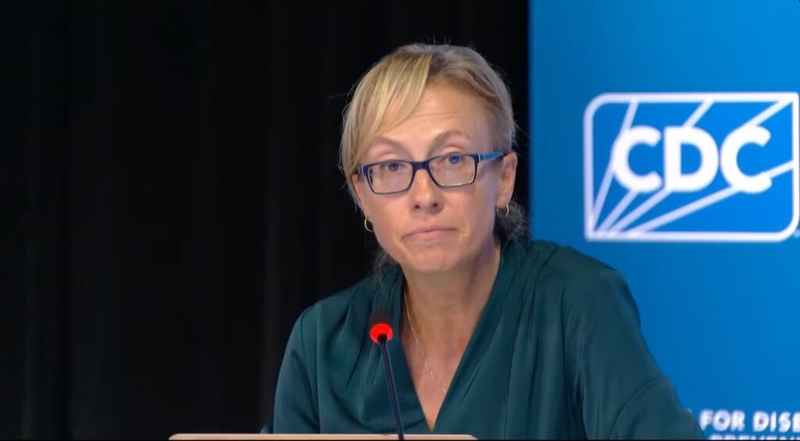
Dr. Evelyn Griffin, a Baton Rouge obstetrician and gynecologist, was announced Monday, Dec. 8, 2025, as Louisiana's next surgeon general. She is an appointee of U.S. Health Secretary Robert F. Kennedy Jr. to a vaccine advisory panel at the Centers for Diseason Control and Prevention. (Screen capture of CDC video stream)
Louisiana’s next surgeon general is a Baton Rouge physician who U.S. Health Secretary Robert F. Kennedy Jr. chose for a panel that’s implementing his anti-vaccine policy recommendations.
Dr. Evelyn Griffin, an obstetrician and gynecologist, has also aligned herself with Republican Gov. Jeff Landry’s stances on the COVID-19 vaccine and abortion.
The governor’s office announced Griffin’s appointment Monday. She will replace Dr. Ralph Abraham, the state’s first surgeon general who Kennedy recently picked for the No. 2 post with the U.S. Centers for Disease Control and Prevention.
“Dr. Evelyn Griffin embodies the expertise and commitment that the people of Louisiana deserve in a Surgeon General,” Landry said in a statement. “Her clinical experience, her leadership in advancing maternal health, and her dedication to strengthening the doctor-patient relationship make her the exact right choice for this role. With Dr. Griffin stepping in, I’m confident Louisiana is in good hands and headed toward a healthier, stronger future,”.
In late September, Kennedy picked Griffin for the CDC’s Advisory Committee on Immunization Practices, making her one of his replacements after he removed all 17 prior members in June. Its new lineup voted Friday to update decades-old guidelines that called for newborns to be vaccinated for hepatitis B at birth.
Griffin sided with the majority in the 8-3 vote, which will be up to acting CDC director Jim O’Neill to adopt. Its revised policy calls for the vaccine at birth only for children whose mothers test positive for the disease. Otherwise, the first dose is recommended to be delayed until the child is two months old.
During debate over the matter, Griffin made a connection between hepatitis levels in the U.S. and immigration.
“We have had years of illegal immigration, undocumented people coming in from higher endemicity countries,” she said.
U.S. Sen. Bill Cassidy, R-Louisiana, a physician with a specialty in hepatology, criticized the panel’s decision in a social media post and urged O’Neil not to accept the panel’s recommendation.
“As a liver doctor who has treated patients with hepatitis B for decades, this change to the vaccine schedule is a mistake,” Cassidy wrote on X. “The hepatitis B vaccine is safe and effective. The birth dose is a recommendation, NOT a mandate.”
“This will make America sicker,” added Cassidy, who chairs the U.S. Senate health committee and cast the deciding vote earlier this year to approve President Donald Trump’s nomination of Kennedy as health secretary.
In the same meeting where she voted on hepatitis B vaccine policy revisions, Griffin made a presentation to committee members on the use of aluminum in vaccines as an adjuvant, which is intended to improve their efficacy. Aluminum-based adjuvants are commonly used in childhood immunizations for hepatitis B, the human papilloma virus and diphtheria-tetanus-pertussis (DTaP).
Kennedy has claimed aluminum in vaccines is linked to autism and food allergies, though multiple studies have disputed that claim and shown no harmful accumulation or harmful effects from aluminum adjuvants. They include research published in July that studied more than 1.2 million children in Denmark from 1997-2018.
Griffin said her presentation was intended to inform members of the advisory committee ahead of the possible formation of a workgroup focused on adjuvants that could make recommendations about their use in vaccines.
The December meeting was Griffin’s second as a member of the CDC’s Advisory Committee on Immunization Practices. At her first meeting in September, she voted with the majority on a resolution to recommend ending the use of a combination vaccine for measles, mumps, rubella and chicken pox given to children before age 4. Instead, the committee suggests doctors administer the MMR and chicken pox vaccines separately. The vote followed a presentation of research that showed a slightly increased chance of fever-related seizures in children who received the four-component vaccine compared with those who received two separate shots.
Griffin previously weighed in on vaccine policy at the state level after former Gov. John Bel Edwards issued an executive order in 2021 that required students 16 and older to provide proof of the COVID-19 vaccine in order to attend school. Landry, who was attorney general at the time, joined anti-vaccine forces to have the order repealed, even though families were allowed to claim exemptions to the rule.
At an April 2022 legislative hearing on a resolution to repeal Edwards’ order, Griffin told lawmakers “the average kid in Louisiana has a higher chance of getting struck by lightning than dying of COVID,” a claim that vaccine proponents called into question.
In her introductory speech as a new member of the CDC advisory committee in September, Griffin said she had received the COVID-19 vaccine.
“In my clinical practice in obstetrics, I had been part of initiatives for maternal immunization, including diphtheria, pertussis and tetanus,” Griffin said. “And in my overall practice, I feel like, if I was to be given a label, I would call myself pro-informed consent because of medical ethics for discussing risk, benefits and alternatives with the patient.”
Abraham offered a similar informed consent explanation when justifying his decision to forego state health department campaigns to promote and administer the flu vaccine.
Griffin has also made public statements in support of Louisiana’s abortion ban, considered one of the nation’s strictest, that went into effect after the U.S. Supreme Court overturned Roe v. Wade in June 2022.
In May 2023, Griffin appeared before the Louisiana House Committee on the Administration of Criminal Justice to oppose a bill that would have removed a 15-year prison term and reduced a $200,000 fine for medical professionals who performed abortions. Some doctors expressed concern the state’s abortion law would result in them facing criminal charges if a colleague did not agree when a pregnancy is medically futile, a requirement to allow an emergency abortion to be performed. The proposal, sponsored by Rep. Aimee Freeman, D-New Orleans, would have allowed a single doctor to decide when an emergency abortion is warranted.
“Our current law is not penalizing doctors who are administering standard medical care, only those who are intentionally performing abortion,” Griffin told lawmakers, who shelved the Freeman bill without taking a vote.
Griffin has also collaborated with Louisiana Right to Life, appearing in one of its social media broadcasts to explain the post-Roe landscape for reproductive health care providers. She also joined a dozen other Louisiana doctors in signing a statement “to provide clarity that Louisiana Pro-Life Laws protect physicians’ ability to care for their patients.” The letter addresses what it calls “misinformation” and “false narratives” that have circulated since Roe v. Wade was overturned.
“Together, let’s ensure the public knows that women’s necessary healthcare is not at stake and move forward with protecting unborn babies and their mothers,” the statement reads.
Lift Louisiana, a reproductive rights organization, expressed disappointment over Griffin’s appointment as surgeon general.
“In a state with such dismal public health outcomes and one of the highest maternal mortality rates in the country, it is reckless to appoint someone to this position that isn’t committed to evidence-based public health policy,” said Molly Thornton, Lift Louisiana’s communications director.
This report was updated to include comments from Lift Louisiana.
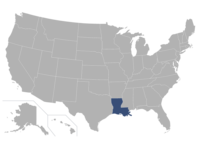
Baton Rouge, LA