In Alaska ecosystems, powerful forces hide in plain sight
Nov 26, 2025 | 5:00 pm ET
Description
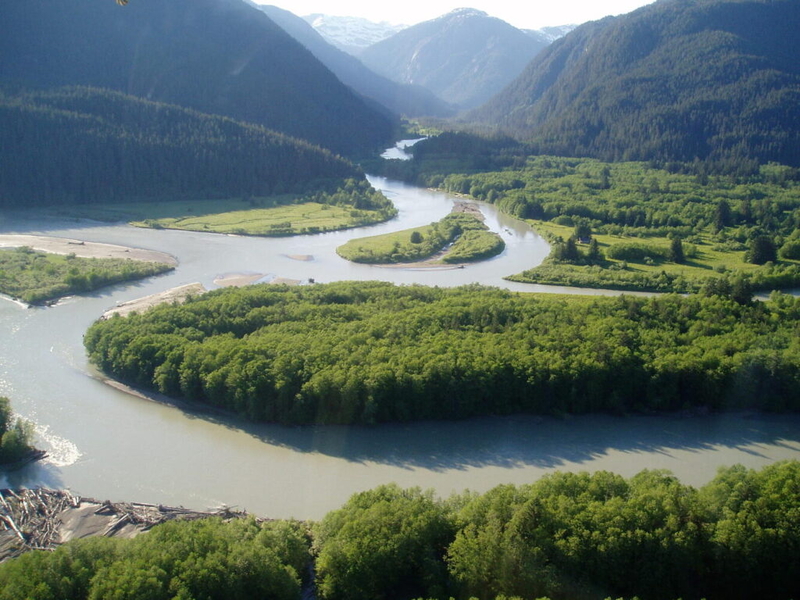
Unuk River is one of the transboundary watersheds of Southeast Alaska. (U.S. Geological Survey Alaska Science Center photo)
After the remnants of Typhoon Halong devastated communities in Western Alaska last month, you might have been jolted into remembering that forces beyond our immediate control govern the planet. A combination of wind, gravity, planetary rotation and uneven heating of the Earth’s surface can result in destructive storms and, in worst-case scenarios, a tragic loss of life.
While we’re right to be gravely concerned about climate change in Alaska, we can also appreciate that the powerful natural phenomena operating around us are often simply doing the quiet work of keeping our ecosystems humming — by transporting water, nutrients and atmospheric gases from place to place. The result is a bountiful suite of ecosystem services: fish and game that fill our freezers, vibrant landscapes for recreation and spiritual renewal, foundations for Indigenous culture and the economic engines of fishing and tourism.
In Southeast Alaska, a coastal temperate rainforest flourishes with help from natural phenomena such as warm ocean currents, mid-latitude wind patterns and mountains. Though the combined effects are easy to see — towering trees and waters brimming with seafood — their machinations often appear invisible to the human eye, operating on scales too vast or microscopic to detect… until we look deeper to find what’s hiding in plain sight. Consider the following:
Tectonic motion. Over millions of years, tectonic motion — the shifting of the Earth’s crust — has helped shape a mosaic of aquatic habitats in Southeast Alaska. Picture rivers and streams gushing down mountainsides or meandering lazily across valley floors. Five species of salmon thrive in this mosaic today, with populations often genetically tuned to their particular habitat. Genetic diversity among salmon populations means higher species survival rates in a changing climate.
Glacial ablation. It’s no secret that glaciers in many parts of Alaska are melting. Glacial melt, also called ablation, is a culprit behind dangerous outburst floods and global sea-level rise. But there can be a flipside. In the transboundary Taku River watershed, for example, ablation is driving a massive ecosystem transformation with new salmon-accessible habitat emerging in pro-glacial streams. Scientists believe these waterways could begin housing Pacific salmon in as little as 15 years. As salmon habitat shrinks in other watersheds on the West Coast, glacial ablation in many Southeast Alaska ecosystems is expanding it.
Big tides. The Stikine River Delta is a major Pacific Flyway stopover for migrating shorebirds, possibly due to nutrient-rich biofilm on its mudflats. These oozing banks are expansive due to big tides that lay bare a spacious coastal table and invite famished birds to gather. While data shows that shorebirds are imperiled by habitat destruction elsewhere, they still find refuge in the Stikine where high-quality food and migratory habitat are on offer when ocean margins vanish into the distance.
Variable light conditions. Are you a seafood lover? If so, thank a rainforest cloud. In Southeast Alaska, coastal waters are often in flux when it comes to the availability of sunlight, and that could be helping fish build necessary fat stores. Research shows that variable light conditions, which can affect photosynthesis in addition to water temperature, salinity and, most crucially, nutrient levels, might be an on-switch for the production of essential fatty acids in diatoms, jumpstarting a food web that supports salmon, black cod and other species rich in omega-3 oils.
Hydrogen bonds. The Southeast rainforest is full of water — in obvious places like rivers and streams, but also in less obvious ones such as soil and vegetation. Due to hydrogen bonds, water can absorb large amounts of energy with only a small temperature increase. The result is a sweeping heat sink that cools the surrounding environment, especially when massive conifers undergo the daily process of evapotranspiration which pulls moisture vertically through the landscape. Requiring no electrical outlets or utility bills, this natural air conditioning system is provided free of charge.
In Southeast Alaska, a host of natural phenomena keep the ecosystem — and its human communities — humming. People do their part for the ecosystem, in turn. Indigenous citizens bring traditional knowledge to natural resource management, like that of Pacific herring. Other problem-solvers work to ensure cruise-ship tourism is more sustainable by promoting a switch from heavy fuel oil to cleaner marine gas oil.
Want to do your part, wherever your ecosystem may be? Start by simply seeing the world you inhabit a little differently. Whether it’s a receding tide, a mercurial cloud or the tremblor beneath your feet, the powers around you are invisible only until you take a closer look.
Juneau