Citizens Research Council: Trump tax, spending plan will mean $1.1B hit to Michigan budget
Jul 30, 2025 | 12:11 pm ET
Description
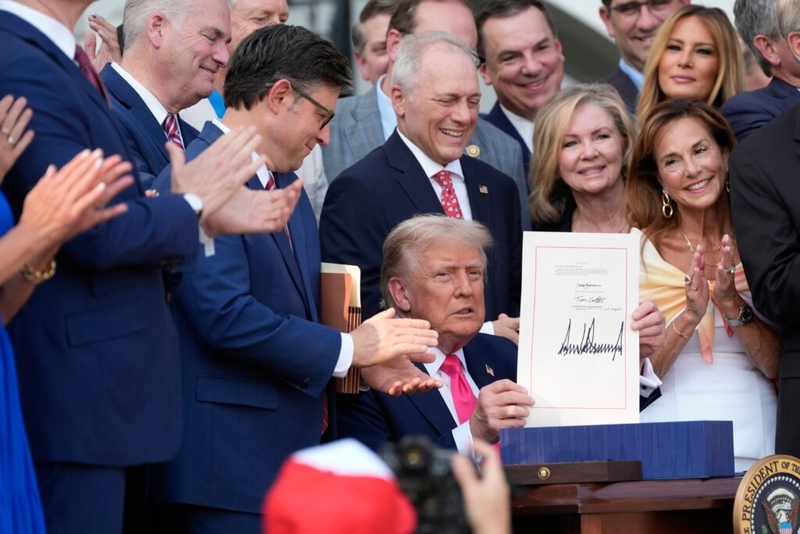
President Donald Trump holds up the "One Big Beautiful Bill Act" that was signed into law during an Independence Day military family picnic on the South Lawn of the White House on July 4, 2025 in Washington, D.C. (Photo by Alex Brandon - Pool/Getty Images)
A federal shift in cost-sharing with the states outlined in President Donald Trump’s controversial One Big Beautiful Bill Act will create a billion-dollar budget hole for Michigan, the Citizens Research Council of Michigan said in a new report.
An analysis of the federal budget bill was released by the organization on Wednesday.
One of its top-line findings was that the state budget currently being hashed out by Michigan lawmakers will see spending have to increase to more than $1 billion by the 2032 fiscal year to make up for federal cuts to Medicaid and the Supplemental Nutrition Assistance Program, or SNAP.
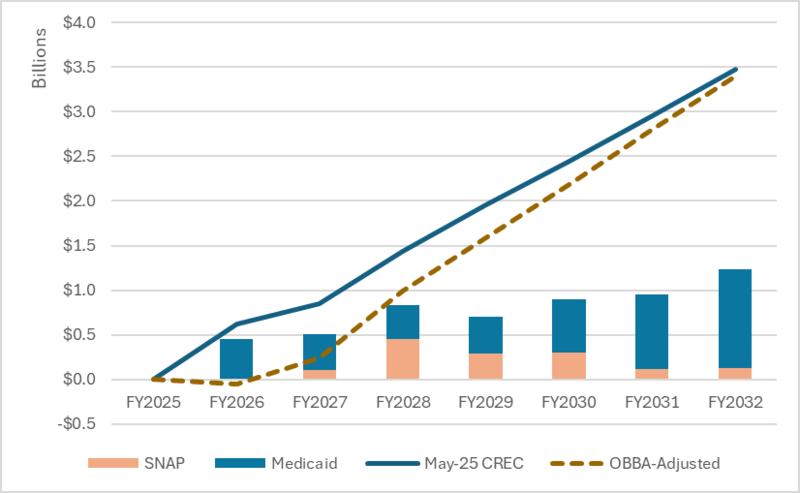
The bill also implements a favorable tax scheme for certain business expenditures under the federal corporate income tax, and those changes could have ripple effects on Michigan’s corporate income tax collections. That could lead to a large and immediate revenue decline – an estimated $677 million revenue reduction by the 2026 fiscal year.
SBN2025-01-OBBBA_and_its_Impact_on_Michigans_BudgetThose factors could ultimately lead the state to cut $1.1 billion in General Fund appropriations from the governor’s 2025-26 budget recommendations. By the 2032 fiscal year, the federal budget’s provisions would be on track to absorb around 40% of Michigan’s expected General Fund revenue growth.
“For years since the onset of the COVID-19 pandemic, Michigan experienced an unexpected state revenue high driven largely by federal stimulus initiatives,” Robert Schneider, senior research associate for state affairs and lead author of the report, said in a statement. “Even before OBBBA, it was evident that those days were coming to an end and state revenue growth was returning to pre-COVID trends.”
With the enactment of the federal budget bill, Schneider said Michigan now faces an added budget challenge that will be particularly severe over the next few budget cycles.
“State lawmakers should get to work on developing a budget plan that considers these new realities,” Schneider said.
Lansing, MI