The heat is on for solar panel retailers as state rolls out new registry, regulations
May 01, 2025 | 4:49 pm ET
Description
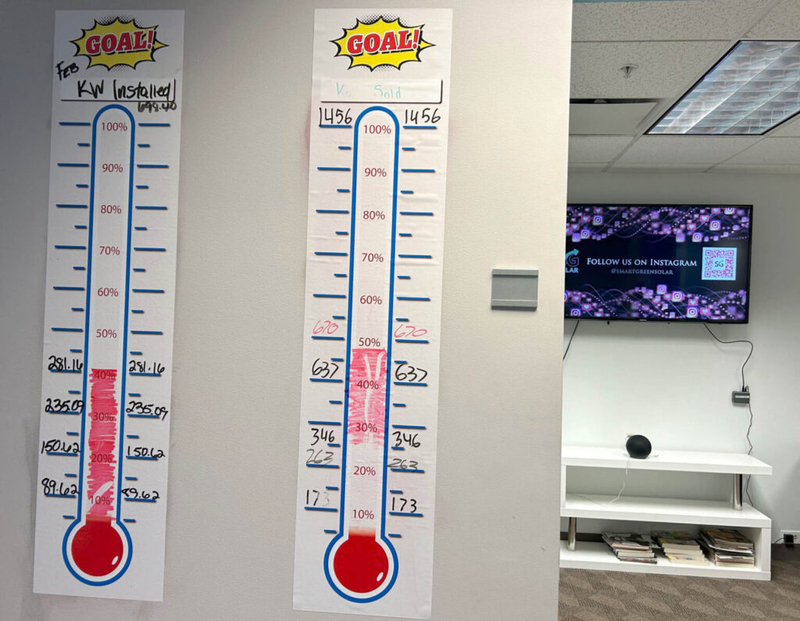
Signs chart the progress in meeting sales goals at Smart Green Solar's fifth floor office in downtown Providence in the spring of 2024. The Rhode Island Office of Attorney General has a lawsuit pending against the company over alleged 'deceptive conduct.' (Photo by Nancy Lavin/Rhode Island Current)
The state is shining the spotlight on solar panel sales companies, with a new law and registry system taking effect Thursday that holds retailers accountable for door-to-door sales tactics, financial disclosures, and contract terms.
The updated state regulations and new, online public registry system reflect legislation passed during the 2024 legislative session and signed into law by Gov. Dan McKee on June 10. Consumer complaints over solar panel sales skyrocketed in recent years, with a majority directed at one company being sued by Rhode Island Attorney General Peter Neronha’s office for allegedly preying upon and deliberately misleading senior and disabled residents.
The 2023 lawsuit against the company, Smart Green Solar, and its CEO, Jasjit Gotra, remains pending in Providence County Superior Court.
Accused of deceptive practices, R.I. solar company CEO operates in unregulated business climate
Meanwhile, complaints against Gotra and Smart Green are still piling up. More than half of the 116 solar sales-related complaints logged with the AG’s office pertain to Smart Green. Another 25 of the 35 complaints submitted from January through March 2025 are directed at the same company, according to information from the AG’s office.
Which is why state regulators are turning to a registry, and new code of regulations, to prevent other potential bad actors from taking advantage of consumers.
“Rhode Islanders want to do their part to mitigate climate change, but they are rightfully weary of being taken financial advantage of in the solar sales space, as my Consumer Protection Team knows all too well,” Neronha said in a statement. “Today’s launch of the Solar Sales Registry is a significant step in putting much needed guardrails on the industry, so that consumers aren’t disincentivized by the deceptive behavior of certain companies. I look forward to seeing the implementation of this registry and am certain it will help move Rhode Island closer to meeting our climate goals.”
Like other licensed industries regulated by the Rhode Island Department of Business Regulation, the department is relying on consumer complaints to inform enforcement, said Elizabeth Dwyer, department director.
As of 3 p.m. Thursday, Dwyer had yet to hear from any aggrieved solar company customers. But if and when she does, the department stands ready to investigate. Violators could face fines of up to $5,000, along with cease-and-desist orders.
New rules limit hours for door-to-door solar sales from 10 a.m. to 8 p.m. unless appointments outside those hours are pre-arranged. There is also a required financial disclosure form prior to any signed contracts, listing names and contact information for solar sales representatives, financers, and installers. A chief complaint voiced by Smart Green customers in interviews with Rhode Island Current was the inability to reach Gotra or other company representatives after signing a contract, even if problems arose.
The regulations also codify the seven-day window for customers to cancel signed contracts, which is standard to other industries. Sales companies are also required to make a “good faith estimate” on project costs and expected energy savings.
“Rhode Islanders deserve transparency and accountability when it comes to solar energy sales—that’s exactly what this new program delivers,” McKee said in a statement. “My administration is committed to protecting consumers while continuing to support the growth of clean energy in Rhode Island.”

‘Our goal is to be as reasonable as possible’
Separate from the immediately enforceable sales regulations, DBR has also launched a public-facing registry. Companies that sell solar panels in Rhode Island must pay $750 to register, and renew their registration each year for the same cost.
There is no firm deadline by which companies must complete registration. Dwyer said Thursday she expects the department will begin taking action within 30 to 60 days if it finds out eligible retailers failed to sign up.
“Our goal is to be as reasonable as possible,” she said. “The purpose is to get as many people as possible to sign up.”
The public portal does not show any registered companies as of Thursday, though applicants must be approved before their information is posted online.
Registered companies risk having their licenses revoked if they violate any of the state’s rules around sales practices and contract terms.
Dwyer estimates fewer than 50 solar panel companies are subject to the registry requirements, which do not extend to individual salespeople. The department plans to oversee the new licensing and enforcement rules with its existing staff, and is using software with a contracted vendor, Tyler Technologies, for the online registry.
“There are some costs, but they are interior costs,” Dwyer said, referring to legal and licensing advice. “We felt this was a small enough group, we could absorb it into our current workload. We will reevaluate if we feel there’s a need.”
The department sent emails to solar panel sales companies over the past few weeks to inform them about the registration launch. So far, no one has complained to Dwyer about the cost to register, or other rules, she said.
Gotra, who denounced the registry and accompanying regulations last year as a barrier to achieving the state’s decarbonization goals, did not respond to inquiries for comment Thursday.
A consent order entered on March 14, 2024, in the state’s lawsuit against Gotra and Smart Green stipulates Gotra must “refrain” from misrepresentations in his interactions and marketing to customers, along with other disclosures, until the case is adjudicated or settled. A procedural hearing on the case is scheduled for May 8, according to the public docket.
Providence, RI