Committee rejects efforts to stymie development of Sears Island wind port
Mar 19, 2025 | 4:51 pm ET
Description
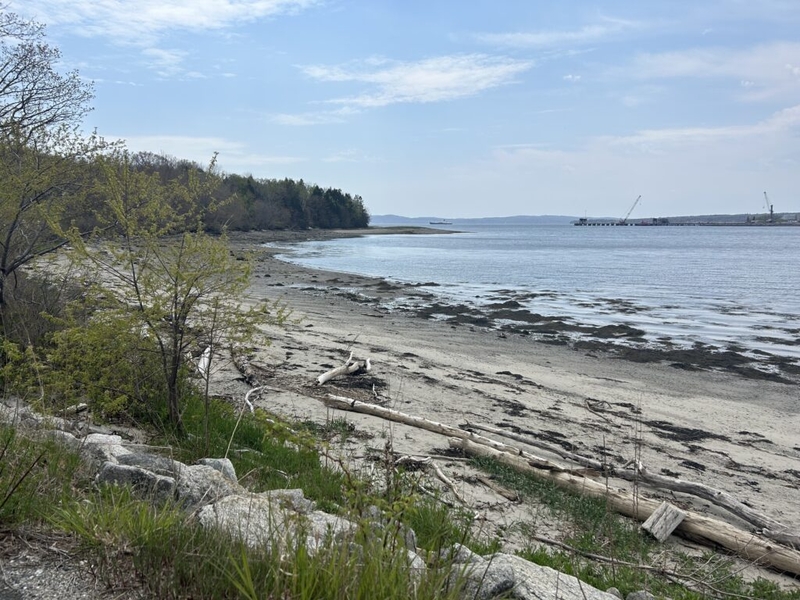
Sears Island in Searsport, the potential home of the new offshore wind port. (AnnMarie Hilton/Maine Morning Star)
The Legislature’s Environment and Natural Resources Committee voted down two bills that would have put up roadblocks to the state’s effort to develop an offshore wind port on Sears Island.
Outside of the debate around developing offshore wind, a bipartisan majority of the committee feared the bills would squash the potential for any future economic development on the island.
Last year, the state made clear that Sears Island is its preferred location for a new port to support a budding offshore wind industry. Rep. Reagan Paul (R-Winterport) brought these bills forward after a reelection campaign that emphasized her desire to save the currently undeveloped island in her district.
In 2009, the state placed two-thirds of Sears Island, about 600 acres, into a permanent easement. The state plans to leave that portion untouched by the port, which will be built on roughly 100 acres outside of the protected area.
LD 226 proposed extending that conservation easement to cover more of Sears Island, including a portion that has been reserved for port development by the Maine Department of Transportation. The committee voted against this bill 10-2, with one member absent.
The state-owned land on the island is protected under the Natural Resources Protection Act, which prohibits new or expanded structures on coastal sand dunes. A bill last year sought to authorize the Department of Environmental Protection to grant an exception for the site, so long as all other applicable permitting and licensing criteria are met. The proposal drew strong pushback from local conservation and Indigenous groups and initially divided lawmakers, but eventually prevailed and was ultimately included in the supplemental budget passed last session.
Reagan’s other bill, LD 735, would roll back those efforts from last session and impose limits on who could propose similar legislation in the future. The committee voted against that bill 9-3, with one member absent.
In addition to concerns raised by the committee’s legislative analyst that aspects of the legislation could conflict with the state constitution, committee co-chair Sen. Denise Tepler (D-Sagadahoc) said she opposed the bill because she was informed that Wabanaki leaders weren’t consulted, despite the proposal including the establishment of an Indigenous lands protection committee.
Despite the overwhelming vote recommending against passage of the bills, they still advance to the full Legislature, beginning with the House of Representatives.
Lawmakers worry bill would ‘close a lot of doors’
The state is in the preapplication phase for developing a wind port on the island, said Matthew Burns, deputy director of the Office of Freight and Business Logistics for the Department of Transportation. Design work is a little over halfway complete, but Burns said the state doesn’t anticipate submitting permit applications until there is more clarity about how the project would be funded.
After conversation digressed into details about what dredging would be necessary for port construction, Tepler reminded the committee that LD 226 is not actually about a port.
“This bill is about voiding the ability of the Department of Transportation to use a small piece of Sears Island — or a third of the island that they own — for any possible future development,” Tepler said.
Given that, she asked the committee to refrain from further conversation about building a potential wind port when discussing that bill.
Rep. William Bridgeo (D-Augusta) said it is “vitally important” to preserve the island’s potential for economic development given that the other major ports in the state are either built out or logistically challenging.
“It would not be prudent for the state to relinquish its ability…to utilize that piece of land for open-ended purposes,” he said.
While she appreciates conservation concerns, Sen. Stacy Brenner (D-Cumberland) agreed that the land should be left open for economic development opportunities in the future. Shutting that off would “close a lot of doors,” she added.
Augusta, ME