NC Supreme Court dismisses lawsuit trying to save Asheville Confederate monument
Mar 22, 2024 | 3:43 pm ET
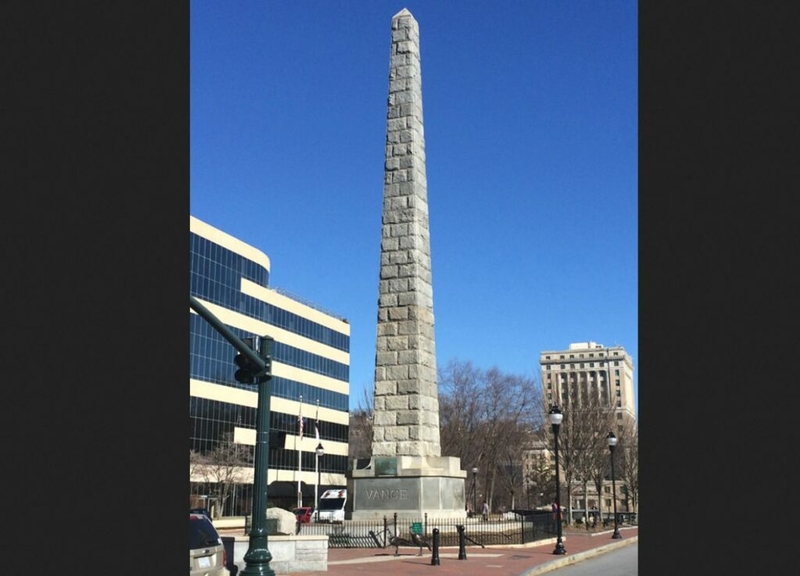
Description
Zebulon Vance Monument in Asheville. Photo courtesy of Natasha Smith.
The North Carolina Supreme Court dismissed a lawsuit Friday afternoon that had been attempting to save a Confederate monument in Asheville.
The Society for the Historical Preservation of the 26th North Carolina Troops sued to stop the city’s removal of a 75-foot-tall monument to Zebulon Vance, a Confederate and two-time governor who also served in the U.S. Senate, and potentially force them to re-erect it.
In oral arguments, an attorney for the preservationists told the Supreme Court the case was about three issues: the Monument Protection Act, a law that prohibits the state from removing a monument without the North Carolina Historical Commission’s approval; whether the historical preservation group has the right to make their case in court; and whether cities and the executive branch are bound by the Monument Protection Act to enforce the law, or if private interest groups must do it.
Those in favor of removal, meanwhile, said the statue’s presence would stand as a continual symbol of white supremacy. The statue’s removal is another chapter in a broader national reckoning about the place Confederate monuments have in conscientious communities searching for ways to topple the vestiges of slavery — or protect public safety from clashes and protests at the sites of these markers.
The Supreme Court did not base its decision on the bulk of those arguments. In a 12-page unanimous ruling, Associate Justice Philip Berger Jr.’s opinion affirmed lower courts’ decisions that the historical society did not have standing to sue.
Berger wrote that the Supreme Court’s precedent does not mean people or organizations cannot in the future challenge the removal of Confederate monuments, but if they don’t meet certain legal thresholds then their cases can be dismissed.
The preservationists’ lawyer argued before the Supreme Court that the society had had an agreement with the city to restore the monument, contending that removing the monument would breach that contract. Berger wrote in his opinion that the society “abandoned the breach of contract claim in its appeal to this court,” which meant they did not sufficiently argue their reasoning to contest the monument’s removal.
Click here to read the Supreme Court’s ruling.
This is the second time this week a state court has issued a ruling on a Confederate monument. On Tuesday the Court of Appeals ruled that Alamance County officials must leave a Confederate soldier monument standing in front of the county courthouse in Graham because state law forbids its removal.

Raleigh, NC