The road not yet taken: Washington Bridge troubles highlight need for a long-term funding solution
Mar 04, 2024 | 5:30 am ET
Description
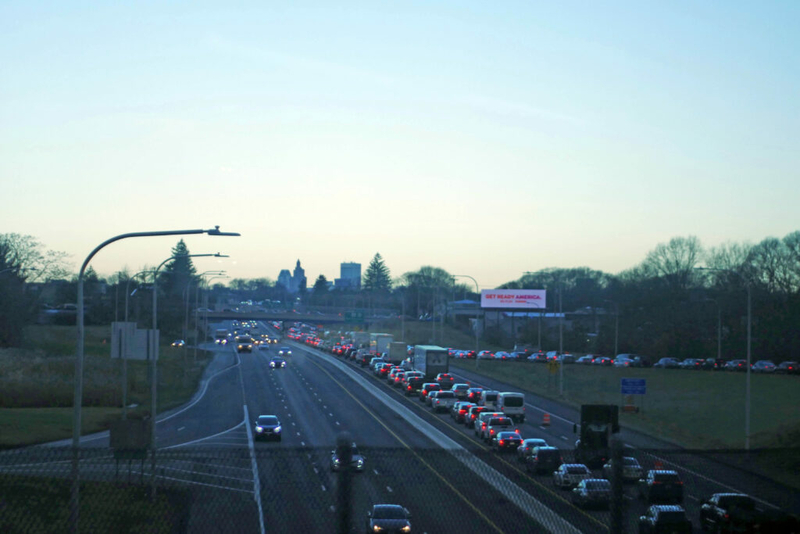
Traffic is backed up on I-195 West at Route 114 at around 7:30 a.m.on Wednesday, Feb. 7, 2024, because of the partial closure of the Washington Bridge. (Alexander Castro/Rhode Island Current)
Editor’s note: This is the third installment of four commentaries from Rhode Island Public Expenditure Council President & CEO Michael DiBiase on Gov. Dan McKee’s proposed fiscal 2025 state budget.
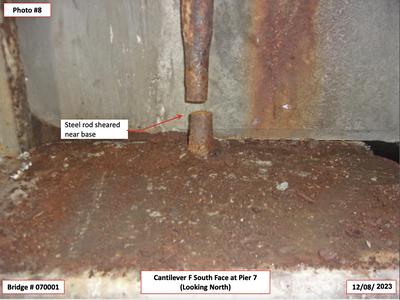
The prospect of repairing or fully replacing the Washington Bridge has created greater urgency to address Rhode Island’s diminishing ability to pay for its transportation infrastructure. Whatever the path forward, the bridge project is almost certain to cost more than the $78 million for repairs already underway when the structure was suddenly shut down in December.
Unfortunately, the Washington Bridge is only one of a long backlog of transportation projects in need of funding. While the state has been chipping away at the list, Rhode Island still has 169 additional structurally deficient bridges — about 14% of the state’s total — that have been rated poor by the Rhode Island Department of Transportation (DOT). Rhode Island’s bridges are in such disrepair, one national study ranks the state third worst in bridge quality among the 50 states. Rhode Island roads fair no better, ranking second worst. Adding to the pressing demands to improve our bridges and roads are persistent financial problems at the quasi-public Rhode Island Public Transit Authority (RIPTA). RIPTA faces a substantial deficit of $18.6 million in fiscal year (FY) 2025 — representing approximately 13% of its operating budget — and the agency projects increasing deficits in future years.
Fortunately, the federal Infrastructure, Investment, and Jobs Act (IIJA), passed by Congress in 2021, authorized substantial increases in federal transportation funding. Beginning in FY 2022, Rhode Island’s federal allocation increased by approximately $100 million and has continued to increase each year. There is also the potential for a special allocation of federal funding to repair or replace the Washington Bridge. However, federal funding for transportation typically requires a state contribution of 20% to match 80% of funding supplied by the federal government. As a result, state funding needs are increasing — for FY 2025, Rhode Island will need to provide $90.1 million in state funding, an increase of $24.3 million over FY 2021. Any special federal allocation for the Washington Bridge also would most likely require additional state matching funds.
To fund its required federal match, Rhode Island relies on dedicated revenues. The primary source of this funding is from the gas tax, with additional revenues from motor vehicle fees, capital funds, bridge tolls and, until suspended by a federal court ruling, truck tolls. These sources provide funding for DOT, the Turnpike and Bridge Authority, as well as subsidies for RIPTA. While the need to invest in Rhode Island’s bridges, roads, and transit grows, and the state’s federal matching requirements increase, Rhode Island’s main funding sources are becoming less reliable.
Revenues from the gas tax are projected to decline, even with scheduled tax increases, by nearly $10 million from FY 2024 to FY 2028. Downward pressure on the gas tax is due in part to the number of Rhode Islanders opting for hybrid or electric vehicles — a trend that the state has incentivized through climate policies and tax rebates. In addition, the state’s commercial truck toll program, which successfully brought in $38.4 million annually at its peak in 2022, was deemed unconstitutional and suspended by the U.S. District Court in September of that year. The case is currently on appeal.
While the need to invest in Rhode Island’s bridges, roads, and transit grows, and the state’s federal matching requirements increase, Rhode Island’s main funding sources are becoming less reliable.
Despite pressures for a sustainable plan for raising transportation revenue, no such plan was included in the governor’s proposed FY 2025 budget. And while the Senate Finance Committee heard testimony from Syracuse University on projected declines in gas tax revenue in 2023, no legislation has been introduced on this issue so far in the General Assembly. In last year’s budget, the Legislature, per the governor’s recommendation, provided $70 million in one-time federal money to backfill lost truck toll revenue for FY 2023 and FY 2024, but the funding gap is not addressed in the governor’s FY 2025 proposed budget. Additionally, the governor has proposed to use $10 million in one-time federal money to address the deficits at RIPTA, but this falls short of filling the projected deficit and does not represent a sustainable source of funding going forward.
The financial pressures created by the Washington Bridge have spotlighted the need for a viable transportation funding plan for the Ocean State. To take advantage of the available increases in federal transportation aid and address declining gas tax and suspended truck toll revenues, as well as providing necessary funding for RIPTA, Rhode Island needs a long-term solution. The state should consider alternatives pursued by other states like road usage charges, electric vehicle charging fees, increased registration fees for hybrid/electric vehicles, or tolls (especially if the state is unsuccessful in its appeal of the ruling in the truck toll court case).
Providence, RI