SC’s mothers need more than congratulations
Nov 19, 2026 | 8:30 am ET
Description
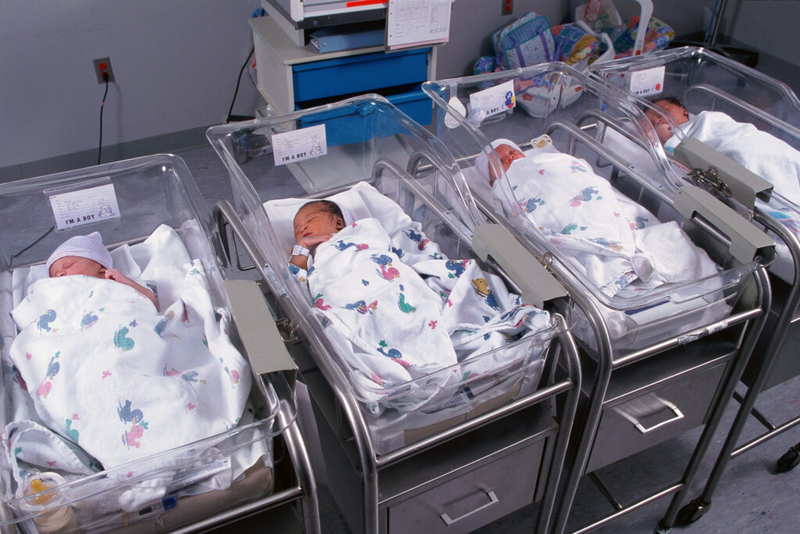
State law guarantees workers of state agencies, colleges and K-12 school districts up to six weeks of paid leave to care for their newborns. Many new moms in South Carolina get no paid leave. (Diane Macdonald /Stockbyte/Getty Image)
I was sitting in my OB-GYN’s waiting room after having my fourth baby when I overheard a conversation I still cannot shake.
A new mother was on the phone, pleading with the receptionist to sign her return-to-work paperwork. The receptionist said she could not legally sign it. At two weeks postpartum, it was not safe.
But the mother would not accept that answer. She needed to go back. She had to go back.
I understood her desperation. But I worked from home, with flexibility and help. Even then, I pumped during Zoom meetings, paced through phone calls with a baby strapped to my chest and scheduled therapy for perinatal depression and anxiety, all while working and caring for a newborn.
If it was hard for me, with every advantage, what must it have been like for the mother who had none?
I keep thinking about what she needed that day: time to recover and enough income to stay home with her baby. Instead, she was pleading for permission to return to work two weeks after giving birth.
SC law extends paid parental leave to temporary workers, ensures time off for stillbirths
South Carolina has begun to address the issue.
In 2022, legislators guaranteed eligible state employees six weeks of paid leave after giving birth. School district employees were included in that protection in 2023.
South Carolina also requires pregnancy-related workplace accommodations and protections for expressing breast milk at work.
We should celebrate these meaningful advances.
Unfortunately, the House’s effort to expand leave to 12 weeks did not pass the Senate.
And public-employee benefits do not guarantee paid leave to mothers who are employed in the private sector.
An estimated three out of four South Carolina workers do not have access to any employer-provided paid family leave, according to an analysis released in February by the National Partnership for Women & Families.
In South Carolina, paid family leave remains the exception.
One study found that paid leave reduced mothers’ postnatal depressive symptoms by nearly 30%. Research also links it with longer breastfeeding, fewer infant hospitalizations and greater employment stability, reports the Society for Research in Child Development.
SC House tries again with 12 weeks of paid parental leave for state workers
Access follows a stark economic divide.
Nationwide, only 5% of the lowest-paid workers have employer-provided family leave. Among low-income working mothers, 76% lose pay when they miss work to care for a sick child, twice the rate among mothers with higher incomes.
The women who can least afford to miss a paycheck are the least likely to receive paid time to care.
In my work alongside vulnerable families, I’ve seen how quickly the bills pile up after a baby is born.
Without paid leave, a mother may fall behind on rent or face having her electricity shut off while she is still recovering from childbirth. Returning to work brings other expenses, especially
childcare, and missing a shift to care for a sick baby can put her job at risk. It feels impossible to recover when you’re worried about keeping your family housed and fed.
The event meant to celebrate new life becomes the beginning of a crisis.
South Carolina’s maternal and infant health outcomes are devastating.
In 2024, we lost 441 babies before their first birthday; a shocking toll in a state with one of the nation’s highest infant mortality rates.
Based on data from 2020 to 2024, South Carolina ranked 40th out of 47 states with available data on maternal mortality.
In a separate review of pregnancy-related deaths in 2022–23, the state found that 86% were preventable.
As maternal mortality rises, SC report suggests ways of increasing health care access
Our mothers and babies are desperately in need of more support.
Scripture repeatedly uses the relationship between a mother and her child to describe the faithfulness of God.
In Isaiah, God asks, “Can a mother forget the baby at her breast?”
The image is familiar to anyone who has cared for a newborn who needs to be fed and held around the clock. Yet the caregiving that Scripture elevates as sacred is the same work our society expects mothers to squeeze around paid time-off balances, shift schedules, unanswered emails, and bills that cannot wait.
The image draws its power from a bond we instinctively understand: a newborn is utterly dependent, and a mother’s care is constant.
We celebrate babies. We congratulate new parents. We call children our greatest blessing.
Then we accept an economy that treats a newborn’s dependence as an inconvenience and caring for another human being as less valuable than almost any other work.
Caregiving has never been secondary work. It makes all other work possible. Every teacher, physician, mechanic and elected official was once an infant whose life depended on someone willing to feed, comfort, protect and love them.
On the Jericho Road, the Samaritan did not simply stop to bandage a stranger’s wounds. He paid for his continued care and promised to return for whatever more was owed. He tethered
himself to another person’s recovery.
Perhaps that is the deeper lesson: care is not only compassion in a moment of crisis. It is the willingness to remain connected; to recognize that healing requires time, security and someone
prepared to share the cost.
I think again of that mother in the obstetrician’s waiting room, pleading to return to work because she had no other choice.
And I wonder what it would mean for a community to tether itself to the well-being of both mother and child.

Columbia