Indigent defense case returns to court as Maine on precipice of ‘constitutional crisis’
Feb 28, 2024 | 6:31 pm ET
Description
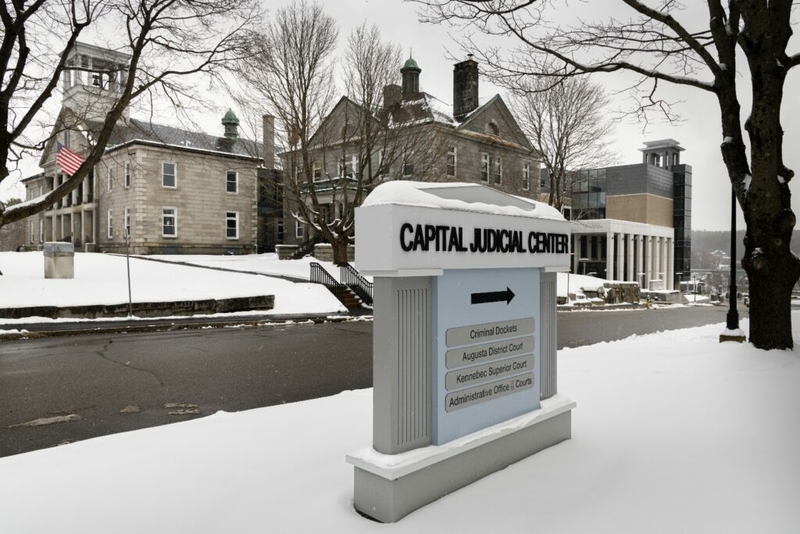
The old and new courthouses of the Capital Judicial Center in Augusta. (Jim Neuger/Maine Morning Star)
Despite extensive settlement negotiations, the ACLU of Maine will be returning to court for its case challenging Maine’s failure to provide adequate legal counsel to people who can’t afford their own attorney.
When the initial lawsuit was filed in March 2022, it focused on the failure to provide effective counsel, but “matters have become gravely worse,” according to a news release from the ACLU on Wednesday.
There are now concerns over the state’s ability to simply provide any counsel for people who may need it. The number of attorneys available to provide indigent defense has decreased, as Justice Michaela Murphy, who is hearing the case in the Kennebec County Superior Court, wrote in her order for litigation to resume.
“Maine is in the midst of a constitutional crisis of denying people the right to counsel and the right to effective assistance of counsel,” said ACLU of Maine Legal Director Carol Garvan. “A person’s liberty and experience in the legal system should never depend on their wealth.”
According to the Wednesday release from the legal rights group, nearly 400 people in Maine are currently waiting for counsel to be appointed, with roughly a quarter of them sitting in jail.
Maine Supreme Judicial Court Chief Justice Valerie Stanfill underscored the scope of the crisis in a recent report to the state Legislature outlining the current state of Maine’s judicial system.
Unlike other states, Maine contracts out indigent legal defense to private attorneys rather than relying on public defenders. That is slowly changing, with the state authorizing the hiring of more than a dozen public defenders, but Stanfill said access to lawyers for low-income defendants remains an issue and upping the pay for private attorneys to take such cases has not solved the problem.
“I hope that adding some public defenders will help, but it will be a while before we really see results,” Stanfill said earlier this month. “And in the meantime, I fear the system will indeed collapse.”
In the order, the Superior Court praised the proposed settlement to ensure the Maine Commission on Indigent Legal Service provides sufficient support, training and evaluation of defense counsel, but it also ordered the parties to address the failure to provide some people with an attorney at all.
Given that, the litigation will happen in two-phases, addressing each of those concerns. The first will focus on whether the state has denied the right to counsel by failing to provide attorneys. The second will focus on the original concerns surrounding ineffective counsel.
The court ordered the amended complaint for the first phase be filed by March 8, with an in-person hearing scheduled for 9 a.m. on March 15 at the Capital Judicial Center. The trial is set to begin the last week of June.

Augusta, ME