GOP lawmakers, businesses want vote on unemployment insurance fund replenishment
Mar 10, 2022 | 2:38 pm ET
Description
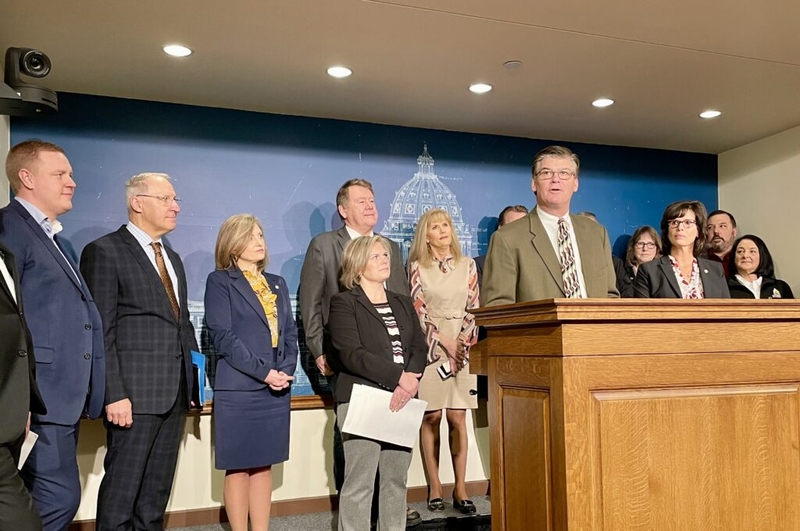
Sen. Eric Pratt, R-Prior Lake, and other GOP lawmakers speak on March 10, 2022, about the unemployment trust fund legislation they want passed. Photo by Ricardo Lopez/Minnesota Reformer
House and Senate Republicans on Thursday warned that businesses will start paying higher payroll taxes next week if lawmakers do not approve a bill to replenish the state’s unemployment insurance trust fund.
The GOP-led Senate, which has already approved a bill to replenish the UI trust fund and pay back the federal government, says the House DFL is stalling by not acting to advance the legislation.
“Put the bill on the floor, let it get a vote,” said House Assistant Minority Leader Anne Neu Brindley, R-North Branch.
The crush of unemployment claims filed during the brief recession caused by the pandemic depleted the state’s unemployment insurance fund, forcing Minnesota to borrow from the federal government.
House Democrats have recently tied passage of the UI bill to another long-stalled effort: the distribution of pandemic hazard pay. Last month, House Democrats passed a $1 billion plan to distribute as much as $1,500 to the roughly 667,000 Minnesotans who worked in health care and long term care, warehouses, meatpacking plants and other work sites where they came into contact with COVID-19.
Republicans want to fully replenish the unemployment insurance fund, but also repay the federal government, costing roughly $2.7 billion. A House DFL proposal would repay the federal government and bring the trust fund to zero, allowing it to be replenished over time with employer payroll taxes.
The House DFL plan would also make hourly school workers eligible to receive unemployment benefits during the summer months.
A spokesman for House Speaker Melissa Hortman, DFL-Brooklyn Park, said House Democrats are awaiting a cost estimate on their plan, sponsored by state Rep. Mohamud Noor, DFL-Minneapolis, before bringing that bill up for a floor vote.
Doug Loon, president of the Minnesota Chamber of Commerce, joined GOP lawmakers in calling on the House DFL to act quickly.
“This is a serious issue for the business community,” Loon said. “We are up against a deadline. (Businesses) cannot have a tax increase at this time.”

Saint Paul, MN