By Gary D. Robertson
Associated Press
RALEIGH | Health advocates thought this might be the year that North Carolina’s solid tobacco heritage would give way to the solid dangers of smoking.
President Bush had signed a buyout of tobacco farmers into law, and Virginia and Kentucky had finally given in to raising their cigarette taxes to 30 cents a pack.
But while North Carolina may ultimately raise the nation’s lowest cigarette tax, currently at 5 cents per pack, to at least that amount, the tradition of protecting the golden leaf hasn’t given way easily.
Rural lawmakers – many of them lobbied by cigarette vendors – have refused to allow colleagues from more urban areas to raise the cigarette tax by more than a quarter.
“A penny is a huge increase when the tax is 5 cents,” said Lew Starling, a lobbyist for JR Tobacco, which runs three sprawling discount stores along North Carolina interstate highways. Ninety percent of the chain’s customers are from out of state, and most come to North Carolina looking for cheap smokes.
But that an increase in the tobacco tax is even on the table is a change for North Carolina, the nation’s leading tobacco-growing state.
While the amount remains unresolved as lawmakers work to craft a budget before the end of the fiscal year this month, some kind of increase appears assured.
“Before the buyout, the farmers and the agriculture industry . . . would not hear of a cigarette tax,” said Rep. Marian McLawhorn, a Democratic quota holder from eastern North Carolina’s Pitt County. Now she hears from plenty of constituents who want it to go up. “I don’t hear the level of distress that it once was.”
Since 2001, advocates of teen smoking prevention have sought a 75-cent-per-pack increase on cigarettes sold in North Carolina, saying it was the most direct way to reduce the 23,700 children in the state who begin to smoke every year.
“This is easier than a vaccination,” said Rep. Jennifer Weiss, a Democrat who represents a suburban district outside Raleigh. “This is saying we are going to raise taxes and it’s going to reduce smoking. Boom. Just like that.”
And there are plenty of adult smokers who say a tax increase will change their habits, too.
“I won’t pay it,” 53-year-old Jackie Harris said while taking a smoke break outside the state education building in Raleigh. She and her other smoking friends have agreed, “We plan on quitting. It’s too much.”
While the benefits of a tax increase appeared so simple to supporters, the idea was largely ignored because of opposition from cigarette companies, including Winston-Salem-based Reynolds American Inc. Meanwhile, farmers had argued for years that a higher tax could further reduce demand for tobacco leaf, eroding the value of any potential buyout of the federal price-support system.
But political cover arrived last fall, when Congress finally approved the buyout, which will pay $3.9 billion to 80,000 North Carolinians.
Preparing for the transition to a new crop would later keep farmers too busy to actively oppose a tax increase.
Larry Wooten of the North Carolina Farm Bureau said “2005 is a really big transition year and a moderate-to-reasonable cigarette tax has not been on the forefront of farmers’ concerns.”
And so with state government desperate to find new sources of revenue to alleviate a $1 billion-plus shortfall and control Medicaid costs, Gov. Mike Easley recommended raising the tax to 50 cents over two years.
A poll found nearly 60 percent of those surveyed supported the idea.
“I’m trying to strike a balance between how I can get enough money to help reduce teen smoking and at the same time not make it too high for those legislators in tobacco-dependent communities, so that they vote me down,” Mr. Easley said earlier this year.
But legislators soon began hearing from lobbyists such as Mr. Starling, who told the story of JR, which moved to North Carolina from New Jersey in 1990 when the Garden State raised its cigarette tax. Legislative researchers said a 25-cent-per-pack increase would raise $142 million, but Mr. Starling told lawmakers that North Carolina’s coffers would end up losing money.
Motorists would buy cigarettes, gas and other items in South Carolina, which has a tax of 7 cents per pack, or Tennessee, at 20 cents, lobbyists argued. Mr. Starling didn’t rule out JR shuttering its outlets, which employ 800 workers, and moving elsewhere if the increase was substantial.
Peter Fisher with the Campaign for Tobacco-Free Kids in Washington calls Mr. Starling’s negative-revenue argument “absolute nonsense.”
“You can look at every state that has raised (cigarette) taxes. Revenues have gone up and stayed up,” Mr. Fisher said.
But JR’s arguments took hold. Conservative Democrats, worried that supporting any cigarette tax might make them vulnerable politically in next year’s elections, blocked anything above a 25-cent increase in the House, 10 cents less than what the Senate recommended.
Other smoking-prevention efforts have had mixed success this year at the Legislative Building, where touring schoolchildren stop at a mural that highlights tobacco’s importance to the Tar Heel state.
The House narrowly defeated a bill that would have required restaurants to set aside half of their dining space for nonsmokers, a measure already watered down from a complete ban. But a bill that would prohibit smoking inside all state prisons cleared the state Senate by a wide margin as supporters talked about attempting to reduce inmate medical costs.
All the changes, leaf loyalists admit, are signs that tobacco no longer has the hold it once did. Even at the Duke Homestead historic site in Durham, where the patriarch of the family for which Duke University is named first grew and processed tobacco, there are few visitors with relatives who can remember working the fields.
“Tobacco has become more historical than ever before,” site manager Dale Coats said. “They are really not connected to tobacco in any way.”
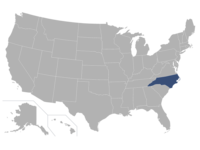
Raleigh, NC