Reporters roundtable: Ballot measures are top draw in some states
In some states, ballot measures are expected to be the main force driving voters to the polls in November. Across the country, voters will decide 145 questions during the midterms.
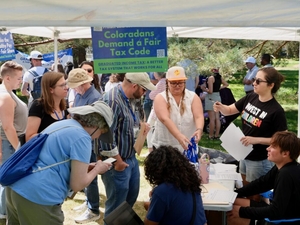
Reproductive rights are on the ballot in four states. In California, residents will decide on a “billionaire’s tax,” among other issues. Elsewhere, ballot questions could determine who has the power to initiate future questions and whether lawmakers have the power to overturn them. There’s a lot on the line.




In Episode 52, States Newsroom journalists discuss the questions before some voters and how interest in the issues might affect state-level races.
Joining the conversation are Rudi Keller, deputy editor of the Missouri Independent; Kelcie Moseley-Morris, a national reproductive rights reporter at Stateline; and Anna Claire Vollers, a staff writer at Stateline.
Episode produced and edited by Mallory Cheng. Music for Stories From The States composed by David Singer.
Got questions? An episode idea? Email us at [email protected].
Subscribe to Stories From The States on Apple Podcasts, Spotify or YouTube.
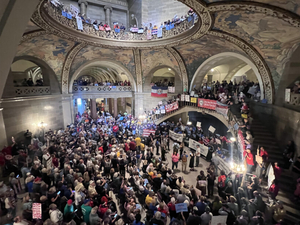
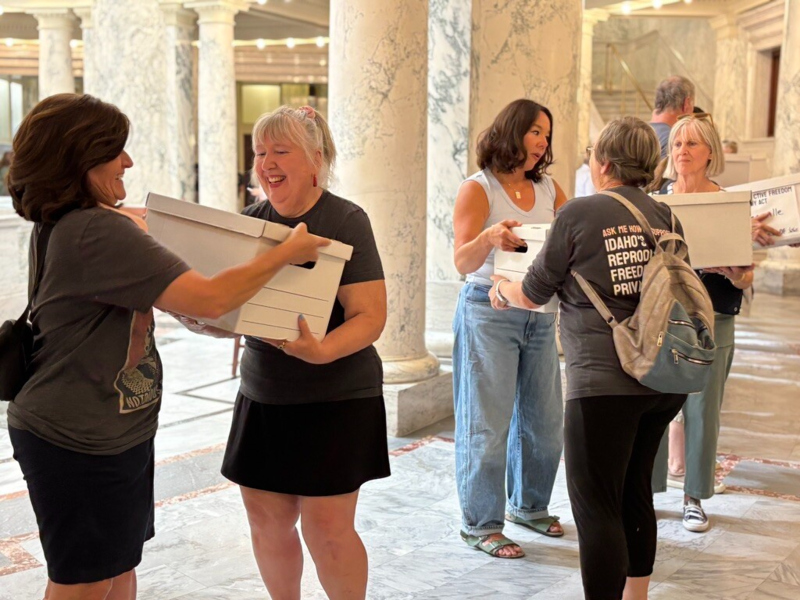
Photo: Volunteers pass boxes full of signed ballot initiative petitions through the Idaho Capitol on July 2, 2026. The proposed Reproductive Freedom and Privacy Act would restore abortion access “without government interference” until fetal viability, and would protect fertility treatments and other reproductive care such as contraception. (Photo by Kelcie Moseley-Morris/Stateline)
Stories From The States is a production of States Newsroom, the nation’s largest state-focused nonprofit news organization, with reporting from every capital. At this pivotal moment in American democracy, our veteran journalists from all 50 states are reporting the consequences of government decision-making. By zooming in on one story each week, Stories From The States contextualizes and gives a human voice to what is happening now.
Transcript was created using an automated software.
Chris Fitzsimon
This is Stories From The States. I'm Chris Fitzsimon. Thank you for being here. Here at States Newsroom, we know there's a lot to keep up with in every state as we get closer to election day, and it's an understatement to say that these midterm elections are going to be contentious. We're doing something a little bit different in t...
Transcript was created using an automated software.
Chris Fitzsimon
This is Stories From The States. I'm Chris Fitzsimon. Thank you for being here. Here at States Newsroom, we know there's a lot to keep up with in every state as we get closer to election day, and it's an understatement to say that these midterm elections are going to be contentious. We're doing something a little bit different in this week's episode. We're going to zoom in on a few major ballot measures that voters could decide and determine what their states will or will not allow. From access to abortion in Idaho, potential billionaires' tax in California, and Missouri potentially restoring an abortion ban while constitutionally prohibiting gender transition care for minors. There's a lot on the line. To help us understand all of this, are some reporters from our States Newsroom outlets. Joining us now is Rudi Keller. He's a deputy editor of the Missouri Independent. Kelcie Moseley Morris. She's a national reproductive rights reporter at Stateline, and Anna Claire Vollers. She's also a staff writer at Stateline. Well, Anna Claire, Rudi, and Kelci, good to see you guys. Thanks for being with us.
Kelcie Moseley-Morris
Good to be here.
Rudi Keller
Good morning.
Anna Claire Vollers
Thanks for having us.
Chris Fitzsimon
Anna Claire. Let's start with you on these ballot measures around the country. A lot of them have to do with taxes, I guess, as they always do. I've seen proposals to limit taxes. I've seen some things about taxing the rich. How would you characterize what states from your reporting around the country are considering about tax policy this election.
Anna Claire Vollers
Well, we're seeing a few different things that are giving voters a direct hand in steering state tax policy. One of the big ones that I think a lot of people are watching is in California. They're they're trying something that no other state has done yet, which is a one-time wealth tax on billionaires. Proposition 40 would take 5% of billionaires' net worth to help them raise, I think, 10s of billions of dollars for their state Medicaid, food assistance, and programs like that. They're trying to make up for the loss of federal funding from cuts in the One Big, Beautiful Bill act, but the Democratic leaders there are divided, which kind of makes it interesting to watch. The state Democratic Party endorses it. Governor Newsom is against it. I think people who are against it are worried it could push billionaires to leave the state, maybe invest less in California, and then there is another wrinkle because there are two other amendments on the ballot that could undo parts of that amendment if it if they all pass, whichever one gets the most yes vote is the one that they will go with. Elsewhere, we're seeing like in Florida, North Carolina, Wyoming, Oklahoma are looking at property taxes, which are pretty unpopular with a lot of people. So putting a an amendment on the ballot in Florida that would gradually cut property taxes, and then in a few other states, including North Carolina and Colorado, they are looking at reining in how legislators can use income taxes. And I think Missouri did that already this year, rejecting a ballot measure that was supported by the governor that would have, I think, replaced income tax and sales tax.
Chris Fitzsimon
It always struck me as a weird way, Rudi. Before we jump in, that we're making tax policy by ballot measure, and everybody's going to vote for less taxes, and then how do we fund government? But Rudi, you wanted to jump in about Missouri.
Rudi Keller
Yeah, Missouri had the most, the largest vote against a change in the taxes that they've had on anything that we've ever put on the ballot in the past 100 years. When we rejected a plan to replace income tax with sales tax, Missouri's kind of unusual. Our tax limitation amendments in our constitution, mean that you have to go to voters to do this kind of change, especially if it would result in any significant increase in revenue momentarily. Despite that, you know, I think the state tax picture, at least in Missouri, is not good. The revenues are not coming in the way it was projected, we could end up, you know, four to $500 million short currently on trends for for this year's budget. So these tax questions are occurring at a time when states are already stressed for their revenues.
Chris Fitzsimon
Right. I guess there's a lot of some of these ballots are put on for policy, and I guess some are put on to sort of get people to come to the polls. I imagine, Kelcie, let's talk about your beat: abortion rights or access to reproductive health care. In 2024, there were 11 statewide ballot measures. There's not a many. There's not as many this time, but there's some that are still very important.
Kelcie Moseley-Morris
Yeah, Idaho is the only one that is actually looking at changing access to abortion in reverse of a ban. Missouri's looking to reinstitute a ban, and Virginia would be codifying access under their constitutional, under the state constitution, and Nevada is also has a ballot measure on theirs for abortion, but it is a repeat from 2024, so it wouldn't actually change anything. It's already passed one time, but Idaho and Missouri are kind of the most significant pieces of of the abortion access landscape.
Chris Fitzsimon
Are you surprised that there's only there's not nearly as many? I mean, after the Dobbs decision, I sort of thought this would be a more widespread ballot measure for the next several cycles.
Kelcie Moseley-Morris
I am a little bit, but I think midterms tend to be lower turnout, and I think a lot of people made the calculus that 2024 was the better bet, and they might be making the calculus now that 2028 is the better bet for getting the most people to the polls.
Chris Fitzsimon
Rudi, she mentioned Missouri and abortion rights. I was trying to understand the language on the ballot this time that has anti-trans rhetoric sort of woven in there. Give us an idea of what what's happening in Missouri there.
Rudi Keller
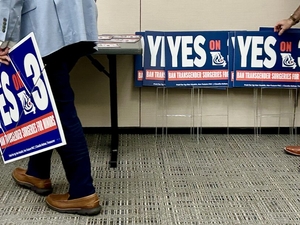
Well, the the narrow vote in 2024 to approve abortion rights encouraged Republicans to try again and reinstitute a ban. The they added some language to the Constitution. We have a statute against medical treatments for minors that would for gender affirming care, but the they want to put it in the Constitution and it polls very well. 80% of people say they will they would support that particular thing, while the abortion question is about even, so that was what they were doing. Now, the dynamic in Missouri is that there's no big statewide race. There's no no national money coming in. So this is the big campaign in Missouri. $6 million plus have been spent. $5 million dollars of that by the folks who want to defeat Amendment Three, which was what what it's called, which would put a you know reinstate the ban. So you talked about you know ballot measures to drive turnout. We have three big ballot measures and no big statewide race. And the the biggest question this year in Missouri is what kind of turnout are we going to have?
Chris Fitzsimon
Yeah, that you mentioned the money. I guess that's the focus of the out both in state and out of state money, right? Is the abortion amendment?
Rudi Keller
Yes, we have, you know, national organizations that are that don't disclose their donors supporting the the opposition campaign. We have the governor's wife as the treasurer for the campaign to pass this, and they've got their own not-for-profit that was recently created that is funneling money to their campaign. So we don't know who's behind these things, but we, in terms of money, but we certainly have, you know, it's the biggest it's the biggest thing going on in Missouri this year, and Democrats were hoping they can ride it to legislative victories.
Chris Fitzsimon
One of the trends I want to ask everybody about and have a discussion about. I've been fascinated by. I live in a state where we don't have initiative and referendum or ballot measures. It's only constitutional amendments. Anna Claire, you mentioned there they are trying to put tax policy in the constitution, which is pretty rare. But I'm fascinated by the states that have these ballot measures and then change the procedure by which the ballot measures are actually govern policy, whether it's changing the threshold or allowing the legislature to overturn these. So I wondered what what you guys what's happening, what you know about these. I know it's happening in some states, including Missouri. And then, what does that say just about the process? If they, if we're allowing voters to determine policy and then don't follow what the voters want, it seems sort of contradictory.
Rudi Keller
Well, in Missouri in August, you know, the only thing that got a you know the the tax amendment was a was defeated historically poorly and the we had an amendment to change the how you count the majorities for things proposed by initiatives that got also was defeated by historic margins. Now we've got in November the opposite, the people who have been pushing these initiatives are tired of Missouri legislature changing or repealing them. So, we have an amendment that will require an 80% vote in the legislature to even put something before voters that would alter the terms of an earlier initiative. It is the basically the opposite of August. It is the measure that Democrats think that they can really clean up on because voters are very upset and showed in August that they want the things that they pass to remain in place.
Kelcie Moseley-Morris
Idaho is interesting because we're one of few states that, maybe not that few, but one of the only states that doesn't allow constitutional amendments to come from the citizens. It has to be referred by the legislature to the ballot. So that's one of the reasons that actually a lot of national support hasn't come to Idaho for our ballot initiative is that the legislature could easily overturn it, and I think that is a a big assumption of what's going to happen in the in the spring if this does pass. But a lot of our efforts to change the initiative process have come from the legislature, and they have tried several times, and they've actually been defeated several times by the courts and by voters themselves. So it'll be interesting to see what happens in the spring.
Chris Fitzsimon
It's interesting. Idaho, obviously, that that the voters voted to expand Medicaid, for example, which is unusual in this. Is that still at issue, or is that still contested there?
Kelcie Moseley-Morris
It is pretty much a discussion in every legislative session of them trying to repeal Medicaid expansion hasn't happened yet, but it seems like every year they try to move the window a little bit closer to be able to do it. So far, it's helped though.
Chris Fitzsimon
Anna Claire, you mentioned the California initiative, the wealth, the billionaires tax, or whatever it calls. I don't think any of us probably will be affected by that if we lived in California. But the idea that there are other ballot initiatives that would offset part of that. One of the things that strikes me is trying to keep up and read about all the reporting you guys have been doing and just what's happening around the country. It's almost mind-boggling. And for voters who aren't active voters who are paying attention, how in the world are voters supposed to keep up with what these ballot initiatives and referenda will do when sometimes it feels like they have conflicting aims?
Anna Claire Vollers
This is really difficult, and and making it even more difficult in some situations, like in Florida, I believe sometimes the or a lot of times the the language used for the ballot measures is purposely, or I guess some people would say purposely, confusing and contradictory. I know in Florida there was a wrangling over this ballot measure that they're about property taxes, and they had some issues there. And so, it is really hard to to keep track of, quite frankly, especially when you get into tax policy. I know it. It took me in a few of these states the measures that they will be considering are kind of confusing and a little bit complicated.
Chris Fitzsimon
Rudi, how does it work in Missouri in terms of the language that's put on the ballot? How contentious is that discussion?
Rudi Keller
Well, just about everything that the legislature puts on the ballot results in a court case where they challenge. You know, is this fair and sufficient? Does it completely describe in 50 words what it is that the legislature is asking you to do? And same thing for initiatives, things brought by initiative. The Secretary of State writes that, and quite often, if the Secretary of State is opposed to something, the language reflects that, and it gets changed by the courts. One of the things the amendment on the ballot would do would be to formalize the court's role in in checking those ballot that ballot language, because the legislature has tried to take that power away from the courts to say and leave it only with the Secretary of State.
Chris Fitzsimon
And what about the the the process? I know doesn't apply in Idaho, but in other places where this, I guess it might the the citizens themselves and signatures. There's always it feels like every ballot initiative that comes from the people. There's a big controversy about how the signatures were were gathered. Are they legitimate, and who validates those?
Kelcie Moseley-Morris
That actually wasn't as big of an issue in this cycle, I don't think, as it has been for some other for some other initiatives in Idaho. It seems like they did try to change some of the laws around how you can gather signatures. They might have succeeded on some of those, but it doesn't seem like it made a big difference in the signature gathering for the abortion ballot initiative, at least.
Chris Fitzsimon
I wondered if you guys know, and Rudi might be the best one. I'm not sure, but how do how do legislative candidates how do they interact with these? Are they pressed to take positions on these? Do they become an issue in their campaigns, or do voters treat them as sort of individual things?
Rudi Keller
We have a Republican supermajority, and for seven elections, Republicans of Democrats have tried to break that supermajority. They think this is the year to do it. The two the amendments that got badly defeated in August. Two of the three things that are on the ballot are completely identified with Republicans, and the Democratic leader says that if this isn't the year where they can tie Republicans to these horribly unpopular things, then she doesn't know what to do. She is a communications specialist, so she thinks that they have the secret sauce this year. They're hoping to pick up as many as a dozen seats. So we will find out if Democrats can successfully tie Republicans to these measures, and which they have not been able to do in the past.
Chris Fitzsimon
Anna Claire, you cover healthcare among many other things that you cover, and I wondered how this sort of the abortion amendments are part of an overall healthcare sort of issue. It feels like not to. We still hear occasionally candidates talking about Medicare for all. We mentioned Medicaid expansion in Idaho. Is there any effort or or any ideas underway to get healthcare on the ballot in any states, or have we heard anything about that overall healthcare?
Anna Claire Vollers
Kelcie can correct me if I'm wrong, but I, other than some of the abortion-related amendments, I don't feel like we've seen a lot of that. I know, you know, in the cast in the past, repealing Medicaid or trying to get Medicaid has been on the ballot, but that's been a little bit less. We've seen that less this year. I think maybe because of a lot of the uncertainty at the federal level with the One Big Beautiful Bill Act around Medicaid funding. I know in Alabama where I live, we don't have citizen-initiated ballot measures, but all of the conversations around Medicaid and expanding it really stopped after the the One Big Beautiful Bill Act came on the scene, and so I think some of those have just been on the back burner, or at least pushed pushed off the ballot.
Chris Fitzsimon
Kelcie, remind us how Medicaid got on the ballot in Idaho, because it is interesting. We still have a handful of states, Alabama included, that don't have Medicaid expansion. Idaho was a thought of as a red state, and it was a surprise to people. I think that it did pass.
Kelcie Moseley-Morris
It was kind of similar to the abortion ballot initiative. I think it was run by a different campaign called Reclaim Idaho, but it was very much a grassroots campaign that ended up gathering a lot more signatures than people expected, and they had to go through a lot of court fights to get the language right and be able to not have deceptive language on the ballot, like we've talked about, and it it passed overwhelmingly. I mean, there aren't that many issues in Idaho that you can get pretty close to 60% approval on, and I think that's part of what's made it difficult for them to overturn it. Is that there was that strong percentage of people who approved it.
Chris Fitzsimon
And was that a surprise that the not only did it pass by the percentage that it passed.
Kelcie Moseley-Morris
It was maybe not as much as something like abortion, but I think there was a lot of assumption that it wouldn't have a ton of support and that it would cost some money, and so people would balk at it, and that has not been the case.
Chris Fitzsimon
I wanted to go around and ask everybody a question. We had another session with three reporters, and we ask them about their state elections, the governor's elections, and legislative elections, which we've gotten into a little bit here, and one of the most fascinating things to me is, what are as reporters who live in states, Anna Claire, you cover the country, but live in Alabama and know a lot about that state. How different, or what would you say to national reporters or the national media who have a sort of who sort of I don't mean this in a derogatory way, but sort of parachute in occasionally and do stories about the electorate or about the state. What do they normally miss that they that people need to know as this election approaches about the state in which you live? Because you guys know much more about it than than folks who are trying to pontificate about it from the outside. So whoever wants to jump in.
Anna Claire Vollers
I think in a state like Alabama, where we've had a Republican supermajority for the majority of my adult life, I think one thing that people miss are the pretty significant numbers of non-Republicans and non-Republican voters in our state. I've seen a lot more, as we've seen in states around the country, a lot more energy movement from Democrats. Democratic candidates are running in in a state like mine. We quite often only have one one candidate on the ballot. It's Republican for for many seats, and and this time around, there are some Democrats with some really strong chances. I think a lot of the questions about redistricting, a lot of those issues that we saw earlier this year have really energized folks, especially those who may have been found their districts moved or their representatives changed because of that, and that's really energized a lot of folks.
Chris Fitzsimon
And what about the governor's race there, Anna Claire? Before I let you go, that seems like it got attention for a while. Haven't heard much about it. Doug Jones and Tommy Tuberville, both names people probably recognize.
Anna Claire Vollers
They are. It's it's been heating up, you know. And I think we've seen Tuberville make some missteps around issues like data centers that he was initially very for, and that's you know polled badly in in Alabama as it has pretty much around the entire nation, so we have not gotten any kind of debates or anything from them. Tuberville won't won't debate that, but it has been a much more interesting gubernatorial race than I can remember in quite a few years.
Chris Fitzsimon
Rudi, your state is in the national news quite a bit because of your senators lately. Eric Schmidt became-I guess I don't know what word I would use for his performance with Jack Smith and Josh Hawley. Seems like he's always in the headlines, or or trying to be. What about the election there? You mentioned there's not a headliner, but there are congressional races, and you mentioned the legislative races. What would you want folks to know?
Rudi Keller
Well, that this year Missouri is pretty much flyover country for the general election. We've got hot races in Kansas. We've got hot races in Iowa. I have a program that was created by a University of Missouri journalism student that drags down all the FCC filings every night, and so I see the I see the ad buys in in those in those adjoining states, and it's not occurring in Missouri except on ballot issues. So, we were expecting a monumental congressional election if the redistricting plan from 2025 that was pushed by President Trump had gotten into had had remained in place for the November election, where a Democratic incumbent from Kansas City would have spent heavily to defend his seat in probably a futile effort against and but there's been no money spent on that race at all. There's only one congressional race that has a significant amount of money being spent, and that's a long time that Republican incumbents preserving her seat. We are we are quiet this year, but it will test a lot of things that, for me as a student of politics in Missouri, will want to know, such as can ballot measures drive turnout in years when there are no other candidate things on the ballot, it doesn't happen in presidential years. It happens big in primaries here, so we will find out. And Democrats are counting on that. So that's if a if there there is an outside chance that a seat in Congress will flip in in one district, but I wouldn't go to Kalshi with that,
Chris Fitzsimon
Kelcie, your state has a Senate race, which is you are. There's a incumbent Senator Jim Risch, which I think that's how you pronounce his name. Who's 83 years old, which some folks around the country think is peculiar. Although Chuck Grassley is in his 90s now. How how how much is that race garnering headlines, or do people feel like it's very unlikely that he will have any troubles?
Kelcie Moseley-Morris
I think political experts think it's unlikely that he will have any trouble, but there is a groundswell of people who think if there was going to be a year when he could defeat Jim Risch, it's this year, and the fact that he's running as an independent gives him an edge in a state where the Democratic brand is very tarnished and very weak. So it'll be interesting to see, even if it's close, it's kind of a test run for how well independent candidates could do in this environment moving forward.
Chris Fitzsimon
Are there any other interesting races of note, or what's the feeling overall about the election other than the high-profile Senate race in Idaho.
Kelcie Moseley-Morris
Honestly, that's the only one that has stuck out to me. I kind of forgot that some of our state officials were on the ballot because it's just been so quiet until October, and the primaries were pretty tame for Republicans. And so I think Prop One, the abortion ballot initiative, has kind of been the biggest issue, kind of like Missouri in this this year's race, and even the Idaho Republican Party didn't really get engaged with it until probably August. And now they have a list of legislators that have signed on against it. They're they're being a little more public with those efforts, but they're still only got 60 of them to sign that list, and that's a not a great number when you're this dominated by the Republican Party. So it's interesting.
Chris Fitzsimon
I would be remiss, Rudi, with ending this without just a quick question. A couple you have the I mentioned Eric Schmidt and Josh Hawley, who are national figures. Are either one of those? We heard a lot about Eric Schmidt potentially being a vice presidential candidate in 2028. Josh Hawley, I guess, has been rumored to have ambitions. What are the thoughts in Missouri about the looking, jumping over this, and looking for the national scene?
Rudi Keller
Well, so Mr. Hawley is on the ballot in 2028, and we have a law in Missouri that allows him to be a candidate for his seat, while he might be on a national ticket, so that could and that you know, so he could be seeking re-election at this in Missouri at the same time he is say the nominee for president, Republican nominee for president. Although I think that if he got that far, he might just give up on his his Senate campaign now when Johnson didn't in 1960 when he was the vice presidential candidate, but that that is long ago. Eric Schmidt, I mean, the conventional wisdom is that he's got a he's got a lot of repairs to do that when he just before his that event with Jack Smith, where he received a lot of criticism nationally, he was being he was being reported as a potential vice presidential candidate, and so that lasted about 12 hours, I think. So Eric Schmidt will probably be on the ballot seeking re-election when he when it time comes. I'm sorry, I I made a mistake. Josh Hawley is on in 2030. It is Eric Schmidt that is up in 2028. So, should he be the vice presidential candidate, he can remain a candidate for United States Senate, but I don't know that that is still in the cards.
Chris Fitzsimon
Yeah, I know I may have asked you the version of this, but quickly around, we only have a couple minutes left. What's the one thing you'll you'll you'll be watching? If there was one thing you were watching in your state on election night, just one, what would it be?
Kelcie Moseley-Morris
I am watching to see if the abortion ballot initiative passes. I think going back to your point about people parachuting in and thinking one thing. I think there is a lot of assumption that that this will fail in Idaho because it's Idaho, and there's been a lot of stereotypes around the country about what Idaho is. But I do think it has a very strong chance of passing because. The issue that it is, and I think a lot of people don't understand how how much abortion has shown up in people's lives since the ban was instituted, and how much it has affected healthcare. So that's what I'll be watching.
Chris Fitzsimon
Anna Claire?
Anna Claire Vollers
Aside from the the governor's race, where we've got probably the only Democrat in the in the state that maybe would have a chance at that seat. I'm watching. There was a district and congressional district in Alabama that got redrawn after all the redistricting earlier this year, and so a Democrat has been holding it for the first time, and he is facing a Republican, and that race is much tighter than I think a lot of people would imagine for that area of the state, and so I'll be really interested to see what happens there.
Chris Fitzsimon
Rudi?
Rudi Keller
I'm looking at the Missouri House of Representatives. This is, as I said, there's been seven elections where Republicans have won a supermajority. There are Republican consultants who are telling me it could be a it could be a bloodbath. They're worried a dozen or more seats could change hands, and that would significantly alter the calculus on a lot of things that the Republicans want to do. And some of these policies that have turned out so poorly at the polls may just get put on the shelf for a while.
Chris Fitzsimon
Well, we will love to talk to you guys after it's all over and the dust settles. Thank you very much for being with us.
Anna Claire Vollers
Thanks for having us.
Kelcie Moseley-Morris
Thank you.
Rudi Keller
Absolutely.
Chris Fitzsimon And that's our show for this week. Thanks for listening to Stories From The States. I'm Chris Fitzsimon. Mallory Cheng produced and edited the podcast. David Singer produced our theme music. We know we didn't cover all of the ballot measures that voters will decide on. If you want to know what you're going to vote on in your state, what your candidates stand for, and how your community is reacting, you can go to newsfromthestates.com to find your local States Newsroom outlet's voter guide. States Newsroom is the nation's largest state-focused nonprofit news organization with reporting from every capital. We shine a light on policy and politics in all 50 states, and we provide the coverage for free. Again, you can go to newsfromthestates.com. Thanks for listening, and we'll talk to you soon.