Relentless anti-LGBTQ+ legislation driving a family out of state
The U.S. Supreme Court heard oral arguments in January challenging trans athlete bans in Idaho and West Virginia. A decision is expected early this summer.
In 2020, Idaho became the first state in the nation to implement this kind of ban, which prohibits transgender athletes in girl’s and women’s sports.
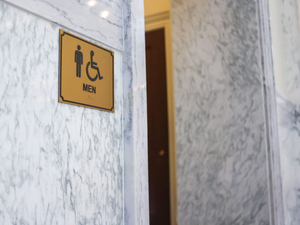
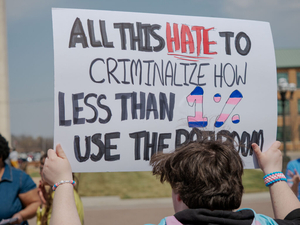
In recent years, state lawmakers passed a wave of anti-LGBTQ+ bills. The measures have included a bill requiring forced outing of youth and a bathroom ban that criminalizes transgender people using bathrooms that align with their gender identity, including in private businesses.
Many advocates have described the measures as the most extreme in the nation. For one Idaho family of medical providers, the bathroom ban was their last straw. Now, they’re figuring out if they can move out of the state.





In Episode 31, you’ll hear from Michael and Dr. Angie Devitt from Boise. They have been outspoken in defending LGBTQ+ rights in the Idaho state legislature.
You’ll also hear from Idaho Capital Sun reporter Kyle Pfannenstiel, who has been following the debate over the anti-LGBTQ+ bills and how they will impact the state.
Finally, Daybreak newsletter author Madyson Fitzgerald shares the top stories she’s watching.
Episode produced and edited by Mallory Cheng. Music for Stories From The States composed by David Singer.
Got questions? An episode idea? Email us at [email protected].
Subscribe to Stories From the States on Apple Podcasts, Spotify and Youtube.
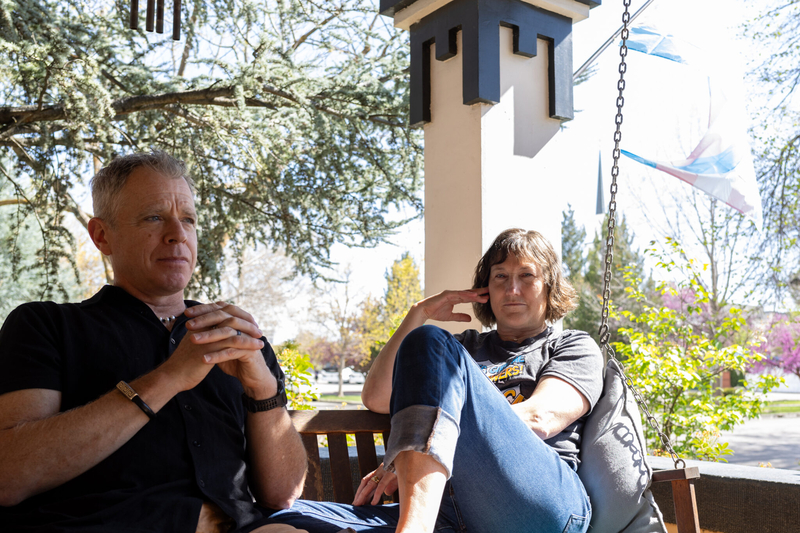
Photo: Michael and Dr. Angie Devitt reflect on their decision to move from Idaho after years of the Legislature and the governor approving anti-LGBTQ+ bills. (Photo by Kyle Pfannenstiel/Idaho Capital Sun)
Stories From The States is a production of States Newsroom, the nation’s largest state-focused nonprofit news organization, with reporting from every capital. At this pivotal moment in American democracy, our veteran journalists from all 50 states are reporting the consequences of government decision making. By zooming into one story each week, Stories From the States contextualizes and gives a human voice to what is happening now.
Transcript was created using an automated software.
Chris Fitzsimon
This is Stories From The States. I'm Chris Fitzsimon. Here at States Newsroom, we know there's a lot going on around the country in every state capital. So, thank you for being here. Today, we're talking about a string of anti-LGBTQ laws in Idaho. One of those laws bans transgender athletes in girls' and women's sports is now bein...
Transcript was created using an automated software.
Chris Fitzsimon
This is Stories From The States. I'm Chris Fitzsimon. Here at States Newsroom, we know there's a lot going on around the country in every state capital. So, thank you for being here. Today, we're talking about a string of anti-LGBTQ laws in Idaho. One of those laws bans transgender athletes in girls' and women's sports is now being challenged in the US Supreme Court. Idaho, in 2020 became the first state in the nation to implement this kind of ban, and the state has been passing a wave of other anti-LGBTQ+ bills in recent years. Some have included a bill requiring forced outing of youth and a bathroom ban. The bathroom ban criminalizes transgender people using bathrooms that align with their gender identity, even in private businesses. Many advocates across the nation describe it as the most extreme law in the nation. One family of medical providers said it was their last straw.
Dr. Angie Devitt
This year was definitely the moment of making that decision more final.
Chris Fitzsimon
Coming up in a moment, we'll hear from the Devitt family and from a reporter with the Idaho Capitol Sun about what's going on.
Chris Fitzsimon
The United States Supreme Court is considering challenges to Idaho's ban on transgender athletes in girls' and women's sports. The court will also take up a lawsuit related to a similar ban in West Virginia. Idaho was the first state in 2020 to implement this kind of ban, which prohibits transgender athletes from participating on any team designated for women or girls, from public K-12 schools to universities. Similar laws are now in place in 27 states, and the Idaho state legislature is not stopping there. In recent years, they have passed a wave of anti-LGBTQ+ bills, including one that criminalizes transgender people using bathrooms that align with their gender identity, even in private businesses. A first offense carries a misdemeanor, punishable by up to one year in prison. A second offense, within five years, is actually a felony, punishable up to five years in prison. For a Boise family of medical providers this bathroom ban was the last straw. They're considering moving out of the state. Joining us now are Michael and Angie Devitt, medical professionals and also parents of a trans daughter. Hi folks.
Michael Devitt
Hello.
Dr. Angie Devitt
Hello.
Chris Fitzsimon
Also joining us now is Kyle Pfannenstiel. He's a reporter at the Idaho Capital Sun. Idaho Capital Sun is an outlet with States Newsroom. Hi, Kyle.
Kyle Pfannenstiel
Howdy.
Chris Fitzsimon
Well, let's just get a little background here from Kyle before we talk to the Devitts. Kyle, tell us, where this even started. Where did this Idaho attack on trans people even start?
Kyle Pfannenstiel
This was in 2020 in the legislature, and it was brought by a lawmaker, Representative Barbara Ehardt from Idaho Falls, who was concerned about fairness in women's sports. So the bill did a few things, it, you know, it applied to K-12 schools and higher ed sports teams, required them to separate teams by sex, or they could be co-ed, and it specifically banned males from participating in female sports, and that's kind of the gist of it, but this was kind of the start of, as you talked about, a wave of anti-trans and LGBTQ laws.
Chris Fitzsimon
The Devitts, Michael or Angie, or both, I just.. I know you've talked extensively about this. You even wrote a book about this, called "Finding Eve", about what it's like to have a trans daughter in Idaho in this current bizarre era that we're living in. I just wondered, overall, what has the experience been like for you and your daughter while this legislation was being passed and being debated?
Michael Devitt
Stressful and disorienting. We both love Idaho. We're, we're very much enmeshed in the community that we live in, Boise, as are both of our kids. And when you participate in a community, you expect that that community will accept you and support you. And the Idaho legislature has kind of made it their pet project to make sure transgender Idahoans and their families feel very unwelcome in Idaho, so it has been, it's been very unpleasant, to put it mildly.
Chris Fitzsimon
And what about your daughter? How is she holding up, and what has it been like for her?
Dr. Angie Devitt
Well, our daughter was not involved in sports, she, she was briefly, but not at the time that this passed, so that in that particular regard, that didn't impact her specifically, but she's been a very strong advocate since 16, and we live just a few blocks from the state house, and so it became an area that she felt like she could speak out as a strong advocate, and and she was the one who said this is what I want to do with the power and privilege that I have, and so we just followed suit. She has moved out of state to go to college, and so that's one impact on her, but she does feel very increasingly unsafe in returning to home.
Chris Fitzsimon
Were you worried? Were you guys worried about her safety when she started speaking out?
Michael Devitt
No, I don't think either of us were, and I'm not sure why, because looking back, I think that's kind of a really good question to ask, but I think you know, Boise itself is a pretty safe city for LGBTQ citizens. It's the Idaho legislature that is really the problem, so you know, Eve she carries herself with a lot of poise and a lot of kind of strength, and so, although she's very prominent, she's not really somebody you would mess with, although you never know, but no. In Boise, we felt pretty safe.
Chris Fitzsimon
Kyle, I'll get back to you in a second with a question about what's next, but I want to ask you guys again, as not only are you parents of a trans daughter who's speaking out, and you're speaking out, and you've written a book, and all those things, you're actually medical professionals, and I wonder how frustrating that is, listening to whether it's testimony or debate about this issue from people who aren't medical professionals and may not have an understanding of what's even happening.
Dr. Angie Devitt
It's extremely frustrating. Again, I've been involved with advocacy in the state from a medical perspective, particularly in the last few years. I've been on the board of the Idaho Academy of Family Physicians, and was president this last year, and we are very strong advocates, and and have been in the room where it happens in regards to to this legislation, and it, you know, I remember the first time Eve testified, I asked her how she felt, she did an excellent job from my perspective and from the legislators' perspective, and she just said, I'm so happy that these, you know, these two Democratic representatives in that particular case are fighting for us, and of course, every everything that gets heard in the Idaho State House tends to be eight to two in favor of the Republicans. There's always two Democrats on every committee, and she just was so excited about the two, even though it passed. That passed on, and in that case, it had to do with gender-affirming care for minors and forbidding that. So, so it's very frustrating, and I would say mostly it just feels like there's so much I want to use the word ignorance, but maybe I'll just say, you know, they're very uneducated about the things on which they are voting.
Michael Devitt
You know, one of the things I'll just add here that that she told me, she found Angie found real frustrating is she would be sitting in a committee room, having testified or waiting to testify, and one of the lawmakers in favor of either the ban on gender affirming care or the bathroom bill, whatever, would say we have to protect these children from their parents and their doctors, and Angie is a family physician, so you know she kind of was getting that on both both cheeks, turning her face, and that was super frustrating, because you know she was feeling like you know I'm here in two really important roles and you've just completely devalued both of them, not having any knowledge of where I'm coming from on either of those.
Chris Fitzsimon
Kyle, can you give us a perspective as a journalist and reporter watching this debate, covering it, interviewing the debits, and this whole sort of process? How do you characterize the debate? I mean, where did this come from? Is it a handful of folks who are using religious grounds? Is it part of a national trend? Put this in perspective for folks around the country.
Kyle Pfannenstiel
I think it's a bit of all of what you just said. I think was very interesting about this, this trans athlete ban bill that's before the US Supreme Court, is that it was, it seemed to more kind of the start of Idaho leading, leading conservative states in pushing for pushing for some of these policies, some of these anti-trans and anti-LGBTQ policies, and in the years since, we, we passed a wave of bills that, you know, the common refrain I hear every year from some folks in the LGBTQ community is that the legislature is making it harder for us to live here, and I think we're seeing that on display with, with how pride is being celebrated here, with how families are making individual decisions about whether it's whether they want to or whether it's safe to stay in Idaho, and yeah,
Michael Devitt
Idaho also passed a ban within schools on transgender Idahoans using students using the bathroom of the gender that they identify with, that has been kind of.. it was challenged, but the people putting up the challenge, the ACLU had a couple of students that were on there that they were suing on behalf of to stop the bill, one of those kids they dropped the suit because one of them, one of the kids committed suicide and one of the kids families just left the state. So, to your point, them making things difficult, this, and I don't want to sound harsh, I don't want to sound hyperbolic, but I think those two things are the results they are looking for.
Dr. Angie Devitt
Actually, the second child just graduated, so that's why they can no longer be part of the suit.
Chris Fitzsimon
You mean that they want folks with trans kids or trans family members to leave the state?
Michael Devitt
They would like trans kids and transgender Idahoans in general to just disappear one way or the other.
Kyle Pfannenstiel
Yeah.
Chris Fitzsimon
Go ahead, Kyle.
Kyle Pfannenstiel
I also wanted to talk about how I find it interesting that that in a number of these suits, the suits are being dropped because of personal situations are changing, like in this case with the with the K-12 public school bathroom ban, there were personal changes in kids who were both part of the student group that was challenging the ban that led to the law being dismissed, one died by suicide, one graduated school, and then in this case it's before the Supreme Court, Lindsay Hecox, the trans athlete who's a college student, tried to get this case dismissed because she's no longer planning to play sports, she just wants to focus on school, and it still wound up where we are today.
Chris Fitzsimon
Yeah, I wondered, Michael or Angie, or both. I wonder what you tell folks who haven't followed this issue carefully. Like, what's your perception of why this is happening? You mentioned that you didn't want to use the word ignorance. Certainly, people seem uninformed. It does feel like this happening around the country sometimes for political reasons, because it does always feel like it's a, it's a solution in search of a problem, and the cases themselves really don't pan out, but it's, and it's more ends up being more about the rhetoric.
Michael Devitt
Yeah, and I think also you said around the country, and I think that's incredibly accurate, but it's also accurate that we're seeing this around the world. I mean, in Great Britain, you know, their far right is using this same playbook, so I think this is just not to be partisan, but within this country, I think it's just kind of the main argument being made by the extreme Republicans or the MAGA Republicans or just the Republican Party, but it is not based upon me. We're talking in Idaho, we're talking about point 4% of the population are transgender, so and there's been 18, I believe, laws passed in the five to six past sessions, so it's literally just, it's not based on anything factual, it's just how they, they get their people motivated.
Chris Fitzsimon
What do you tell folks when they, if they're not informed at all, and they're not even watching the politics of it? Why on its face, what is the easy response to why all this is unnecessary?
Dr. Angie Devitt
Well, I would say it's uninformed, it's pointing the finger at a problem that isn't a problem. You know, people who are transgender do not have an agenda, you know. In the state house, this last session I was there for a particular bill for social transitioning, and there was a gentleman that you know talked about the billion dollar trans industry, and again, that's just not a thing. We're all, if we're involved, we're all waiting for our checks, but you know it's, it is just completely uninformed, as you said, and pointing the finger at other people, and, and they're, and then they're the ones that are being hurt, they're trying to not be out, they're trying to live normal lives that they've been trying to figure out for a long time.
Michael Devitt
You know, the other thing, in answer to that, I think that's part of why we wrote the book. One of the main reasons was just to kind of combat all of the misinformation, but also we were kind of hoping almost like a little kind of a Trojan horse to be sort of a vehicle to start a greater conversation about bodily autonomy and human dignity, and I think this is basically just kind of an attack on a group's human dignity and even their humanity just for political gain.
Chris Fitzsimon
Yeah, and as you mentioned before, it has real consequences on real humans, your daughter and also other children in Idaho and around the country.
Dr. Angie Devitt
Very much so. Yeah. Yeah.
Chris Fitzsimon
Kyle, what is what's next in the Idaho legislature? I mean, are there more attacks on LGBTQ people underway?
Kyle Pfannenstiel
I guess I doubt this will be the end. It's been a very consistent pattern over the past five or six sessions. As the Devitts said, this year we got the two big bills that we got were the criminal transgender bathroom ban that criminalizes trans people using bathrooms that align with their gender identity and public, including in private businesses and in government buildings, and we also got a bill that requires teachers and doctors to out transgender kids to their parents, and both of those laws take effect July 1, so I think we'll see how things roll out, but I don't know what's in store for next session. The legislature typically meets in January until March or April, and we don't have a great idea of what's always in store until then, but I, but I doubt this is the end.
Chris Fitzsimon
Michael or Angie, you guys have talked openly about considering leaving Idaho, and Kyle has reported that story for us, and I wondered, what are your thoughts now? What's in your family's future?
Dr. Angie Devitt
Well, the first step was that Mike declared and decided that he was closing his 28 year physical therapy practice, and you know these things are very complicated. We have another daughter we love equally, and she will be in Idaho another year until she leaves to go somewhere for graduate school. And then I have a 90 year old father who I've been in Idaho my whole life, and so he's still there, and so yeah, so one step at a time, but we are certainly considered this, which we have have talked about, depending on the legislation that was in front of the state house every year, but this year was definitely the moment of making that decision more final, and figuring out what that looks like.
Michael Devitt
When your child can't come home and visit you without the very strong possibility of ending up in prison. It's not a place you want to stay living.
Chris Fitzsimon
Could you have imagined five or 10 years ago? Well, more than, I guess, 2020 but before that, could you have imagined that you would be in this position where, because of the gender identity of a child, your, your, your child's life and your life would be turned upside down?
Michael Devitt
No, we never thought we would leave our home ever, like we that was no in answer to your question, not even once.
Chris Fitzsimon
Well, I want to thank you both for sharing your story. And Kyle, as always, it's great to hear from you and hear your reporting. And best of luck to you guys, Devitts, and hope things take a turn for the better. Thanks for being with us.
Kyle Pfannenstiel
Thank you much.
Michael Devitt
Thank you,
Dr. Angie Devitt
thank you. So much for having us.
Chris Fitzsimon
To stay up to date on the latest laws being argued or passed in your state. You can always go to newsfromthestates.com. Coming up in a moment, podcast producer Mallory Chang will chat with Daybreak newsletter author Madyson Fitzgerald. We'll be right back.
Chris Fitzsimon
I don't know about you, but the first thing in the morning I like to have some coffee and try to catch up on all the news that I missed. One of my favorite new morning newsletters is Daybreak from States Newsroom. Daybreak gives you a quick 50 state snapshot on vital issues and how they're affecting state policies around the country. Start your day informed. Subscribe to Daybreak at statesnewsroom.com/subscribe.
Mallory Cheng
Hello, podcast listeners. It's podcast producer Mallory Chang here, with the one and only Daybreak newsletter author Madyson Fitzgerald.
Madyson Fitzgerald
Hello!
Mallory Cheng
Hello. It's so great to see you. It's so great to be in the host chair with you. If you haven't read Daybreak yet, you can subscribe at newsfromthestates.com/subscribe. Mady puts together a 50 state snapshot every morning of everything that's happened while you've been asleep, or if you've been ignoring the news. Mady has got it all for you, so subscribe. But Maddie, as always, it's been that people can't see me, but I have my hands in my head, I'm like, it's been a lot.
Madyson Fitzgerald
It's always a lot. Yeah!
Mallory Cheng
I know, it's always a lot.
Madyson Fitzgerald
That's what keeps it exciting, though. You know, I think my favorite part of this job is there's always something to do.
Mallory Cheng
You know. And I appreciate that perspective and point of view. B ut what's been. Something, what's been a story or stories you've been keeping an eye on this week?
Madyson Fitzgerald
Yeah, so one story that I've really been following has been this news out of New Jersey, where the state sued the owners of a migrant jail in Newark to force the company to allow state health inspectors inside, just because the detention center has been at the center of claims that detainees are living in inhumane conditions, so the complaint basically asks the judge to order the company that owns the jail to allow state inspectors to have access to the facilities, you know, medical unit, sleeping quarters, shower and toilet facilities, and HVAC systems, and so the governor said that when state inspectors visited the jail last week, the staff only allowed them to access the food service areas, and so the reason this caught my eye is just because this comes as communities across the country are really trying to figure out how to deal with immigrant detention centers and the conditions inside them. It's become something that I think is a bit of a side effect of President Donald Trump's push for more deportations.
Mallory Cheng
Right. Right. On another note, what have been some stories that you're keeping an eye on in the coming weeks, in addition, of course, to what's happening in Newark.
Madyson Fitzgerald
Wow, this one is, it's, it's a little scary, and if you don't like bugs, then I would just say to brace yourself.
Mallory Cheng
Oh no, okay, my head is in my hands again.
Madyson Fitzgerald
Okay, so the US Department of Agriculture confirmed the country's first case of new world screwworms in South Texas, and the infested animal was a three week old calf, and there have been no other detections so far, but the parasitic fly could harm the state's $15 billion cattle industry, and so state and federal officials have really been bracing for this, because we knew that, you know, screw worms were coming, and they've been preparing for it for months, and they mainly fear its potential to impact livestock and the agriculture industry, like kind of at large, and so this parasitic fly targets the live flesh of warm mammals, including cattle, pets, wildlife, and humans, and so I won't get into the details of how exactly the infection happens, but it's really gross, and also it is a pretty big threat to the agriculture industry. So, I think that officials will be keeping an eye on it, and I will as well.
Mallory Cheng
What do the bugs look like?
Madyson Fitzgerald
I would, they're kind of like I would say the size of my thumb, they look a little bit like just giant flies, if that makes sense. It's, and it says it's a parasitic fly, and so it's just imagine a bigger version of a fly, and one that's able to dig into the live flesh of mammals.
Mallory Cheng
Oh, okay, that's that's a fun thing to look out for. But okay, Maddie, let's cleanse the palette a little bit with One More Thing, I hope. I hope it's whimsy. I hope it's, I hope it's not bug related, but what's one more thing you got for us today?
Madyson Fitzgerald
It's not bug related.
Mallory Cheng
Okay, phew.
Madyson Fitzgerald
It's not bug related, and it's a little bit, you know, it's silly, and so it's not silly, but it's something that I thought was very interesting this morning. The Georgia Supreme Court ended an agreement that prevents the execution of nine death row inmates, even though the Food and Drug Administration hasn't approved the COVID vaccine for children under the age of six months. Now, those two things sound like they're not related, but here's how the two things are actually intertwined. So, according to the court, the 2021 agreement stated that the Attorney General's office would not pursue execution warrants for certain prisoners whose petitions for overhearing had been denied while the state was under, you know, an emergency order during the COVID 19 pandemic. So, under the agreement, the process could only move forward if there were three conditions that have been met: one, the COVID 19 judicial emergency had to have been lifted. Two, the Georgia Department of Corrections had to have resumed its normal visitation policy, and three, the vaccination against Covid 19 had to be readily available to all members of the public. And so, the attorneys for the Federal Defender Program, which is a nonprofit that represents death row inmates, argued that the jails have not resumed to their normal visitation policies, and COVID 19 vaccines are technically not available to all members of the public, because they're not recommended for infants until they are six months old, and so under these conditions they cannot get rid of the agreement. So that's what they're arguing in court right now, and I thought it was really funny because reading the first, you know, reading the lead, I was like, how does, how does inmates have to deal with, like, you know, six months old, so I didn't realize there was a connection there, but it'll be interesting to see how that case sorts itself out.
Mallory Cheng
That's an interesting loophole, I like, would not have even thought about that at all as a way to connect the two, but Mady, thank you so much for being here. Thank you.
Madyson Fitzgerald
Yeah, of course. Thanks for having me.
Chris Fitzsimon
Thanks for listening to Stories From The States. I'm Chris Fitzsimon. Mallory Chang produced and edited the podcast. David Singer produced our theme music. If you like what you heard, share it with someone you think might enjoy it, and please leave a rating and review. It means a lot to know what you think about the podcast, and it helps other people find us. To stay up to date on the latest episodes, subscribe now to Stories From The States, a podcast from States Newsroom, available wherever you listen to podcasts. We'll talk to you soon.