


Plans to roll back roadless rule threaten a New England forest
The federal Roadless Area Conservation Rule has been in place since 2001, but is under threat. In August, U.S. Agriculture Secretary Brooke Rollins announced her agency’s plans to rescind the rule “in its entirety.”
The roadless rule currently prohibits road construction, logging and mining on about 30% of the nearly 200 million acres of land managed by the U.S. Forest Service. The rule mostly applies to forested areas of the West, but a unique area in the White Mountains along the border of Maine and New Hampshire could have its landscape changed.




In Episode 50, Maine Morning Star reporter Kaitlyn Budion discusses the concerns of New England conservationists who think the rollback of the roadless rule would hurt one of the few unbroken stretches of wilderness in New England.
You’ll also get a weekly news wrap-up from Evening Wrap newsletter writer Danielle Gaines and Daybreak newsletter writer Madyson Fitzgerald. They’ve got you covered with the latest on: North Dakota’s stripping wells, candidate debates and early voting trends.
Episode produced and edited by Mallory Cheng. Music for Stories From The States composed by David Singer.
Got questions? An episode idea? Email us at [email protected].
Subscribe to Stories From The States on Apple Podcasts, Spotify or YouTube.
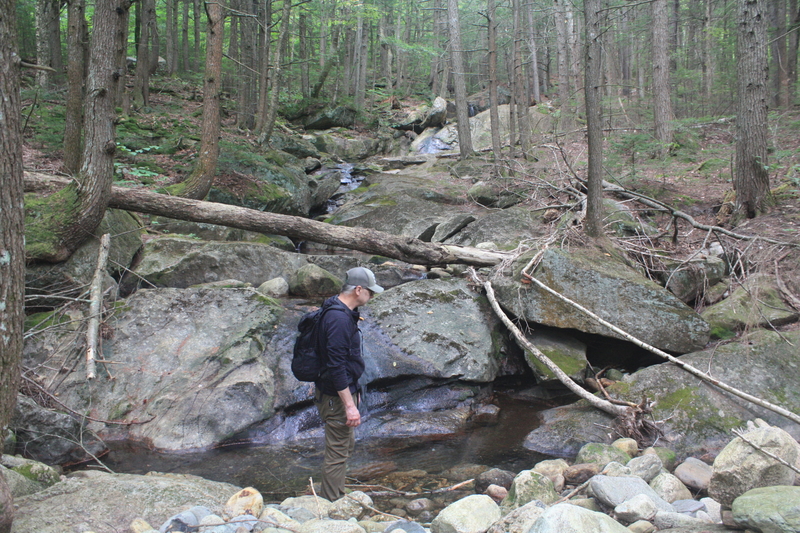
Photo: Jeff Swayze, a mental health counselor and registered New Hampshire guide, stands in a stream bed along the Wheeler Brook trail in Maine. The area is currently protected from development by the federal roadless rule. (Photo by Kaitlyn Budion/Maine Morning Star)
Stories From The States is a production of States Newsroom, the nation’s largest state-focused nonprofit news organization, with reporting from every capital. At this pivotal moment in American democracy, our veteran journalists from all 50 states are reporting the consequences of government decision-making. By zooming in on one story each week, Stories From The States contextualizes and gives a human voice to what is happening now.
Transcript was created using an automated software.
Chris Fitzsimon
This is Stories From The States. I'm Chris Fitzsimon. Thanks for being here. There's a lot to catch up on this week. It was a big week for statewide political debates. Candidates on the ballot this midterm are trying to make their case as election day gets closer and closer. And some schools repurpose their parking lot when kids l...
Transcript was created using an automated software.
Chris Fitzsimon
This is Stories From The States. I'm Chris Fitzsimon. Thanks for being here. There's a lot to catch up on this week. It was a big week for statewide political debates. Candidates on the ballot this midterm are trying to make their case as election day gets closer and closer. And some schools repurpose their parking lot when kids leave for the day, like renting out parking spaces or hosting events. But one public school system in Ohio is doing something totally different. They're letting families experiencing homelessness sleep in their cars overnight there. But the federal roadless area conservation rule that has been in place since 2001 is under threat. The so-called roadless rule prohibits road construction, logging, and mining on about 30% of the nearly 200 million acres of land managed by the U.S. Forest Service. The Trump administration wants to get rid of that rule entirely. In New England, a unique area along the border of Maine and New Hampshire could have its landscape dramatically changed because of it. Coming up, we'll talk with a Maine Morning Star reporter about all that, but first let's check in on the news with our state's newsroom newsletter authors Danielle Gaines and Madyson Fitzgerald. Hi, Madyson and Danielle. How are you guys?
Danielle Gaines
Hey Chris, I'm good.
Madyson Fitzgerald
Hello, how are you?
Chris Fitzsimon
Good. We are headed into the home stretch of this crazy political season. What else is going on in your lives? Crazy weather.
Madyson Fitzgerald
Yeah, it's been really interesting. I I was enjoying like the fall, and I was a little nervous because I was like, "Oh, it's gonna get really cold really fast. And then yesterday it was 80 degrees, and so I think we got faked out a bit. But I'm still enjoying the nice leaves, so that's been fun.
Danielle Gaines
Yeah, I'm looking forward to real fall when it decides to actually stay.
Chris Fitzsimon
Stay right without getting too cold, so which of you is a sourdough baker?
Madyson Fitzgerald
Oh my gosh, that is me. I've only baked one loaf so far, but it actually came out okay. I was so scared because I see the videos where people like open it up and it looks like chalk, but mine was actually pretty spongy, and it's all thanks to my mom because I have been begging her for part of her starter, and she finally gave me some the last time I visited, so it came out pretty well. And next, I'm gonna try a sourdough pizza dough. So we'll see how that goes.
Danielle Gaines
Ooh, congrats!
Chris Fitzsimon
Cool.
Danielle Gaines
You can come use my pizza oven, Mady.
Madyson Fitzgerald
You have a pizza oven? That's so cool.
Chris Fitzsimon
All right, let's jump to the news before we get to all the political news and debates and no kings and all that kind of interesting wonky theme. North Dakota, some new interesting well stuff about wells, tax breaks. What's happening there?
Danielle Gaines
Yeah, stripper wells. So you know the headline alone will get you interested if you don't live in an oil-producing state, this was a new term for me. One of the things I love about writing the newsletter is how deep you can get into things that you never even knew about before. So, our North Dakota team did a deep dive into the state tax revenue that the state is missing out on as a result of Wells getting this special designation as a stripper well, so a stripper well is a well that is underproducing. It has you know like dried up. Typically, that means in North Dakota that they're producing 35 barrels or less of oil a day. But once you get that designation in North Dakota, it doesn't go away, and so companies can start using new technology. They can increase the production of these wells that were previously underperforming, and they still end up getting the stripper well tax break, and they get it forever. It's not something that can be rescinded. So some interesting stats: more than half of the 20,000 active oil wells in North Dakota have stripper well status.
Chris Fitzsimon
I don't know. I don't know. I don't Sorry to interrupt you. I don't know which is more startling: that more than half have that status, or that there are 20,000 active wells.
Madyson Fitzgerald
That's a lot of wells.
Danielle Gaines
Right? I know. I learned so much. Yeah, I was. I I got so deep into this story. So, so about half of the 20,000 have stripper well status, which gives them a 5% tax break. That was established in 1980, so some of them have had this designation for decades, for longer than Mady's been alive. And this year, the state is going to lose out on $66 million in projected tax revenue for wells that are actually now producing a lot more than that stripper well designation, so one of the ones they looked at is owned by a subsidiary of Exxon Mobil, one of the largest oil companies in the world, and that that well is producing about 300 barrels of oil a day on average.
Chris Fitzsimon
Exxon doesn't need a tax break, but that's another topic.
Danielle Gaines
Right. And so, that's about $16 million in revenue that the state has missed out on on that one well since it got that designation. So, lawmakers are looking at revisiting this. There's a lot of different opinions. Oil is so important to the North Dakota economy, and one of the things that. Our report really dug into was just how different North Dakota's rules on stripper wells are than other states, and that's where you know you might see some movement from lawmakers on making change in the future. And overall, the stripper well program leads to about $200 million in tax breaks a year for oil companies in that state..
Chris Fitzsimon
In North Dakota. That's all. I mean, that's a lot of money anywhere, but especially in North Dakota, a small state.
Danielle Gaines
Yeah, I mean, one of the things on their ballot is this year is a question about providing free universal school lunch, and that would cost about $67 million a year. So, they're talking about not understanding how they're going to be able to pay for that if voters pass it, and then you know here's $200 million they could start thinking about. Perhaps.
Chris Fitzsimon
I hesitate to say that you went deep on that, but you know that would be another.
Danielle Gaines
It's it's my new favorite topic. If you see me on the street, just ask me about it. I'll tell you more.
Chris Fitzsimon
All right, let's get to what I feel like everybody I bump into these days wants to talk about or ask me about which is some version of the election. There's so much to talk about, but it really does seem like every every day there's more debates. I'm having trouble keeping them straight. Madyson, what's what's going on in debate-palooza?
Madyson Fitzgerald
Yeah, well, this week was really really busy in terms of debates, which makes sense because we're only a couple of weeks out from election day. But it's been interesting to watch that. Like now that we're in President Donald Trump's second term, it's cool to see how this era's politics are influencing how these debates are being handled. In Georgia, for instance, one of the states where we've been watching closely because of the governor's race is still a toss-up, and there's been massive spending on both sides of the aisle. Earlier this week, Keisha Lance Bottoms, who's the Democratic nominee for governor debated against an empty podium after GOP nominee Rick Jackson declined to participate? That's like basically like arguing with a wall, which I'm I'm very good at, but I wouldn't want to do that, you know.
Chris Fitzsimon
Not on camera
Danielle Gaines
Live TV, yeah.
Madyson Fitzgerald
And so that was already you know pretty surprising. And there's been other situations across the country where things like this are happening, where these debates are planned and people drop out, or even sometimes the networks that are involved-I saw this in Arkansas-are pulling out at the last minute because of changes to, I guess, I don't know, changes to schedules and things of that nature. Another race that we've been watching in Georgia is the U.S. Senate race between U.S. Senator John Osoff and Republican Congressman Mike Collins, and they faced off for their second and likely final time this week after a pretty heated conversation where they talked about immigration, the war in Iran, and Jeffrey Epstein. And so it's just been a very busy week in terms of debates, and it'll be interesting to see also how this actually influences how voters decide at the polls what they'll who they'll vote for.
Chris Fitzsimon
Yeah, I'm really struck by reading the coverage and watching part of these clips that it's fairly rare that they just don't reinforce what we already think or what we already suspect or already know. I was I do think like Darlene Graham's first one in the Republican primary, where she didn't in South Carolina, where she didn't know anything about foreign policy or whatever, got a lot of attention, but don't you think Danielle? Overall, it feels like there hasn't haven't been that many moments that people are going to talk about after the campaign and say, "Oh, that's that debate really changed somebody's mind".
Danielle Gaines
Yeah, I definitely I do agree. You know, one one debate that caught my eye this week was the Iowa governor's debate because it's their second debate, which is becoming more rare this day and age. Everyone's like one and done. Like you get to hear us one time. We have our preset, you know, sound bites, and then we're just going to move on. But Iowa, the governor's race, they had a second debate between auditor Rob Sand, a Democrat, and businessman Zach Lahn, and one of the things that was interesting about it is they got into policy. They actually talked about education policy, how they would fund education. You know, of course, Republicans want to cut taxes and find deficiencies in government. Democrats want different approaches, and they got to a place where they another kind of growing common ground, I guess. But got to a place where they both said that they agreed on cutting tax breaks for data centers. And their first debate was very spicy. It was very akin to what we're seeing in other places. And so it's interesting that getting on a stage for a second time leads to more nuanced discussion.
Chris Fitzsimon
That's a record. I think we have been talking almost nine minutes since first time somebody has mentioned data center.
Danielle Gaines
Yeah.
Chris Fitzsimon
What about the the other the other interesting thing about these debates? To me, they're always stories about like we we have all these debates. People watch them. Nothing really happens. And then there's stories about how people won't debate, like we have. I know the Arkansas Senate race, Tom Cotton, the incumbent, won't debate. There's a whole thing about Tallerico and Paxton. I wonder what I I can't tell if debates don't matter. Does not debating matter? I
Madyson Fitzgerald
I sometimes wonder if people are scared to say something that's going to end up throwing off you know. All of the work that they've done thus far, like we're less than three weeks out, and so one thing could really could it could possibly change how voters how well voters decide on, especially with like some of these really really close races where it's like one or two percentage points. It's it's it's a bit of a you know it's a tight situation.
Chris Fitzsimon
So, well, let's talk about another aspect of this political season, another No Kings Day, which we at States Newsroom and everybody else has covered. These mass mobilizations of folks around the country who aren't thrilled with the direction that the Trump administration is taking the country. There's another one coming up. We're tell us, Madyson, what what we need to know about the next No Kings Day.
Madyson Fitzgerald
Yeah, so the next No Kings Day movement is taking place this Saturday, where millions of Americans across the country are going to come together for what I believe is the fourth iteration of this movement. But this time, the theme is early voting, and organizers are hoping that every eligible voter has a plan, knows their options, and is ready to make their voice count according to their website. So we're recording this on Thursday, October 15, and if you're listening, you should definitely check out States Newsroom's DC Bureau preview about the protests that are going to be taking place this weekend. But because we're just a couple of weeks away from Election Day, I thought we could talk a little bit about early voting in numbers because there's a handful of states, or most states, I think, at this point, have started early voting, and it's been interesting to see just how many voters are coming to the polls this early on. And I mean, I'm one of them. I I prefer voting early because I don't like waiting in line. But in Georgia, nearly 189,000 people actually cast their ballot on the first day of early voting, which surpassed the first day voter turnout in 2022 by almost 50,000 votes. And so, also, I think they found out that Tuesday's turnout set a new record for first day midterm election voting in the state. And so the governor's race, you know, has probably garnered a lot of interest. It's a very very close one, and so a lot of people are are making their voice heard.
Chris Fitzsimon
Yeah, it's interesting. Every every political prognosticator and pundit and professional is dissecting every number of every votes, trying to figure out who voted and who has the advantage. A long, you know, a long time ago, it used to be when when the the polls were flooded that was an advantage for Democrats. I think Trump sort of turned that around in some states, and now I feel like that might be true again because of the his popularity. So, what, Danielle, what do you make of all this early voting talk?
Danielle Gaines
Yeah, I mean it's hard to read into it. I was talking with with Maddy about it. You know, progressive groups are urging people to go and vote early. I think primarily, although the president has now backtracked on a lot of what he had to say about mail ballots, which he himself casts, and so I think it's hard to read the tea leaves on when people vote, like it it used to be, especially because just modern life is so different. We have seen a little bit of some stories lately in a couple of states that I just wanted to share, where election officials are actually encouraging people to find ballot boxes to turn their ballots into, rather than relying on the postal service, so we know that the Trump administration wanted to overhaul rules for mail ballots that was thwarted in the courts, did not go forward. However, we had in the newsletter an interesting story out of Oregon, where the Secretary of State's office took more than 100 pieces of mail, sent it out to all the different counties just to check travel time for ballots, and they found that although some of the ballots would have been postmarked in time to be counted if it were an election day, they didn't arrive in time to be counted. And so they're saying now that they would recommend taking things to a ballot box or getting them in hyper early.
Chris Fitzsimon
Yeah, that's really interesting. Well, we'll have a lot more politics on Stories From The States in the next couple weeks. What about one last thing this week? I thought this is really fascinating.
Danielle Gaines
Yeah, it's kind of like a a happy, not happy story. I don't know. I had mixed feelings about it, but Cincinnati Public Schools in Ohio is the first district in the country they said to own and operate a parking lot where families experiencing homeless can come, homelessness can come and sleep in their cars for the night. So, you know, I kind of hope nobody has to experience homelessness, but it is a part of our lives. It is something that is a reality, and so they created this safe sleep lot. It is gated. It is has security. It's a safe place for people to go. Families can check in. When they check in, they are connected with appropriate shelter accommodations for the future if they want them. They can get hotel vouchers, and then as part of this program, they've just expanded it, and now there's kind of a temporary building, a modular building attached to the parking lot that has frozen meals, showers, laundry, laundry detergent, clothing, other things that families can just come in, and if they're experiencing a hard time, can just feel better. Get. Better, you know, have a sense of normalcy, treat themselves to just our basic comforts of life, and also every kid does get a new stuffed animal, which I think is really important for them to have a little bit of companionship and a little sign of love, and it is actually also helping keep kids in school. So nearly 8% of Cincinnati public school students are homeless, and so this is something that the school district is doing to try to improve how they live, how their parents live, and how they perform in school. So.
Chris Fitzsimon
it's such a mixed story because why in the world would we need this, and yet we do need it? Right.
Danielle Gaines
Yeah, it's putting a lot of resources into something that really we hope we wouldn't have to, but
Chris Fitzsimon
yep. Well, let's leave that on an uplifting note. Somebody's trying to help folks in this time. Thank you both. Thank you both for being here. We appreciate it. Thank you.
Danielle Gaines
Thanks.
Madyson Fitzgerald
Thank you.
Chris Fitzsimon
To stay up to date on all the latest happenings in the states, please subscribe to Daybreak and Evening Wrap. You can do that at newsfromthestates.com/subscribe. If you've ever found yourself in a national forest without a car in sight, you can thank the 2001 Federal Roadless Area Conservation Rule. The so-called Roadless Rule protects roughly 58 million acres of national forest nationwide from logging, road construction, and other development, but in August, U.S. Agriculture Secretary Brooke Rollins announced her agency plans to rescind the rule quote in its entirety. The rule mostly applies to forested areas in the West, but a unique area in the White Mountains along the border of Maine and New Hampshire could have its landscape changed. In a moment, we'll chat with , who talked to conservationists there. She's a reporter at the Maine Morning Star, based in Central Maine, where she focuses on energy and the environment. We'll be right back.
Nelle Dunlap
At a time when so many communities are losing their local news outlets, State's Newsroom is filling a gap. We are now the nation's largest state-focused nonprofit news organization with reporters based in every state capital and Washington D.C. But we can't do it without your support. Your contributions allow us to produce award-winning journalism and deliver it to you for free, no pop-ups, no paywalls. This is a crucial time to support local journalism, and every bit helps. To give, go to statesnewsroom.com/donate.
Chris Fitzsimon
Well, Kaitlyn,hank you for being with us on Stories from the States. I hope you're well.
Kaitlyn Budion
Absolutely, thanks so much for having me.
Chris Fitzsimon
Well, let's talk about the roadless rule. You report on energy and the environment in Maine, which is obviously a lot of people's opinion of Maine, is shaped by the landscape and the beauty, the natural beauty there. You've been reporting on an area affected by the rollback that stretches from Maine and New Hampshire. Tell us what that area is like.
Kaitlyn Budion
Yeah, I think you know when a lot of people first think about the roadless rule in these areas, Maine and New England is not necessarily what comes to mind, but there is this stretch that's part of the White Mountains National Forest. So that's about 235,000 acres in New Hampshire, and just sort of the edge of that, about 6000 acres, stretches across the border into Maine.
Chris Fitzsimon
Wow, you're right. It is something I think most people associate with the the Midwest or the Far West, but it's interesting that it affects Maine and New Hampshire as well. How will how will the roadless rule, if they rescinded this rule, how would it impact this area?
Kaitlyn Budion
Well, it would lose the same protections that are being discussed in other areas. What conservationists here in Maine say, though, is that while you know when people think about the forest in Maine, a lot of times what you're thinking about are the northern Maine woods. But a lot of that has been open to timber harvest in the past, even currently, and even if there's not active harvesting now, it's still broken up by all of those old logging roads, so really in Maine, in New England as a whole, there's not a lot of these uninterrupted stretches like this, which makes this area really all the more important for the local plants and animals and the ecosystem.
Chris Fitzsimon
How do you explain the roadless rule to people? I think it just conjures up something that is really not the case.
Kaitlyn Budion
Yeah, I think it is kind of that. Given the name, you know, people think about roads is obviously step one.
Chris Fitzsimon
right.
Kaitlyn Budion
And it's sort of hard to say, like, well, you know, it's the roads, but it's the timber, you know, which is a big industry in Maine, and so people are very familiar with that. And there's not a ton of areas that have sort of this long-standing protection, which conservationists say is a big part of this conversation. That even if you have other forests that aren't actively seeing harvesting right now, they're still a lot younger. Even sort of this area that we're talking about that is protected. It's not true like old growth forest that you might see in other parts of the country, but it's about as old as you're going to find in this area.
Chris Fitzsimon
Yeah, and I I wonder if people have a mis another misperception of that. It's not like this this land is off limits to people. That's the whole point, right?
Kaitlyn Budion
Yeah, exactly. And I think too, you know, the sort of fire protection conversation that comes up, that has been the argument kind of made for why this rule needs to change. You know, what I've heard from conservationists is that's not really the case. It's not that these are nobody's allowed to enter. We don't know what's happening there. There could be these really high risks of wildfire. That sort of management is still happening, and I think you know that's part of why it's also important to keep you know these areas in the eastern side of the country in the conversation, because when you're talking about New Hampshire and Maine, the wildfire risk is already much lower than it is going to be in the west, so that argument really doesn't fly.
Chris Fitzsimon
Yeah, I guess that argument was made by the Secretary of Agriculture, Brooke Rollins, that it's mostly about wildlife prevention. What's been the reaction to that statement there in Maine?
Kaitlyn Budion
Really, kind of incredulous. I think you know people that are familiar with this area know that it's not that there is no management happening for those risks, and that the conversation around wildfire is so different that it really just feels particularly out of touch.
Chris Fitzsimon
Is any of this making any waves in the election year? You guys have a lot of interesting elections there. Is the roadless rule or protection of natural resources is this something on people's minds in Maine?
Kaitlyn Budion
Yeah, I think interesting election year is almost a bit of an understatement out here. I think you know, with so much conversation and so many issues at the forefront of these races, that the roadless rule specifically is still kind of a sidebar. There, there are some broader conversations always happening in Maine, really, about conservation and the outdoor economy, because so much of Maine's economy relies on these areas in different ways. So I think that is still a factor for a lot of people as they approach election day. I don't know that the roadless rule specifically is a big focus.
Chris Fitzsimon
Did anything surprise you reporting this story or learning about this?
Kaitlyn Budion
I think you know. I'm always kind of impressed when I can get out to these areas in Maine. I grew up in Minnesota, you know, which is really kind of the very classic Midwest setting of like you're in the city, you slowly get more suburban, you slowly get more rural. Then you find yourselves in the woods, hours and hours away. And in Maine, it's just hard to describe to people how quickly you end up in the middle of nowhere. You know that these areas, like this spot, you know, we went to Wheeler Brook Trail, and you start at the trailhead on this county road, and there's all this car traffic, and it's totally unassuming, and you just go like half a mile into these woods, and it's like you're in the middle of nowhere, and it's just so pristine, and I think that's you know people who have that experience see these areas really understand why they want it to be protected.
Chris Fitzsimon
And what about the caribou?
Kaitlyn Budion
The mountain, or the animal?
Chris Fitzsimon
Yeah, the mountain. Well, either way, but the Caribou and Speckled mountain that I was thinking of.
Kaitlyn Budion
Yeah, and I think that is sort of part of the concerns here as well. Is that it is a pretty mountainous area, so even if you were saying that this rule goes away and you want to build a road in here to start to facilitate timber harvesting? That's not going to be easy. It's going to be a really bigger disruption to the ecosystem. Even if you're only trying to make a small road.
Chris Fitzsimon
Yeah. So where are we? Trump administration wants to rescind it. There are people in in the Northeast where you are, and people in the West that don't want this. What? What? How does this work?
Kaitlyn Budion
You know, the process here has been pretty unusual, and that's been part of the frustrations. That when this rule was first rolled out and any amendments in the past, there have been really extensive public hearings, you know, really extensive comment opportunities, and that hasn't been the case here, and I think people are concerned. You know, as we have seen with other things coming out of the Trump administration, that they can have this really vocal pushback, and it doesn't necessarily mean that it's going to affect the outcome. So I think people are still kind of waiting on the edge of their seat to see what happens here.
Chris Fitzsimon
I think I've asked you this before. I was thinking about this in a different way, though, not just the area affected by the possible recension of the or ending of the roadless rule, but just Maine's natural areas. How important is that to the state's identity at Maine and New Hampshire?
Kaitlyn Budion
Oh, it is incredibly important to people, you know. People are really proud of this sort of protected lands that we have. They are very connected to it. People really like to get out to the areas surrounding their towns, you know. And there's a real connection of Maine's heritage industries of the fishing and the lobster and timber and the paper mills being very connected to the environment, and even as some of that has shifted, you know, outdoor recreation has become another big economic force here in Maine, and I think people are really aware of that and don't want to lose that opportunity for themselves for the potential economic benefits, and they want their kids to be able to see the lands that they grew up and value so much.
Chris Fitzsimon
So the worst case scenario here is is what that if this rule is rescinded, that we will see more development, more timber harvesting in places that it's currently not that these lands will change dramatically.
Kaitlyn Budion
Yeah, I think it is kind of the, you know, not necessarily that anybody is saying like you know the rules gone and the next day we're going to see all of this development and it's all going to vanish. But I think what a lot of the conservationists in particular are saying is that it doesn't take a lot of disturbance to this type of area to have a long-lasting impact on the ecosystem that relies on it. So you know maybe that is migratory birds that are normally able to have this area to stop in, and they're going to, you know, come back next year and not have the same spaces. It's going to be other species that have to scatter to other surrounding areas because of this development interrupting them, and just the you know, for like the trees in particular, in a forest like this, you can do you know a year of timber harvesting, thin things out, and then let it sit for another 10 years, but that doesn't bring back the growth that has been here for decades longer.
Chris Fitzsimon
Yeah, it's interesting that I was reading about this to get ready to talk to you about it, and I didn't realize the roadless rule has has managed to survive five presidents, and yet here we are. So it must come as a shock to people who just this is one of the things that people probably counted on.
Kaitlyn Budion
Yeah, and I think that it's certainly this area in Maine and New Hampshire. I don't think has had a lot of like development push to get in there in this part of the state, and so I think that kind of adds to some of this confusion and kind of feeling like it came out of nowhere, of really not understanding what the benefit is going to be in Maine and New Hampshire to eliminating this rule.
Chris Fitzsimon
Well, thank you so much for your reporting on this. We'll keep up with the developments. Thank you for being here.
Kaitlyn Budion
Thanks for having me.
Chris Fitzsimon
That's our show for this week. Thanks for listening to Stories From The States. I'm Chris Fitzsimon. Mallory Cheng produces and edits the podcast. David Singer produced our theme music. To stay up to date on all the latest episodes, subscribe now to Stories From The States, a podcast from States Newsroom, available wherever you listen to podcasts. Thanks for listening. We'll talk to you soon.
