Unique stretch of New England forest under threat after proposed rollback of roadless rule
Sep 11, 2026 | 4:14 am ET

Description
Frances Killea with the Natural Resources Council of Maine (left) and Sally Stockwell with Maine Audubon, hiking Wheeler Brook trail in September. The area is part of an unbroken stretch of land across the New Hampshire and Maine border, and would be affected by the Trump Administration's proposed rollback of the Roadless Rule protections. (Photo by Kaitlyn Budion/Maine Morning Star)
At first look, the trailhead for Wheeler Brook trail is unassuming. Sitting just off of Route 2 in Gilead, north of Caribou Mountain, the passing traffic of cars and logging trucks is no different from other roadsides across the state.
But just a short hike into the woods and the noise of civilization quickly fades away, as the trail follows Wheeler Brook, crossing over the (currently dry) streambed and offering a serene forest for visiting hikers, as well as varied, valuable habitat for wildlife.
It’s one of the few unbroken stretches of land in New England, reaching across the White Mountains that straddle the border of Maine and New Hampshire. And the unique ecosystem is under threat.
Last month, the U.S. Department of Agriculture filed to rescind “in its entirety” the national 2001 Roadless Area Conservation Rule, which prohibits road construction, logging and mining on about 30% of lands managed by the U.S. Forest Service.
“The attempt to rescind this is not just an attempt to remove robust protections for healthy habitat, animal migration, healthy soil — it’s really an attempt to try to steal a public health resource,” said Jeff Swayze, a registered New Hampshire guide and mental health counselor. “It’s a way to try to steal agency from the American citizens who own these lands.”
Swayze joined other conservationists Wednesday at the trail to emphasize the importance of the area for local plants, animals and surrounding human infrastructure.
Although most roadless areas are in the western U.S., there are still areas in the Northeast that are protected under the rule, and would be affected by the proposed change.

“There’s obviously a much lower proportion of roadless areas in the East, but it doesn’t mean that they’re any less meaningful to us as humans, and certainly from a habitat perspective as well,” said Frances Killea, with the Natural Resources Council of Maine.
Namely, 235,000 acres in New Hampshire that are part of the White Mountains National Forest, and an additional 6,000 acres that stretch across the border into Maine: the Caribou and Speckled Mountain extension.
Killea said that even Maine’s north woods are often broken up by logging roads, making the roadless area in Western Maine and New Hampshire all the more important.
“To have a parcel that is mostly undivided, mostly unfragmented by roads is really special, especially in the East, a much more developed area in the U.S. than places out West,” Killea said.
An ecosystem under threat
The area is home to several bodies of water, and the forested ecosystem stretches through a variety of elevations — all of which provides valuable habitat for a range of plants and animals.
“There are very few places left in Maine where we really have older forests that are structurally complex — that have at least three layers of vegetation, that have trees that are of different species, different sizes, different ages,” said Sally Stockwell with Maine Audubon.
Much of the wooded area is still not considered true, old growth forest, Stockwell said. But it’s well on its way after the end of industrial logging in the region, which in the early 1900s stripped most of the lumber.
“This forest has some time yet to grow into that truly old, older forest stand, but it’s on its way, and that’s what we need,” Stockwell said. “We need these places where it can continue to grow into these older forests. And when they’re much more structurally complex, we have many more wildlife species.”
The area is an important habitat for a wide variety of wildlife, including several rare, threatened or endangered species. That includes golden eagles and peregrine falcons, both of which are considered endangered species in Maine.
The habitat for birds is particularly important, Stockwell said, as many species have seen steep declines across North America in the last 50 years.

“There just aren’t as many birds when we go out into the woods anymore,” Stockwell said. “And so anything we can do to create good nesting habitat for those birds gives them a fighting chance because they got all kinds of other threats that are bringing them down too.”
And any loss of habitat is in this protected area is likely to have a direct impact on vulnerable species, she said.
“If we lose these places, we’re likely to lose a lot of those creatures as well,” Stockwell said.
Swayze, the mental health counselor and registered guide, said that these protected areas also have benefits for people.
“These are intact, rich ecosystems,” Swayze said. “But as human beings, we’re also ecosystems too, and so connecting these places is a part of having well-regulated, emotionally healthy American citizens. And you really cannot put a price tag on that.”
Protecting these woods also protects people who live downstream of the watershed, said Adam Nordell with Environment Maine.
“We’re also protecting drinking water supplies for the greater Portland area, and all of the towns in Maine that are served by the Saco River,” Nordell said.
Roadless lands and wildfires
Brooke Rollins, head of the U.S. Department of Agriculture, first proposed rolling back the rule in August 2025, and said at the time that the move would support President Donald Trump’s executive orders meant to increase logging and energy development on federal lands.
That notice of intent set off a 21-day public comment period that brought in more than 600,000 comments, most of which expressed opposition to any changes that would erode the Roadless Rule’s prohibitions on development. Federal officials have not held a single public meeting since then.
In her August announcement, Rollins said the rollback of the rule was driven by wildfire prevention, and that the roadless protections have led to “overgrown stands, insect outbreaks and disease” turning “healthy landscapes into tinderboxes.”
“For too long, outdated restrictions have kept tens of millions of forested acres off-limits to the very treatments that improve forest health and reduce wildfire risk to our communities,” she said.
But research into wildfires contradicts Rollins’ claim that roads will reduce fires.
Oregon State University Professor Chris Dunn and his colleagues found that most wildfires in Western national forests between 1984 and 2018 started near roads. And the U.S. Forest Service’s own research also shows the majority of human-caused ignitions occur on roadsides, and 20 years of monitoring data does not support assertions that repealing road prohibitions will improve forest health.
“So constructing more roads and having more public or private access can only serve to cause more wildfires,” Killea said.
Swayze said that just because an area doesn’t have roads, that doesn’t mean that the area is untouched or unmanaged.
“There’s already provisions for fire mitigation and treatment in roadless areas,” Swayze said. “You just can’t punch a road in to do that.”
Conservationists will hold two more events next week to share information with the public, on Wednesday in Freeport and Thursday online.
The USDA has extended the public comment period to Tuesday, Oct. 6.
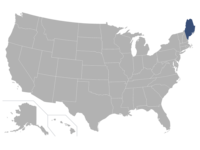
Augusta, ME