Kratom Collision Course
State lawmakers have taken the lead on regulating kratom. The controversial herbal supplement is often used for pain relief, anxiety and opioid withdrawal symptoms.
Last summer, the U.S. Food and Drug Administration pushed to ban 7-hydroxymitragynine, also known as 7-OH, saying it posed serious health risks and should be classified as a controlled substance with heroin and LSD.
In Louisiana, legislators initiated a statewide ban on kratom because of that ingredient.



In Episode 9, we’ll hear from our States Newsroom colleagues at the Louisiana Illuminator. For their podcast called The Light Switch, they took a deep dive into kratom as Louisiana lawmakers debated the ban in 2025.
Louisiana Illuminator editor Greg LaRose will help us understand both sides of the kratom discussion. This was done in partnership with WWNO, New Orleans Public Radio station.
Episode produced and edited by Mallory Cheng. Music for Stories From The States composed by David Singer. A special thank you to Greg LaRose from the Louisiana Illuminator and WWNO, New Orleans Public Radio.
Got questions? An episode idea? Email us at [email protected].
Subscribe to Stories From the States on Apple Podcasts, Spotify and Youtube.
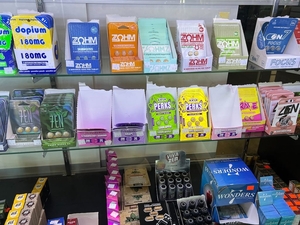
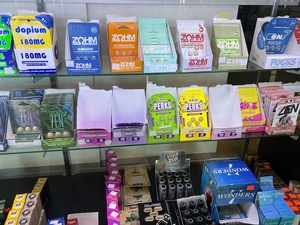
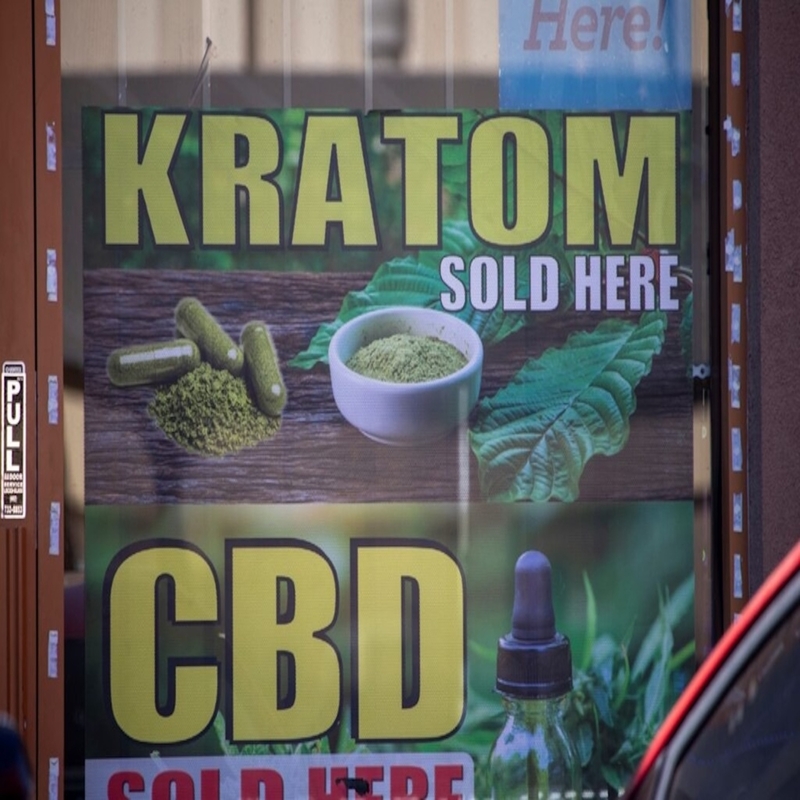
Photo: An advertisement for kratom at a shop in Phoenix, Arizona. (Jerod MacDonald-Evoy/Arizona Mirror)
Stories From The States is a production of States Newsroom, the nation’s largest state-focused nonprofit news organization, with reporting from every capital. At this pivotal moment in American democracy, our veteran journalists from all 50 states are reporting the consequences of government decision making. By zooming into one story each week, Stories From the States contextualizes and gives a human voice to what is happening now.
Transcript was created using an automated software.
Chris Fitzsimon
This is Stories From The States, I'm Chris Fitzsimon. This week we're talking about kratom, the controversial herbal supplement is used for pain relief, anxiety and opioid withdrawal symptoms. Some states have banned it entirely. Others have passed laws requiring age limits, labeling and lab testing. In the summer of 2025 the US...
Transcript was created using an automated software.
Chris Fitzsimon
This is Stories From The States, I'm Chris Fitzsimon. This week we're talking about kratom, the controversial herbal supplement is used for pain relief, anxiety and opioid withdrawal symptoms. Some states have banned it entirely. Others have passed laws requiring age limits, labeling and lab testing. In the summer of 2025 the US Food and Drug Administration was pushing to ban 7-hydroxymitragynine, also known as 7- OH. It's a powerful compound found in small amounts in kratom and sometimes concentrated or synthesized in products sold online at smoke shops or behind gas station counters. Over in Louisiana, they had initiated a statewide ban on kratom because of that one ingredient. This week, we're handing the reins over to our colleagues at the Louisiana Illuminator for their podcast called The Light Switch. They took a deep dive into kratom last summer before the statewide ban was decided. This was done in partnership with WWNO, New Orleans Public Radio station, we'll let Louisiana Illuminator Editor Greg LaRose take it away.
Greg LaRose
You might have heard of kratom, but it's more likely you've seen it, or at least the word written in neon on the front of a smoke shop or on a little bottle next to the checkout of a convenience store. Technically, kratom is not a drug, but some people use it like one. In many cases, they're using it to help them get off drugs like highly addictive opioids.
Public Hearing Guests
Now, before, I was using oxy and morphine at the same time, sometimes I even needed stuff as strong as Dilaudid. Since I've been using kratom, I haven't been able I haven't needed to use it anymore. Kratom was an essential tool in my recovery from drug addiction. Throughout the majority of my 20s, I was addicted to opiates, mainly heroin and fentanyl, but there are other kratom stories, and they don't have happy endings. He believed it would help him manage his anxiety and depression.
Greg LaRose
Instead, it has destroyed his health, his career and much of his confidence. The drug took our son and with him a big part of us. There are two bills being debated in the Louisiana Legislature. One seeks to ban kratom entirely. The other would regulate how it's packaged and sold, keeping it available for people who say it's changed their lives for the better. In this episode, we're going to explore both sides of the kratom issue. We'll hear from the people it affects, good and bad, explore the science behind kratom and the disputes over it, plus we'll chip away at the misinformation that surrounds the political debate here in Louisiana and in other states that have chosen to regulate and ban and unban the substance. I'm Greg LaRose, and you've turned on The Light Switch.
Greg LaRose
A good way to start our kratom discussion is with a little science lesson. I'm not an expert, so I'm going to lean on a few for help, and we're going to be up front with you about where these experts stand on the kratom issue. So let's talk botany. First, kratom comes from trees that grow predominantly in Southeast Asia. It's in the same genus as the coffee plant. For centuries, people in Southeast Asia have chewed kratom leaves or made tea from them as a pick me up. And in the same part of the world where there are vast sources of opium, kratom has been used to help addicts wean off the drug. Next, we need to talk about chemistry. Kratom leaves contain many different alkaloids, which are just the oxygen compounds that interact with your body. There are two key alkaloids in kratom that you need to know about, and they're as hard to pronounce as they are to spell.
State Senator Jay Morris
It has two compounds in it called mitragynine and 7-hydroxymitragynine.
Greg LaRose
Hey, that's pretty good. That's State Senator Jay Morris from West Monroe, and he wants to ban kratom altogether. More from him later. But what you need to know now is that first alkaloid, mitragynine, is what gives kratom its stimulant effect like caffeine. The other compound, what's known as 7-OH is what in higher doses, acts on the same part of your brain as opioids. Both alkaloids occur naturally in kratom, but when the leaves are cut and left to dry, the 7-OH increases, and proponents say that natural change in chemistry still makes kratom safe. But when Kratom is taken into the lab and the 7-OH is manipulated into stronger, more concentrated version, this is when it acts more like an opioid.
Professor Christopher McCurdy from the University of Florida
I equate this to like alcohol, where you have the spirits industry, you have like a Miller Lite, and you have very low alcohol containing beverages all the way up to like, you know, 190 proof ever clear.
Greg LaRose
That's Professor Christopher McCurdy from the University of Florida.
Professor Christopher McCurdy from the University of Florida
I've been studying the science of kratom for over 20 years. I'm recognized as one of the world's foremost experts on the species.
Greg LaRose
McCurdy is not for or against any of the legislation proposed in Louisiana. He came to Baton Rouge to testify on a bill that would create the kratom Consumer Protection Act in Louisiana. 16 states already have their own version, and some of them have made those high 7-OH products illegal. That would be the case under the protection act. Representative Chad Boyer of Breaux Bridge has sponsored a ban on those 7-OH products would be just fine for Adam Peak. He owns a smoke shop in Baton Rouge.
Adam Peak
Hey, Mo, what can I do for you?
Greg LaRose
You might have an image in your head of what you think Adam, a smoke shop owner, looks like. And if you still call them head shops, then you're definitely way off the mark. Adam looks like he could be on the cover of the blue album by Weezer, if you know, you know he's clean, cut, slender and starts an upbeat conversation with everyone who enters his store, his knowledge of all the products he offers is encyclopedic. What you won't find on Adam's shelves are 7-OH kratom products, in part because he doesn't know what's in them.
Adam Peak
There is no transparency on the manufacturer's level that I've been able to discover. I can't really locate the methods in which they're manufacturing and let alone where most of the brands I have. I can narrow down a farmer, if I dig hard enough.
Greg LaRose
And by farmer Adam means he could trace the natural kratom he sells all the way back to Southeast Asia, where it was grown, even though he says he would make a lot more money if he sold adulterated 7-OH products, he refuses to do so. Adam says the connection he has with his customers and why they use natural Kratom is why he believes it's past time for regulation.
Adam Peak
I've met hundreds of people who just suffer on a daily basis. Shop with me. We talk about their problems, and if anything, that's just made me more sympathetic to making sure what I'm selling is what it's supposed to be.
Greg LaRose
Adam made many of those same points when he testified at the capitol in support of a Kratom Consumer Protection Act in Louisiana. So did his wife, Leanne. While Adam says he occasionally uses kratom for an energy boost, Leanne says it saved her life since she was a teen, she says she's dealt with chronic pain, depression and anxiety. The medications Leanne was prescribed for those ailments, in her words, made her feel like a zombie. Kratom allowed her to wean off those meds, including the opioids to which she'd become dependent.
Leanne Peak
I couldn't afford to go to rehab and if kratom, if not for kratom, I know that I wouldn't be here before y'all today.
Matthew Lowe with the global kratom Association
You might be wondering why Louisiana and other states are creating laws to deal with kratom. Isn't that something the federal government handles, specifically the Food and Drug Administration, while the FDA considers kratom an unapproved drug, basically, this means that it shouldn't be promoted as a medical cure or treatment, because the agency hasn't confirmed through testing that it has a medicinal use.
Matthew Lowe with the global kratom Association
And the way that they're being marketed and pushed out onto the market is for a new solution to chronic pain, or a solution to the opioid crisis that unequivocally puts them in a position of being an unapproved new drug.
Greg LaRose
That's Matthew Lowe with the Global Kratom Association. His organization supports natural kratom products, and he wants to see regulations that protect consumers from the adulterated products and their potentially harmful effects.
Matthew Lowe with the global kratom Association
It's incumbent upon every state and the FDA to take these products on because they are fooling the population into thinking they're taking a safe natural product that's been consumed for 100 years, and it just simply isn't the case.
Greg LaRose
Matthew points out that while kratom has been used in Southeast Asia for centuries, it's only gained popularity in the west over the past dozen years or so. Its advocates say there are 24 million kratom users in the US, including 325,000 in Louisiana, and research is only just now gaining steam to confirm whether kratom can be used to treat addiction and other ailments. There was a push to have kratom declared a controlled dangerous substance. The Federal Drug Enforcement Administration considered it in 2016, but there was resistance from Congress and kratom users. It didn't meet all the factors to be declared a scheduled one drug, which is a substance that has no approved medical uses and the strong potential for abuse. But there are many who would disagree with that, and they say others need to know about the dangers of kratom before they find out the hard way, the way they did, you'll hear from them next on The Light Switch.
Norman Clay Russell
I've done too many funerals and too many you know different things because of people overdosing or committing suicide because of drugs like this.
Greg LaRose
That's Norman clay Russell. He's a licensed addiction counselor who is in charge of fresh start, a faith based rehab center in northeast Louisiana. He was among the people who showed up to a Louisiana Senate committee hearing last month on the bill that would ban kratom entirely, along with him, Dr Pete Croughan, Deputy Secretary for the Louisiana Department of Health,, aside from his state job, Croughan is an addiction and internal medicine physician.
Dr Pete Croughan
I now actually treat more patients with kratom addiction than crack addiction in my clinic.
Greg LaRose
And Dr Smita Prasad, an addiction specialist from New Orleans, who says the multitude of kratom products on the market are part of the problem.
Dr Smita Prasad
I think part of the major problem is that we don't know what's out there.
Greg LaRose
But by far the most compelling and heart wrenching testimony came from families who shared the impact kratom has had on them. The hurt is still fresh for David Lubrano Sr of Metairie. His 41 year old son, David Jr, took his own life in December, the family blames his kratom addiction. David senior struggled to keep his composure when he told lawmakers about how he learned of his son's death
David Lubrano Sr
Before 24 near midnight, my wife and I received a knock on door that no parent ever wants to get a detective in the coroner's office to inform us our son was no longer with us. So I'm here today, not for my son, unfortunately, but for other parents and other kids, the drug took our son and with him a big part of us.
Greg LaRose
The committee also heard from David's sister, Tara Ladue. While she spoke, her sister Tiffany held a photo of their brother with his two nieces and nephew. All four are in the Gulf, smiling. It's from when David taught his oldest niece how to surf at Grand Isle. The surfboard in the picture was brought to David's funeral.
Tara Ladue
I stand here today not only for my brother but also for my daughter, who carries the heavy burden of guilt and confusion, she recognized only after it was too late that her uncle had used kratom in her presence, mistaking it for an energy supplement. How could a child possibly know this?
Greg LaRose
I spoke with Tara afterwards to learn more about David's path to kratom addiction. Did he have an injury that he sought to medicate, was he using other drugs and turned to kratom for relief? She admitted she didn't know. He was a successful insurance adjuster with no obvious issues that would have steered him to drug use. But David went to rehab multiple times for kratom and couldn't shake his addiction. Tara says she believes the wide availability and false promises of kratom products are to blame for his death. Charlie and Melanie Jones of West Monroe share similar feelings about kratom. They told senators about their son who's been to 11 rehab facilities for his addiction. He was an honor graduate from high school. Now he's 29 and his mom says she can't buy him Christmas presents because he would pawn them to support his kratom addiction. Melanie says he first bought kratom from a convenience store labeled as a natural supplement. He believed it would help him manage his anxiety and depression.
Melanie Jones
Instead, it has destroyed his health, his career and much of his confidence.
Melanie Jones
Charlie Jones, who's a pharmacist, says banning Kratom is his preferred solution. He doesn't believe regulating it will go far enough.
Greg LaRose
Stories like these hit home for Troy Dalbor of St Martin Parish. He has sympathy for these families, but he says the products responsible for their tragedies is not the natural substance he credits for helping him shed an opioid addiction. It's one he developed after he was seriously injured in a 120 foot fall.
Troy Dalbor
I've listened to the argument of those that want to ban kratom, what they want to ban is not the kratom I take. It shouldn't even be called kratom.
Greg LaRose
Troy made a personal appeal to Senator Jay Morris, the sponsor of the proposed kratom ban that he was there to oppose. Troy noted that previous efforts to ban kratom in Louisiana have failed. That included an attempt to make it a schedule one drug. Two years ago, lawmakers agreed to limit its sale to adults only.
Troy Dalbor
Mr. Morris, I know you're doing what you think is right. I really do, but banning is not going to fix this. We tried banning this for years, never got anywhere. Regulation is where it needs to be at.
Greg LaRose
But Morris says if there's going to be regulation, it needs to come from the federal level.
Senator Jay Morris
If this drug or this product can do something to help people like you, then the FDA needs to approve it and regulate it, and you get it at your pharmacy, like, like so many other things. And that's, that's my opinion, but thank you for your testimony.
Troy Dalbor
I understand, Mr. Morris, but how can you, you know what it cost to regulate something that you taking away, something that's helping people? You know, why can't I go and say, I want to help myself? Why can't I put in my body? What I want to put my body?
Greg LaRose
Another person who sings the praises of kratom is John Chikuli. He's a 35 year old disabled combat war veteran who sustained three serious back injuries going back to when he was in high school. His wartime service was in Iraq, where he taught police trainees and saw up close when an explosive device killed one of their squads. John suffered a traumatic brain injury from the incident, and says he still deals with nightmares. I met John at Adam Peake's smoke shop, where he's been a kratom customer for a couple of years. John also testified at the capitol in support of the bill to regulate kratom. He walked me through his series of injuries over the years and how they put him on the path to addiction. First, it was pain killers, which he took under a doctor's supervision for more than a year, his wife, Michelle, accompanied him on his medical visits.
John Chikuli
We're going to these appointments within, like a year and a half, and we're seeing the effects it's having, long term, on me, and the deterioration of like me being on time at work, and me caring about my work and and just even around the house, like if I didn't have any pain medication, I wouldn't do anything.
Greg LaRose
John was a diesel mechanic, so he needed the painkillers to hold a job. He was moved from oxycontin to hydrocodone, and one reason doctors do that is when a patient builds up a tolerance to a drug or there's a risk of addiction, John realized the drugs were tightening their grip on him. He remembers pleading with his doctor for help.
John Chikuli
You got to wean me off of these. You got to get me off this medication. And I already know from running out early because I'm building up a tolerance, so I'm taking more than the bottle. Says it takes.
Greg LaRose
John's struggle only got worse. He says he began asking friends and family for their unused prescription pain pills. He also bought opioids illegally, including heroin. John says he could still function on the drugs until it became clear he couldn't. One day at work in the diesel repair shop, a loud noise triggered a flashback to his time in Iraq.
John Chikuli
And like, I hit the phone. I'm like, everybody get down in coming and it's like the whole shop just stops and stares at me. And I kind of realized what happened. The truck backfired. I thought either RPG or mortar round hit close to us or we were being shot at.
Greg LaRose
John says his boss called him into his office the next day. His co workers no longer felt safe around him, and his drug dependents had already forced him to exhaust all of his vacation and sick days, he was let go, and as he took and lost a succession of other jobs, John began to rely more on illicit drugs. He overdosed twice within five days, both times, there was fentanyl mixed in with the drugs he was taking. Both times, Michelle, his wife, raced from work to the emergency room, where John had to reveal the second time the heroin habit he had been hiding from her.
John Chikuli
At this point, I'm terrified. I know my addiction is going to kill me.I want to tell her I need help. I did.
Greg LaRose
John decided to enter rehab through the VA and he found a spot at its inpatient facility in Biloxi. It was a five week program, and to get John off the drugs he had been taking, doctors gave him Suboxone. It's the go to treatment to reduce opioid cravings, and it's considered highly effective as part of an overall addiction treatment plan, but it's not without its own side effects.
John Chikuli
I'm at this rehabilitation facility trying to get clean off a dope and I'm more I'm more intoxicated than I was on dope.
Greg LaRose
As he made his way through rehab, John remembers hearing from other vets about how they had found an alternative to Suboxone. Patients could come and go from the VA rehab center, and some were heading to a nearby convenience store where they bought kratom.
John Chikuli
So they would, they would like pretend to take the suboxone and, you know, spit it out when they got away from the nurse administering the mess, and they they were weaning themselves off the suboxone while in rehab, and doing it with the assistance of kratom.
Greg LaRose
John says he was too afraid to try what the other vets were doing. He didn't want to risk getting kicked out of the rehab. So once he got home, he started to do his own research on kratom and decide to give the natural version a try. He gradually lowered his suboxone dose and has been free from his addiction ever since it's been five years. Now, John says he's also come off about a dozen of the prescription medications thanks to kratom, and he now only takes kratom occasionally to deal with a pain flare up or for a little pick me up. Stories like John's have become part of the ongoing debate over kratom in Louisiana. When we come back, we'll explore the politics and business behind the proposals.
Greg LaRose
Whether to ban kratom or regulate it, is one of those topics where emotion plays a big role in where people stand. If you've lost a loved one to the substance, you certainly want to see it go away. If kratom has helped you shake free of opioid addiction, it's understandable you'd want to see it remain available. It also needs to be said that kratom is a multi billion dollar industry in the US, whether you're talking about the natural form or the more potent, adulterated version, and the business of kratom is part of the conversation as states decide whether or not to ban or regulate it. And there's even a split within the industry. The American Kratom Association wants regulation so that the high 7-OH products are strictly regulated, even banned.
Mac Haddow
The FDA concluded in public and published papers that kratom appears to be well tolerated at all ghost levels. The problem is adulterated kratom products.
Greg LaRose
That's Mac Haddow with the American kratom Association. He testified against the proposed ban. With him was Jack Henningfield, who spent more than 40 years researching substances that affect the central nervous system, including kratom.
Jack Henningfield
you can do something, you can try to ban it. But what really happens? You ban the best players. You ban the companies that are making good kratom products and labeling it properly, and they will leave the state, and then what are you left with the bottom feeders that sell adulterated products?
Jack Henningfield
Senator Jay Morris, who's pushing for that all out ban, wasn't swayed by any of their arguments. In fact, he challenged whether Henningfield was qualified to offer an opinion on what is or isn't safe.
Senator Jay Morris
You're not a medical doctor. Are you? You're just you're a PhD, so you're not you're not qualified to treat people for medical conditions.
Jack Henningfield
Correct? I do not treat people. I write books for medical doctors and publish medical journals to educate medical doctors.
Greg LaRose
Morris used the same approach to shoot down Kirsten Smith, a researcher with Johns Hopkins, who's conducting government funded studies into kratom use.
Senator Jay Morris
And you're not a licensed physician, clinical social worker, but not a medical doctor.
Kirsten Smith
No, sir. Okay. Thank you. Thank you for your testimony.
Greg LaRose
It should be noted, one of the experts, Morris asked to testify in support of his bill, also isn't a physician. Remember Norman Clay Russell with the faith based rehab in northeast Louisiana. He's an addiction counselor. I connected with Norman after his testimony, and he made the same point that Dr Pete Croughan did at that same hearing. Croughan is the addiction treatment specialist who's also the state's deputy health secretary.
Dr Pete Croughan
Like the doctor said that day that he sees, you know, more people in his inpatient with cradle addictions than he does crack cocaine, and we do too.
Greg LaRose
But I wanted to know if the number of kratomatics were significant, Morris suggested this when he presented his bill on the Senate floor.
Senator Jay Morris
The addiction centers around the state. We had several come and testify. Are full of kratom addicts. It does not help you get off of opioids. It just keeps you going when you can't get your hands on opioids.
Greg LaRose
To be clear, just three people affiliated with addiction clinics testified, and none said they were filled with kratomatics. I asked Russell for a breakdown on what types of addicts he sees most at his rehab center were kratomatics at the top of the list.
Norman Clay Russell
Not as many as methamphetamines and not as many as other opiates.
Greg LaRose
So while Russell's seeing more kratomatics, they're not filling up his treatment clinics like other addictive substances.
Norman Clay Russell
Yes, meth, opioids and alcohol are the three biggest.
Greg LaRose
Now, I don't want to come across like I'm painting Morris as untruthful. He's doing what just about all lawmakers do, really what a lot of people do when they're passionate about a subject, they bring forward the facts that support their viewpoint. It's called confirmation bias, and it happens on both sides of the kratom debate. Mac Haddow with the American kratom Association, says he wants strict regulations to keep the bad actors out of the marketplace. But Senator Morris revealed he was able to go to the organization's website and find a link to one of its members, where he obtained a free kratom sample without any ID. That type of transaction is illegal in Louisiana, and evidence that the self proclaimed good actors in the kratom industry have trouble policing themselves. Just before this episode was put together, a House committee resoundingly approved Morris's bill to ban kratom that leaves just one step before it's sent to the desk of the governor, who's likely to sign it. Meanwhile, the regulation bill sits in a committee and faces long odds to move forward, back at his smoke shop, Adam Peek says a total kratom ban could be the death knell for his business, beyond the threat to his livelihood, he says his bigger worry is the attack he sees on personal liberties.
Adam Peak
while having sympathy for others, people who abuse their rights should not affect yours as a responsible adult. That has horrible implications for a free society under any other standard.
Greg LaRose
Other kratom supporters are worried to lesser degrees. Some say they'll buy it from another state where it's still legal. Only six have banned it, and 16 states have versions of a kratom Consumer Protection Act in place. A couple of kratom users told me they already have a huge stockpile on hand, figuring that a ban in Louisiana was possible. Research will continue into whether or not kratom, either natural or altered, can become a legitimate medical treatment option. It won't happen soon enough, though, for the people who say the substance has saved their lives, but for those who've succumbed to addiction, whether kratom or opioids, it will still be too late. That'll do it for this week's episode of the light switch from the Louisiana illuminator. The light switch is produced with a little help from our friends at wwno, New Orleans, and WRKF Baton Rouge. Don't forget to support your local public radio station. I'm your host. Greg LaRose, editor of the Illuminator if you have a news tip, you can reach us by email@[email protected] and remember your donations make this program and the Illuminators work possible. Visit la illuminator.com backslash donate to make a tax deductible contribution. Until next week, we'll keep the light shining you.