ICE is using migrant kids as ‘bait,’ a Texas lawyer says
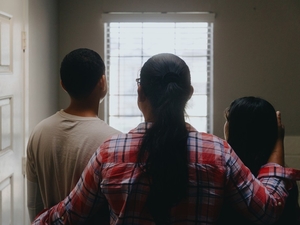
Attorney Alexa Sendukas represents many unaccompanied children in Immigration and Customs Enforcement custody and tries to reunite them with relatives in the U.S. She has started to see a startling tactic: Federal agencies are using the children to trap and detain the adults who come to detention centers to pick the kids up. It’s left many families scrambling and trying to figure out when they’ll see each other again.


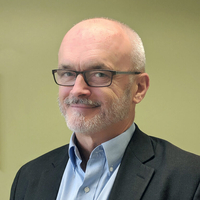

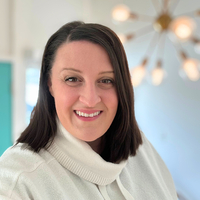

In Episode 46, you’ll hear from Alexa Sendukas, a managing attorney with the Galveston-Houston Immigrant Representation Project. She has represented many detained adults and children in their immigration cases.
You’ll also get a weekly news wrap-up from Evening Wrap newsletter writer Danielle Gaines and Daybreak newsletter writer Madyson Fitzgerald. They’ve got you covered on the latest about: local officials in Louisiana signing NDAs, how states are using their national opioid settlement funds and how school boards are dealing with declining school enrollment.
Episode produced and edited by Mallory Cheng. Music for Stories From The States composed by David Singer.
Got questions? An episode idea? Email us at [email protected].
Subscribe to Stories From The States on Apple Podcasts, Spotify or YouTube.
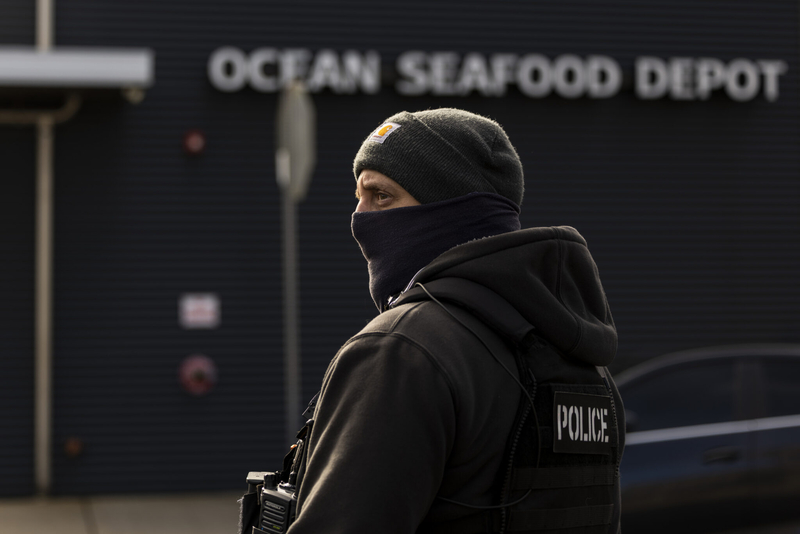
Photo: A masked, armed agent outside Ocean Seafood Depot during an immigration raid, Newark, NJ, Wednesday, Nov. 19, 2025. (Photo by Anne-Marie Caruso/New Jersey Monitor)
Stories From The States is a production of States Newsroom, the nation’s largest state-focused nonprofit news organization, with reporting from every capital. At this pivotal moment in American democracy, our veteran journalists from all 50 states are reporting the consequences of government decision-making. By zooming in on one story each week, Stories From The States contextualizes and gives a human voice to what is happening now.
Transcript was created using an automated software.
Chris Fitzsimon
This is Stories From The States. I'm Chris Fitzsimon. Here at States Newsroom, we know there's a lot going on around the country in every state capital, so thank you for being here. First, as always, we're jumping in with the news of the week from around the country. There's an industrial mega project boom in Louisiana, but a lot...
Transcript was created using an automated software.
Chris Fitzsimon
This is Stories From The States. I'm Chris Fitzsimon. Here at States Newsroom, we know there's a lot going on around the country in every state capital, so thank you for being here. First, as always, we're jumping in with the news of the week from around the country. There's an industrial mega project boom in Louisiana, but a lot of local and state officials there have signed NDAs, which leaves the public with a lot of questions about what's going on, and that could actually be a big issue in the upcoming elections. Also, a number of our newsrooms are looking into how states are using or misusing funds from national opioid settlements. We'll also hear about how school boards in states like Alabama and Minnesota are dealing with declining enrollment, and a Texas-based attorney is seen a startling tactic by ICE. They're actually using unaccompanied kids to trap and detain adults they're trying to pick up. Later in the show, we'll chat with Alexa Sendukas about how her organization is dealing with this. But first, let's check in on the news with our state's newsroom newsletter authors, Madyson Fitzgerald and Danielle Gaines. Well, hello, Danielle and Madyson. How are you guys?
Danielle Gaines
Hi, Chris. I'm good.
Madyson Fitzgerald
Doing good.
Chris Fitzsimon
A lot to talk about in the news of the week. But first, the NFL is back in full force everywhere I go.eople are asking me. I was at a restaurant there that a guy was asking me if I saw the Patriots game. So a lot of people are talking about the NFL.
Madyson Fitzgerald
Yeah, I'm excited. I have been waiting for this. I'm a huge football fan, so it was it was. I'm glad that the Steelers won because that's my primary team. But because I'm in Philly, I also was rooting for the birds. So Steelers and Eagles did good, and I'm glad.
Chris Fitzsimon
Danielle, where are you on all this?
Danielle Gaines
Oh, big Bears fan, Chicago all the way. Teaching my little girls to sing "Bear Down, Chicago Bears. So that's what we sing when we win.
Chris Fitzsimon
The opening week of the the Carolina Panthers, I think the Bears are still scoring points.
Danielle Gaines
It was brilliant. Yeah, it was gorgeous.
Chris Fitzsimon
All right, well, let's talk about the news of the week. A lot of stuff happening, obviously, as always. I feel like every week there's something remotely about privacy, data centers, sort of people wondering about what's going on, and that seemed to be true this week as well.
Danielle Gaines
Yeah, we had this really fascinating story out of Louisiana Illuminator where they took this kind of big overarching idea of lawmakers signing NDAs and all the secrecy around these really big projects. So, Louisiana is undergoing, you know, an industrial mega project boom. There are several things underway. There's a big Meta data center, a SpaceX facility, a steel plant, and throughout this process, many lawmakers involved in making decisions on this are signing non-disclosure agreements with these mega tech companies, and so the story was just kind of looking at that issue, looking at how voters react to that issue. It's something that candidates are trying to bring out on the campaign trail. It prompts a lot of secrecy, privacy concerns, whether or not lawmakers are looking out for the best for the people they represent, so some of the things they reported on is that you know more than 100 people in Governor Landry's office have signed blanket NDAs to not discuss various projects or what they're working on as they work for the governor. It's poised to become an issue in a couple of races. So the U.S. Senate race, the underdog Democrat candidate, is trying to make that an issue as he runs against a U.S. representative who signed a NDA with Meta and also was trading Meta stock. Although she says she wasn't aware of the stock trades at the same time.
Chris Fitzsimon
It's so weird. I used to I used to feel like what our government, the people that we elect, or the people that are working for us, are accountable to us, and that we have a right to know what they're up to. But these NDAs seem to fly in the face of that.
Danielle Gaines
Yeah, one of the things Louisiana did in that story is they actually asked some candidates in the congressional districts where some of these projects are coming up whether or not they would agree to not sign NDAs as part of their campaign.
Chris Fitzsimon
Madyson, what's it's happened? There's some other sort of tangentially related things are happening across the country, not just in Louisiana.
Madyson Fitzgerald
Yeah, and like even from some of my like previous reporting on data centers, it's kind of upsetting how secret everything is. Like from like proposing the project to the construction of it all, a lot of data center developers or tech developers will basically put on this front that it's just like a manufacturing building or a warehouse building or all these other like zoning codes that maybe like cities and towns aren't really paying attention to, and so they're not required to go through public hearings and they're not required to get you know votes and things of that nature, and so that's why you see a lot of these areas putting in their own you know zoning amendments and things like that, so they can try and catch it before it gets too far down the pipeline to where now there's a data center in your neighborhood. But yes, there are a lot of similar issues happening in other parts of the country, specifically in New Mexico this week. The state ethics commission said that the tech giant Oracle spent more than 3.4 million in recent months on advertisements meant to influence the state's air quality permitting process for Project Jupiter data center, which has garnered national attention all year long. In a statement, the commission said that it was likely the largest lobbying advertising campaign ever disclosed in New Mexico, and noted that it reached out, it reached a voluntary agreement with Oracle to disclose its advertising expenditures before taking further legal action.
Danielle Gaines
And I just want to put a plug too for Source New Mexico. That's been all over the Project Jupiter reporting, because you know they also broke the story that representatives from the company or from a canvassing group for the company had put in false positive testimony on behalf of residents and even lawmakers in the state's comment portal. So you're talking about distrust. It's it's high, especially around these major projects.
Chris Fitzsimon
Another issue that people are wondering about, and a lot of our outlets have been writing about, is what happened to all that money from the opioid settlement. Like, where's it going?
Madyson Fitzgerald
Yeah, I saw a ton of our newsrooms reporting on it this week, and so I was I was telling Danielle, I was like, I wanted to look more into it because I was like, we hear a lot about these funds. It's huge amounts of money, but I was like, where is this all coming from? And so, looking into it, for those who don't know, opioid settlement funds refer to billions of dollars from opioid manufacturers, distributors, pharmacies, and a lot of other groups that settled various lawsuits regarding their nationwide opioid crisis, and so as a result, states have had all the all this money to be able to address that. And this week, an analysis by the West Virginia Watch showed how localities spent nearly 10 million more of the opioid settlement funds that they received between 2024 and 2025 than in the year previously, and a bulk of that went towards law enforcement, jail bill payments, and support for emergency medical services. And but in New Mexico, on the other hand, state agencies failed to spend roughly a quarter of the millions of dollars in opioid settlement funds they received in 2024, according to a new report from the state auditor's office. And then finally, in Virginia, a state agency is steering more than 12 point 3 million in opioid settlement money towards state programs ranging from naloxone distribution and treatment services to youth education and recovery support on college campuses. So, as you can see, a lot of states are approaching it in different ways, but it seems like there might be an issue with oversight.
Danielle Gaines
You know, one of our partners, Mississippi Today, they have a lot of reporting over the past year about the troubles that an opioid settlement advisory council has faced in just getting up and running. They're still doing organizational work. They've now gotten outside help. Last year, you know, they were putting recommendations together and spent a lot of time vetting applications, and then the legislature just rewrote the bill and gave the money to different places, including to people who hadn't applied through this formal process that was created. So states are really struggling with how much, how to deal with this much money. And you know, in general, it's supposed to be going to addiction treatment. And one of the interesting things about the West Virginia report is that it mostly went to law enforcement and it mostly went to the purchase of new patrol vehicles.
Chris Fitzsimon
Yeah, it reminds me a little story of the tobacco settlement when it was supposed to help stop people from smoking or help people who were suffering from the ill effects of smoking. You almost wonder why they don't put in these lawsuit settlements more restrictive language somehow.
Danielle Gaines
Yeah, so the states are like grappling with that. We had a story in Pennsylvania too about the lessons that could be learned from how the tobacco settlement and how the opioid settlement are being spent in this new upcoming multi-billion-dollar, multi-state settlement for social media harms.
Chris Fitzsimon
Another story I thought was really fascinating and something I hadn't really even thought about is declining enrollment in schools and what all that means.
Madyson Fitzgerald
Yeah, it's a it's a huge deal, and one of the reasons why I know a lot about is because my mom works in education, and she's worked in education for my entire life, and she even has seen like the changes and just the amount of kids that are coming in the door and how many are staying through all four years of the high school that she teaches at and things like that and so it's just been and a lot of this has also been exacerbated by the COVID 19 pandemic, but State,ine earlier this week had a really good story on it and they basically reported that this is driven largely by declining birth rates, but it has also worsened by several other factors, and so districts and school boards are making decisions to close and consolidate schools, which is drawing anger and anxiety from parents and students. And many states are stopping short of forcing mergers, but taking a variety of steps to encourage them. So, like in Alabama this week, the Alabama public charter school. Mission approved its first merger application and renewals for two charter schools, and so the mission basically approved a merger policy in July that'll allow two or more schools to combine. And this was its first time happening. And then in Minneapolis, right now, they're also looking to close as many as 16 schools amid declining enrollment.
Chris Fitzsimon
Yeah, it's interesting for many communities, the school is sort of the centerpiece of a neighborhood, and it seems weird to think about that shutting down.
Danielle Gaines
Yeah, and I mean, I just went to back to school night with my kid yesterday, and one of the things they were talking about was like attendance because it's so important. Your your per day headcount is so important to all of your various funding formulas and mechanisms, but I also we also had some stories this week about declining college enrollment, and so I thought that was interesting. It's obviously it's actually a problem that's a little further off than the K 12 enrollment decline, obviously because you have this demographic shift working its way through the education system, but declining birth rates are going to catch up to colleges, and then we also have the issue of declining international enrollment at colleges and less interest in going to college overall. Kind of the finances of that are very uncertain at this point in time. So, Utah had a story about how the state officials there are kind of starting to deal with this, and one of the things that they were looking at that I thought was really interesting is that they basically said if we could increase our retention rates, if we could increase the number of students who stay with us and actually graduate from college, we could get rid of what we're losing in the enrollment, and we could make up that that money, that funding, and keep our student body whole. I thought that was really interesting. And then the state also discussed pursuing nontraditional older students, people coming back for additional education.
Chris Fitzsimon
Well, what about one last thing? What's what's interesting out there?
Danielle Gaines
Picked a kind of fun one, I guess. I guess we're really on a school theme this week. But New Jersey has passed a new policy that kids have to have their cell phones away from bell to bell, and so a state lawmaker, somewhat cheekily, said he is introducing a bill called the Practice What We Preach Act, and it would bar his fellow legislators from using or even possessing their phones during floor debates and committee meetings. This was put forward by Republican Assemblyman Brian Bergen, so he's often fighting an uphill battle in legislative debate on the losing side of various votes, and he talked about just being really disenchanted when he sees people shopping online or doing other things, playing a game, scrolling through TikTok while he's trying to make a point in legislative debate. So I don't know that it's going to go forward, but it's out there.
Chris Fitzsimon
I wonder how many texts he got after he filed that bill on his phone.
Danielle Gaines
Yeah, I'm sure.
Chris Fitzsimon
Well, thank you guys very much as always. Good to see you.
Madyson Fitzgerald
Good to see you.
Danielle Gaines
Thank you.
Chris Fitzsimon
To stay up to date on the latest news happening in all the states, subscribe to Daybreak and Evening Wrap to get those newsletters right in your inbox. Please go to newsfromthestates.com/subscribe. In a moment, we're going to chat with Alexis Sendukas, a managing attorney with the Galveston-Houston Immigrant Representation Project. The Texas-based attorney represents many unaccompanied children in immigration and customs enforcement custody, and tries to unite them with their adult relatives in the United States. But throughout Trump's second term in office, she started to see a startling tactic: federal agencies actually using the children to trap and detain the adults trying to pick the kids up. That's left many families scrambling, trying to figure out when they'll ever see each other again. In a moment, we'll hear from Alexa on how she's helping families maneuver in the legal system. We'll be right back.
Nelle Dunlap
Hi, it's Nelle Dunlap, Product and Engineering Director at States Newsroom. At States Newsroom, we have more than 200 reporters and editors working for you. Our journalists are located in all 50 state capitals and Washington D.C. providing state-focused news coverage about the issues that matter most to you and your community. You can support our work by going to statesnewsroom.com/subscribe.
Chris Fitzsimon
Alexa Sendukas is a managing attorney with the Galveston-Houston Immigration Representation Project, also known as GHIRP. Well, Alexa, thank you very much for being with us. We I know you're really busy, and we appreciate your time.
Alexa Sendukas
Yes, of course. Thank you for having me.
Chris Fitzsimon
Well, if you could give some of our listeners some context, how do kids, sometimes very young children, find themselves in these federal shelters? What what what is happening?
Alexa Sendukas
There's usually two primary ways that kids end up in custody. It's through the Office of Refugee Resettlement, which is part of the Department of Health and Human Services. Traditionally, most of the children in these shelters were coming from the southern border, and they would come to the United States alone or with a person who was not their parent or legal guardian, and they were processed at the border and sent to ORR custody to then try and reunify with a family member in the United States. More so now, we are seeing a lot of children who were living in the United States who are separated from their family and sent to ORR custody for a variety of different reasons, but generally speaking, the idea is that they are without a parent or legal guardian in the moment of apprehension, and so they are sent to ORR custody so the government can figure out where to release them.
Chris Fitzsimon
I know the Texas Tribune has done a lot of great reporting on this, and and in some cases, the children are used as some lure in some ways to actually arrest and detain their parents.
Alexa Sendukas
Yes, this is very explicit nowadays. The children are literally being used as bait to lure their parents or other family members to various appointments that they are told is in connection with the OER reunification process, but actually is not. It's being done by ICE, and it is very obviously a trap to detain them and try and deport them.
Chris Fitzsimon
So, what happens in this in a case like that? Some parent or guardian shows up with the child. the The parent is taken taken away, and for people aren't familiar with the system, then what happens to that 10-year-old boy or girl at that at that moment?
Alexa Sendukas
A lot depends on what's going to happen to the parent. We've seen this happen so many times now in a large variety of circumstances. So if we're able to get the parent out of detention, which is rarer nowadays, unfortunately. But if we are, then they can resume the reunification process once they've been released. If not, often they have to fight their case from detention and assert different legal protections before the judge. And in that case, we're seeing ORR deny them as sponsors and find that they're not fit to serve as their child sponsor simply because they are in detention.
Chris Fitzsimon
What happens when that parent or guardian is taken away? So that child is taken somewhere. I assume
Alexa Sendukas
It it does depend. So a lot of times, what we see is the child is not there in the moment that the parent is taken. So we've seen situations where like the child is watching from the home, or they're at school, and so then usually another family member, or we've seen neighbors have to take them in, or even older siblings having to raise their younger siblings. But we have seen situations where they're both apprehended together, so the children are just sent to ORR custody again, as if they're coming from the border with no family, but they have family here, and they've been living with family and going to school, and they have their lives here, and they're separated and being put through this same process that children from the border are typically put through.
Chris Fitzsimon
And then those children in custody obviously need representation. Well, how does that work?
Alexa Sendukas
Well, traditionally, ORR funded a large network of nonprofit legal service providers, including GHIRP, through the Acacia Center for Justice. Unfortunately, the government let that contract expire on July 31st, and they've been attempting to put in place an alternative, but it has been far from adequate to cover all of the children that were represented through the program, it's almost 20,000 children, 1800 of whom are in government custody right now and have urgent legal needs, and unfortunately, a lot of those children right now are not receiving the legal assistance they need.
Chris Fitzsimon
So, 1800 children in that status. I think people who have been sort of following this remember when the funding was cut off to support the legal representation, but there was discussion that a law firm in Texas received a contract to do that. What what happened? What happened?
Alexa Sendukas
Yes. So initially. It appears that the government contracted with a Houston-based law firm, but they withdrew almost immediately after a great deal of public scrutiny, and so then the government pivoted to another organization that also had ties to the administration that also lacked experience representing unaccompanied children in custody, and that award was protested, and so it's currently not in not in effect. So then they've now pivoted to a third organization, but like I said, not all the children, not nearly enough children, are able to receive legal representation, and they're on active court dockets, and they're having their asylum interviews expedited by USCIS. And ICE is moving very quickly to remove anyone who's ordered deported by the immigration judge. So it's it's a time when legal assistance, pro bono legal assistance, is needed more than ever, and it's not available.
Chris Fitzsimon
You've represented folks in this realm. Tell us what that is like, and what how that how that how that works, and what that must be going through their minds.
Alexa Sendukas
It's very very hard on the children. GHIRP has been doing this work for many years. We have specialized expertise in representing these children. We perform trauma-informed, child-friendly, culturally competent services to the children. So we spend a lot of time building trust with them and making sure they understand the process that they're going through, what rights they have, and helping them assert those rights and seek protections that they qualify for under the law. And now that they're being detained for so long, I think the average length of stay is up to 180 days as of last month. They are suffering a great deal. We have seen so many harm harms to their mental health. We're seeing increased hospitalizations, incidents of self harm. They're losing hope. We've seen firsthand the transformation in these children from when they arrive to the ORR facility, hopeful with dreams and hopes, and now after spending months and months in custody, not knowing when they're going to get out, or if they're going to get out, or if their parents are going to get detained, they have completely lost hope. They're anxious. They're depressed, and so more than ever, it's very important that we maintain the trust we've built. And what the government is now asking us to do, having terminated our contract and almost 100 other nonprofit organizations' contracts, is turn our backs on them and abandon them at a time when they need the most help. And so the effect on the children is the worst of all, and especially when their parents are detained, it's horrific to see how it affects them because a lot of the times it happens at the end of the process, and so they are expecting to be released soon, and instead they're told the opposite.
Chris Fitzsimon
And these are kids. It just seems like so they're in school somewhere one day, and the next day they're in custody somewhere else, not knowing where their parents are.
Alexa Sendukas
Yes, we've seen a lot of family separations where children have been almost educated their entire lives here. They're in high school, they're getting honors. They're they speak almost perfect English. They're very well adjusted, and they're just being ripped from their lives and put into a detention center and told that their parents have to now fight to get them back out.
Chris Fitzsimon
And what are these detention centers like?
Alexa Sendukas
They are different than DHS facilities, thankfully. So we typically refer to them as shelters, but the children are not free to leave, and they often report feeling stuck and imprisoned because it's the same routine almost every day. They have limited ability to leave the facility. They're not often not permitted to mix genders because we one of the facilities we've worked with has mixed genders, and so they specialize in receiving siblings, and they can't even see their siblings often more than once a week. And then the the parents also have limited time; they're able to speak to the children when they're in these facilities.
Chris Fitzsimon
What is it like to represent these kids? What is that like to to feel like you're there to help these kids and you keep running into these roadblocks?
Alexa Sendukas
It's never been this hard before. I think we were anticipating a lot of changes when this administration took office, but nowhere near the scale we've seen. Our clients are under attack from every single agency right now, and it's a very comprehensive and coordinated initiative to fast track their deportation. So we work really hard to educate the children and inform them of their rights and help them seek these protections. But this administration has made it almost impossible for them to obtain legal relief and to fight their deportation.
Chris Fitzsimon
When when you meet folks and tell them about what you do for a living, what's the first thing you tell them?
Alexa Sendukas
Well, to be honest, I've sort of stopped talking about it because it's really hard to understand if you're not in it right now. But I always tell people that I work with children in custody, and they're usually shocked that there's a need for that. And I have to explain there across the country there's children in custody, and we're seeing it more than ever, children in the interior of the United States being picked up by law enforcement, turned over to immigration, and then being stuck in detention. Usually, they're very surprised and want to know more.
Chris Fitzsimon
I think we almost-I don't feel this way, but I think sometimes you almost become numb to these individual stories that we see. But this is happening every day in in all across the country, and it feels like it's almost too. There's too many things happening to report or to understand.
Alexa Sendukas
Yes, that is definitely true. It's something we've been navigating also with fundraising, because now that we've lost, it's almost half of GHIRP's organizational budget. The funding that we've lost through the Unaccompanied Children Program, and we are trying to fundraise with individual and foundational donors, but the need is so vast, and they're already being asked to help with so many other causes right now. It's really difficult. I've been lucky to work with some really amazing reporters who want to shine light on these things, even with everything else going on. But we really have to fight to direct the public's attention to this because a lot of it is happening behind closed doors, and you're not going to know about it unless you're very specialized in the field or you're able to access some of these stories.
Chris Fitzsimon
What can people listening do? What would you tell people how they can help?
Alexa Sendukas
Well, I think we really need Congress to step up and provide funding for this again, because this has been this work has been has had bipartisan support and congressional appropriated funding for years and years and years, and there are a lot of organizations that still want to do this, and a lot of us are actually still doing some of the work for free because we just feel like we can't abandon our clients right now.
Chris Fitzsimon
Right. I mean, it it does seem a pretty amazing that we're having to ask people to get public officials to figure out a way to make sure children who are in in detention need representation. Children.
Alexa Sendukas
Yes. Yes. They're children. They're just like you know our children. I'm I'm a mom, so it's very personal for me to think about children this young-I mean, our youngest client is four years old right now. Some of the children we work with who are in detention are six years old. They do not understand what's going on and why they're being kept there and why they can't go live with their mom. One of our one of our clients, their stepfather had bought them a dog to celebrate their arrival, and they never even got to see that dog because they never got out of detention. So yeah, they are children, and they do need our support. This is why the Trafficking Victims Protection Reauthorization Act exists, the TVPRA. It's because Congress and the public recognize that these are some of the most vulnerable people in our society, and we have an obligation to support them. And right now, this administration is doing everything it can to just deport them without due process, out of the public's view. So we're working very hard to stop that, to make sure they have this due process and this ability to seek protection, because a lot of them qualify for relief under the law, but they can't obtain it without an attorney, and they can't find an attorney while they're detained. So we need the public to step up as well, and we need funds to continue doing this work.
Chris Fitzsimon
Well, thank you so much for the work you're doing, and hope you're taking care of yourself. We really appreciate you being with us. Thank you so much.
Alexa Sendukas
Thank you, I appreciate it.
Chris Fitzsimon
Well, that's our show for this week. Thanks for listening to Stories From The States. I'm Chris Fitzsimon. Mallory Cheng produced and edited the podcast. David Singer produced our theme music. If you liked what you've heard, please share it with someone you think might enjoy it, and leave a rating and review. It means a lot to know what you think about the podcast, and it helps other people find us. To stay up to date on the latest episodes, subscribe now to Stories From The States, a podcast from States Newsroom, available wherever you listen to podcasts. We'll talk to you next week.