Continued DEI pushback at colleges and universities
Diversity, equity and inclusion programs have faced constant attacks from the current Trump administration.
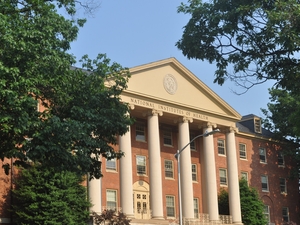
Early in his second term, President Donald Trump signed several executive orders to terminate federal programs with any mention of DEI. This included the end of funding to some National Institutes of Health programs.
Some states pushed back, and now the Trump administration has agreed to drop anti-DEI criteria for stalled health research grants.
However, for one former Georgia professor, his state didn’t participate in this legal battle.


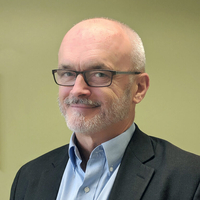
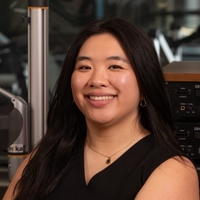
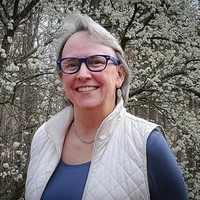
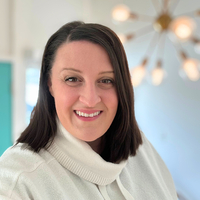
In Episode 12, you’ll meet Géza Kogler. He most recently was a professor at Kennesaw State University, but was one of the many recipients who lost their NIH grant.
His program aimed to train the next generation of orthotists and researchers who specialize in designing, constructing and fitting medical devices such as braces, splints and supportive footwear.
Kogler believes that his NIH funding was terminated because it specifically supported researchers from underrepresented backgrounds.
At the University of North Carolina System, they’ve been tackling to repeal the system’s policy on DEI in favor of “principled neutrality” since before Trump’s second term.
You’ll hear from NC Newsline Deputy Editor Clayton Henkel on what is going on at the 17-campus system.
Finally, Evening Wrap newsletter author Danielle Gaines shares the top stories she’s watching.
Episode produced and edited by Mallory Cheng. Music for Stories From The States composed by David Singer.
Got questions? An episode idea? Email us at [email protected].
Subscribe to Stories From the States on Apple Podcasts, Spotify and Youtube.
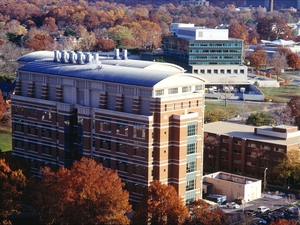
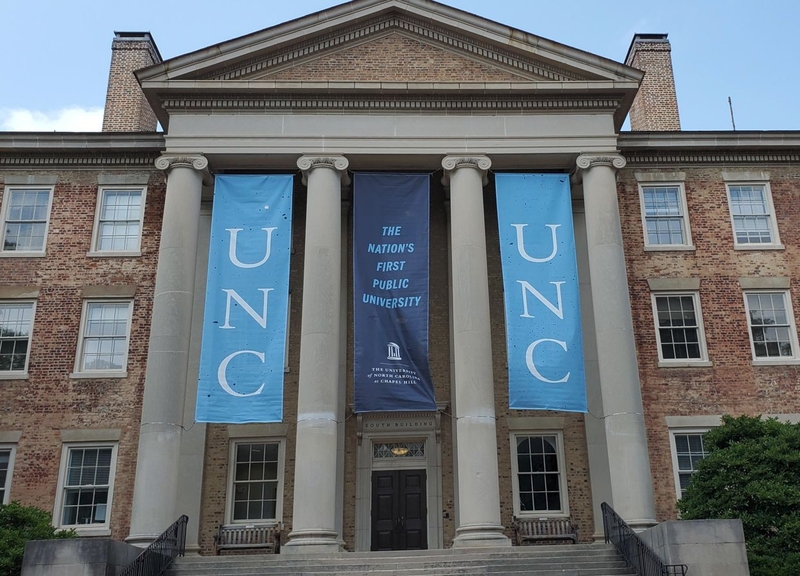
Photo: A photo of a building at University of North Carolina's Chapel Hill campus. (Photo: Clayton Henkel/NC Newsline)
Stories From The States is a production of States Newsroom, the nation’s largest state-focused nonprofit news organization, with reporting from every capital. At this pivotal moment in American democracy, our veteran journalists from all 50 states are reporting the consequences of government decision making. By zooming into one story each week, Stories From the States contextualizes and gives a human voice to what is happening now.
Transcript was created using an automated software.
Chris Fitzsimon
This is Stories From The States. I'm Chris Fitzsimon here at States Newsroom. We know there's a lot going on around the country, in every state capital. Thanks for being here. Today, we're talking about diversity, equity and inclusion, specifically how they're impacting programs at colleges and universities. DEI programs have face...
Transcript was created using an automated software.
Chris Fitzsimon
This is Stories From The States. I'm Chris Fitzsimon here at States Newsroom. We know there's a lot going on around the country, in every state capital. Thanks for being here. Today, we're talking about diversity, equity and inclusion, specifically how they're impacting programs at colleges and universities. DEI programs have faced constant attacks from the Trump administration. At the University of North Carolina system, they've been tackling the repeal of the system's policy on DEI. You'll hear from NC Newsline's Deputy Editor on what's going on. But early in his second term, Trump signed several executive orders to terminate federal programs with any mention of DEI. This included the end of some funding to national institute of health programs. Some states have pushed back, and now the Trump administration has finally agreed to drop anti-DEI criteria for stalled health research grants. However, for one former Georgia professor, his state didn't participate in this legal battle. We'll hear from him in a moment.
Chris Fitzsimon
For over 40 years, Geza Kogler was an educator. Most recently, he led a program aimed at training the next generation of orthotists and researchers who specialize in designing, constructing and fitting medical devices like braces, splints and supportive footwear. However, shortly after starting his second term in office, the Trump administration announced major NIH funding cuts. They also used controversial standards that discourage gender, race and sexual orientation initiatives and vaccine research. In the frenzy of all of these changes, Geza's program was canceled. Attorneys general from 17 states like Arizona, California and Wisconsin challenged the new criteria and won. Now, NIH would consider grant applications without judging the efforts related to diversity, equity and inclusion, or DEI ,or vaccines. Unfortunately, Geza's state wasn't part of the lawsuit. He's recently retired, but he lost a program he believed in, and quite possibly his career in academia. Geza joins us now. Thank you for being here and talking to us.
Geza Kogler
Thank you for having me today.
Chris Fitzsimon
Well, first, let's talk about the program that you were running that received the NIH grant funding. Tell us about it and orthotics.
Geza Kogler
Yes, this was the NIH training program, and it's called the research education program R25 and it supports research education activities in various areas of missions that the NIH pursues. So the goal is to support educational activities that encourage individuals this particular one with diverse backgrounds or those from underrepresented biomedical or behavioral science areas of interest, and the goal is for them to pursue studies or careers in research. And I was awarded one of those grants a couple years ago for 1.3 million, and most of those funds went to support scholarships and stipends for the students that would enter the program.
Chris Fitzsimon
What were you training these students to do or to become?
Geza Kogler
So the National Institute of Health has many different institutes with it, and two of them, the National Institute of Biomedical Imaging and Bioengineering and the National Institute of Child Health and Human Development where orthotics and prosthetics is funded. They were seeking to increase the amount of research scientists coming through the pipeline. And so the goal was to recruit STEM students, science, technology, engineering and math that were entering universities, and it's been well documented, and there's evidence to support that when students as undergrads, are exposed to research, they often go and pursue graduate degrees and pursue research so they can — all these students had various backgrounds, and the goal was to train them in areas of bioengineering or biomedical engineering. And the focus of our grant was in orthotics and prosthetics technology and innovation.
Chris Fitzsimon
Right. So for folks, I think most people might know, but tell us what orthotics and prosthetics technology is actually, how it affects and interacts with people's lives.
Geza Kogler
Sure, orthotics and prosthetics is includes a scope of medical practice and allied health profession that provides prostheses or devices for individuals with limb loss, and on the orthotic side, there any devices that fit literally head to toe, that control movement for patients that have diseases, pathologies or injuries that compromise their physical function. And these devices aim to improve their functional attributes. And between the two disciplines, which are sister professions, orthotics is by far greater the amount of patients that we treat than prosthetics.
Chris Fitzsimon
And I know this may seem sound obvious to you, but why is this such an important function? Why should we be trying to get these new young minds into this field to help people what's at stake here really?
Geza Kogler
Well, it's basically by need. There is an increased need for these types for orthotics and prosthetic services because of the aging population. The health, at least here in the United States and other countries, isn't very good. We have problems with diabetes, cardiac health and obesity, and that leads to these problems that require the devices that this profession provides. And many students are actually excited about the field because of the broad areas of training and experience that they think they may may contribute, like there's an engineering component, but it's also patient oriented, so they get to work with people, and they can help improve people's lives.
Chris Fitzsimon
How did you find out, or when did you find out that this grant would no longer be available?
Geza Kogler
Well, we kind of anticipated that, with the change in administration starting in January, that something like this might happen, and as it rolled out, the other directors of these programs at other universities in the country. We started talking to each other, wondering what we would do if there were cuts or whatever, and so they started making these cuts almost immediately, February, March. I think my program was the last one to get notified. It was terminated in May. So it was kind of a quick rollout. We didn't have any solutions of how we might resolve it, because our programs require this type of funding.
Chris Fitzsimon
What was the reaction among the students? Were there already students that were participating?
Geza Kogler
There were so my program, over the course of six years, the program was funded by the National the NIH for four was designed to support 32 students through their undergraduate training. So we were halfway there. We had about 16 students, and we're in our second year, and so immediately they're what these students are, well aware of social media pushes of the news talking about it, and they were very concerned. At the beginning of our sessions, the first thing that we would discuss with what you know, how might this impact us? And unfortunately, there was very little information provided to the directors of these programs. We kind of knew it was happening, but we didn't know how it would affect us, if it would be gradual, like a phase out or a complete loss. So they were immediately concerned, because this was their basically their scholarships. And so these students, after that funding was reduced, lost their tuition funding, and perhaps ended up trying to pursue other avenues to get support, but this was their main source of funding.
Chris Fitzsimon
Do you know why the NIH funding was canceled? Did you get a reason? I know that they were trying to cancel anything that had any part of it that would be helping kids from underrepresented communities.
Geza Kogler
We use a NIH portal for all of our business interactions with the NIH that usually report what the status of the grant is, and in that portal, there was no no statement of the reason why the grants were terminated. Some of them said that it was departmental. They just said departmental needs or did not meet policy, very, very vague and kind of a general overview of the reason.
Chris Fitzsimon
And how did you, what was your reaction? It does sound like you maybe saw it coming, but now looking back, what do you? How do you, what do you make of this, of a program training students in a medical profession where there's a shortage or where there's a need that helps people's lives and that now that funding isn't there.
Geza Kogler
Well, there's no question that personally, I had decided to increase my attention within my career to help train all aspects of students. So in addition to this program, I teach in a master's of science and prosthetics orthotics program, which is the entry level into the field, and but this would there was no avenue for undergraduate students to be connected to the profession that that may not want to be practitioners, but could play a role in developing the next innovations and technologies. And so for me, it was, it was a real change in in what my career was going to look like, because it takes time. It took a couple years to develop the to write the grant, pull together the team that would be helping initiating the program, garner support from your university, and then set. A place in system where you could execute the grant and recruit these students. And so that created a big void. I put everything into this one element. I wanted to build a research program in orthotics and prosthetics, and that requires few students. I already had graduate students, but the undergraduate students are an important component.
Chris Fitzsimon
What do you make of overall? I mean, the your this grant that you were part of is one of just hundreds across the country that were that were canceled and ended and almost in every state, and I wondered what it feels like a change in the way we help students and fund higher education projects?
Geza Kogler
When you look at the US, which leads the world in scientific, engineering and medicine, innovation and technology, and we've been that way for for decades. Now, we have the best system to work. We're the envy of most other countries and being able to innovate, and obviously it has a direct impact on our economy and why we are so successful. It doesn't make sense to me why you would have make such a damaging policy, you know, for the whole country, economically and also with our education and higher education institutions.
Chris Fitzsimon
And you have since retired, right?
Geza Kogler
I have retired, there were some personal reasons. I just moved to South Carolina, and I felt that if I stayed at the university, I would have to build a whole other direction of where my career was going to end up, with research grants, and I wouldn't have those students access to do the research. So I decided that I probably am going to transfer my talents into industry, and I'm still writing, I'm still writing scientific papers, and I'm writing some textbooks, some medical texts, and providing some advocacy to these areas, because I still believe passionately. You know, in pursuing these programs.
Chris Fitzsimon
Are you worried that the I mean, you were you started something relatively rare there, trying to get undergraduates interested in this program. Are you? Are you worried about, are we going to have enough smart, bright students from underrepresented communities going into this field to help people?
Geza Kogler
I don't see any way that we will have that group of demographic students, underrepresented with diverse backgrounds, that are going to be tainted. Here's the thing that that I don't think is the public really kind of understands the push for this is all was all related to diversity, and that anything that was supporting diversity was not going to be in the policy of this administration, but there's so many underlying elements that were positive. So what's happening is there's a big educational cliff happening in higher education, where there's declining birth rates, there's less students graduating at 18 that want to go in school, where there's an increased need for scientists, engineers and healthcare providers. And so if you're having a decrease in that and you're wanting the best, especially STEM students, which is also shrinking, it becomes more competitive. These students that were underrepresented minorities or groups, they don't have access to actually pursue these degrees and become scientists and engineers. And so the idea was, this was a mechanism to take where it's decreasing, and they would never have the opportunity. But because NIH would support them, or the National Science Foundation, they could actually pursue careers like this. And so it was actually meeting a declining pipeline of STEM students within within the workforce. And this was actually meeting it.
Chris Fitzsimon
Yeah, well, I guess it's a we will see what happens. I really appreciate you speaking out and being with us, and thanks. Thanks for what you're doing.
Geza Kogler
Thank you kindly.
Chris Fitzsimon
Over in North Carolina, the University of North Carolina system has been trying to repeal DEI policy, but the journey to dismantling the programs is a lot more painstaking than they anticipated. In a moment, we'll chat with NC Newsline Deputy Editor Clayton Henkel about what's going on
Moses Esheit
At a time when so many communities are losing their local news outlets, States Newsroom is filling a gap. We are now the nation's largest state focused nonprofit news organization with reporters based in every state capital and Washington DC. But we can't do it without your support. Your contributions. Allow us to produce award winning journalism and deliver it to you for free. No pop ups, no pay walls. This is a crucial time to support local journalism, and every bit helps to give go to states newsroom.com/donate.
Chris Fitzsimon
The University of North Carolina system is one of the institutions focused on eliminating what they consider DEI. In May 2024 the UNC Board of Governors voted to formally repeal the system's Diversity Equity and Inclusion programs in favor of what they call, quote, principled neutrality. But efforts to do that in higher education and in North Carolina have not been quick or easy. Joining us now is Clayton Henkel. She's the Deputy Editor for NC Newsline. NC Newsline is an outlet with States Newsroom. Hi Clayton.
Clayton Henkel
Hey Chris.
Chris Fitzsimon
Well, tell us what's going on here with the UNC system. It's a story that's happening around the country, but how are UNC efforts to root out what they consider DEI working?
Clayton Henkel
Well, this is something, as you mentioned in your introduction, they've actually been working on for well over a year now. They've been trying to get a little bit ahead of the curve, if you will, in repealing Diversity Equity and Inclusion and complying with the Trump administration's executive orders. So most recently, they had a hearing in which the UNC system's Senior Vice President for Government Affairs was meeting with a House Select Committee on Government efficiency, sort of like a North Carolina version of DOGE if you will, and explaining that they've really gone to extraordinary lengths to make sure that all 17 campuses are complying with what they call their new equality policy. Some of the things that they've done is they've emphasized refocusing on student success, reminding these campuses that they're going to be an ongoing vigilance about making sure that they are not moving forward with any DEI trainings. There was a memo that went out that mandated that all general education requirements that included completion of courses and course credits, rather for Diversity Equity inclusion, that those be suspended. And they say that those are just a handful of examples of what's underway.
Chris Fitzsimon
Yeah. So one of the things that they mentioned originally when they did this was something that, and I mentioned in the introduction to principled neutrality. Did they talk about that? What does that mean?
Clayton Henkel
It's one of the words that the UNC system President Peter Hans has discussed, and they've actually moved now toward referring to it as an equality policy, as opposed to an equity policy. The new policy affirms diverse opinions. All, all diverse opinions are invited, they say, and they're treated equally, and there is the institutional neutrality. So really, what the legislators and the members of the Board of Governors are saying is that they want to refocus on merit. They want to move away from DEI which has sort of been in the political crosshairs nationally and at the state level. There have been several bills that have been introduced that would remove DEI from K 12, community colleges, the university system, and from state government. So the lawmakers who are pushing this say that really, what they're trying to do is get rid of a program that they believe is wasteful and discriminatory, and they're trying to bring about what they call perhaps a more ideological balance.
Chris Fitzsimon
So this was a this was to be clear for folks who don't know how the system works, this was a hearing before a legislative committee. Was it to check in on their progress in doing this? Or were legislators concerned that the university hasn't either gone far enough or fast enough?
Clayton Henkel
You know, that's a good question. This particular committee is supposed to be looking at government efficiency. And so you might say, well, they're looking at government waste here. And the Vice President from the UNC system, who was invited to appear, was saying, 'We're doing everything you would want us to do, and more'. You know, to give an example, he said, 'we've gone through 4700 web pages. We revised 1200 web pages. We've reviewed 8000 gifts to the UNC system'. This includes scholarships and grants. Of those funds, 345 were flagged. 29 were amended. In fact, some spending was paused. And he says, 'All of this shows that we're doing everything that we could possibly do that would comply with the intent of the General Assembly and also comply with what the Trump administration wants done'.
Chris Fitzsimon
Yeah, it's probably worth a reminder that the Board of Governors is elected by the General Assembly. The Board of Trustees is now of each campus appointed by the General Assembly. So in some ways, the university, the legislature, sort of already has a handle in how the university is run.
Clayton Henkel
Very much so and predominantly, the UNC Board of Governors is led by Republicans. But yes, you're right. It really is hand picked members. Members who serve at the pleasure of the General Assembly.
Chris Fitzsimon
Well, do we know what the faculty at UNC, or what some other other folks at the at the university system, are saying about this?
Clayton Henkel
You know, the UNC faculty are concerned about it. They're they're worried about what is this going to mean for academic freedom moving forward? As I mentioned earlier, there several bills that are in the General Assembly that passed last session, and there are veto overrides that are pending for this year. We'll see how that goes. But the ACLU has said, you know, their constitutional concerns here. Academics at the universities who are opposed to this say this could have a chilling effect on academic freedom. There are others who are just saying, well, let's let's wait and see.
Chris Fitzsimon
There are scholarships that traditionally have been for under represented populations, or students of color or students with certain backgrounds. And I think a lot of people are wondering, are those affected by this new policy?
Clayton Henkel
Could be it remains to be seen. Obviously, when these bills were being introduced last year, there were people who raised that concern. The university system says no, we're absolutely going to make sure that people who want to come to the university are actually able to come to the university. But as we learned in that committee, they are looking at gifts, they're looking at grants, they're looking at scholarship, and certainly some of the language there is being reviewed, if not rewritten.
Chris Fitzsimon
Do we know how many jobs have been impacted? There were obviously people at the university system.
Clayton Henkel
We do so far, 59 positions that were tied to diversity, equity and inclusion have been eliminated across the UNC system. 131 have been realigned to some extent, and the system estimates that they have saved $17 million here. That savings has been redirected into things like student mental health, military and veteran student services and academic advising.
Chris Fitzsimon
At the committee hearing, did they talk mostly about UNC Chapel Hill? We've been, I apologize I've been using those terms sort of interchangeably, whether it's UNC Chapel Hill or the 17 campus system.
Clayton Henkel
They predominantly were talking about the UNC system. And we should mention that the person who was doing the presentation. His name is Bart Goodson. He is formerly the Chief of Staff of then House Speaker Tim Moore, who's now serving in Congress. The UNC system obviously sent somebody who was a friendly face to present this information, and he said that, you know, headway is being made. The UNC system he mentioned, has actually been recognized. I should say that he he lifted up the Manhattan Institute, which has its own listing of colleges and colleges that are supposedly doing things right in in terms of rooting out DEI and he says that Chapel Hill UNC Chapel Hill is actually third on that list. They're just behind the University of Texas and the University of Florida. So he did lift up UNC Chapel Hill and say that they're doing things right. The legislators say we'd like to see a little bit more.
Chris Fitzsimon
You've monitored and been through a lot of legislative hearings. Were there legislators on that committee who weren't thrilled with this process, or were the I assume it would be Democrats if that were the case.
Clayton Henkel
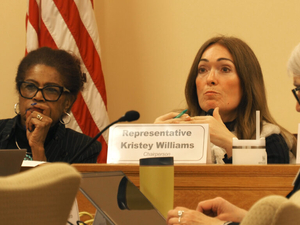
You know, in this case, there was only one Democrat representative, Allison Dahle from Wake County, who said, You know what, I think that we're going a little bit too far here in your effort to root out this program, we're really discriminating against a lot of people. So she brought it up. There was not a vote that was taken it was interesting. The Chairman of the Committee, Representative John Torbert, he's a Republican from Gaston County, he did raise the question of, you know, there's a lot of expense that comes with this. When you're talking about reviewing 1000s of web pages, 1000s of documents, 1000s of grants, and this is not just a one time thing. This is an ongoing process. It's going to cost a lot of money. But he wasn't so much thinking about the money that it was costing the UNC system. He was saying, you know, this is money that we may have to be spending to get around people who are trying to skirt the law. So his concern was people who were trying to, perhaps rebrand DEI but keep it in place. The Vice President of the UNC system said, we're not going to request any additional money for this scrutiny. But it is an ongoing process. It's not a one time exercise. It's going to be a process that that will be involving boards of trustees moving forward, and chancellors at each university will be signing off on this on an annual basis.
Chris Fitzsimon
Do we think this is part of a national trend? Will it have a national effect? Do you think?
Clayton Henkel
You know it is happening elsewhere, but I'll tell you one place that it probably will come up again is possibly in the US Senate race. It was in 2023 that then Governor Roy Cooper had vetoed a bill that dealt with non discrimination and dignity in state work. And he said at the time that he was vetoing this bill because it dealt with unconscious bias in the workplace, and he felt that that was something that was important for state employees to be aware of. And I can only imagine that that issue is going to come up again as Roy Cooper tries to become a US senator in 2026 he'll be facing, most likely, Michael Watley, the Republican challenger who Donald Trump has given him his full throat support in running for that race as well. Well, it is fascinating, and we will continue to follow all the great work of Newsline. Clayton, thank you so much for being with us.
Chris Fitzsimon
Coming up shortly Evening Wrap newsletter writer Danielle Gaines will join us with the top stories she's looking out for and with one last thing,
Nelle Dunlap
Hi, it's Nelle Dunlap, product and engineering director at States Newsroom. At States Newsroom, we believe journalism should be fair, fearless and free, with reporters working on the ground in all 50 states and Washington DC, we provide non partisan coverage of the state issues that matter most to you. You can subscribe to our work by going to statesnewsroom.com/subscribe.
Chris Fitzsimon
As we do every time this week, we're going to check in with Evening Wrap newsletter writer extraordinare Danielle Gaines to find out what's been happening and to look ahead a little bit. So Danielle, how are you?
Danielle Gaines
I'm great. How are you?
Chris Fitzsimon
I am well, all right, so catch us up. What caught your eye this week?
Danielle Gaines
Yeah, I'd have to say, data centers. Data centers. Data centers. This is a debate that is everywhere. It is unfolding in different ways, in different places. So I live near Northern Virginia, and so I see these data centers spread out throughout the neighborhoods here, and I think seeing them in real life is now influencing some of the debate that's going on throughout the country.
Chris Fitzsimon
What do you mean?
Danielle Gaines
For instance, we have this one photo from Getty that we run that shows just, you know, a data center like, 10 feet from somebody's back bedroom window, and it just really makes you think about the impact that these could have on communities. And I think some environmental concerns are leading some states and utilities to rethink the whole data center thing. But we had a story from Colorado Newsline about lawmakers considering new tax exemptions for data centers there. This is a bill that stalled out last year after strong opposition, but it's back. And one interesting thing I took from that story is that industry leaders said that at least 37 states have incentives for data center operations or construction at this point, so Colorado not having an incentive makes it an outlier.
Chris Fitzsimon
It's fascinating, with so many communities starting to protest, and so many states consider continuing to recruit them.
Danielle Gaines
Yeah, and we had other stories this week too. We had a story out of New Mexico about the Project Jupiter data center there. That's a campus of data centers. It's absolutely massive. There is $165 billion in local bond funding support for that project, and so a big coalition of people sent a letter to the governor and other state officials, kind of demanding more public involvement in that process.
Chris Fitzsimon
Yeah, wow. Okay, and what about something coming up?
Danielle Gaines
I'm going to be watching, of course, immigration this coming week. We had a story this week about advocates in Maine urging immigrants to quote shelter in place as a crackdown is taking place there. And our DC bureau had a story about an asylum seeker who is eight months pregnant and was forced onto a deportation flight despite medical advice not to fly so late in a pregnancy, and also as she was experiencing pain in her back and abdomen. So that's a case that we're going to try to continue to follow as well.
Chris Fitzsimon
Gosh. And finally, the part that I look forward to maybe the most every week, Danielle. Give us one last thing to think about.
Danielle Gaines
Yeah, well, I have a question for you.
Chris Fitzsimon
uh oh.
Danielle Gaines
Pop quiz, what does the US Constitution do?
Chris Fitzsimon
Well, that is a long answer. I think it keeps helps us figure out how to run this crazy government we have, among other things.
Danielle Gaines
Yes, I will not keep you on the spot, but I did want to share a story that we had out of Nebraska this week. So teenagers in Nebraska are required to clear a civics requirement in order to graduate high school, and we all know that immigrants have to pass a test on civics. And so a bipartisan group of Nebraska state legislators wants to write a law that requires every member of the nonpartisan legislature to take a civics test and to post the results their score publicly on the legislature's website. It doesn't require that they pass. It just requires that their score be posted. And it was a really interesting idea.
Chris Fitzsimon
Yeah, we'll see if that passes. That will be interesting. Thank you very much. As always, we appreciate it.
Danielle Gaines
Thank you.
Unknown Speaker
Thanks for listening to Stories From The States. I'm Chris Fitzsimon. Mallory Cheng produced and edited the podcast. David Singer produced our theme music. A special thank you to Georgia Recorder reporter Alander Rocha. If you like what you heard today, please leave a rating and review. It means a lot to us to know what you think about the podcast to stay up to date on all the latest episodes. Subscribe now to Stories From The States, a podcast from States Newsroom. Available where you listen to podcasts. We'll talk to you soon.