Billionaires and private school vouchers
For years, voucher and scholarship programs that used taxpayer dollars for private school tuition were limited to low-income or special needs students.
Now, states like Arizona, Iowa and Texas have universal programs that allow any student to use public money for private school tuition. By the 2026-2027 school year, at least 17 states are expected to have that policy.
There’s been a significant shift in the conversation about school choice in state legislation. Advocates say it gives parents options. Critics argue there’s not enough oversight over public dollars that billionaires are lobbying for.


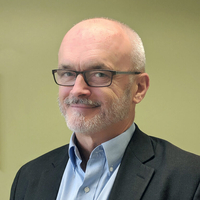
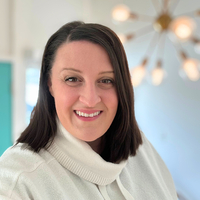
In Episode 17, you’ll hear about the culture shift on school choice. Joining us will be Joshua Cowen, a professor of education policy at Michigan State University who wrote “The Privateers: How Billionaires Created a Culture War and Sold School Vouchers.”
And we’ll look at South Carolina, where legislators are dealing with some unintended consequences of a school voucher law they wrote in 2025. They’re now debating whether homeschooled students should be included in the voucher system.
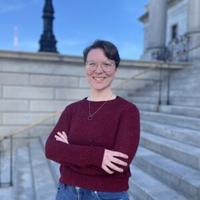
South Carolina Daily Gazette reporter Skylar Laird, who has been covering this, will discuss her reporting.
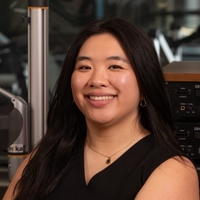
Finally, Evening Wrap newsletter author Danielle Gaines shares the top stories she’s watching.
Episode produced and edited by Mallory Cheng. Music for Stories From The States composed by David Singer.
Got questions? An episode idea? Email us at [email protected].
Subscribe to Stories From the States on Apple Podcasts, Spotify and Youtube.
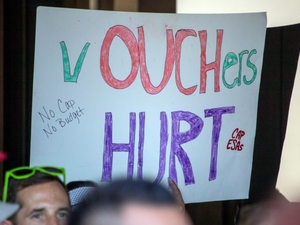
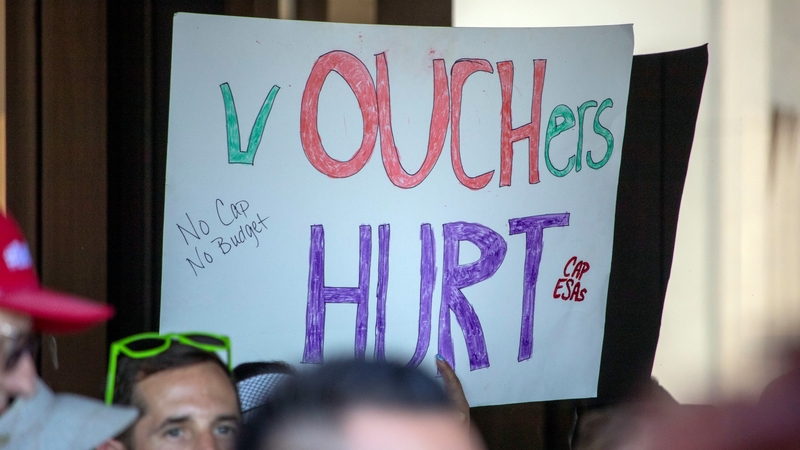
Photo: A sign held by a teacher at a rally at the Arizona Capitol on June 5, 2024, to advocate for restrictions on the state’s school voucher system, known as Empowerment Scholarship Accounts. (Photo by Jerod MacDonald-Evoy/Arizona Mirror)
Stories From The States is a production of States Newsroom, the nation’s largest state-focused nonprofit news organization, with reporting from every capital. At this pivotal moment in American democracy, our veteran journalists from all 50 states are reporting the consequences of government decision making. By zooming into one story each week, Stories From the States contextualizes and gives a human voice to what is happening now.
Transcript was created using an automated software.
Chris Fitzsimon
This is Stories From The States. I'm Chris Fitzsimon. Today we're talking about private school vouchers, sometimes referred to as school choice. For decades, voucher and scholarship programs that used taxpayer dollars for private school tuition were limited only to low income or special needs students. Over the last few years, state...
Transcript was created using an automated software.
Chris Fitzsimon
This is Stories From The States. I'm Chris Fitzsimon. Today we're talking about private school vouchers, sometimes referred to as school choice. For decades, voucher and scholarship programs that used taxpayer dollars for private school tuition were limited only to low income or special needs students. Over the last few years, states like Arizona and Texas have implemented universal programs to allow any student to use public money for private school tuition. In South Carolina, lawmakers there are dealing with an unintended school voucher standard that they wrote in 2025 And federal funding will start to trickle in too. Under President Trump's so called, One Big, Beautiful Bill, a federal tax credit program was created that would go towards school choice programs in some states. With more taxpayer money and opening up guidelines to all students. Are states able to handle the demand?
Joshua Cowen
Over time states can't afford two systems of publicly funded education. They're gonna have to choose.
Chris Fitzsimon
In a moment, we'll chat with an education policy expert about how we got to this cultural shift.
Chris Fitzsimon
In 2022 Arizona became the first state to allow all students to use public money for private schools. By the 2026-2027 school year, at least 17 states are expected to have universal such programs, making roughly half of all US students eligible to receive money. That's according to reporting from Stateline. That's been a big shift in the conversation about school choice, and many educators, parents and communities are either embracing it or bracing for it. Professor Josh Cowen is a professor of education policy at Michigan State University whose current research focuses on teacher quality, student and teacher mobility and evaluations of state and local education programs. He also wrote the book, “The Privateers: How Billionaires Created a Culture War and Sold School Vouchers.” Professor Cowan, thanks for being here.
Joshua Cowen
Appreciate you having me.
Chris Fitzsimon
Well, let's just jump in here. Is there sort of a renewed push for private school vouchers to expand it? Where would you assess the state now and as all these state legislative sessions are underway?
Speaker 1
Well, there's certainly been a push to expand voucher systems across the US, as you suggested, began roughly around late '21-'22 and has continued pace, really, through the 2025, legislative session. There's a couple of more sort of legislative debates about that. Some of the attention is moved to a federal tax credit system. We could talk about that. This has mostly been the work of a number of very, very well funded advocacy organizations based in D.C. Betsy DeVos', organizations, a couple of groups aligned with the Kochs. Jeff Yass, the Tiktok billionaire from Pennsylvania, has been pushing these in a lot in places like Texas. So certainly a push. It's been driven by a handful of advocacy groups that have gotten very, very effective, frankly, at legislative, state legislative strategy over the last two, three years.
Chris Fitzsimon
How do you respond to folks. It feels like the rhetorical shift happened a good many years ago. When it used to be we would just talk about vouchers, and now I even use the term school choice and people money follows the children and parents ought to have the ability to choose where their kid goes to school and all the I know you've heard those things a million times and in different versions, but how do you how do you answer when you hear that sort of rhetoric.?
Joshua Cowen
Yeah. Well, there's a lot of different kinds of school choice programs, lots of different kinds of school choice within the public sector. Charter schools, which are independently run, public schools, choice within school districts, between school districts, depending on where you live. In Michigan, one out of every four children attend a school choice program, either through a charter school or crossing district boundaries every day. But we don't have vouchers. The voucher advocacy organizations, sort of the DeVos groups, have really kind of appropriated, taken the words 'school choice' and made it an all or nothing conversation. So you either, people will call me a school choice critic, which I'm nothing of the sort. I support limited types of school choice and expansive school choice within public school systems, including charter schools with proper oversight. But I've drawn the line at taxpayer funding for private schools, which most voters do too, by the way. So some of this is just a matter of understanding that the word 'voucher' polls very poorly and the words 'school choice' poll very well, and so they've sort of folded these two things in together. But you'll you'll find a lot of different people who support lots of different school choice programs and draw their own lines, as I have.
Chris Fitzsimon
Yeah, I guess there are varying standards in each state. I used to cover the General Assembly in North Carolina, when the program here was created. There's very little accountability. There's very little auditing. We don't know what the children are being taught. We don't know the standards are meeting. I mean, it feels like even a push for accountability somehow puts you on the side that you're against parents having a say.
Joshua Cowen
Yeah. And as you suggested, this has all been a shift. So in the early days, when I first started working on this stuff as a young researcher, 25 years ago. Not only were vouchers targeted toward lower income families, and particularly in urban areas where, let's be honest, the public school system had not lived up to its end of the bargain, necessarily. They also took a fair amount of accountability, and most voucher systems had something along lines of what at that time, No Child Left Behind required from public schools. You had to take the same exams, your results, the school results, not the kid results, but the school results were published publicly, like where they are with public schools. You had to open your books financially to state accounting offices, state treasurer's office make sure you're not defrauding taxpayers. None of that is in place in the new voucher system. So to the extent we have any kind of accountability in state voucher systems. It's generally an artifact of the old program. So Wisconsin, Ohio, are two states that have had vouchers for a very long time, and they tend to have slightly better, more robust accountability systems than as you suggest in North Carolina, Arizona is the big offender there. Florida and other sort of new voucher states. They really have no accountability to speak of whatsoever.
Skylar Laird
You mentioned Arizona, I guess the teachers union is and some advocates are trying to have a ballot measure to overhaul the state's voucher system. Do you think we'll see more of this? You mentioned that just the word voucher is unpopular. Is there a way to use the initiative or referendum process to have some accountability?
Joshua Cowen
Yep, vouchers have never actually survived a statewide ballot initiative. Now there's, there's only been one attempt to ever pull them off the books, and that was in Nebraska in 2024 and it and it actually passed so.
Chris Fitzsimon
Wow.
Joshua Cowen
So voters in Nebraska actually pulled their their new voucher law off of the books in that state on the same day that the majority of voters in Nebraska, by the way, voted for Donald Trump. Look, as these things expand and become multi billion dollar programs and systems in states, there will be a natural process and period of time where they become just part of the educational landscape. That's what the voucher lobby groups are counting on, but they will at some point also get reined in. I have every confidence this, whether it's through voters like in Arizona, or legislators as they change. As fraud becomes a bigger and bigger story in these programs as it is happening in Arizona, the more you spend in terms of state dollars, it's not going to be true, say, 10 years from now that we're just going to be spending billions of dollars in several states on these private school subsidies without any idea what's going on. That's certainly what happened when the laws have been passed. But legislators come and go. Governors change. Politics change like, if we're talking about this in the Trump era, as if it's sort of an accident, all this reckless, unaccountable spending on private school subsidies is happening independent of anything else that's going on in this country right now. This will pass. And I don't think that a bunch of voucher programs will get rolled back or eliminated in the states that have passed them. I don't think that's realistic. But what will happen? There will be more transparency, there will be more accountability, and there will be more investigation as needed, when, when cases of fraud occur.
Skylar Laird
President Trump signed in July, a provision that creates a new federal tax credit for people who contribute to nonprofits that award private school scholarships to K 12 students. Taxpayers in any state can get the credits, but only by donating to organizations in participating states. Looks like 23 states had opted into the program, and all of them, except for Virginia, are led by Republicans. What do you make of that idea?
Joshua Cowen
Yeah, this, this is an interesting thing. So they've really maxed out in terms of the states that they're going to be able to spend to push vouchers into the state legislatures. There's really no more states, I think that they're really going to be able to do that. So they turned to the federal government last year. They've been trying to get a federal tax credit through for quite some time, the original version before it was passed in the Big Beautiful Bill was much more of a way to force private school vouchers into states. The version that made it out of the Big Beautiful Bill has some opportunity for public schools because there's a lot of allowable expenses, tutoring programs, after school programs, there's some state tax credits, for example, in Ohio, where schools have full day kindergarten, where parents are able to purchase additional kindergarten services through public schools, all of those are potential opportunities under the new federal tax credit, which will also include scholarship granting organizations to just fund private school. So it's kind of a hybrid and a mix of a private school tuition program, like a voucher program, and potentially some new opportunities for tutoring and public school services. The devil is going to be in the details, but we're watching that, and we'll see there may be some some things that are worth taking a look at.
Skylar Laird
What do you say to parents ,who their kids go to public schools are relatively happy. They're not really paying attention. Why should a parent who currently is enrolled or supports public schools be so concerned about the proliferation of vouchers around the country?
Joshua Cowen
Well, the typical voucher user in state voucher programs, we're going back to the states here for a second, is already in private school to begin with. So on paper, you might think, 'Well, why should a parent in a public school care. Some private school parent on the streets getting their tuition paid for when the parent was paying for it last year'. Sounds like it might be fair, right? The problem with that is that, over time, states can't afford two systems of publicly funded education. They're gonna have to choose so at some point down the line, you know, if you got a third grader here today, and when the kids in ninth or 10th grade, the state could be spending a lot less in public education for your child by the time they get to ninth or 10th grade than what they are today, particularly since short term deals to keep public spending basically at an equal level. When vouchers are passed, go away six or seven years later. It's not that there's this mass exodus of public school students to private schools when vouchers pass. That's not what happens. But what does happen is the state obligates itself to spend new money, new taxpayer dollars, on the private sector, which just last year were were actually being paid by the private sector there, and that that long term is a threat to public school budgets and to investments in your community's educational opportunity.
Skylar Laird
Yeah. And before I let you go, I want to go back to something you said earlier, that this has been a long running campaign by national foundations. I know that every year there's a school choice day, and there's this coordinated activities. And I feel like a lot of educators and supporters of traditional public schools might feel like they're fighting this battle in their own state on their own, but this has been a campaign for a long time.
Joshua Cowen
Yeah, it has, and this is actually Public Schools Week, and you were referring to school choice week, which was a couple of weeks ago, is that was funded. School choice week was originally created by the Walton Family Foundation, DeVos organizations and a couple other conservative organizations to kind of mimic a grassroots movement, which has always kind of been what these organizations do. You know, one thing to remember is that in the public school support community, there's a lot of things going on right now. We're talking in my state about literacy investments. My governor is making a new literacy push, universal school meals, pre k for all, reducing class sizes. There's, like, a lot of different things in the public school community that people are working on. On the other side of it, in the voucher community, they're sort of singularly obsessed. This is the reason folks in the voucher world get up in the morning. Betsy DeVos has made this her life's work. There really isn't an equivalent to that on the public school side, and so I think that's why, you know this dynamic you're describing with public school advocates. And you know, it's not just teacher unions, but community organizations, superintendents organizations, they got a lot on their plate, a lot of those things that I just ticked off. And then what happens is they go into state capitals and they're trying to push 10 different things and ask for, you know, lower class sizes and school meals, you know, improved education, teacher education, around literacy, whatever it is. And the DeVos people are in there saying, 'vouchers, vouchers, vouchers, vouchers, vouchers'. And, you know, I just think from from the standpoint of politics, sometimes the singular, single minded folks get their voices heard the most.
Chris Fitzsimon
Well, thank you for letting us hear your voice. We really appreciate your input and your expertise on this. Thank you very much.
Joshua Cowen
I appreciate you having me.
Skylar Laird
In this conversation, we mentioned Arizona as the first state to implement a universal private school voucher program, but it's faced some financial hurdles and concerns about oversight of taxpayer dollars. According to reporting from the Arizona Mirror, the program will cost more than $1 billion this year. There have been calls for more oversight, especially after a 2025 report found that some parents use these funds to purchase unallowable items like major appliances and even lingerie. While all that is happening, states like Alabama, Tennessee and South Carolina are talking about increasing funding for their school choice programs. But before all that, South Carolina state lawmakers are dealing with unintended consequences of a school voucher law they wrote in 2025. In a moment, we'll check in with a South Carolina Daily Gazette reporter about what's going on
Nelle Dunlap
At a time when the federal government is making drastic changes to public policy and pushing so many programs back to the states, it's hard to know what it all means for you, your family and your community. Our Evening Wrap newsletter from States Newsroom keeps you up to date on what your elected officials are doing or not doing to manage the fallout. You can sign up by going to statesnewsroom.com/subscribe.
Skylar Laird
South Carolina's Republican Governor Henry McMaster is trying to get more money for school choice programs. His revamp of the Program, also known as the Educational Scholarship Trust Fund, has increased public spending for these private school vouchers. And in a 2025 law changed the limitations of who can qualify for the voucher. But state lawmakers are now dealing with an unexpected issue related to homeschoolers in the law they inadvertently wrote themselves last year. To help us untangle all this is South Carolina Saily Gazette reporter, Skylar Laird. The South Carolina Daily Gazette is an outlet with States Newsroom. Skylar, thanks for being here.
Skylar Laird
Thanks for having me.
Chris Fitzsimon
All right, just to start help folks understand who are listening. In 2025 what were some of the major changes to the scholarship Trust Fund... Educational Scholarship Trust Fund that Governor McMaster pushed for.
Skylar Laird
Yeah so the big thing in 2025 was that we had a state supreme court ruling that made it so that the money could no longer go toward private school tuition, which was obviously a big part of what the program was intended for. So the 2025 law put that back into place, and then also it allowed students who are not just at public schools, but also at private schools and homeschoolers, to access the money. And it increased the amount of money from up to $7,500 per student, with a built in increase every year.
Skylar Laird
So explain that again, for folks, it's hard to maybe understand that who was eligible before this new law for the for the vouchers?
Skylar Laird
Sure so before this, it was only public school students who were switching to a school other than their zoned public school. So if they were switching to a private school, if they're switching to another public school, but you had to be enrolled in a public school or going into kindergarten.
Skylar Laird
So the idea, I guess, being that you didn't want to give voucher money to kids who are already in private schools.
Skylar Laird
Exactly.
Chris Fitzsimon
And do we know how many students are in the program this year?
Skylar Laird
It is capped at 10,000 we're expecting that to go up to 15,000 this coming year.
Skylar Laird
And how much money do kids get, or families get?
Skylar Laird
It's $7,500 a student.
Chris Fitzsimon
Okay, so that's not, not an insignificant amount of money for families.
Skylar Laird
Not at all.
Chris Fitzsimon
Okay, now let's talk about the drama about homeschool students that you've been writing about, which I found fascinating. What's going on there?
Skylar Laird
Yeah, so like you said, legislators, basically, they included a couple lines in the law that they passed last year that the Department of Education has interpreted as allowing students to access the money for what they call unbundling, but schooling at home, and legislators say that they never meant to do that. They explicitly put in there that students who are homeschooling under you know, the existing code for homeschooling couldn't access the money. But the Department of Education has essentially found this, this loophole or this workaround to give the money to students who are are learning from home.
Skylar Laird
But the, I guess, the original philosophy, whether I mean some people oppose school vouchers and some support it, isn't the rhetoric that we always hear from school voucher proponents is that the money should follow the child? So wouldn't this be a —when I was first reading your stories, I was a little surprised that some strong supporters of vouchers would be opposed to giving it to homeschoolers.
Skylar Laird
Yeah, and that actually came from the state's homeschool Association and homeschooling parents who asked legislators to keep them out of the program out of concern that it would create more government oversight of what they were doing. They liked the law as it was. They didn't want the requirements around testing or someone looking at how they were spending the money, so they asked to be left out of it. And something that legislators have said is that they're not opposed necessarily. Some of them are not opposed necessarily to writing it in a way that would include homeschoolers, but because they didn't intend to do that, they're worried now that they've inadvertently created this program without any of the usual guardrails that they'd have around it.
Skylar Laird
And how are they going to fix it? What's the plan?
Skylar Laird
So we have a bill right now that's proposed in the Senate that would essentially take out the lines that the department has read as allowing this homeschooling program so it the way the law is written, just signing up for the program satisfies the state's attendance law, so your student isn't truant, and there is a line in there that allows any other personalized education, which the Department has said, you know, that means any sort of homeschooling curriculum or classes. So the Senate bill would essentially just delete those two lines and make it explicit that that is not allowed under this program.
Skylar Laird
And would this still be an expansion of the program, even if you obviously once they they fix the homeschooler kerfuffle?
Skylar Laird
Not an expansion necessarily. There's been some talk of rewriting it in a way that would allow parents who are already using the money for homeschooling to be grandfathered in so that they're not facing the loss of this money that they, you know, believe that they qualified for and have been receiving. But it would, I think, limit the program a little bit, because there are more parents who want to get into this, especially now that it's become more publicized that it's available, and this would kind of keep them from from getting it.
Skylar Laird
What is the debate like there in the South Carolina legislature, obviously, the Republicans as a generally support expanding school voucher programs. Are the Democrats there vocally opposed to that? Or where do they fall?
Skylar Laird
Yeah, for the most part, the Democrats here are opposed to it, for a lot of the reasons, I'm sure you see in other states, of concerns about oversight, concerns about, you know, not actually helping the students who need it the most, of putting students in private schools with little accountability.
Chris Fitzsimon
And I guess, the issue that we raised at the very beginning of the conversation, subsidizing kids that were already in private schools, not making it available right, just to kids who want to go.
Skylar Laird
Right. And that was that was controversial among Democrats and some Republicans who are. Otherwise in favor of school choice, because they feel like the intent of the program is to help students who are in failing public schools get access to better education.
Skylar Laird
As a reporter, if somebody asks you about this, people who are in traditional public schools, who are happy with them and aren't worried about leaving or want to send their kids to a private school. Why is this important just to the overall taxpayers of South Carolina?
Skylar Laird
Well, it's a lot of taxpayer money. Like you said, $7,500 is not an insignificant amount of money. And it's, it's 10s of millions of dollars in the state budget that is going toward this. That was $30 million this year. They're looking at another $20 million next year. And that's, that's all taxpayer dollars that's going toward, you know, paying these expenses for children.
Skylar Laird
And I guess you could argue that 30,000,00 one year, 20 million the next year, is money that could go to traditional public schools that people think are failing.
Skylar Laird
And some people certainly have argued that.
Skylar Laird
Well, Skylar, thank you very much for all your great reporting and help us understand this. Thanks a lot.
Chris Fitzsimon
Coming up shortly…Evening Wrap newsletter writer Danielle Gaines will join us with the top stories she’s watching out for…and One Last Thing.
Moses Esheit
Hi. It's Moses Esheit, product associate at States Newsroom. At States Newsroom, we believe journalism should be fair, fearless and free. With reporters working on the ground in all 50 states and Washington DC, we provide non partisan coverage of all the state issues that matter most to you. You can subscribe to our work by going to statesnewsroom.com/subscribe.
Skylar Laird
Now, the best part of every week our check in with Evening Wrap newsletter writer Danielle Gaines. Danielle, how are you?
Danielle Gaines
Hi, Chris, I'm good.
Chris Fitzsimon
All right, quite a week. It was a lot week that you could choose from, but I'm interested to know what, what caught your eye in this kind of crazy week?
Danielle Gaines
Yeah, well, of course, you know we have so much immigration coverage, but I have started seeing a little trend emerging even within that coverage, which is a renewed effort by state lawmakers to legislate how immigration enforcement can occur in so called "sensitive places". So this is a rule that used to exist in federal government. It was expanded during the Biden administration, rescinded now, and so you're seeing states step in and try to create state level policies. So Maine is trying to lawmakers there are trying to take that same federal rule which kind of prohibited immigration enforcement in places like churches, schools, medical centers, and put it into state law. It's not quite as broad as the rule was when Biden was in office, but it is something that they're trying to write into state law. In Oregon, we're seeing the same thing. So the Senate passed the Healthcare Without Fear Act, and so that aims to protect hospital workers and set policies if immigration agents show up to medical facilities. And during the testimony, there was just so much about federal agents coming to hospitals, people being detained in parking lots, agents accessing confidential information, standing guard outside of hospital rooms while people were receiving care. So it's a big issue.
Chris Fitzsimon
Yeah, obviously this has a giant In fact, if people, whether they're undocumented or not, are scared to show up at those places. It really is a huge problem.
Danielle Gaines
Right.
Chris Fitzsimon
What about something coming up?
Danielle Gaines
We're presently smack in the middle of the federal comment period on a Trump administration proposal that would open up millions of acres of Western Oregon forests to 1960s logging levels. So that's about 10 times more than we're currently harvesting from those lands. They're called the O and C lands because they were once owned by the Oregon and California Railroad. And depending on who you talk to, they are either the most productive timberlands in the world or the most effective carbon storing forests in the world. So President Trump issued an executive order in March called the immediate expansion of American timber production, and said that they were going to look at bypassing some endangered species rules that have previously stopped this kind of increased logging from moving forward, and you can comment on that until the last week of March.
Chris Fitzsimon
Well, that's really interesting. Okay, and how about one last thing?
Danielle Gaines
Well, if you're going to be in Iowa this summer, or know somebody who is, I have a great activity for you. It's the Iowa frog census.
Chris Fitzsimon
Excuse me?
Danielle Gaines
Exactly! So this is a conservation effort run by the State Department of Natural Resources. And several times each summer, Iowans drive out on set routes at night, and they listen for frog calls, and they document what it is that they hear. And they are hosting workshops, next month you can learn different frog calls, and take a shift to drive around and try to help track amphibian populations, see if they're growing, see if they're declining, and and help keep them alive and happy.
Chris Fitzsimon
Well, now I want, now I wish I were going to be in Iowa this summer. That would that's really interesting.
Danielle Gaines
Yes, exactly.
Chris Fitzsimon
Well, thank you, Danielle, so much. We really appreciate it. Thank you. Thanks for listening to Stories From The States. I'm Chris Fitzsimon. Mallory Cheng produced and edited this podcast. David Singer produced our theme music. If you liked what you heard today, please leave a rating and review. It means a lot to hear what you think about the podcast. To stay up to date on the latest episodes, you can subscribe now to Stories From The States, we're a podcast produced by States Newsroom. It's available wherever you listen to podcasts, and we'll talk to you soon.