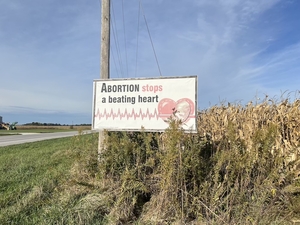
Billion Dollar Baby Bump
Since the 2022 Dobbs decision by the U.S. Supreme Court, state governments decide how they’ll regulate abortion. This includes which organizations receive reproductive health funding.
Crisis pregnancy centers, religiously affiliated organizations that advertise free pregnancy tests and ultrasounds but dissuade women from pursuing abortions, are seeing an influx of taxpayer dollars. At the same time, officials are pulling funding from Planned Parenthood and other health clinics across the country.


States Newsroom conducted a 50-state investigation examining state and federal budgets, as well as the tax records of hundreds of crisis pregnancy centers around the country.
In Episode 18, you’ll hear from States Newsroom reproductive rights reporter Sofia Resnick, who will break down how this is playing out and how public money is being spent.
You’ll also hear from Dr. Kristin Lyerly, an OB-GYN based in Sheboygan, Wisconsin. Since 2013, Lyerly has worked in rural Minnesota, Arizona and a Wisconsin Planned Parenthood clinic. She’ll share her firsthand experiences at the center of the fight over abortion access.
Finally, Evening Wrap newsletter author Danielle Gaines shares the top stories she’s watching.
Episode produced and edited by Mallory Cheng. Music for Stories From The States composed by David Singer.
Got questions? An episode idea? Email us at [email protected].
Subscribe to Stories From the States on Apple Podcasts, Spotify and Youtube.
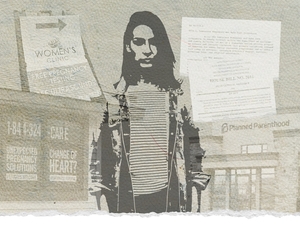
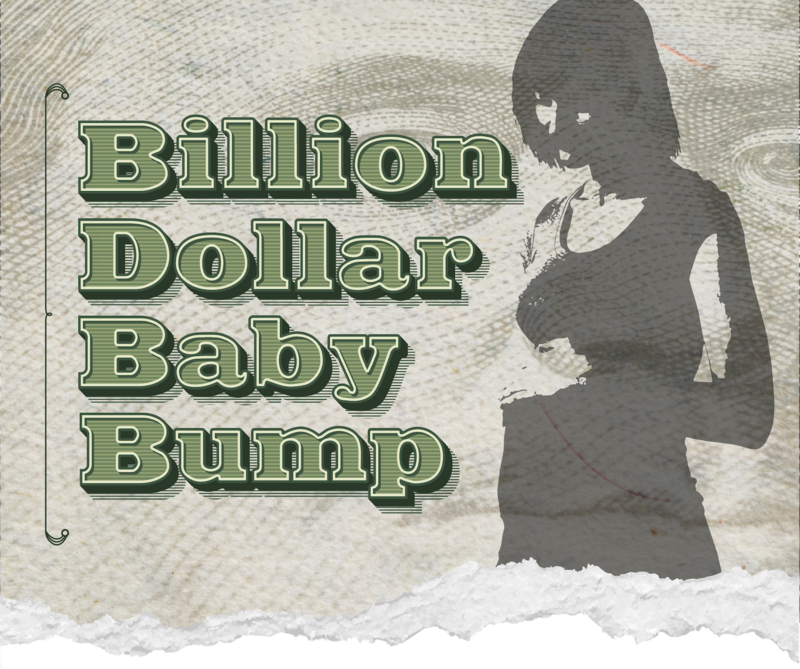
Photo: Crisis pregnancy centers have been the beneficiary of at least a half-billion dollars since the U.S. Supreme Court ended federal abortion protections in June 2022, a States Newsroom investigation found. The centers discourage women from seeking abortion and contraception, which medical experts say compromises public health. (Illustration by David Jack Browning for States Newsroom)
Stories From The States is a production of States Newsroom, the nation’s largest state-focused nonprofit news organization, with reporting from every capital. At this pivotal moment in American democracy, our veteran journalists from all 50 states are reporting the consequences of government decision making. By zooming into one story each week, Stories From the States contextualizes and gives a human voice to what is happening now.
Transcript was created using an automated software.
Chris Fitzsimon
This is Stories From The States. I'm Chris Fitzsimon. Here at States Newsroom, we know there's a lot going on around the country in every state capital, so thanks for being here today. We're talking about crisis pregnancy centers. The number of them has steadily increased since the 2022 Dobbs decision by the US Supreme Court. One...
Transcript was created using an automated software.
Chris Fitzsimon
This is Stories From The States. I'm Chris Fitzsimon. Here at States Newsroom, we know there's a lot going on around the country in every state capital, so thanks for being here today. We're talking about crisis pregnancy centers. The number of them has steadily increased since the 2022 Dobbs decision by the US Supreme Court. One Wisconsin OBGYN is concerned about the care people are actually getting at these centers.
Dr. Kristin Lyerly
They had an ultrasound picture of what they were told was their pregnancy, but what it actually was was a full bladder.
Chris Fitzsimon
State Governments now decide how they'll regulate abortion, including which organizations receive state funding related to reproductive health. Crisis pregnancy centers are seeing an influx of taxpayer dollars without much oversight.
Sofia Resnick
The funding from some of the same state governments that banned abortion, they increased their funding for pregnancy centers as sort of antidote.
Chris Fitzsimon
We'll chat with the States Newsroom reporter in a moment about how much public money is going to these centers.
Chris Fitzsimon
Crisis pregnancy centers are receiving more public money than ever before. 21 states have funneled nearly half a billion dollars in public money to crisis pregnancy center organizations between June 2022 and 2025. States Newsroom conducted a 50 state investigation examining state and federal budgets as well as the tax records of these organizations. What reporters found was not only the growing magnitude of public funding for these groups, but the lack of oversight and to help contextualize how all this is playing out across the country is Sophia Resnick. She's a national reproductive rights reporter for States Newsroom. Hi Sophia.
Sofia Resnick
Hi Chris.
Chris Fitzsimon
So let's start for folks who probably might have heard the term crisis pregnancy centers, but might not know much more about them. What? What are they actually?
Sofia Resnick
So crisis pregnancy centers. They are centers run by anti abortion organizations that started in the late 60s. The first one was founded in Honolulu, Hawaii, and they're sometimes called the hands and feet of the anti abortion movement, because their job is to actively dissuade people from having abortions as they're heading into an abortion clinic or reproductive health clinic that also gives abortions. And they have developed over time and now the anti abortion movement tend to not use the term crisis pregnancy center. They use terms like pregnancy help center that offer more services like limited ultrasounds and pregnancy tests, but they're also called pregnancy resource centers that offer more just counseling and information that we have found, and that researchers have found that sometimes this information is is intentionally misleading to prevent people from having abortions.
Chris Fitzsimon
So when someone walks into one of these do they... do they sometimes think they're there seeking traditional medical care, or believe that that's going to be available to them? Do they know the point of view of the center that they're entering? Is... is part of this deception from the beginning? Or do, do people know what they're where they are headed? Or does it is there? Is that mixed?
Sofia Resnick
So the short answer is that it depends. What we have found is that it's mixed, and that over time, as there's been more criticism and more scrutiny on these centers, they have changed and amended their ways. And in the past, there's been a lot of focus on the fact that there has been misleading information, and that on there, on the outside, there'll be posters that say, 'free testing, abortion information, come in. Sometimes people have called centers and said, 'Do you have abortions?' They'll say, 'let's talk about it. Come in. Come in.' Now there are because of the scrutiny over time from different news investigations and other research shining a light on some of the deceptive practices. More of these centers now, like at the bottom of their website, it'll say in smaller print, like, 'we don't offer abortions', but at the top they'll say abortion information or abortion services even. Their target audience, for most of them, is people who want abortion. So they're trying to get people who want abortions, or think they want abortions, or think that might be the option for them to come into their center first so they can tell them why abortion is horrible, why it's dangerous, why it will ruin their lives. But also, it's important to say that some of these centers do offer services and help and kindness to people.
Chris Fitzsimon
Well, I was going to ask about that. So are there medical personnel at these centers, or is that also depend on the center?
Sofia Resnick
Again, it depends. So there are approximately 3000 of these centers around the country, and the it seems that the that there's a smaller subset that do offer more expansive services. And do have more medical personnel on staff, most of them don't have doctors on staff. They'll say that they have a an off site medical director. But some centers and some that we've talked to do offer STI testing, but the majority the medical services they offer are over the counter pregnancy tests and limited ultrasounds.
Chris Fitzsimon
So have these, the number of these centers grown since the Dobbs decision in 2022 or have they were they were already growing, I assume what's happened since the Supreme Court decision?
Sofia Resnick
So after the Supreme Court overturned Roe v Wade and overturned federal precedent allowing abortion protections around the country in 2022 it does seem that the amount of centers have steadily increased, but they've remained around the 2500 to 3000 figure for the last several years. What has happened, as you noted at the top, Chris is that the funding from some of the same state governments that banned abortion, they increased their funding for pregnancy centers as a sort of antidote, like, don't worry, we're going to increase help for the same women who won't be able to get abortions in our state.
Chris Fitzsimon
And what sort of money are we talking about? I know it was a laborious process that you guys went through putting the story together how much, how much public money is being spent.
Sofia Resnick
So what we found is that 21 states have infused centers with about half a billion dollars between 2022 and 2025 and then 1.3 billion in total federal government grants. So that includes local, state, federal between 2019 and 2024
Chris Fitzsimon
Is there? Is there regulation that comes with this money? Is there oversight? Is it reviewed by in states to see if they are misleading people, or how's the process to look at how this money is being spent?
Sofia Resnick
In some cases, yes, in some cases no, and in some cases, states that have been audited and there have been issues finding how they've spent or not spent the money, they continue to get more funding.
Chris Fitzsimon
Does that depend on how the state overall views abortion rights, or does that just vary state to state? It may be hard to put that in one category. I guess it
Sofia Resnick
It appears to vary state to state. Some of the issues is sort of how these centers are regulated to begin with. So we're not talking about traditional medical clinics. In many cases, these are nonprofits. They are most of them are faith based, and you can look at their mission statements and their 990s and so they are. They don't have the traditional regulation that say reproductive health clinics or other medical clinics would go through. In some cases, the money goes to like an umbrella organization, which is then it's sort of up to that entity to make sure everything is going the way it's supposed to.
Chris Fitzsimon
Your story details some really horrific examples of either misinformation or dangerous information that we're giving to people who came in. Can you tell us a story to sort of illustrate the dangers of these clinics?
Sofia Resnick
So one story that we have comes from a high risk obstetrician gynecologist who's currently working in Colorado, but she at the time in 2019 was in was in St Louis, Missouri, working the emergency shift. And this woman comes in, and the way that Dr. Leilah Zahedi-Spung described it to me is that her belly was full of blood, and what had happened is that she was pregnant. This woman was pregnant and had an ectopic pregnancy, which means the embryo was not in the uterus, it was in her fallopian tube. And that is, despite what some lawmakers have said publicly that is always, it is always going to end in the death of the embryo, and the pregnancy needs to end or it can kill the pregnant person. And so what happened was, this woman walks in, her ectopic pregnancy has ruptured, and, you know, needs immediate treatment. But the thing that was crazy to Dr. Leilah Zahedi-Spung is that she had already known that she was ectopic a couple days ago because she had gone to this mobile pregnancy center so an RV that was parked outside of the Planned Parenthood that gave her an ultrasound, and the this woman told the doctor that, 'well, I was told that it is ectopic, but that it could be saved, and that I should eventually go to the hospital and that you could save it.' They didn't communicate to her that it would, this was an emergency situation, that she needed to go to the hospital immediately, and that it couldn't be saved.
Chris Fitzsimon
Now, in normal cases, if that happened at a traditional, regulated medical center, there would be a follow up and investigation. People would be asked questions about that. Or does this do these sort of events? And you there are several of those in the in the stories that you guys have produced, is there follow up with these centers in these kind of cases?
Sofia Resnick
So far, there, at least in the stories we have, and some of them date back a few years. It really depends. There has been a malpractice case in Massachusetts, and there have been some complaints here and there, but overall, you know, a lot of these centers because they all of their services are free and they don't take insurance, so they don't have to comply with regulations that come with with with that, including, as we all know, HIPAA, which stipulates that there has to be privacy and confidentiality. These centers are just sort of giving out medical advice without having the strings attached.
Chris Fitzsimon
Well and finally, before I let you go, what, what are the crisis pregnancy center p eople say, what is their point of view on this, that they're providing a service?
Sofia Resnick
Yes, they say that they are providing vital services to people, a range of vital services. And we have talked to people who have gone to crisis pregnancy centers, either knowingly or or unintentionally, who do report that they that they did receive, you know, vital support and material services that were really helpful, in some cases, life changing. And I think that's really important to understand, and especially people who are religious, and who are, you know, who follow the same conservative Christian practices that many of these centers do. They tend to be attracted to those centers, which is wonderful, in my opinion, our issue, some of the problems that we found is in lack of transparency, lack of saying what kind of services they do and don't offer. But the other thing that crisis pregnancy centers, and you know, the way they pregnancy help centers or pregnancy resource centers, they are trying to also, in their minds, offer an alternative to abortion, and they, some of the directors I've spoken to, think that Planned Parenthood only offers one option, or that reproductive health clinics only offer abortion, which is not the reality we found, but that's why they are trying to get people into their centers, as opposed to others, because they worry that they're only given one option and not told well, actually, there are supports, there are referrals, there are ways we can make your lives easier and have a baby.
Chris Fitzsimon
Well, it's really fascinating. We really appreciate all your work on this, and thank you for being with us to help explain it.
Sofia Resnick
Of course, thank you so much.
Chris Fitzsimon
To see if and how much your state is spending in taxpayer dollars on crisis pregnancy centers. You can go to newsfromthe states.com. Coming up in a moment, we'll hear from a Wisconsin OBGYN on her first hand experiences at the center of the fight over abortion access and why she's been outspoken.
Dr. Kristin Lyerly
But I truly believe, Chris that it's not just going to be reproductive health care, but health care in general is reaching a point where people can't access it, they can't afford it, they can't get it. And you know, people are struggling.
Chris Fitzsimon
We'll be right back
Moses Esheit
At a time when so many communities are losing their local news outlets. States Newsroom is filling a gap. We are now the nation's largest state focused nonprofit news organization with reporters based in every state capital and Washington DC. But we can't do it without your support. Your contributions allow us to produce award winning journalism and deliver it to you for free. No pop ups, no pay walls. This is a crucial time to support local journalism, and every bit helps to give go to statesnewsroom.com/donate.
Chris Fitzsimon
Abortion access and the restrictions of it are now totally dependent on the states. In 2022 the US Supreme Court decision in Dobbs versus Jackson Women's Health Organization ruled that the Constitution doesn't confer the right to abortion. That led, of course, to the overturning of Roe versus Wade and put the authority to state governments to regulate any aspect of abortion. It's impacted how medical professionals approach their practice. Dr Kristin Lyerly is a practicing OB-GYN based in Sheboygan, Wisconsin. Dr Lyerly, thank you for being here.
Dr. Kristin Lyerly
Thank you so much for having me, Chris.
Chris Fitzsimon
Well, I want to ask you about these crisis pregnancy centers, but first, you've had decades of experience working in this field. What? What was it like when Dobbs was overturned and you were practicing?
Dr. Kristin Lyerly
It was a terrible gut punch. We knew it was coming right because we had, there were leaked documents in May, so we weren't surprised and we had been making plans, but still I was literally on the Supreme Court webpage, just refreshing, refreshing, refreshing, and there it was, and all I could do is stare at the computer and think about what was going to happen in the future. And here we are, yeah.
Chris Fitzsimon
And here we are. And what has changed since then, before we get into the crisis pregnancy centers, what has changed in your practice in your professional life since then?
Dr. Kristin Lyerly
Well, I mean, everything's in the states now, so there are no federal protections for abortion care. So I live in Wisconsin, and since the Dobbs decision, a lot has changed in my personal and professional life. I got involved in a lawsuit for over the 1849 criminal abortion ban in Wisconsin. This is a band that's one year younger than the state that prevented us from doing nearly all abortions. And as a result of that, I didn't feel safe and comfortable practicing medicine in Wisconsin, so I had been practicing in Minnesota since that time, away from my family, away from, you know, the people who support me and who I choose to be with, and it's been a real struggle, but we ended up winning the case, fortunately, and we were able to restore abortion care to Wisconsin. And you know, we keep fighting for it because we have to. It's healthcare.
Chris Fitzsimon
Right. And let's talk now about crisis pregnancy centers. As you know, States Newsroom, our reproductive rights team, are publishing a story just showing the breadth of the funding, the lack of transparency across the country. What are your thoughts? Just initially, first, and then have some specific questions about these so called crisis pregnancy centers that are popping up everywhere and are in Wisconsin?
Dr. Kristin Lyerly
Yeah, there is such a sham. I always think about it from the perspective of my patients who end up in these crisis pregnancy centers, thinking that they are a legitimate health care center, but not realizing that they're not getting the full spectrum of reproductive health care. And not only that, their privacy isn't protected. So these centers are not mandated to take care of patients the way that I am as a medical professional, and frankly, it's it's political malpractice to allow and support these centers.
Chris Fitzsimon
Tell us more about their privacy, not being protected. What's different?
Dr. Kristin Lyerly
Yeah, we have to be held to the standard of HIPAA. So if a patient comes to see me, we have very complex personal conversations. You can imagine, you know, your health is so personal, and I don't share that information with anybody. I shouldn't ethically, but I can't legally, because of HIPAA. They can. They are not held to the same standard. So they can share that information, that data. They can put all of your dirty laundry out there.
Chris Fitzsimon
Have you had experience with patients who have first been to one of these pregnancy centers and then come to your office?
Dr. Kristin Lyerly
I have, I think specifically of a patient who showed up with her partner and they had an ultrasound picture of what they were told was their pregnancy, but what it actually was was a full bladder. It wasn't even her uterus.
Chris Fitzsimon
That's almost unbelievable, isn't it?
Dr. Kristin Lyerly
Yeah, well, that's the other thing. They are not held to the same medical standard. So they don't have to have the same training, they don't have to maintain the same credentials. They don't have the same oversight. So they can just grab an ultrasound machine, take a picture and tell you what they think it is, and there's no there are no consequences for them, but there are so many consequences for our patients, right?
Chris Fitzsimon
And they, and these centers, one of the points of this story is that they, they get public funding in Wisconsin, I think it was 123,000 which isn't as much as some states, but there are taxpayer money that is paying to tell patients this information, this misinformation.
Dr. Kristin Lyerly
Yeah, it's crazy that we're putting money into this instead of real healthcare that is evidence based and factual and it really, truly provides health care that will set people on a positive trajectory in their lives. Instead of this shameful... it's not even care, it's just a joke.
Chris Fitzsimon
But I guess, do you understand? I'm trying to understand, I guess people go into these pregnancy centers because they might be desperate, they might be religious, they might think that they're going to get help, or that there might even be a doctor in there.
Dr. Kristin Lyerly
Yeah, well, they see a sign that says, 1-800 pregnant come here. So they go to this place because they don't know where else to turn. They're afraid. They don't have resources. They don't want to talk about it, because it's it's personal, and they end up in this situation, and often, when they walk in, they don't even know that it's not a medical clinic, because the crisis pregnancy centers do such a good job of masking their inadequacies.
Chris Fitzsimon
And most of, I guess, most of these seem to be religious based, and obviously have a point of view, which is they're trying to make sure women don't consider abortion.
Dr. Kristin Lyerly
Yeah, it would be great if they would do the other things like offer diapers and help with meals and all of the other social supports. But don't just do it at that moment. You have to do it continuously. And if people do decide to maintain the pregnancy, you have to do it after that too. And that's not what we see with these crisis pregnancy centers.
Chris Fitzsimon
You know, it's interesting with all after the Dobbs decision overturned Roe v Wade, it felt like that abortion right, rights and access were on the front page for a while, and now it's almost as if that for some people, not you, not people who are in this situation, but in terms of the public consciousness, it's it might have slipped off the headline some but it feels like this story and many others show that people are still facing these tough decisions every day.
Dr. Kristin Lyerly
Well, look at what's happening in the world. Look at what's happening in our government every day. It's some other shocking, crazy, unbelievable story. It's hard for these slow, long, chronic things to break through and become a headline. But I truly believe, Chris that it's not just going to be reproductive health care, but health care in general is reaching a point where people can't access it, they can't afford it, they can't get it. And, you know, people are struggling. So we are going to be hearing more and more about this as people realize that they can't get the care that they need, and they're suffering as a result of it.
Chris Fitzsimon
When you talk to people who aren't in this world, how do you it feels like when we use the term reproductive care, it means a wide range of things, from contraception to maybe abortion services, maybe not, maybe all sorts of things that people who who want to conceive or who are pregnant need and yet, and for some folks, when they debate this is only about abortion. How do you sort of make that broader healthcare argument and say that abortion care is just one part of a spectrum of care that are that is should be available to people?
Dr. Kristin Lyerly
Hey, I'm pretty out there about abortion being healthcare. So people tend to know where I stand, but I like to let people lead. Where are they at? This is such a personal issue, and so many people even have a hard time saying the word abortion. You'll often hear people where I live in Wisconsin, because it's, you know, kind of a small town. It's pretty rural, people will whisper it. We have to say it out loud, and we have to have these conversations, but we have to do it from a place of knowledge, a place that we understand and feel comfortable having the conversation. That's where it starts, and we can take it where it needs to go from there.
Chris Fitzsimon
What do you wish would happen with crisis pregnancy centers? Wisconsin funds them, not as much as some states. It's half a billion dollars. The story has found in the last few years, across the country, more than a billion in the last several years, and that funding in many states is dramatically increasing.
Dr. Kristin Lyerly
I wish they would be honest. They do offer some services that are valuable to people. If they could focus on those things, like the diapers, the support services, that kind of stuff, great, but stay out of reproductive health care. Don't pretend that you're a clinic. Don't fool people and then put their privacy at risk. That is shameful. It's harmful. It's unbelievable that they can do that and get away with it, and that we fund it, that our politicians give them money. So I think what we need to do as citizens is recognize the danger of these crisis pregnancy centers and vote against the legislators that support them, because they clearly don't have our best interests in mind.
Chris Fitzsimon
Do you think that the outrage after the overturning of Roe v Wade, we mentioned, I mentioned that it sort of fell off the headlines is going to be part of this whole new health care debate where a lot of people around the country are having trouble affording the Affordable Care Act because the subsidies have gone away. There are more people now worried about their economic situation. How do you make sure that this, this aspect of healthcare, is part of this larger debate?
Dr. Kristin Lyerly
Well, for half of us, it's fundamental healthcare, right? I mean, women need reproductive healthcare. It is the number one reason why we seek healthcare when we are in our reproductive years. We need birth control. We need obstetrical services. We need a hospital to go to to deliver our babies if we decide to go down that path. And it's not just what's happening right now. I mean, a new piece just came out showing that trainees don't want to train in states that have abortion restrictions. That impacts the entire health care system. If you can't bring doctors to your state, if you can't maintain the workforce, if you can't keep your hospitals open, everybody suffers.
Chris Fitzsimon
Is that? Are you getting it medical not just training, but medical education even? Is it? Is it controversial in our medical schools?
Dr. Kristin Lyerly
Absolutely, it was even controversial back when I trained in the early 2000s and people could opt in or out. But you know, it was such a different time, Chris. I remember as a medical student at the University of Wisconsin, there were people who were Catholic and strictly anti choice, but we put together a lecture series on all of the contraceptive options, and they talked about natural family planning, and we talked about abortion, and we bridged everything in between. We worked together because we knew that was for the benefit of our patients, that is not the environment that we live in now.
Chris Fitzsimon
And yet you seem optimistic somehow.
Dr. Kristin Lyerly
Yeah, because I believe in women, I believe that people do understand what's happening here, and I think that people are getting to the point where they know that they need to stand up. So I am optimistic.
Chris Fitzsimon
Well, let's end on that positive note. Thank you so much. For sharing your knowledge and experience. We really appreciate it.
Dr. Kristin Lyerly
It's been a pleasure. Thanks for having me.
Chris Fitzsimon
Coming up shortly, we'll check in with Evening Wrap newsletter writer Danielle Gaines on the top stories of the week. And one last thing.
Nelle Dunlap
Hi, it's Nelle Dunlap, product and engineering director at States Newsroom. At States Newsroom, we believe journalism should be fair, fearless and free, with reporters working on the ground in all 50 states and Washington DC, we provide non partisan coverage of the state issues that matter most to you. You can subscribe to our work by going to statesnewsroom.com/subscribe.
Chris Fitzsimon
Now it's the time of the week when we check in with evening rap newsletter writer Danielle Gaines to get a sense of what's happening around the country. Danielle, how are you?
Danielle Gaines
Hi, I'm good. How are you
Chris Fitzsimon
Good. So tell us what caught your eye this week.
Danielle Gaines
Sure, we had a series of stories since the last time with that we've talked from New Jersey, Minnesota, West Virginia, about judges getting increasingly fed up with the Trump administration not abiding by their orders. This is all related to immigration cases. And so this week, there was a hearing where some of the top officials in Minnesota were called in. They were asked to show a judge why they should not be held in contempt, criminal contempt. In that particular case, it was about not returning people's possessions to them after their release from custody. So we had reporters there they had the judge had consolidated 28 cases where people were released without cash, phones, jewelry, other things that were taken from them while they were illegally detained. And attorneys filled three rows in the courtroom for this hearing, attorneys for people who had been held. And one of the things that struck me about that was that releasing people without their belongings had become so common in Minnesota that a care team had been established outside the federal building to give people basic clothes, a ride home, a cell phone to use, and this is a story that we're seeing across the country. So in New Jersey, a judge just ordered a whole new process for attorneys, prosecutors and immigration to abide by, to basically make sure that people aren't being transferred to new locations against judicial orders.
Chris Fitzsimon
It sounds like we might continue to see this. I wondered if it'll ever come to you know that that contempt thing, it always feels like it's just short
Danielle Gaines
In Minnesota on the property case, they did, you know, suddenly find almost all of the property and return it. There were some things that were lost. Ultimately, that's what they said. They just continuing to look would be futile. But they said, basically, the chaos of so many arrests is just making it really hard on them. And that's kind of what they said in New Jersey as well.
Chris Fitzsimon
Yeah, it's really interesting. Okay, what about one thing to look forward to, or one thing coming up?
Danielle Gaines
Yeah, something I'm watching. I know we've talked on the podcast before about redistricting. So just recently, there was a decision in Virginia that allows early voting to begin on Friday for their redistricting amendment. So this is something that was passed by the newly democratic trifecta in the state that says basically that lawmakers can draw up new maps outside of the typical census cycle this year, to quote, restore fairness in elections, and they would resume the typical schedule later. This is of course, because in response to the Republican gerrymandering efforts across the country, if voters approve, it would likely reshape Virginia's map from a six five partisan split to favoring Democrats in as many as 10 districts in the state's 11 districts. So it's definitely something to watch. And you know, early voting has begun. Election day is not until April 21. Republicans have launched a campaign against the measure. The court case is still pending, so there's kind of a lot to lot of moving parts to keep track of there still.
Chris Fitzsimon
It's really interesting what sort of domino effect it had when President Trump called on Texas Republicans to start this whole process.
Danielle Gaines
Yeah and there's still other things happening in other states as well, of course. So, you know, in Wisconsin this week, the Democratic governor essentially challenged the Republican legislature to hold a special session in April to ban partisan gerrymandering. So that's kind of a different direction than we've seen in Maryland. You know, there's pressure on that state to redistrict in favor of Democrats. They say it's dead. The Senate says it's dead, but session is still going. So you never know.
Chris Fitzsimon
Yeah, you never know. All right, what about one last thing?
Danielle Gaines
Yeah, we had this story out of South Carolina, and it was, what's what caught my eye about it first was really the photos. So it was a group of people, and. South Carolina, they all came to the State House to advocate for the continued preservation of Rosenwald schools. And so you had some very seasoned, some elder residents in this state who had graduated from Rosenwald schools. And it also brought young people. And there were these young boys who were dressed as Booker T Washington and Julius Rosenwald to advocate for the saving of these schools. So Rosenwald schools were established by Julius Rosenwald in the early 20th century to give black children an opportunity for education. There were probably about 500 of those schools in South Carolina, yeah, they were, they were prolific. They were especially prolific in the south where it was, you know, harder for black children to get an education. And they kind of dotted the rural countryside, but now only 44 of those schools are still standing. And so this group of people had all come together to advocate, you know, in their preservation and to continue telling the story about perseverance, resilience and education
Chris Fitzsimon
That's so interesting, and I'm trying to decide if I want to consider myself seasoned, but either way, it's a fascinating story.
Danielle Gaines
I wish I'd come up with a better word before we were recording, Chris.
Chris Fitzsimon
No, no. That's great. That's great. Thank you, Danielle, thank you. Thanks for listening to stories from the States. I'm Chris Fitzsimon. Mallory Cheng produced and edited the podcast. David Singer produced our theme music. If you liked what you've heard today, please leave a rating and review. It means a lot to hear what you think about the podcast and to stay up to date on the latest episodes, you can subscribe now to Stories From The States. It's a podcast produced by States Newsroom, available wherever you listen to podcasts. We'll see you soon.