‘This is abhorrent’: Chaos takes over debate of WV child abuse bill
West Virginia lawmakers fought until the wee hours of the morning – and the final minutes of this year’s session March 14 over Raylee’s Law. Named for 8-year-old Raylee Browning, the bill would have prevented a parent from pulling a child out of public school to homeschool if social services is investigating abuse or neglect in the home.
One of the highest profile bills of the session, the measure boasted bipartisan support. But it faced fierce opposition from homeschool lobbyists, parents and some Republicans, calling it an attack on parental rights.






In Episode 22, you’ll hear from West Virginia Watch reporter Amelia Ferrell Knisely. She’s been reporting closely on this issue.
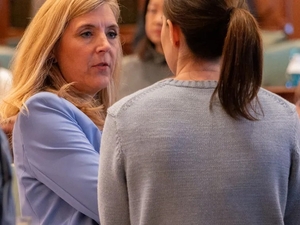
You’ll also hear from Republican West Virginia state Senator Amy Grady. She championed Raylee’s Law and worked across the aisle to try to get it passed.
She’s also a 4th grade public school teacher and serves as the chair of the West Virginia Senate Education Committee.
Finally, Evening Wrap newsletter author Danielle Gaines shares the top stories she’s watching.
Episode produced and edited by Mallory Cheng. Music for Stories From The States composed by David Singer.
Got questions? An episode idea? Email us at [email protected].
Subscribe to Stories From the States on Apple Podcasts, Spotify and Youtube.
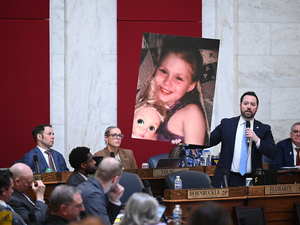
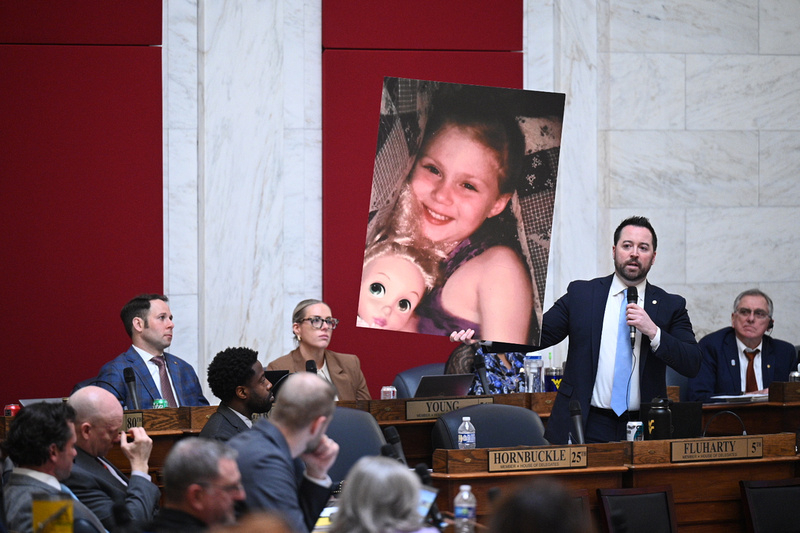
Photo: Del. Shawn Fluharty, D-Ohio, held up a poster of Raylee Browning, a child who died from abuse and neglect after her parents removed her from public school to homeschool her. Raylee’s Law would prevent parents from removing their child from school to homeschool them if a teacher has reported them for abuse. (Perry Bennett | West Virginia Legislative Photography)
Stories From The States is a production of States Newsroom, the nation’s largest state-focused nonprofit news organization, with reporting from every capital. At this pivotal moment in American democracy, our veteran journalists from all 50 states are reporting the consequences of government decision making. By zooming into one story each week, Stories From the States contextualizes and gives a human voice to what is happening now.
Transcript was created using an automated software.
Chris Fitzsimon
This is Stories From The States. I'm Chris Fitzsimon. Today we're talking about a bill at the center of the debate on homeschool rights. For the last seven years in West Virginia, a Democratic lawmaker has introduced something called Raylee's Law. It is named after an eight year old girl who died of abuse and neglect in 2018 after...
Transcript was created using an automated software.
Chris Fitzsimon
This is Stories From The States. I'm Chris Fitzsimon. Today we're talking about a bill at the center of the debate on homeschool rights. For the last seven years in West Virginia, a Democratic lawmaker has introduced something called Raylee's Law. It is named after an eight year old girl who died of abuse and neglect in 2018 after her parents withdrew her from public schools to home school her. But there's been a tug of war between politicians calling this an attack on homeschool rights. Up until the last three minutes of the legislative session, homeschooling has increasingly been framed as a political and cultural choice, especially in conservative circles, other Republicans warn that lack of regulation can leave some kids isolated from the visibility and protections built in the public school system.
State Senator Amy Grady
We heard a lot about parents rights, but what about that child's rights? You know, those children have rights too, as people in the school system, it's our job to protect them.
Chris Fitzsimon
We'll hear from a GOP state senator in West Virginia, but first, a reporter with West Virginia Watch will help us understand what happened on the last night of the legislative session.
Del. Adam Burkhammer
You're trying to attack homeschoolers. You're setting up a system that will not function and communicate within itself. And I've drafted amendment that the gentle lady already offered, and it is before you that will protect children, and I don't care what time it is, our job is to write good law.
Del. Shawn Fluharty
This is abhorrent behavior, disgusting government. People abusing children are taking advantage of this loophole, and so the bill was introduced to close it. It's simple, it's one page. It comes from a judge, an assistant prosecutor, and you all politicized it. We know this bill is good. We know who it was drafted by. We know what it stands for. It's not about homeschoolers. It's not attacking homeschoolers. Those who pretend to be and actually abuses who we're going after should be. You should want to do that. Why are we here defending child abusers? It's insane.
Chris Fitzsimon
What you just heard was what the end of the legislative session in West Virginia sounded like this year, where lawmakers debated Raylee's Law. This year, more state lawmakers in West Virginia did cross the aisle to try to get the bill passed, but they waited in the House to pass it until 11:57pm the last day of legislative session. That meant the state Senate didn't have time to consider it. Now the law is eclipsing the upcoming state elections in the state Amelia Ferrell Knisely has been covering all this for quite a while. She's a reporter at West Virginia Watch. West Virginia Watch is an outlet with States Newsroom. Hi, Amelia.
Amelia Ferrell Knisely
Hi. How are you?
Chris Fitzsimon
I am well, thank you for being with us.
Amelia Ferrell Knisely
Thanks for having me.
Amelia Ferrell Knisely
Let's jump in first. And I want to talk about this crazy way that this I was going to say happened, but actually didn't happen, would be more correct. But first of all, tell us a little bit about Raylee's Law and how it sort of came about in the first place.
Amelia Ferrell Knisely
Sure. So this is a bill I've been covering for a couple of years, and it's been in the works for even longer than that, but a girl in West Virginia, about an hour from where I live in Charleston, died in 2018 from really horrific abuse the court records going through them, I mean, it really is stuff that you can't even imagine that a child would go through and her public school teachers had reported suspected child abuse and neglect in the home. Once her parents and guardians found out that teachers had made that report to CPS, they withdrew her from public school, and then, from then on, the abuse and neglect unfortunately resulted in her death. And some of the details surrounding her death, I mean, she had pneumonia that went untreated, she was septic, and she at one point, was drinking toilet water. I mean, there was just horrific things that you cannot imagine a child going through. And so after Raylee died, one of the teachers contacted Delegate Shawn Fluharty, who is a Democrat, who actually is not from that area, but is an attorney by trade, and really showed him that there was this loophole in our state law. And to set some of the scene for West Virginia, we are one of the poorest states in the country. Sometimes we're considered the poorest, depending on what metric you might use, and we also have a high rate of child abuse. And of course, poverty doesn't always equate to child abuse, but there are some overlaps there, and our foster care system has the highest rate of kids in the whole country because of our substance use problem. So we have a lot of kids in crisis in West Virginia to where Raylee's story, while we have not seen that exact tragedy, she is not the only child to die while being homeschooled from abuse and neglect.
Chris Fitzsimon
And so how long this bill has been around? For a while?
Amelia Ferrell Knisely
It has, yeah, so I covered it, I would say three sessions ago. Was the first time that it passed the house, and I remember sitting on the House floor, and sometimes when you are having a front row seat to government. It's not always pretty, but sometimes it's really powerful and shows you how democracy can work. And a couple of years ago, Delegate Fluharty, he has a very bombastic, loud speaking style. Democrats have a very, very minor minority in our house, I'll say. And so he had been working on this bill and it wasn't really going anywhere, and a Republican stood up, who is a homeschool parent, and said, I really like this bill. There's a couple of things I don't love about it. Would you be willing to table it for today? Let's work on it behind the scenes and come back out tomorrow. And they did that, and the next day, they came out with this bipartisan agreement and got it through the House and then passed the next year, but it's never been taken up by the Senate. And couple of reasons for that, but I would say one of the biggest reasons was the homeschool lobby has a very strong voice in the West Virginia Legislature.
Chris Fitzsimon
Take us back to that, that moment before midnight. What was that like, watching this happen? Such a such a weird time?
Amelia Ferrell Knisely
Is it okay if I rewind one day prior to that to set it up? So I had two really intense days with this bill, and after covering it for so many years, I couldn't have predicted either of these nights, but late Friday night, we saw a massive bipartisan push in the Senate to get Raylee's Law up for a vote. There had been other efforts that had failed this session, and an attorney, Senator Ryan Weld, he's a Republican, he had never really crossed with this bill before, because it hadn't been up for a vote in the Senate, and he led that charge, and he ended up challenging the ruling of the senate president to get up for a vote, and he won. And I was sitting there thinking, I don't know the last time I saw someone not only challenge but win their challenge. And because you have...
Chris Fitzsimon
Just..to be clear, I remember his own party, right?
Amelia Ferrell Knisely
Yes, yes. And you have to get enough Republicans to come with you and say they don't agree with the Senate president's ruling. And I started asking people at the Capitol who've been there for decades, and they're like, 'I don't remember a successful challenge in 50 years'. So to see this kind of push for a child abuse prevention bill was really something we just don't see. So that was Friday night, so we went into Saturday the house was going to get it, and the day just started ticking away. We came in at 9am we had, like, a handful of bills. I mean, there were definitely some things to get through, but it wasn't a packed agenda like we've seen on other final days. And lunch rolls around, other stuff is rolling around, and we just didn't take it up. And on the last day of session, you're not only finishing a couple bills you have hanging out, but you're receiving messages from the Senate and voting on them, right? So we're going till midnight. 10 o'clock rolls around 10:30 and I start noticing that people from the Freedom Caucus, kind of the far right, are standing up and asking really drawn out questions. Sometimes they're holding their mic away from their mouth to where you can't hear them. There was just a sense in the air that something was up. And this isn't my first session, so I had that going to right, but still, sometimes you can't believe what you're witnessing, right? And so people start texting me because I'm sitting on the floor in West Virginia, we face the 100 member house during Bill debate, which is...
Chris Fitzsimon
Very odd.
Amelia Ferrell Knisely
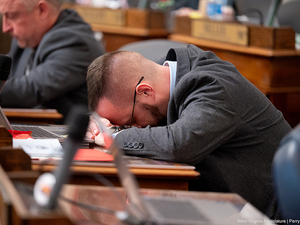
Yeah, yeah, it's an exercise in keeping your face still during intense moments or funny moments. But lawmakers started texting me like they're trying to filibuster Raylee's Law. And finally, at about, I would say 11:15 maybe 11:10, we took up Raylee's Law, and that set off many attempts to filibuster the bill. It was loaded up with amendments that were hadn't really been vetted yet, and I'm not sure the Senate would have accepted. And then people just started asking questions. People were trying to limit debate. It just seemed like every 10 seconds someone was standing up and talking. Some of it was to filibuster, and some of it was because people didn't understand what was going on. And I think in my 12 year reporting career, probably the most intense pressure I've ever felt at the Statehouse, and you could just see the people that wanted the bill. Their emotions were raw. They were already sitting at their desk, crying or...
Chris Fitzsimon
And it was midnight.
Amelia Ferrell Knisely
It was, yeah, we were we were going till midnight and getting closer to midnight. And there was that, and then there was also the other side of it, where they were winning, they were filibustering it. So you felt both of these emotions kind of flowing through the room. And finally, at 11:57 they voted on a version of Raylee's Law with an amendment from a homeschool dad, who is also a lawmaker, that would have allowed school superintendents to directly report suspected of use to CPS, and it required CPS to investigate that report within 24 hours. Now we didn't have a chance to really vet that, because it didn't come before lawmakers until after 11pm but they hit their buttons to vote on that at 11:57 it passed, but there wasn't enough time to get it to the Senate for them to agree to those changes. And so the session ended, we gaveled out, and normally at midnight, we all cheer and high five and reporters go write their stories, and there was like very minimal applause, a lot of tears. I ran across the capitol to the Senate and found very stunned and sad and angry senators who had done this, this charge Friday night, to only see it go down that way and and at one point, Senators had walked over to the House to try to negotiate, and they thought they had a deal. And so for it to kind of come down at the last minute like that was very disappointing, on on both sides, not for everyone, obviously, but for the people that wanted it.
Chris Fitzsimon
But an outsider like me, looking at this, would say, Why in the world would the home school lobby want to prevent something that would be trying to save a kid's life that I mean, if someone has been suspected of abuse, it seems like a no brainer from the outside
Amelia Ferrell Knisely
I will tell you, having covered this for a couple of years and other school choice and parental rights movements in our super majority GOP legislature, I don't have a great answer to that. I've asked those questions over and over again. I've sat through hours of committee meetings and floor debates on this bill. From what I gather, homeschool families feel that anything that could be a barrier to them educating their child at home is an attack. And it's hard for me to see it that way, because this bill would only affect parents who have been accused of abuse and neglect. It will not affect any current homeschool families, but they really do feel that it's an infringement on their rights, and I've tried to listen to that side and understand it, but I've seen, as more years have gone on with this bill that now, even sitting in committees, Republicans are saying you should want this bill it protects the integrity of homeschooling. 99% if not higher, of homeschool families, maybe 99.9 are doing the right thing. We see that, right? I have a lot of homeschooling families in my own life, but we do have these tragic stories like Raylee Browning that show that sometimes homeschooling is being used to shield abuse.
Chris Fitzsimon
Is that maybe part of it that any alleged, well, criticism, but it's really not criticism of home schools. It's criticism of the parents in this case. It feels like an attack on the whole home homeschooling network?
Amelia Ferrell Knisely
Yeah, I think so, and I know we're talking about rayleigh's law for this podcast, but we had another high profile measure this year that was going to put some restrictions on our broad educational voucher program, and some of those restrictions were just saying that homeschool families couldn't use it to buy instruments, or they couldn't use it for various things that I think a lot of Republicans agreed with weren't really the best use for that money, and the homeschool lobby came out strong against that and saw it as an attack on their rights, and that kind of teed up Raylee's Law because the homeschool lobby and parents were very activated this session. There were a lot of kids running around the Capitol, a lot of homeschool families in meetings, and I think that kind of played into how this ballooned into probably the most dramatic bill of the session, because homeschoolers felt that they were under attack. Now, ultimately, both of those things died. We saw no changes to our voucher program, and we saw nothing on Raylee's Law finish.
Chris Fitzsimon
Why is the homeschool lobby so powerful in West Virginia?
Amelia Ferrell Knisely
I haven't really been able to wrap my mind around that. I mean, certainly the lawmakers who support homeschooling and support parental rights, and I would say are the far deep red right, are growing. That is who is in power in the Senate right now, that our governor is very much that way, he's very pro homeschooling. It's still not the majority of lawmakers. I wouldn't put him in that far right kind of Freedom Caucus swing, but I think just a mixture of who's in power, and also it's an election year, and so when you start throwing things out there, like we're going to paint you that you're against school choice, that can be really scary for a Republican. But to answer your question, I really don't understand it, yeah.
Chris Fitzsimon
So what? What happens now? I mean this Rayleigh died in 2018...and it's 2026.
Amelia Ferrell Knisely
So next year, this bill will come back. We will see the Republicans and I'm sure Democrats too, but we will see Republicans in leadership push for this bill. They have said, first day, this is something I want. I think this amendment that passed in the final hour of the House could come back too, and maybe we'll get a chance to vet what that might. Might look like, but I don't predict that. That means it will have an easy path forward. This year, the person who sponsored the version of Raylee's Law in the Senate was the chair of the Education Committee. She's a public school teacher. She is a very Republican conservative lawmaker, and when I saw her name on it, I wrongly predicted, in my mind that it was it would be fine, because this was the first year we had a Republican sponsor it. So I know we will see it next year. I don't know what its fate will be.
Nelle Dunlap
What will the governor do if it passes?
Amelia Ferrell Knisely
I don't know if he'll sign it. You know, part of being a reporter is there's so much that you see that never makes it into a story, right? And the day that the Senate Health Committee was supposed to take up Raylee's Law for the first time this year, I saw the governor's wife walking around. Now, maybe there were other bills she was there. Our governor's wife is a former lobbyist, so she knows her way around legislation, but it was, you know, a little bit of a coincidence that the day it was pulled off of the agenda that kind of led up to all these other dramatic events, she was up around Senate. And so we have a very pro school choice, pro homeschooling governor, and I don't know should it land on his desk. Now, we do have the ability to override him, but they have to do that while they're still in session. So that means Raylee's Law has to get out the door early, and that will probably face challenges too. And it's an election year right now, West Virginia is trending more and more right, but there's a big push in our Senate to get more moderate Republicans in, so that might help it, or we could come back and have even further right legislature. You know, it's hard to say.
Chris Fitzsimon
Well, gosh, it's such a fascinating and sad story, I guess, really. Thank you so much, Amelia for all your coverage there, and thanks for being with us.
Amelia Ferrell Knisely
Thanks for having me.
Chris Fitzsimon
West Virginia isn't alone trying to pass additional reporting requirements to guard against child abuse in homeschool settings. States like Connecticut and Illinois are also considering it. This type of law hasn't fallen neatly under party lines in West Virginia or other parts of the country, according to reporting from Stateline, another outlet under States Newsroom, the 2018 deaths in Georgia of two siblings prompted a Republican sponsored bill that prohibits caregivers from withdrawing a child from school for the purpose of evading detection of child abuse and neglect. That became law in 2019. In Hawaii, then Republican state senator Kurt Fevella filed a resolution in 2024 calling for the state to conduct a wellness visit for any child removed from school to be homeschooled. He was motivated by the deaths of two unrelated children in Hawaii who had been taken out of school for home schooling. That bill died in committee. But even though their session just ended, West Virginia lawmakers are still planning on bringing back Raylee's Law the next time they meet. In a moment, we'll hear from the education chair who championed Raylee's Law in the West Virginia Statehouse
Moses Esheit
At a time when so many communities are losing their local news outlets. States Newsroom is filling a gap. We are now the nation's largest state focused nonprofit news organization with reporters based in every state capital and Washington DC. But we can't do it without your support. Your contributions allow us to produce award winning journalism and deliver it to you for free. No pop ups, no pay walls. This is a crucial time to support local journalism, and every bit helps to give go to statesnewsroom.com/donate.
Chris Fitzsimon
Raylee's Law did not pass this year in West Virginia state legislative session, but it didn't go down without a fight Republicans and Democrats in both the State House and Senate tried to pass the law. One of those Republicans was West Virginia State Senator Amy Grady. She represents West Virginia's fourth district. She's also a teacher and serves as the chair of the West Virginia Senate Education Committee. Senator Grady, thank you for being here.
State Senator Amy Grady
Absolutely. Thank you for having me.
Chris Fitzsimon
I know it was quite a busy session. I know you're back to work as a teacher. We really appreciate you taking the time out to talk to us.
State Senator Amy Grady
Absolutely
Chris Fitzsimon
Well, now that you've had a little bit of time to decompress for what was seemed like a wild and wooly end of the session, I wonder if you have, just in general, any reflections. I know you've talked a lot about this, about sort of what happened there at the end, especially with Raylee's Law.
State Senator Amy Grady
Yeah, I've, I've had a lot of time to reflect, and I've been a senator. This was my sixth session, and it was my most disappointing session by far, and I've stated that several times in several different interviews, but there's, there are a number of reasons that it was a disappointing session, not only because of legislation that I felt was really important that didn't get passed, such as Raylee's Law, but also just some characteristics that I saw some of my colleagues demonstrate. And so, you know, it was one of those. I guess if you look at it, five out of six isn't bad. You know, I can't have perfect sessions every year, but, but I was really hopeful, and hoping for a lot more than what. We got accomplished.
Chris Fitzsimon
Why is this so important to pass for West Virginia?
State Senator Amy Grady
You know, as a public school teacher, a lot of people, I'll tell you, a lot of people say this is, this is an infringement on on parents personal rights of pulling their child out and homeschooling them. As a public school teacher, I see students who you know should, I would hope would never be pulled out of school where our eyes are not on them. You know, we see some of the some situations where we we don't have students who are all in situations that we all assume they are, you know. So I always, I said this to my colleagues in the Senate. I said, you know, we are we, as as senators, have families and children, and we take care of them, we love them, we provide them with every single thing they need. The reality is every single child does not have that, and as much as we don't want to think about that, the truth is that there are children coming to our public schools that this is their safe haven. They're getting away from an abusive situation at home, and sometimes the only people that they can trust are the ones in the school system. It's their teachers. They're, you know, the cooks, the counselors, and allowing families who are abusing their children to just pull them out without say when there's an open CPS case and open about abuse or neglect is doing the child a lot of harm. You know, we heard a lot about parents rights, but what about that child's rights? You know, those children have rights too. As people in the school system, it's our job to protect them, and so it's really important, I think, to make sure that those those kids have a voice. I mean, we've heard a number of horror stories from across the nation, but also here in West Virginia, of children who have been pulled out to homeschool and have ended up dying because of neglect and abuse, and we have to stop, you know, we have to find a way to stop that somewhere.
Chris Fitzsimon
You know, as a regardless of what people think of homeschooling and all that, as an outsider, I certainly don't think, I wouldn't think the lobbyists for the homeschool association or legislators who are really fiercely supportive of that don't want children to be abused either. So it's hard as an outsider to understand why what feels like such a common sense thing doesn't pass. Is it because they're worried this opens the door to other regulation or weakens home schools, or what sort of what do you think is behind that?
State Senator Amy Grady
So after discussing with several of them, they feel that it is an infringement, because they say that 90% of CPS cases that are reported are found unsubstantiated, but they're concerned about neighbors reporting different people. We this bill only dealt with mandatory reporters within the school system. We don't report anonymously, like you know, and in order to and there were a lot of stories of, well, false claims, we might, they might be mad at a family and not want us to pull them out the home school. So we will, they'll call and make a false claim. And, you know, I can't wrap my brain around that. As a teacher, I know the amount of time it takes for me to call in and to file a report. It's not something I just go in anonymously and type, you know, type in a computer I have to actually call centralized intake. I'm on the phone for probably 45 minutes. I don't have that much time during the school day, so if I'm calling, I'm calling for a reason. And you know, they're really concerned about infringement on personal freedoms, but more privacy of the family, and I understand that. But I've also talked with Homeschool families are in favor of this bill, and they said, 'We want this because we really want you to catch the people who are pretending to be homeschoolers, because these people aren't homeschoolers. They are abusers, they're child abusers, and they're using homeschooling as a curtain to shield or hide that abuse'. And so I've talked with a lot of families who are happy and want to support it, because they want those people away from their community. They don't want to be tied to them. You know, we all have bad apples, and so they want to make sure that nobody, I guess, confuses the two. So I can't wrap my brain around it either. Chris, honestly, I can't wrap my brain around why anybody thinks it's an infringement on rights when it's doing nothing but trying to protect kids from abuse.
State Senator Amy Grady
After the dust settled and the folks like you who are working across the aisle, across the chambers, to to pass this. What was the feeling after it didn't pass?
State Senator Amy Grady
Well, I'll tell you when we when we we on Friday, we passed it, and we overruled the chair on his Germanus ruling. We were, we were we were living pretty high. We were on cloud nine. We were thinking, you know, great. We knew there was some appetite in the House to run it. We watched throughout the day to see if it moved and it hadn't, and so when it gave came into the evening, you know, we started getting a little nervous. We had House members coming over to us, mentioning that, you know, they're not running that bill. They're not running it. And we contacted leadership, and House leadership said there's no there is no consensus in our caucus to run that bill. Well, we had members coming to us saying they didn't ask us. We weren't asked in caucus about this bill. So there was some untruths there, which forced us to go over and actually talk with some leadership members about it. We ended up having to make a deal to even get it on the floor. So at that point, I knew it's, it's not going to pass, but we didn't want to give up on it, you know, but we knew as the as the evening on went on, that it wasn't going to pass because of political games that were being played.
Chris Fitzsimon
You think it'll pass next session?
State Senator Amy Grady
It's going to be our primary focus, and we're going to get it out in the first week or so. So I hope so. And, you know, I'm willing to work with there were a couple of House members who are who were against this bill, but want to work with some language. I'm willing to work with people to get the language where more people can support it, you know, to where it doesn't, they don't feel like it's something that's infringing on their rights. I'm happy to do that, and maybe we can come up with something that everybody can compromise on, that a lot of times, you know, that's the best legislation that you can have.
Chris Fitzsimon
And finally, before I let you go, I wonder, what is it like being a public school teacher and being a state lawmaker? First of all, I don't understand how in the world you could do both and keep your sanity, but you seem to do be doing pretty well. And what's it like both, to have both of those jobs, but then also to take all that knowledge into the state Senate, into the General Assembly, and actually be able to talk to people about students you know that you see every day.
State Senator Amy Grady
You know it's, it is, is definitely difficult. I couldn't do it if I didn't have a supportive family, supportive husband. My husband's amazing. We have three kids at home that he also helps with during this time. But you know, it gives me, it gives people a really good perspective, as a classroom teacher, when we have legislation that affects public schools, you know, I don't. I don't have to call people that represent I don't have to call the teachers unions and ask what their input is, because I have teachers right at my right at my fingertips that I can ask, 'Hey, how do you guys feel about this? How do you see this work?' And, you know, I teach fourth grade, so I'm an elementary teacher, so some things may affect secondary a little bit differently than they do our elementary teachers. So I always try to reach out. It is, it is definitely when I came into the Senate six years ago, Chris, I you know, we had just gone through this big teacher strike in 2018 I'm sure you heard about that in West Virginia with 2018 a huge fit, all 55 counties went out. That's when I became interested in running. And it wasn't because of the strike, but it was more because I was there. And I felt like a lot of our lawmakers gave us what I call the politician pivot. You'd ask them a question, and they danced around it, and and so and I got really frustrated, and so I said, You know what? I'm just going to do it myself. And so put my name on the ballot and 2018 as a non party, non Party candidate and got 11% of the vote. You know, you can't win as non Party candidate, but you can. Told me that then so the and then decided run again in 2020 against the sitting senate president. Ended up and ended up beating him. I spent $2,500 to his 250,000 but that was, that was the I was in a point where I said, you know, I'm going to do it myself, because we need to have a perspective from inside the classroom. There's no way these lawmakers don't like teachers, because that's what we were told, you know, oh, these, these, these lawmakers just don't like and don't understand public school teachers. So I made it my mission, when I got in there, to educate them on what it's like to be a public school teacher and what it's actually like from the inside. And they've done, I'll tell you what they've surprised me with, how well they've listened and really just kind of wanted to learn about how things work inside of public schools. And so I feel like it's been successful, and both of my jobs are equally important. So, you know, everybody always says, Which one do you like more? I love both. If I had to choose one over the other. I don't know that I could, you know, I I truly do. I do love both I do miss my kids. I have to be gone nine weeks out of the school year when I'm in session, and that's difficult. But you know, it's like I said, both jobs are equally important, so it's important to be there as well.
Chris Fitzsimon
Well, thank you for doing both jobs, and we really appreciate you your advocacy there in the legislature. And thanks for being with us.
State Senator Amy Grady
Of course. Thank you very much for having me.
Chris Fitzsimon
To keep up with what's going on in your state legislature. You can always go to newsfromthestates.com. Coming up shortly, we'll chat with Evening Wrap newsletter writer Danielle Gaines on the top stories she's looking out for. And one last thing.
Nelle Dunlap
Hi, it's Nelle Dunlap, product and engineering director at states newsroom. At States Newsroom, we believe journalism should be fair, fearless and free. With reporters working on the ground in all 50 states and Washington DC, we provide non partisan coverage of the state issues that matter most to you. You can subscribe to our work by going to statesnewsroom.com/subscribe.
Chris Fitzsimon
Well now the best time of every week our check in with Evening Wrap newsletter writer, Danielle Gaines. Danielle, how are you?
Danielle Gaines
I'm good, Chris. How are you?
Chris Fitzsimon
I am well, okay, let's jump in. Tell me something that caught your eye this week?
Danielle Gaines
Yeah, well, I've been looking at a number of taxing issues. So this week, the number of states without a state level income tax decreased with legislation signed in Washington State, Democratic governor Bob Ferguson signed a bill that imposes a state income tax on households with an income of over $1 million a year, and so he said this was a critical step towards making the state's tax system less regressive, and it would generate about $3 billion a year from about 21,000 filers. The celebration was very short lived. There are already legal challenges. This has been a back and forth in Washington and all the way back to a Supreme Court case, a state supreme court case in 1933 so yet to be seen, if this will actually be imposed.
Chris Fitzsimon
Yeah, that's really interesting. I think I remember that case. No, I'm not that old.
Danielle Gaines
But you know also, it decreased the number of states with a state level income tax, without a state level income tax for right now, but there are a number of states that are actually looking to now get rid of the income taxes that they already have. So those are typically Republican led states, they are trying to increase the sales tax instead, so it may all end up in a wash, yeah.
Chris Fitzsimon
And a lot of states I know are considering limits on local property taxes, even though it's a primarily a local government function.
Danielle Gaines
Yeah. And then there are also in Maine, they're moving on a quote, unquote, millionaires tax, and that's also become an issue in the Rhode Island gubernatorial race.
Chris Fitzsimon
What about one thing that's coming up?
Danielle Gaines
Well, another broad look for you this week, I guess, but keeping an eye on the courts and challenges to the President and the courts. So as you, I'm sure, heard, there was this startling scene at the US Supreme Court this week with the President, the first sitting President to go and watch oral arguments. So that's obviously, it's a huge case. It is a challenge to his executive order seeking to end birthright citizenship, which is, of course, a bedrock principle of the US Constitution. Judges seem skeptical of his effort to do that, and we know that they recently overturned the president on the tariffs issue as well. So we have to wait and see how that shakes out. But if it seems like the administration has been in court a lot to you, that's because it is so the Democratic Attorneys General Association announced this week that they had filed their 100th coordinated multi state lawsuit against the Trump administration.
Chris Fitzsimon
100 unbelievable.
Danielle Gaines
100 already, yes. And so they said that they are winning most of their cases, or, you know, policies are changing or being put off as a result of the cases being filed. So as of earlier this week, there were 67 cases with rulings, and the association said that they won 55 of those cases.
Chris Fitzsimon
Okay, taxes, courts, it's time for something else. What about one last thing?
Danielle Gaines
We had so many good candidates for one last thing this week. It was really hard, but I don't think I really had a choice other than choosing the pencil that's running for governor in Oregon. So this is a pencil for governor. The campaign launched on Monday, and it is an effort by a literacy advocate in the state to raise awareness about persistent problems with reading proficiency in the state, there's, you know, somebody walking around in a pencil suit.
Chris Fitzsimon
Is it a number? Is it a number two pencil?
Danielle Gaines
Oh, I don't know, but it's very convincing. I mean, it's a it's a cool life size pencil, and they are just trying to basically infiltrate the governor's race and encourage people to talk about this issue more, as they say, they want to, quote, make their mark on the race by using the pencil pulpit.
Chris Fitzsimon
Wow. And I hope that their contributions won't be erased.
Danielle Gaines
Ah, very good. You should have written the story.
Chris Fitzsimon
Danielle, thank you very much. We appreciate it.
Chris Fitzsimon
Thank you. Thanks for listening to stories from the States. I'm Chris Fitzsimon. Mallory Cheng produced and edited the podcast. David Singer produced our theme music. If you liked what you've heard today, please leave a rating and review. It means a lot to us to know what you think about the podcast. To stay up to date on the latest episodes, subscribe now to Stories From The States, a podcast from States Newsroom available wherever you listen to podcasts. We'll talk to you soon.