73 days in ICE detention: an Ohio hospital chaplain speaks out
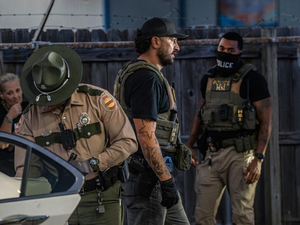
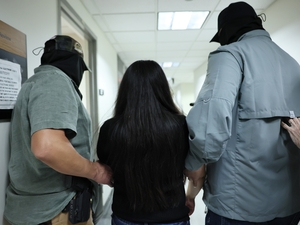
Across the country, many communities are seeing an increased presence of federal immigration agents. Chicago, Los Angeles and New York City have seen aggressive and sometimes violent tactics from ICE officers trying to apprehend people from the street and from their homes.






In Episode 2, you’ll meet Ayman Soliman, a former Cincinnati Children’s Hospital chaplain. He was detained by ICE for 73 days, and now shares his experience.
Soliman has been in the U.S. since 2014 fleeing persecution from the Egyptian government, where Ayman was detained and tortured for his work as a journalist. In 2018 he was granted asylum in the U.S.
However, his asylum was revoked in June and he was asked to meet with ICE officials on July 9. At the check-in, Ayman was detained by ICE and sent to Butler County Jail in Hamilton, Ohio.
Although the Trump administration contends that ICE is focused on detaining and deporting hardened criminals, Ayman disagrees.
“I don’t think these are the worst of the worst. This is just a statement that they made to convince the American public that these people deserve to be deported and to cover their racist reasons behind the deportation.”
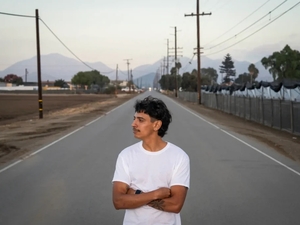
With increased ICE raids, many U.S. citizens also have been swept up and detained. You’ll hear from Washington, D.C., Bureau reporter Ariana Figueroa, who has reported about this development.
Finally, Evening Wrap newsletter author Danielle Gaines shares the top stories she’s watching out for.
Episode produced and edited by Mallory Cheng. Music for Stories From The States composed by David Singer. Special thank you Marty Schladen from the Ohio Capital Journal.
Got questions? An episode idea? Email us at [email protected].
Subscribe to Stories From the States on Apple Podcasts, Spotify and Youtube.
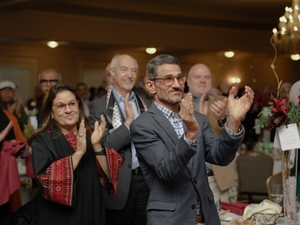
Photo: Ayman Soliman, the former Muslim chaplain at Cincinnati Children’s Hospital whom federal authorities are trying to deport on what his lawyers are saying is a trumped-up basis. (Photo courtesy of the Ohio Immigrant Alliance.)
Stories From The States is a production of States Newsroom, the nation’s largest state-focused nonprofit news organization, with reporting from every capital. At this pivotal moment in American democracy, our veteran journalists from all 50 states are reporting the consequences of government decision making. By zooming into one story each week, Stories From the States contextualizes and gives a human voice to what is happening now.

Transcript was created using an automated software.
Chris Fitzsimon
Chris, this is Stories From The States. I'm Chris Fitzsimon. This week, we're talking about ICE. Across the country, many communities are seeing an increased ICE presence. Cities like Chicago, Los Angeles and New York have seen aggressive and sometimes violent tactics from ICE officers trying to apprehend people from the street an...
Transcript was created using an automated software.
Chris Fitzsimon
Chris, this is Stories From The States. I'm Chris Fitzsimon. This week, we're talking about ICE. Across the country, many communities are seeing an increased ICE presence. Cities like Chicago, Los Angeles and New York have seen aggressive and sometimes violent tactics from ICE officers trying to apprehend people from the street and from their homes. With increased ICE raids, many U.S. citizens have also been swept up and detained. Today, we'll chat with Washington D.C bureau reporter Ariana Figueroa about this trend. We'll also hear from Ayman Soliman. Soliman has been in the United States since 2014 he was granted asylum here in 2018 he was recently detained and then released by ICE. Now he's sharing his experience.
Ayman Soliman
They started mocking all of us. Listen. You will tell me that you was kidnapped from the street. I don't care.
Chris Fitzsimon
We'll hear from him in a moment.
Chris Fitzsimon
Ayman Soliman has been in the United States since 2014 he was granted asylum here in 2018 he was fleeing persecution from the Egyptian Government, where Ayman was detained and tortured for his work as a journalist during the Arab Spring. He's built a life in Cincinnati, working as an Imam and chaplain at Cincinnati Children's Hospital. However, his asylum was revoked in June, and then he was asked to meet with immigration officials on July 9. Ayman first said the check in was going fine, but quickly turned into an over two hour interrogation by ICE and FBI agents. Ultimately, he was arrested and sent to Butler County Jail in Hamilton, Ohio, where other people detained by ICE were taken when he was detained, he had no idea if or when he would be released or deported. He was held in ICE custody for 73 days and then released without warning in September. Ayman joins me now to talk about his experience. Thank you for being with us today.
Ayman Soliman
Thank you, Chris for having me.
Chris Fitzsimon
Well, first of all, I just want to know how you're doing. It's been a couple months since you had that. What I'm sure was a harrowing experience. How are you doing?
Ayman Soliman
I'm slowly adjusting. It was definitely one of the most traumatizing, if not the most traumatizing, experiences of my life, so I'm sure it left a lot of scars and wounds. So trying to trying to adjust slowly.
Chris Fitzsimon
Well, I'm glad you're doing as well as can be expected. I guess, given the circumstances you've endured, I want to bring us back to the day of your scheduled ice check in, when you went to show up on July 9. What what happened?
Ayman Soliman
Before we went to this routine check in, we called. I got an attorney who called them to just check what is happening. When they terminated my asylum, they referred me to immigration court in Cleveland, Ohio, which means I'm already in court, I'm following the rules, and I'm waiting for an immigration judge to decide whether I qualify for asylum, I qualify for status, or they will go ahead and confirm the government decision to terminate my asylum. But we asked them, and they said it's just a routine check in, and we weren't expecting that I'll go home, or, let's say mostly go home, because there were lots of things going on with ice kidnapping people from the streets, so we were kind of worried, but they confirmed twice that this was just a routine check in. And when we entered the office, we found two people. The first one introduced himself as the ice officer and the other one as FBI agent. And when my attorney asked why FBI is here, they said, We're here for just some few questions. And this is volunteer, voluntarily. And to be honest, this was very, very scary. Someone in my situation, fighting the government, fighting on court to save his life, because I know sending me back to Egypt could mean this, that sentence, and now I'm meeting the FBI. When you meet an FBI, especially if you're Muslim, then you're there is a big trouble. Most likely they're not having you here because some information that you're posting pornography, for example, or because you're, you know, a drug dealer, it's you know terrorism, most likely violence, accusations, Islamophobia. So I really did not see that as an option to say no, what
Chris Fitzsimon
What? Sorry to interrupt. What kind of questions Did they ask you during this time?
Ayman Soliman
Every everything about my life, my life in Egypt, my political views, my religious views, my the degrees that I got in Egypt, my opposition to the Egyptian regime. How I was detained, how I came to the US, my life in the US, my relationship to any group or any organization that call itself Islamic. They actually named many, many, many that I ever, never, never, ever heard of, including very radical and extremist and terrorist groups.
Chris Fitzsimon
And then after that, two and a half hours, when the questioning was done, what happened?
Ayman Soliman
To be honest, during the conversation, I felt like I personally felt that they probably realized that I was not the person that they were looking for. They probably got some misinformation. I would say the two officers became somehow more friendly towards the end of the conversation, and I thought they will ask me to go home. They asked us to excuse him for a minute or two. They went outside the room and they came back telling me that, Mr. Solomon, unfortunately, you are under arrest. That was a terrible moment. Everything darkened, and I asked them why. The ice officer was very honest, and he said, we just got some order from above that anyone who comes to an ice office should be detained. The FBI officer tried to find some excuse related to something related, but it was not really convincing, and they took me to the Butler County Jail.
Chris Fitzsimon
And that must have been a harrowing experience. Do you remember arriving at the jail and what was going through your mind?
Ayman Soliman
I would say, hearing that I will be detained was not just shocking, it was traumatizing. All my experience of detainment and torture in Egypt, just all of a sudden came to my mind. It was like a terrible horror movie, and now, after 11 and a half years in the US, I might be sent back, and I'm sure the regime this time is way more violent, way more brutal. So it was really terrible. They took me to the Butler County Jail, where I realized that we're starting a time of dehumanization.
Chris Fitzsimon
What do you mean by dehumanization?
Ayman Soliman
Everything in jail, when you go tells you that this is a different life than your life outside. And although we detained it for no crime, we did not commit any crime. We were just supposed to be held there until a judge decides if we are deportable or if we should be free. So we should have been treated better. But this is maximum security jail, and the rules apply to everyone. Even if you did not commit a crime, you are equal to the person who killed 1000 people. When I first arrived there, they held us in a freezing room, a holding room, where we were held for 12 to 13 hours for no reason. You're supposed to have what they call booking, where you just take off your normal cloth, put on the jail cloth, and just be registered as an inmate or detainee. Unfortunately, we had to remain in a freezing room and were stripped off our top cloth, except a t shirt. Everyone was shivering, and I I had to keep jumping and, you know, exercise in order to keep my body warm, that is dehumanization. Why are you doing that? And people would get toilet paper, soak it in water, and hit the fan in order to block the fan to plug the airway so they can protect themselves from this freezing air. After that, I'm in a room with 12 or 14 more people with a toilet inside the room exposed. Everyone can see you if you are using the bathroom, and I asked the officer outside to let me use a bathroom that was used by other prisoners, and he said no, and he kept mocking me, and he asked me to use this toilet, and in front of everyone, which is very dehumanizing. I don't I don't see how. How is that part of a detention center for people who did not commit in a crime, even if you committed a crime, you deserve a better treatment than that. When they finally took us to change our cloth and put on our new jail uniform, the same officer who was mocking me for asking to use a bathroom took me and two other inmates, they were Spanish speaking to a room to change our cloth, and he asked the three of us to strip naked in front of each other. And I told him, this is impossible. Why? Why do I have to do that? The room, the narrow room, has a screen wall at the end, but easily. I think it was intentionally. This screen wall was built in order for people to go back. You know. Hide it and change their cloth. So why are you asking us to strip naked in front of each other, to change our cloth? This is dehumanizing. And he said, listen, he started mocking all of us. Listen, you will tell me that you was kidnapped from the street. I don't care. You can tell me that you left your kids or your family back home and you don't know anything about them, or they don't know anything about you. I don't care you. Tell me that you have not eaten anything the entire day. I don't care. Tell me that you haven't slept for whatever time. I don't care. I do not care you have to listen to the orders here when I told him it's impossible, and there is no power would force me to strip naked. And this goes against every human value and every it goes against my own faith. And I raised my voice, and he let me, after fighting with him, let me go use this screen wall, and the other two had to strip naked in front of me and him and each other. That tells you that this is this is dehumanizing, and I don't see any justification. I cannot accept any justification for that.
Chris Fitzsimon
And you, you were detained for 73 days.
Ayman Soliman
Yes.
Chris Fitzsimon
At any point, did you have hope that you would be released?
Ayman Soliman
Unfortunately, not the first two weeks, I would say I was more optimistic because I was told that I qualify to get released on bond. I'm a person who had zero felony in my criminal record. I have a very good reputation where I am. I'm a professional PhD student, a researcher on Islam and Biomedical Ethics. Many, many people wrote statements to the judge, praising me and saying that I should be released, so I should qualify. But then, unfortunately, the government objected upon the hearing and said the court does not have jurisdiction on my case, and they fabricated some claims that I had the three outstanding warrants for terrorism and murder in Iraq, a country I never visited, so I lost my bond.
Chris Fitzsimon
Wait, I'm sorry to interrupt. They said you had, you had warrants in Iraq?
Ayman Soliman
Yeah.
Chris Fitzsimon
And you'd never been to Iraq.
Ayman Soliman
I never been to Iraq. And you know, these were all fraudulent information, fabricated charges, just to convince the court and argue that the court did not have jurisdiction because I was I represented a society threat. And of course, they had to withdraw this later when I faced the government attorney on court and told them, You guys accused me of murder and terrorism in Iraq and I never been there. Where did you get this information from? They said, We apologize. This was a mistake. We just copy, paste it from a file of another person and put it on there, and we did not realize that it was you. Wow, yeah. So the first few days where I had hope, but once I lost the bond release, I felt every day was a day closer to being sent to Egypt and getting killed.
Chris Fitzsimon
When you were detained by ICE. There was a lot of outrage from community members, sparking protests calling for your release. A few co workers at Cincinnati Children's Hospital spoke out to support you, and some of them were fired for doing so. Did you know that there was quite a bit of publicity about your case? Were you aware that people in Ohio were talking and nationally were talking about you?
Ayman Soliman
Yes, I met a kind officer. He told me there was somehow, some press conference in front of the ice office after I got detained, but I didn't really think it will be more than that. Later in the morning, I went to my cell at 3am and then woke up at five to pray and get breakfast. And then people there said, Oh, we know you. We saw you on the news last night. So eventually we had small televisions in our cells, so I would watch the news and television, and I knew that there is, there was a lot of support, but unfortunately, I was not really sure that this will ever impact my situation.
Chris Fitzsimon
And the people that you were in jail with. We hear all the time that it's the worst of the worst that are being rounded up, and that these are hardened criminals. You obviously do not fit that description. I wondered if you had a chance to talk to other other men that were in that detention center with you, and what were they like? What was their story?
Ayman Soliman
Absolutely, I 100% disagree, and I could say with confidence that I met some of the most beautiful people I met in my life, some of the best of the best, not the worst of the worst. We have been told that the detain and deport the criminals, the undocumented, the illegal. I actually moved between three different pots. A pod has an average of 90 plus people. I would say I dealt with 150 people average. I would say everyone was kind. Everyone was a decent human being with a story. They did not commit a crime, except hoping for a better life. Everyone came to this country documented through the southern border, applied. For asylum, got a date on court, got a work permit, paid their taxes, everyone except for two, told me that they never committed a crime. Only two people that I met said they were deported because they committed a crime. I only met, I think, two people that told me that they got into the country illegally. So I don't think these are the worst of the worst. This is just a statement that they made in order to convince the American public that these people deserve to be reported and to cover their racist reasons behind the deportation.
Chris Fitzsimon
You have spoken out quite a bit since your release. Are you concerned about retribution? Are you worried?
Ayman Soliman
Every American is concerned right now, who is safe. American citizens are being kidnapped from the streets and being attacked and beaten up, and so no one is safe. No one is safe, even American citizens.
Chris Fitzsimon
Well, I'm sorry that you had to go through that experience, and I really appreciate you being with us, and we hope you will stay well.
Ayman Soliman
Thank you very much, Chris, it was a pleasure being with you.
Chris Fitzsimon
In a moment. We'll head to Washington to chat with reporter Ariana Figueroa. Then we'll chat with Evening Wrap newsletter writer Danielle Gaines on the top stories to watch out for. We'll be right back.
Moses Esheit
At a time when so many communities are losing their local news outlets. State's newsroom is filling a gap. We are now the nation's largest state focused nonprofit news organization with reporters based in every state capital and Washington DC. But we can't do it without your support. Your contributions allow us to produce award winning journalism and deliver it to you for free. No pop ups, no pay walls. This is a crucial time to support local journalism, and every bit helps to give go to states newsroom.com/donate
Chris Fitzsimon
The Trump administration has been aggressively pursuing mass deportations of people without legal status, that has led to US citizens also being swept up in the raids and detained as ICE raids are increasing states. Newsroom, DC, bureau reporter Ariana Figueroa has heard from immigration experts that these detainments will only increase, and legal residents, including US citizens, will continue to be arrested too. Ariana joins me now. Thanks for being here. Thanks for having me, Chris. Well, let's jump in and talk about there's so much on the on the immigration front, from your reporting, people with documentation are being swept up in these ICE raids. Tell us more about that.
Ariana Figueroa
Yeah, ICE agents do have a pretty broad discretion on their kind of enforcement tactics, and as they're doing this, it's really hard to tell who is a citizen and who is not. There is no national database that an agent can quickly look someone up, and there's also no requirement to carry along some type of documentation, like a passport. So it's it's really hard for you to simply just verify citizenship status, despite what the Supreme Court Justice Kavanaugh said.
Chris Fitzsimon
Yeah, I want to ask you more about that. I mean, my summary of that is, he basically said, Yeah, that might happen. All you have to do is tell the ICE agents that you're a citizen and they'll let you go. But that doesn't seem to be the practice, right?
Ariana Figueroa
It's not. There has definitely been a few court cases and suits specifically brought by US citizens or people who have some type of legal documentation that have said they tried to inform an agent, yes, I have my papers or I am a US citizen, and they were either pretty wrapped up or detained. We have multiple reports of US citizens being detained, and our own networks have been covering those instances as well.
Chris Fitzsimon
The undercurrent of that decision was described by a lot of folks as racial profiling, also that it's it's okay for someone who looks like that they might be of Hispanic origin or another nationality, that that that alone is enough for ice to be able to stop and detain people.
Ariana Figueroa
Yes, in their briefs to the Supreme Court, ice and DHS said, you know, having those type of characteristics, someone who has an accent, their type of employment, such as landscaper, or just even location, so someone taking the bus. I mean, I take the bus every morning. Is all grounds for suspicion, and they had argued that they needed that type of questioning to pair with their immigration enforcement.
Chris Fitzsimon
What happens after someone is detained? How long does it take to verify immigration status?
Ariana Figueroa
It can. Take a while to verify your status. I mean, DHS previously has accidentally removed US citizens. There are a lot of forms that agents will try and get folks to sign. Voluntary departure is one of them, and that essentially says you have agreed to not appear before you know any judicial person, and you will be swiftly removed. The Trump administration has also been aggressively using this really wonky policy tool called expedited removal, which and applying it to people, and they haven't really had the chance to challenge that. And essentially, that tool allows for like, quick deportations, again without appearing before an immigration judge. So if you do this in a paper, papers, or if you are a US citizen, even opening like an immigration case can take, like, weeks,
Chris Fitzsimon
Even if you are a US citizen or you have legal authority to be here and you're detained. It's not like there's a lot of opportunities while you're there to talk to your lawyer or to reach out to family members. I'm struck by these stories about how people are 123, days, maybe more, and really have no recourse at the moment,
Ariana Figueroa
Well, it's also really hard to track people, because if you are picked up, you know, maybe you're in a processing center, but within 24 to 48 hours, you could very easily be across the country, and your family has no idea. People are shuffled around really fast, and sometimes, like even if you are able to get legal representation, your attorney could lose you
Chris Fitzsimon
So especially if you're a US citizen, and you are detained for several days, once you are released, is there any recourse? Can you do anything after that happens?
Ariana Figueroa
Well, I mean, in the racial profiling case. So the Supreme Court that was brought by one of the plaintiffs was a US citizen who was pinned by an ice agent and detained for several hours before he was finally released. So that's the type of recourse that we're seeing, is lawsuits left and right, but as of now, that's that's kind of where things are.
Chris Fitzsimon
Do you expect these issues to be on the supreme court docket for a while?
Ariana Figueroa
Broadly speaking, all the immigration suits that I have been covering, the pattern really has been a lower court, maybe places in an injunction or bar. The Trump administration has been pretty aggressive on appealing to either an appellate court, but they have other cases I gotta do. If they're not, you know, fast enough, they have been aggressively making these emergency requests to the Supreme Court, so I almost assume nearly every immigration related case I have will in some form make its way to the High Court. And there have been cases I followed that have gone to the High Court several times. This case dealing with temporary protected status for Venezuelans, has gone to the High Court at least twice, and I expect to see that in the future. Broadly.
Chris Fitzsimon
Do you feel like that the public understands all these ramifications? It just feels like these stories keep happening over and over and over in our network and in other media outlets. And I wondered if you think the confusion and chaos of this is becoming widespread enough that people understand it.
Ariana Figueroa
I think what we are seeing now, it's kind of coming to the front door of people who haven't necessarily been involved in immigration. For folks of us who have been covering it, we kind of know again, like how much of a patchwork immigration policy is in this country, and how wonky and almost like, understandably frustrating it can be for some folks going through the system, and I think people who maybe weren't tuned into that, or had never had some type of experience, it's now being in the forefront, and they're seeing, you know, these aggressive ice tactics, and are now being aware of the ramifications.
Chris Fitzsimon
Well, we really appreciate your coverage in the DC bureau of state's newsroom, and we appreciate your time today. Thanks, Ariana.
Ariana Figueroa
Thanks so much for having me appreciate it.
Chris Fitzsimon
Coming up shortly, producer Mallory Cheng will check in with Evening Wrap newsletter writer Danielle Gaines on the top stories she's looking out for and one last thing you.
Mallory Cheng
Hello, it's Podcast Producer Mallory Cheng here, filling in for Chris in this segment, we're looking ahead with the news for this week and next week, and joining us now is Danielle Gaines. She's the national newsletter author for States Newsroom, and she puts together our daily newsletter the Evening Wrap. Subscribe if you haven't already. It's a great newsletter. Hi, Danielle, thanks for being here with us today.
Danielle Gaines
Hi, great to talk to you. And yes, please subscribe. I'd love to have you.
Mallory Cheng
It's a great newsletter. I'm not biased or anything, but what is the top story that you saw this week?
Danielle Gaines
Yeah, we've had so much news on redistricting this week, so I feel like we have to revisit this ever continuing issue. Now it's like elections, it just doesn't ever end. But there was big news this week out of Utah, a state judge presiding over a case challenging the state's 2021 congressional district map put in place a new map that includes a solidly Democratic district covering Salt Lake City, and she refused a version that was drawn by the legislature, which favored Republicans. And this is all based on a challenge to that 2021 map group of voters said it violated a voter effort which bans partisan gerrymandering in the state. The fight there is far from over. One Republican lawmaker is already calling for impeachment of the judge she was, by the way, appointed and approved by Republicans. But impeachment is a really high bar, so uncertain if that's going anywhere. And then, of course, we have all the mid decade redistricting news going on as well, and that's being pushed by President Donald Trump and Republicans across the country.
Mallory Cheng
More to come on redistricting. What's a story that you're looking out for this upcoming week?
Danielle Gaines
This upcoming week, you know, I'm going to be paying attention to shut down cleanup work, of course. So the Congress voted to reopen the government for at least two months. There's going to be another fight in January, so it'll be interesting to see how quickly debate moves or doesn't move, especially with the holidays, on some of the lingering issues. So obviously, health insurance premiums were a big issue, and that wasn't resolved. And now, you know open enrollment is happening, will be complete, and people are going to start to feel that hurt. So it'll be interesting to see where that goes. You know, just in the last few days of the shutdown itself is when states kind of started rolling out their payments partial or full to people who are receiving SNAP benefits. So, you know, there's an interesting government story in there about how, or if you know, states will be repaid. And of course, the air traffic issue, will we have air traffic controllers working at full force for the holiday travel.
Mallory Cheng
We'll see. Good luck to everyone traveling during the holiday season. I won't be, but good luck to everybody else who are.
Danielle Gaines
Yes, I'll be driving.
Mallory Cheng
I think that might be the best route. And the last part of the segment, it's personally my favorite part with one last thing. So what's our one last thing today.
Danielle Gaines
Yes, I've had this song stuck in my head all week long. Some folks, especially in the Midwest, will know this song if you were around in the late 70s, early 80s. But it's called the wreck of the Edmund Fitzgerald by Gordon Lightfoot, and it's a song that honors the crew that died aboard the SS Fitzgerald. They were sailing on Lake Superior on November 10, 1975 going from Wisconsin to Detroit, and the ship sunk. And so this week was the 50th anniversary of that tragedy, and the Michigan advance wrote just a beautiful story about the families who are still around the industry that's still around and about how this song has called attention to all of it for many decades now.
Mallory Cheng
Well, thank you so much. Danielle, I really appreciate you being here. I always learn so much. Yes, thank you.
Chris Fitzsimon
Thanks for listening to stories from the States. I'm Chris Fitzsimon.
Mallory Cheng
And I'm Mallory Cheng.
Chris Fitzsimon
Mallory produced and edited this podcast. David Singer produced our theme music and a special. Thank you to Marty Schladen from the Ohio Capital Journal. If you liked what you've heard today, you can subscribe to stories from the States, wherever you listen to podcasts, we'll talk to you soon.