Zinke’s out. Everyone’s piling in. What’s next for Montana’s 1st Congressional district?
Mar 04, 2026 | 7:14 pm ET
Description
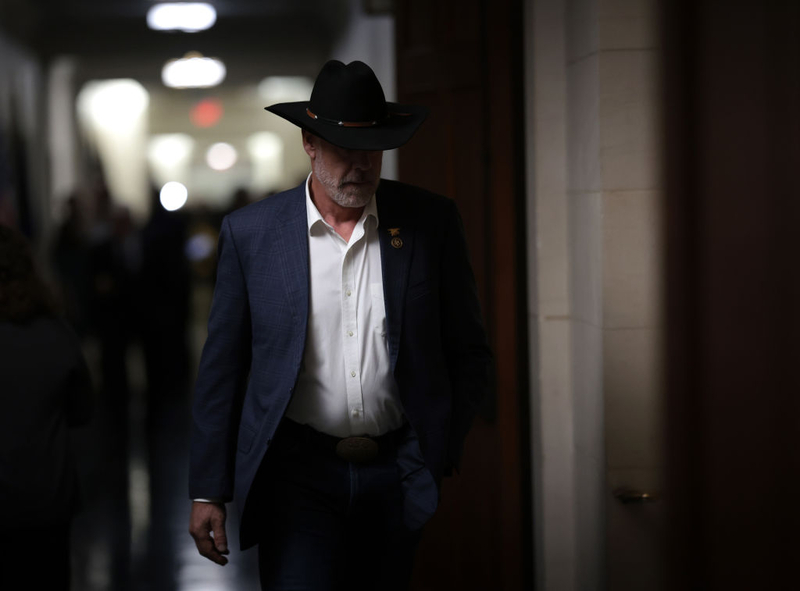
Montana U.S. Rep. Ryan Zinke, a two-term incumbent for the state's Western congressional district, announced this week he will not seek re-election.
Ryan Zinke’s out for re-election to Congress.
Democrats are taking credit.
Elected Republicans (mostly) have anointed a successor for Congress.
Shots are being fired from left to right, and right to slightly less right.
But does anyone really know what the last-minute changeup means for a potentially competitive seat representing Montana’s western district?
Montana U.S. Rep. Ryan Zinke made waves on Monday with the announcement that he is retiring from Congress, just two days before candidate filing in the state closed.
Zinke has been elected to the U.S. House four times, but only has served three terms, after President Donald Trump tapped him as Secretary of the Interior during his first administration, a position Zinke left after multiple ethics investigations.
He won the newly formed western congressional seat in 2022 and 2024, both times beating Democrat Monica Tranel by three and nearly eight points, respectively.
But in 2024 he ran six points behind Trump, and then Democratic Sen. Jon Tester won a slight majority in the district, indicating there might be an opportunity for Democrats to target the race during the midterms.
Publicly, Zinke cited health concerns and upcoming surgeries, stemming from injuries he had sustained during his Navy Seal days.
But Kyle Kondik, managing editor of Sabato’s Crystal Ball with the University of Virginia Center for Politics, said only a candidate knows the real reason they make the decision to drop out.
“Retirements can sometimes tell us about what members think the environment of the next Congress might be, and it looks like it will be a Democratic-leaning environment to some degree,” Kondik told the Daily Montanan. “Even if he was going to win re-election, maybe he didn’t want to be in the minority.”
Kondik also pointed to a poll released by a Republican firm and shared widely by members of Zinke’s team showing Zinke with a lead over two announced Democratic challengers, but garnering less than 49% support.
“Internal polls, sometimes you wonder why they get released when they look like that,” Kondik said.
Zinke’s seat had been targeted by the DCCC — the campaign arm of congressional Democrats — as a target in the party’s quest to take control of the House this year, meaning national resources could be available to the eventual Democratic nominee. And while Zinke’s 2024 margin is not the largest in a Republican District DCCC is eyeing, Trump’s margin in the district is among the highest — around 12%.
Sabato’s Crystal Ball kept its rating of the race, sans Zinke, as “Likely Republican,” but Kondik notes that during the 2018 midterms, a shift of national sentiment towards Democrats saw a few districts Trump won by double digits flip.
“Maybe they could shake a Republican loose here,” Kondik said.
The Republicans
The pathway for any candidate to reach the U.S. Capitol now runs through a crowded primary field.
Within hours of Zinke’s announcement, candidates were piling into the Republican race.
Al Olszewski, chairman of the Flathead County Republican Central Committee — who came within a few points of unseating Zinke in the 2022 primary — announced his candidacy.
Olszewski said he anticipated Zinke dropping out and assembled a strong campaign team that’s worked on successful House and Senate campaigns nationally.
And Secretary of State Christi Jacobsen, who received the most votes in 2024 of any Republican candidate in Montana, including Trump, announced her own bid for the seat on Tuesday.
But it’s conservative talk radio host and combat veteran Aaron Flint who has made the most noise.
Flint, who ran his show “Montana Talks” out of Billings for most of his career but recently moved to the Flathead where he has family roots, launched a campaign website and announcement video on Monday afternoon and then let the endorsements roll in.
First from the state’s eastern Rep. Troy Downing. Then from Zinke himself, anointing his successor.
Then from the state’s junior Sen. Tim Sheehy. And Gov. Greg Gianforte. And the state’s attorney general and the commissioner for securities and insurance.
On Tuesday, Trump also endorsed Flint.
Notably absent from the endorsement list, as of Wednesday afternoon, was Montana’s senior U.S. Sen. Steve Daines, who faces his own re-election battle.
(Editors note: Sen. Daines announced he will not seek re-election late on Wednesday)
Heather Swift, a longtime staffer and campaign chief for Zinke, said in a social media post that Flint had raised more than $100,000 in his first day as a candidate, and secured a $1 million Super PAC to back his primary race, an effort tied to longtime Montana political consultant Jake Eaton.
Many Montanans across the political spectrum were impressed with Flint’s campaign rollout, with Democratic legislator Ellie Boldman calling it a “slam dunk.”
In 2022, the primary race for Montana’s First Congressional district drew just more than 85,000 Republican votes, with the difference between Zinke and his closest challenger a little more than 1,500 votes.
The Dems:
Democrats began vying to challenge Zinke months ago when the first candidate, Russ Cleveland, filed for candidacy last spring.
He was soon joined by Matt Rains, with Sam Forstag and Ryan Busse making their entries early this year.
All four candidates have made opposition to Zinke a tenet of their early campaign rhetoric, and their strategy is sure to quickly evolve to the new political landscape.
But the Democrats have also taken to loudly proclaiming Zinke’s exit from the race as evidence of their respective strengths and taking last-minute shots at their former opponent.
“Ryan Zinke quit because he saw what was coming: all of us,” Forstag, a Missoula smokejumper and union leader, said. “People across western Montana who are hungry for real representation and a new generation of leadership.”
“Ryan Zinke bailing on Montana during a war and an affordability crisis tell us everything we need to know about his character,” Rains said in a statement.
Cleveland, also a Navy veteran, said in a statement that he respects the time in service Zinke gave as a Seal a congressman.
“But as we look to the future, there is more opportunity now than there has been in decades to achieve the positive change Montanans need and deserve,” Cleveland said. “With the recent news, Montana voters now have the ability to choose a truly independent person who truly represents them, not corporate lobbyists, not dark money, not party first representation.”
Busse, who ran for governor against Gianforte in 2024, losing by 20 points, sought to credit himself for Zinke’s departure, recording a video saying that “just weeks after I got into this race, we already scared Ryan Zinke right out.”
A poll by a Democratic firm conducted in December showed Busse up on Zinke by four points.
The 10,000-foot view:
While Democrats in Montana are viewing Zinke’s exit as an opportunity, political analysts are split on whether the race is more, or less, open.
On Tuesday night, with high-profile primary contests taking place in Texas and North Carolina, former NBC “Meet the Press” host Chuck Todd repeatedly told cohosts on a Decision Desk HQ livestream that he believes the worst name in politics this year is “Congressman.”
He was pointing to the dissatisfaction Americans have with Congress, and especially with Republicans who hold a governing trifecta — one sitting Republican representative lost his primary in Texas while another, Rep. Chip Roy, was nine points behind in the primary for attorney general, though that race will go to a runoff.
Todd’s point was that incumbents, who have historically seen an advantage in elections to the tune of 2.5%, according to a Princeton analysis of U.S. House races in 2024, might not carry as much credit this year.
To that end, Montana Democrats might have been better off if Zinke had stayed in the race, according to Decision Desk HQ chief election analyst Geoffrey Skelley.
“Zinke is a case where maybe the incumbent wasn’t as strong. While at some time he was viewed as a strong force in Montana politics, he might not have been thought of the same way anymore,” Skelley said in an interview with the Daily Montanan. “It’s possible Montana Republicans will be better off with a different nominee.”
Rob Saldin, of the University of Montana’s Mansfield Center and Political Science Department, said he isn’t sure how much effect Zinke’s retirement will have on the race.
“In terms of partisan dynamic, I’m not sure it shakes things up too much,” he said.
Saldin also pointed to the fadeout of incumbency advantages in recent years as the national political scene has gotten increasingly polarized.
“I tend to also think the partisan dynamic is a lot more important these days than the incumbency advantage,” Saldin said. “That mattered more I think in a time when you had a lot more split ticket voters. Now we have a lot less split ticket voters and entrenched partisan voting. The name next to the R and the name next to the D doesn’t matter anymore.”
He also said that both Flint and Olzweski come into the race as notable figures with significant followings — likely to carry less name recognition than Zinke, but more than any of the Democrats. (The Daily Montanan spoke to Saldin before Jacobsen had announced her candidacy, but Skelley said that on a national level, a sitting Secretary of State is usually a strong candidate as a known entity.)
Political analysts across the country are widely expecting Democrats to have substantial success during the midterms, given that a series of special and off-year elections since Trump took office again in 2025 have seen Democrats overperform by up to double digits.
“If there’s ever a year when Democrats could pull it off, you’d think it would be a year when the Republicans control everything in Washington, the president is unpopular and you have a longtime incumbent retiring,” Saldin said. “That’s a pretty good cocktail right there. I’m not sure it’s going to be enough, but that’s what you’d want to see.”
Editor’s note: this article has been updated to include additional statements from Democratic candidates for MT-01, and to reflect that Sen. Daines is not seeking re-election.
Helena, MT