You shouldn’t need a law degree to hunt moose in Alaska
Oct 07, 2026 | 6:00 pm ET
Description
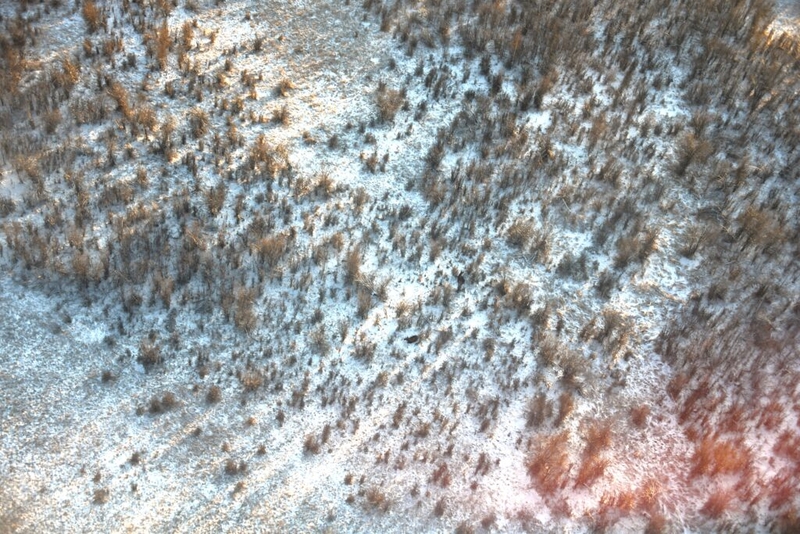
A few moose are seen in from the air in a forested area of Interior Alaska in this undated photo. (Photo by Mark Nelson/Alaska Department of Fish and Game)
The last thing a hunter needs to pack before a moose hunt is a crash course in federal regulations and bureaucracy. We shouldn’t need to spend the days before a hunt refreshing federal websites, comparing land-status maps, deciphering emergency action, and trying to determine whether our regular hunting spot is suddenly subject to a different set of rules. But apparently, thanks to the feds, that’s where we are now.
On Sept. 3, actively in moose hunting season, the Federal Subsistence Board approved Emergency Wildlife Special Action Request WSA26-09 by email, closing specified federal public lands in Unit 25D, a more than 17,000 mile swath of the upper Yukon River region, to moose hunting by non-federally qualified hunters from Sept. 10-20.
That’s right. A federal board made a consequential decision about who could hunt public land, and did so via an email string completely out of public view. There was no Zoom meeting to tune into. No teleconference where hunters could listen to Board members deliberate. No public meeting where Alaskans could hear, in real time, how each member justified their decision. Instead, the vote happened in their inboxes.
The Board’s rules may allow that. But “allowed” and “ideal” are two very different things. When a decision about who can hunt public land is made by email just days before the closure takes effect, Alaskans deserve to see how that decision was made and hear the reasoning behind it. Decisions that shut hunters out of public lands should be made in public.
In fact, the Board’s own meeting guidelines call an open public meeting the “preferred forum” for emergency special actions. So why wasn’t there one? Why couldn’t the Board get on a public Zoom or teleconference and let Alaskans watch their government make the decision? How were the votes collected and verified? What safeguards surrounded the vote? Was there discussion among Board members before or while they voted?
If the answer is simply, “The rules allow us to do it by email,” that’s not good enough. Transparency isn’t a technicality. It matters most when the government is exercising its power to tell people that public land they expected to hunt is suddenly off-limits.
Here’s what makes this even more infuriating: this wasn’t some unforeseen wildlife emergency that suddenly appeared in September. The underlying decision was made in April through Wildlife Proposal WP26-75. The feds had months to address this. But because the federal regulatory process wasn’t completed in time, hunters received an emergency action just as moose season was arriving. Their delay became a hunter’s emergency. Moose season didn’t sneak up on anyone. September is on the calendar every year, last time we checked.
And after the last-minute decision came the next problem: figuring out what it actually meant in real life. In Unit 25D, WSA26-09 applies to specified federal public lands along major river corridors. But navigable waters present an entirely different jurisdictional question. Depending
on land status and navigability, state-managed hunting opportunities may remain below the Ordinary High Water Mark while the federal uplands immediately beside it are closed.
Got all that? You’d better. Because while the government makes the rules confusing, the government doesn’t pay the price when you misunderstand them. You do.
On Sept. 16, the Board considered Emergency Wildlife Special Action Request WSA26-12, seeking to implement yet another April decision, Wildlife Proposal WP26-31, changing moose hunting on our public lands in Unit 13, which is south of Fairbanks. Again, the vote happened by email.
This time, however, the Board rejected the request because it arrived too late. Hunters were already in the field, and implementing the closure at that point could create “confusion and conflict.” You think?
That’s exactly the problem. Hunters shouldn’t find out that the rules are shifting while we’re packing camp, driving to the trailhead, running upriver, or already sitting in hunting camp. Government decisions about who gets to hunt federal public lands shouldn’t disappear into an email inbox where the people affected can’t watch the deliberation happen.
Hunters have responsibilities. We must know the regulations and whose land we’re on. We must, and should, respect private property, understand boundaries and follow the law. The feds have responsibilities, too. Finish the regulatory process on time and give hunters adequate notice. Make the rules understandable to a normal person and show us exactly what’s open and what’s closed. And if you’re going to vote to remove hunting access, do it in the open where the people losing that access can watch it happen.
It’s not an unreasonable ask. It’s the bare minimum. Alaska hunters shouldn’t need a law degree, or a sneak peek into a federal official’s inbox, to know where they can hunt moose.
Juneau