Wyoming schools superintendent race features two primaries and five candidates
Jun 10, 2026 | 6:23 am ET

Description
Photo courtesy of WyoFile
A crowded field of candidates in the race for Wyoming’s top education post will trigger primary elections on both Republican and Democratic ballots — a rarity in this predominantly red state.
Democratic candidates Ana Cordova and Sergio Maldonado filed their intent to run for superintendent of public instruction by the May 29 deadline alongside GOP candidates Steve Harshman, Tom Kelly and Chad Auer. WyoFile interviewed the Republican candidates — who announced campaigns earlier this spring — about their stances in April.
Maldonado, a Northern Arapaho man who was born in Riverton, is not new to campaigning, having lost to current Superintendent Megan Degenfelder in 2022. The Northern Arapaho tribal education director has worked as a substitute teacher in Arapaho, taught at Central Wyoming College and is working on earning a Ph.D. He opted to run again because he believes he can contribute to improving academic outcomes in the state, he said.
“I’ve been in education all my life,” Maldonado told WyoFile. When contemplating Wyoming’s educational realities, he said, the question arose: “What can I add as a tribal member that will effectively facilitate aggressive change in the lack of academic achievement? After that, I knew I was going to run one more time.”
Cordova, a standout student and graduate of Cheyenne schools, earned a master’s degree in human genetics before obtaining her law degree. In 2021, while living in Washington, D.C., she launched a scholarship for Cheyenne students. When urged to run for the position, Cordova decided it would be a worthy way to give back to Wyoming, she told WyoFile in an email.
“I have long agreed with the adage ‘we do not inherit the earth from our parents — we borrow it from our children,’ and I take the societal responsibility of stewardship for future generations very seriously,” she wrote.
This isn’t the first time a crowd has jockeyed for the position of superintendent, which entails heading the Wyoming Department of Education. Six people ran in 2022, when Degenfelder prevailed. But in the race previous to that one, a single candidate, Republican Jill Balow, ran unopposed.

Degenfelder is running for governor, leaving her seat open at a time when lawsuits, policies, funding decisions and technological innovation are reshaping Wyoming’s educational landscape. The Legislature passed a recalibration bill in March that represents a new funding model for school districts; Wyoming’s universal school choice program is being challenged in court and the state just overhauled literacy standards and instruction.
The primary election is Aug. 18. The two candidates who prevail in their respective parties will face off in the November general election.
The dems
Cordova grew up in Cheyenne as the only child of a single mother, according to an article on the NM State Foundation website. She excelled in science and was picked for the third cohort of the prestigious Gates Millennium Scholarship, which she says allowed her to pursue higher education. Cordova attended New Mexico State, the Johns Hopkins University School of Medicine and Northwestern University.
Cordova is the only candidate without direct classroom or school administration experience, but she has worked for nonprofits devoted to increasing educational access. As a teenager in Cheyenne, she volunteered for Head Start, the Hispanic Organization for Progress in Education and others. In 2020, she established a scholarship for Cheyenne students.
“I am … a big believer in giving back, community strength, and helping those who come behind me — which is why I established the Cordova Family scholarship for Central High School seniors,” she told WyoFile.
Cordova returned to Wyoming earlier this year and decided to run after being asked to by community members, she said.
Though she is pleased that a school funding bill passed this spring, Cordova doesn’t think the recalibration legislation went far enough. When it comes to the state’s controversial Steamboat Legacy Scholarship, which was created to give $7,000 to parents for private schooling, Cordova said she believes “that funneling public, taxpayer-funded monies to private entities undermines public education systems.”
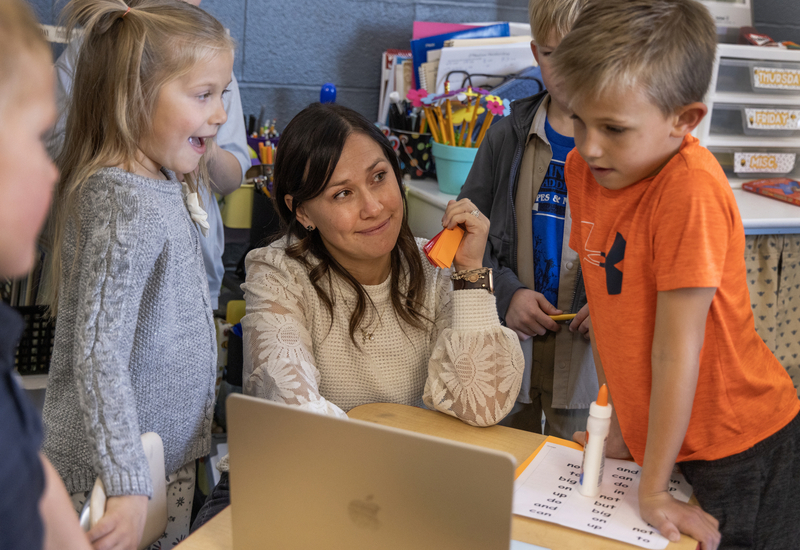
“My top priority as Superintendent would be to create an educational environment in Wyoming whereby the Steamboat Legacy Scholarship program is essentially unnecessary — because our public schools are so vibrant, so successful, and so easily the natural choice for all parents,” she wrote.
Maldonado was born in Riverton and lived on the Wind River Reservation as a child before his family moved to Arizona. He returned to Wyoming as an adult, where he worked in classrooms and in administrative roles. Along with seeking the superintendent post in 2022, Maldonado has also thrice unsuccessfully run for a seat in the Wyoming Legislature. His concerns include teacher burnout, student mental health needs and providing inclusive education to all Wyoming students. If elected, he said, he would travel the state to hear from teachers and administrators about their needs.
“I’ve always said education should never be politicized,” Maldonado said. “I will ensure that every student will receive in collaboration with districts, from their classroom teacher all the way to school board, a quality and personal education.”
Distinguishing themselves
On the Republican side, Kelly was the first to announce his candidacy. The state representative from Sheridan has worked as a paraprofessional, social studies teacher and college professor. Kelly holds a master’s degree in education and a doctorate in political science.
In education policy matters, Kelly, who described himself as a “free-market libertarian-leaning Republican,” has been critical of the increasing presence of screens in Wyoming’s classrooms, advocated for salary raises for teachers and supported school choice and parental rights.
As superintendent, Kelly’s No. 1 priority would be to “get the state bureaucracy to back off a little bit,” he told WyoFile this spring, and to work with superintendents, principals and teachers of each district to figure out, “how can I as superintendent make your job easier?”
While he is unsure that the Steamboat Legacy Scholarship will survive its legal challenge, he said he would like to see it go into effect.
Auer also got his start in education in the classroom — teaching high school English and math. Auer went on to work in administration, as a principal and in the Colorado Department of Education.
After his family moved to Wyoming in 2016, Auer enrolled in law school, earning his Juris Doctor in 2021. Former Superintendent of Public Instruction Brian Schroeder appointed Auer as the Wyoming Department of Education’s chief of staff in 2022. Most recently, Auer was Gov. Mark Gordon’s senior policy advisor.
Auer sits in the middle of the extremes of wanting to radically dismantle public education and wanting to preserve things exactly as they have been for decades, he said in an April interview.
“Wyoming has the strongest foundation of any state in the country,” he said. “[But] we can’t just settle into the status quo, because this chapter that’s dawning is going to radically change the economy and our society. Our education system needs to thoughtfully embrace those technological advancements without destroying our strong foundation.” Local control is also important to him.
In terms of the Steamboat Legacy Scholarship, Auer agrees with the legal challenge that it is unconstitutional. As superintendent, Auer would prioritize literacy and math proficiency, he said.
Harshman is a Natrona County native who has been a member of Wyoming’s House of Representatives since 2003. That makes him one of the longest-serving representatives in state history. He is also a veteran teacher and football coach.

As a lawmaker, Harshman has historically championed funding for Wyoming schools, and was instrumental in creating the Hathaway Scholarship and Wyoming’s Tomorrow Scholarship.
In the Legislature, Harshman opposed the Steamboat Legacy Scholarship program, warning his colleagues the universal voucher program would end up in court — which it has.
As superintendent, he said, he would focus on continuing to whittle down onerous school tests and requirements while equipping districts with the tools they need to succeed. He also believes Wyoming’s education system is stellar but that preservation of local control is critical.
“Our future is really so bright in Wyoming and this country, and I just want to be an advocate for this abundance and … building these opportunities for our kids and grandkids not to leave this state,” he said.
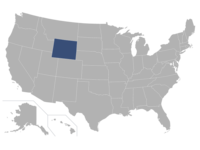
Cheyenne, WY