Wyoming congressional candidates talk campaign finance, roadless rule, keeping Trump in check
Jul 24, 2026 | 12:33 pm ET
Description
Photo courtesy of WyoFile
CASPER—One of the spicier moments of Thursday night’s U.S. House of Representatives forum came when the eight-person panel was asked about the record-breaking sums of personal and family cash that candidates were throwing into the race — and what that trend forecasts for access to office in Wyoming.
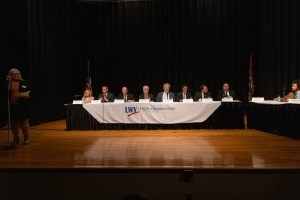
Instructions were to keep the discourse civil: Panelists who sat on stage in Casper College’s Durham Auditorium were told explicitly to avoid personal attacks on other candidates, and to address the audience, not one another.
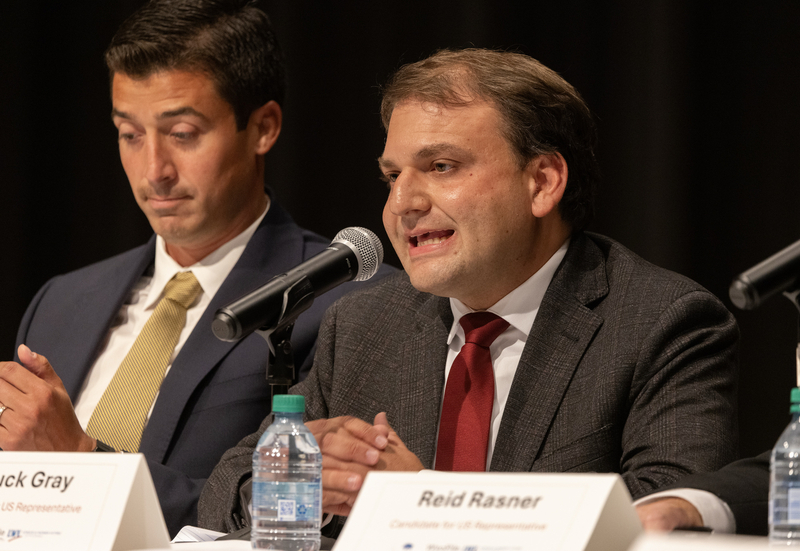
Current Secretary of State Chuck Gray, among the candidates dipping into the family piggy bank, used the question to address fellow big spender Reid Rasner, alleging that he’d spent “hundreds of thousands of dollars in false attacks.” Then Gray, the Wyoming Republican Party’s pick for the seat, turned to his fellow heir of a family fortune, Steve Friess, who’s written the largest check to his own campaign, $2 million, so far.
“I’m not spending as much as Mr. Friess over here, with the Jackson element,” Gray said.
He was cut short for breaking the rules.
Candidates who haven’t benefited as much from their own wealth and family largesse bemoaned the trend in Wyoming politics.
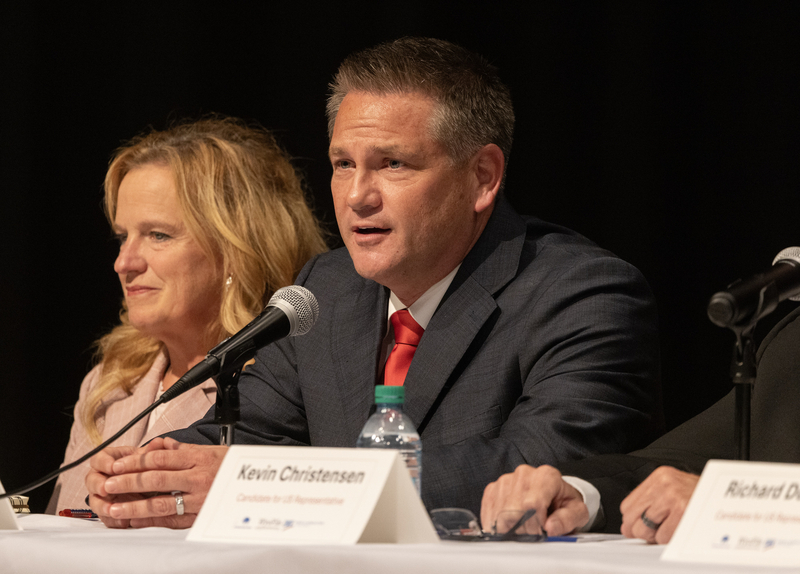
“We’re creating a situation where millionaires and billionaires can buy their way into office,” said Kevin Christensen, a Bureau of Land Management retiree whose campaign has brought in about $13,000. “That circumvents our democracy in Wyoming. We as voters need to be aware of where that money is coming from and why people are spending that kind of money for a $174K job in D.C.”
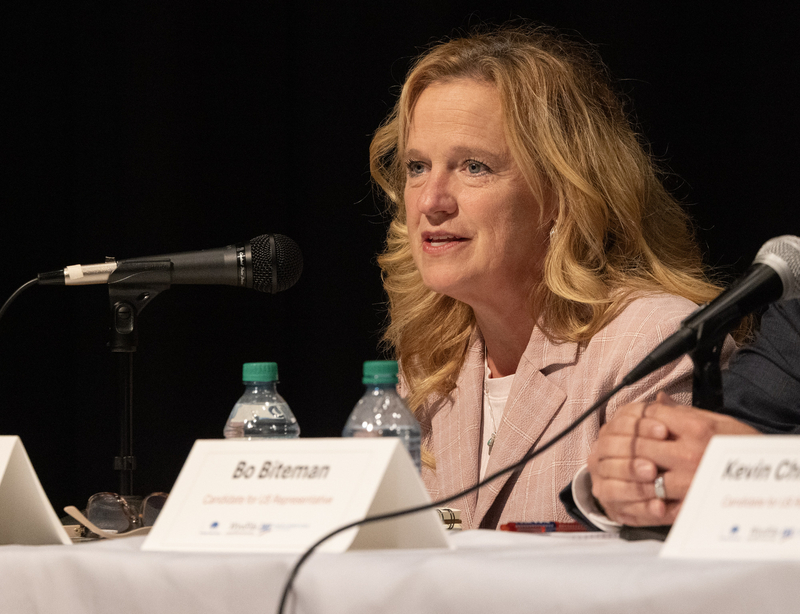
Candidate Bo Biteman, the Wyoming state Senate president, called the campaign spending trend “unnerving.” He’s raised about $94,000, almost all from individual contributions.
“Candidate quality used to be the thing. Retail politics used to be the thing,” Biteman said. “Hopefully, the voters ultimately have the final say. The voters will be able to go to the election booth and make their choice based on who they think is best to represent them, not based on who spends money on mailers and ads and billboards.”
Divisions among the crowded pool of GOP candidates weren’t always easy to come by. None, for example, openly supported disposing of federal lands.
The day of the forum, the crowded field became less crowded. Frank Chapman, a Jackson Hole businessman who’d loaned his own campaign over $1 million, announced that he was dropping out that morning. That leaves nine still vying for the seat. Candidate Keith Goodenough did not attend the forum.
Over the course of the nearly two-hour-long forum, the candidates had just one minute to answer questions that were sometimes about convoluted policies. Asked about the Trump administration and U.S. House Rep. Harriet Hageman’s efforts to rescind the Roadless Rule, the candidates were mostly on the same page in their desire to get rid of the environmental protections.
“The roadless rule was a Clinton-driven, left-driven attempt to hurt our public lands,” Gray said of a policy that comment-writing Westerners overwhelmingly want to keep. “Some of these agencies are almost like the Joker: It’s almost like they want it to burn,” he said, referencing an argument that roads are needed to defend national forests from wildfires.
Some candidates struck a more nuanced tone.
“It’s hard to say ‘always yes’ or ‘never no’ to something like the Roadless Rule,” Balow said. “It depends on the location, it depends on the use.”
Only Christensen clearly wanted to retain the policy, which has been in place for a quarter century.
“Modify, but do not rescind the Roadless Rule,” he said. “Wyoming people love to go into these areas. That’s where I go to hunt. Out-of-state people love to go on their roads.”
Asked if Congress is fulfilling its role as a check on executive power, the field was somewhat split. Most stated plainly that the U.S. government’s legislative branch needed to do more, but most candidates were leery of criticizing President Donald Trump, who’s retained 64% approval in Wyoming — the highest rate of any state.
Friess, who calls himself a “Trump Republican,” used the question to argue that Congress should do more to support the president.
“It is important to lock down many of the advances President Trump has made,” Friess said, “so they aren’t reversed by the next liberal administration.”
Candidate Richard Dodson, an actor and singer, made a quip out of the question: “If I were an orthopedic surgeon,” he said, “I would very much be in the business of spine transplants.”
Congress “needs a lot of help” finding their spines, Dodson said.
Christensen, a U.S. Army veteran, was the only candidate who cited an example of what he felt was an overstep by the Trump administration.
“We have no further to look than the current conflict in Iran,” Christensen said, calling the war “untenable, unclear, and unwinnable.”
“Members of Congress have the responsibility to ask those tough questions,” he added. “I’ll have a personal conversation with Pete Hegseth on the first week.”
Organized by the League of Women Voters of Wyoming, Wyoming Public Media and WyoFile, Thursday’s forum was the last of five statewide candidate forums for the 2026 primary election. Footage of each is available on YouTube.
Wyoming’s primary election is Aug. 18. Early voting is underway.
For more information about candidates in Wyoming’s federal, state and legislative races, check out WyoFile’s 2026 Election Guide.
Clarification: This story was updated to clarify which candidates have inherited wealth. —Ed.
Cheyenne, WY