The words that Kansans use matter. Can we find the strength within ourselves to put pride aside?
Jul 14, 2026 | 4:33 am ET
Description
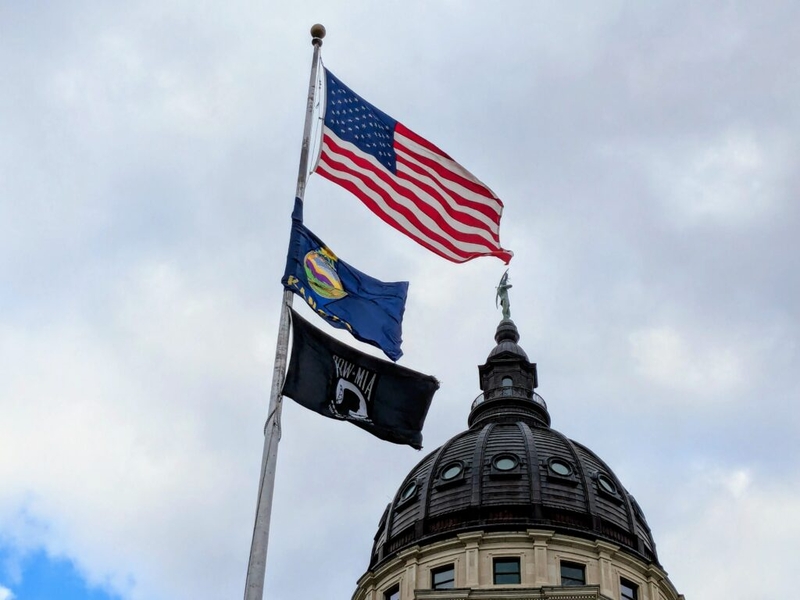
Kansans should find it within themselves to use kind words and show a generous attitude to others, writes our columnist. (Photo by Tim Carpenter/Kansas Reflector)
Living in Topeka, one grows accustomed to driving past the Westboro Baptist Church members holding up their signs. The Phelps family members aren’t out in force like they used to be, but there’s no missing them at times, and it can make one’s day a bit frustrating to know that hate is still alive in Kansas and in America.
I didn’t grow up in a hateful family. My grandpa was a minister for 60 years who taught me to love others and give to those in need. Of course there are church politics, and as a minister he endured elders and deacons and people in congregations from his past being not so nice.
Many Christians these days look really bad. They are saying things that just aren’t, well, Christian. They are supporting people who use discrimination and prideful speech to put people in “their place” and make others feel like second-class citizens.
I love my little Toyota Corolla. I inherited it from my father five years ago when he passed away of Parkinson’s. I drive my Corolla around town, and sometimes honestly I am horrified by the bumper stickers and the flags and the aggression of other drivers. Some men whiz past me in their big trucks and they are determined to own the road. They are angry, and they are taking it out on other drivers who are just going the speed limit and minding their own business.
Politicians these days often use critical and hateful speech. I am sure many readers are sick of this talk, just as I am. Would we teach children to say things that they say? As I often like to quote: “What Would Jesus Do?” Moreover: “What Would Jesus Say?”
Barry Feaker of Compassion Strategies is one of the kindest men I know. He has been working with the homeless population for years and years and he truly cares about those in need. I have known Barry for years and he practices what he preaches. His actions and his words are one and the same.
Speech has become a battleground these days. What we say matters. My dad earned a doctorate in communications, and in our home we were taught that what we said matters. I wrote a teen devotional book at the young age of 15 and 16, and I remember thinking as I wrote: “What will my readers take away from what I have to say?”
I still think that today as I write my opinion pieces: “What message am I trying to convey? Is it uplifting? Is it positive?”
I speak twice a year at the Topeka Police Department for their Crisis Intervention Team training. I show a documentary in which I appeared, and which has one million views on YouTube. Every time I try to educate and inspire the officers about how to treat people with mental illness who may be experiencing a crisis. The words the officers use in these situations could make all the difference in the outcome of the encounter.
Yes, words matter.
I would encourage everyone to try to choose words that are kind, not judgmental or accusatory. There is enough hate to go around. Let’s practice what we preach and say things that uplift and inspire. Let’s rededicate ourselves to spreading compassion and not hate.
Rebecca Lyn Phillips is a published author, speaker and mental health advocate. Through its opinion section, the Kansas Reflector works to amplify the voices of people who are affected by public policies or excluded from public debate. Find information, including how to submit your own commentary, here.

Topeka, KS