Wisconsin’s record high prison population is not just a capacity problem, advocates say
Sep 01, 2026 | 4:45 am ET
Description
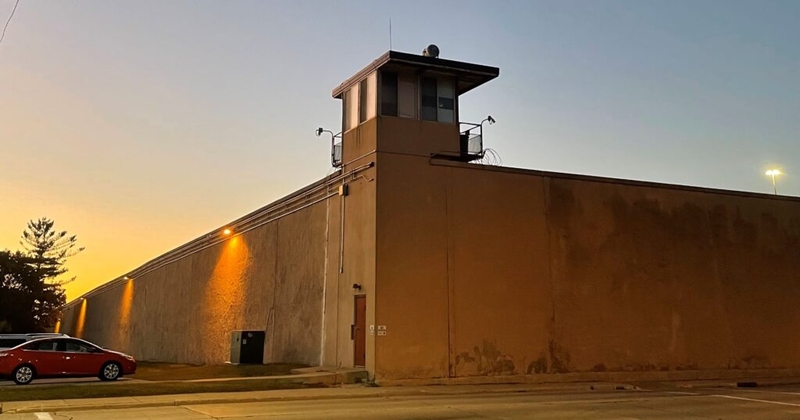
Green Bay Correctional Institution. Wisconsin's prison population recently hit a record high. (Photo by Andrew Kennard/Wisconsin Examiner)
According to Wisconsin Department of Corrections statistics, the state’s prison population hit a new record high last week. As of Aug. 28, there were 23,854 people housed across adult prisons in Wisconsin. The figure surpasses the last record, set in 2019, and raises questions about whether and how the state will take steps to address its chronically overcrowded prison problem.
The record high was first reported by Wisconsin Watch, which noted that the prison system was designed to hold nearly 6,000 fewer people than it currently does. In some prisons, such as the three prisons housing women in Wisconsin, gyms and office spaces have been converted into dorm space. Meanwhile, the DOC struggles with staffing shortages among correctional officers, medical and psych workers.
Wisconsin is an outlier, with some of the highest rates of imprisonment for Black and brown people in the country. The state has also struggled to finally close the troubled Lincoln Hills juvenile prison, despite bipartisan agreement that it needs to shut down what has been one of the largest facilities of its kind in America.
Shannon Ross, a member of Justice Forward Wisconsin has watched the prison population rising again after dropping after the onset of the COVID-19 pandemic in 2020. “It’s been going up steadily every year,” Ross told the Wisconsin Examiner. “And it’s a confluence of the fact that we have too many ways for a person to get sent to prison — we just have a lot of crimes … we have a lot of high penalties for crimes, and we have a lack of ways for people to come home early.”
Emily Curtis, a member of the group Ladies of SCI, told the Examiner Wisconsin “continues to rely heavily on incarceration without putting enough emphasis on what actually reduces incarceration over the long term.”
While excessive sentences keep people in prison for as long as possible, Curtis added that “there are still not enough meaningful rehabilitation opportunities within the prison system that are accessible to everyone who could benefit from them.” She stressed that “education, job training, treatment, reentry preparation, and other programs need to provide people with real tools and realistic avenues for success when they return to their communities. If we want to reduce recidivism, rehabilitation cannot simply exist on paper. It has to create an actual path toward successful reentry.”
The DOC says incarcerated people have access to various programs aimed at rehabilitation and education. Earlier this year, for example, the University of Wisconsin college system graduated its first incarcerated bachelors degree students in over 50 years. The students graduated as a result of a partnership program between the DOC and UW.
The state agency has also pushed back against criticisms of the rising prison population, stating that it has limited authority to grant early release and that it’s up to the state Legislature to craft laws dealing with the pressing challenges faced by many DOC facilities. Although Wisconsin Gov. Tony Evers has proposed reforms in multiple state budget drafts, including closing aging prisons and establishing greater oversight, these ideas were rejected by the Republican-controlled Legislature.
Meanwhile controversy has grown around exceptionally old prisons including in Waupun and Green Bay, where reports of deaths due to negligent medical care, violence, alleged drug smuggling by staff, extensive lockdowns restricting access to programming, and use of solitary confinement (what the DOC calls restrictive housing), and other problems have surfaced. Lawsuits and investigations targeted prison leaders for these problems. The population at Waupun plummeted from over 1,000 people to as low as 694 people in July 2024, which brought the population within the prison’s designed capacity, according to data compiled by Wisconsin Watch. As of Aug. 21, however, the population had risen to nearly 1,000 people.
Ross, of the advocacy coalition Justice Forward, a formerly incarcerated person himself, said that in Wisconsin “the criminal justice system is used as a political football, and neither side is really moving what they know clearly in front of them should happen, because they don’t want to fully give up on the tough-on-crime claim that they can make.” The politics of crime and punishment, he says, results in elected leaders either not doing enough to institute reforms, or doubling down on a culture of punishment. “That creates this dynamic where everyone is trying to be seen as protecting society, meanwhile no one’s actually protecting society because it doesn’t make us healthier as a society having a large prison system.”
Curtis added that it’s important to “broaden the conversation about what rehabilitation actually means.”
“Programs are important, but so is the environment a person lives in every single day. The daily interactions incarcerated people have with correctional staff can either reinforce rehabilitation or work directly against it. When the culture focuses primarily on catching mistakes, writing conduct reports, handing out punishment, or viewing positive behavior and accomplishments with suspicion, it becomes extremely difficult to create an environment where genuine change is encouraged.”
What drives the prison population to climb is a complicated formula. Part of it, many advocates say, is the system of revoking parole, probation and other forms of community release and sending people back to prison. Missing an appointment with a probation officer or a baseless accusation without thorough investigation can send someone on release back to prison.
That’s what happened to Dennis Simmons, who was nearly sent back to prison in 2025 due to false accusations, and a probation agent who tried to revoke Simmons despite having evidence that the accusations against him were false. Simmons was housed in the Milwaukee Secure Detention Facility while the case played out. He described the facility as overcrowded and short staffed. Simmons eventually beat the accusations, but said that the episode crushed his hopes of change after being in and out of the system most of his life. Simmons was later arrested in a different case, and the DOC recommended he be sent back to prison. Over 8,100 people were sent back to prison in 2025.
Talking to people who’ve worked on the prosecution-side of the criminal justice system, Ross said he learned of many cases where people were sent back to prison because prosecutors decided it was a simpler, quicker, more cost-effective route than filing new charges against the person. Yet, at the root of the overpopulation issue is the lack of ways for people to come home early, Ross said.
Right now, there are people who’ve been incarcerated for decades who are going before the state’s commutations board to ask the governor to shorten their sentence. In April, Gov. Evers signed executive orders to revive the board, changing a pattern lasting decades of Wisconsin governors choosing to not use their power to alter prison sentences. The commutation process has been a target of attack for right-wing pundits, who frame efforts to shorten sentences as being soft on crime and releasing droves of criminals. The attacks are similar to those against probation, parole, and the bail system.
Marianne Oleson, co-executive director of Ex-Incarcerated People Organizing (EXPO) said in an emailed statement that the revival of the commutations board is “an important and long-overdue step.” Oleson cautioned, however, that “commutations alone cannot resolve a crisis of this magnitude,” adding, “Wisconsin needs broader sentencing and supervision reform, expanded opportunities for earned release and ‘second look’ review, greater use of alternatives to incarceration, and substantial investment in housing, treatment, employment and community-based reentry support.”
“Wisconsin cannot incarcerate its way out of every social problem,” she said.
Ross told the Examiner that he understands why people might be skeptical of incarcerated people’s assurances that they’ve genuinely changed and deserve to be released.
“I’m sympathetic to that because those things do happen, but they happen in life, period,” said Ross. Still, in his view, prison is one place where it’s hard to disguise bad character traits. “Those of us that have done time, we know that the fish bowl of prison is place that, if you can genuinely be changed and show people you’re changed there, then you very clearly are not who you were at one point.”
Ross said people who apply for and meet the standards for commutation are demonstrating not only that they’ve done the bare minimum of educating themselves and getting therapy, but that more importantly, they are making connections with other people. “You can see folks that have built up support networks,” said Ross. “You see folks that have reference letters and have people in their corner. You can see folks in the way that they carry themselves, in the way they talk, it’s very humble. It’s very aware and accountable to the things that they’ve done.”
He added that “people show you who they are if you’re paying attention, and if you know how to look.” Ross said that he wants the state to get to a point where people are able to see through sensationalism about the criminal justice system, and understand the nuances of the issue and people’s individual stories.
Curtis said something similar. “I would like to see state leadership take a comprehensive look at sentencing practices, revocation policies, rehabilitation, institutional culture, and reentry rather than treating the record prison population simply as a capacity problem,” she wrote. “Building or expanding facilities may address where people are housed, but it does not address why the population continues to grow or why people return.”

Madison, WI