Wisconsin Democratic lawmakers step into new era with election of 2 women leaders
Nov 11, 2026 | 4:45 am ET
Description
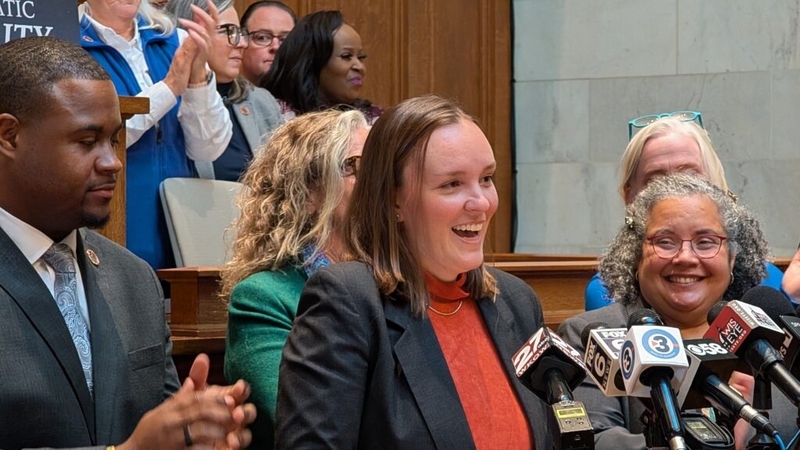
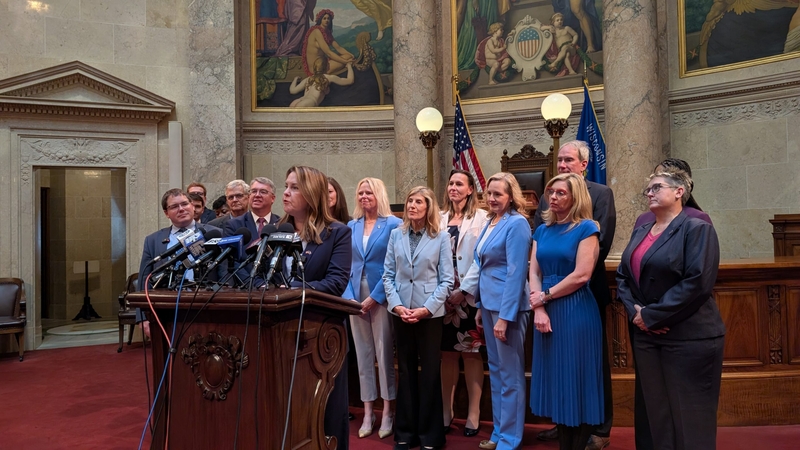
Rep. Greta Neubauer, who was first elected to the Assembly in a January 2018 special election, will be the first woman to serve as speaker. (Photo by Baylor Spears/Wisconsin Examiner)
The transition to a new era of Democratic leadership in Wisconsin was set in motion on Tuesday as Democrats elected Rep. Greta Neubauer (D-Racine) to serve as the next Assembly speaker and Sen. Dianne Hesselbein (D-Middleton) to serve as the next Senate majority leader.
Both lawmakers were expected to be chosen to lead by their respective caucuses as they led in the minority and helped shepherd in the Democrats’ midterm election wins for the first time in 16 years.
Neubauer, who was first elected to the Assembly in a January 2018 special election, will be the first woman to serve as speaker. She has led Assembly Democrats since 2021 and in the upcoming session will lead a Democratic caucus of 53 members. She succeeds Republican Assembly Speaker Robin Vos (R-Rochester), who had held the position for 13 years.
Hesselbein, who was first elected to the Senate in 2022, took charge of the Senate Democrats in December 2023. At the time, the caucus only had 11 members. She will now lead a majority caucus of 18-members.
Their elections mean the Wisconsin State Legislature will be led by two women for the first time in state history.
“It, of course, is a historic moment, and we hope to use our positions to make life better for women, for families, and for people across the state,” Neubauer said.
Senate lawmakers were giddy as they gathered for their caucus meeting on Tuesday morning, giving hugs and congratulations to their colleagues.
“15 years since I’ve been in the majority,” Sen. Bob Wirch (D-Pleasant Prairie) said a few times as he greeted his colleagues. He is the longest serving member in the Senate, having been elected to the position in 1996.
Democratic Gov.-elect David Crowley and state lawmakers will be sworn in on Jan. 4, 2027.
“We are united, and we are ready to govern. I cannot be more excited to work with this thoughtful and hardworking group of people from all across our state,” Neubauer said at a press conference. “I do not take this responsibility lightly. At this moment, I am thinking about my own 5-month-old daughter and every child here in Wisconsin, and what the future holds for them. Our responsibility is to do right for them. That will take a tremendous amount of work, but we are up for it.”
“What a day this is,” Hesselbein said ahead of the Senate Democrats’ caucus elections. “We know the assignment. We’ve been working towards this for years, and we are going to get it done.”
Neubauer told reporters Democrats plan to meet over the next few months to speak about their priorities. She said there are many bills they are considering, including free school meals for students, investing in our public schools and regulating prescription drug costs, but she said they still need to discuss what comes first.
“We have a lot that’s ready to go,” Neubauer said.
Hesselbein was asked about a number of issues including marijuana legalization, opting Wisconsin into the National Popular Vote Compact and artificial intelligence. Her answer was similar for each question, saying that her caucus needs to have open discussions first. She said Senate Democrats plan to meet through November and December.
“I understand everyone has a sense of urgency, but just for the first time today, we welcomed three new senators-elect to our caucus,” Hesselbein said. “Whereas I have knocked on thousands of doors for the past year and a half listening to voters, they have done tens of thousands of doors, and so we really want to bring those voices from those districts that really didn’t have any good representation in this building until this moment.”
Sen. Mark Spreitzer (D-Beloit) was elected by Senate Democrats to serve as the Senate president. Some of the priorities he mentioned include placing guardrails on data centers, lowering the cost of everyday essentials, making healthcare and medications more affordable, fully funding schools, restoring the Knowles-Nelson Stewardship Program and reigning in artificial intelligence.
“After years of Republican inaction, there is so much that we must get done for the people of Wisconsin,” Spreitzer said in a statement.
Crowley and Lt. Gov.-elect Sarah Godlewski spoke to lawmakers in their closed caucus meetings on Tuesday. Crowley dodged questions from reporters afterwards.
Crowley has said he would be interested in a blue ribbon commission that looks at the state’s taxation system, including school funding and Act 10.
Neubauer said Democrats need to be thoughtful, but also need to work quickly.
“We need to be thoughtful about how we approach these pretty challenging issues. We have a lot of priorities that we hope to fund. We want to invest in schools in a serious way that sets them on a different trajectory and stops the endless cycle of referendum,” Neubauer said. “We’re always open to participating in those more comprehensive looks at deeper, challenging issues. We do want to move quickly to make sure that we are restoring collective bargaining rights and investing in our skills in the way that our kids.”
Neubauer said Democrats are discussing changes to the school funding formula and said her caucus will be “pushing very hard to restore the rights of working people in Wisconsin.”
“I think it’s possible that we will propose some changes in the school funding formula, but our No. 1 priority is to get kids and families the resources that they need,” she said.
Hesselbein said during the press conference that she would need to speak with Crowley about his comments on a blue ribbon commission.
Republicans prepare to be in the minority
Republican lawmakers are preparing for their own transition to minority status in the Legislature. Assembly Republicans elected Rep. Tyler August (R-Walworth) to serve as the next Assembly minority leader.
Sen. Howard Marklein (R-Spring Green), who lost his bid for reeelection to Sen.-elect Jenna Jacobson (D-Oregon), said it was an honor to serve as the chair of the powerful budget committee.
Marklein was in the building as the Joint Finance Committee met for likely the final time under his leadership with co-chair Rep. Mark Born. The committee approved a $124,000 transition budget for Crowley. It will provide support, including staff, equipment, travel and legal support, for his transition into the governor’s office.
Marklein told reporters that he wished the next co-chairs the best, and declined to offer his thoughts on what the biggest challenge could be. He also said it was up to Democrats to decide what to do with the state’s $3 billion budget surplus.
“It’s a big responsibility,” Marklein said. “You have to ask the leadership. It’s always a challenge, I think, in a caucus to unify over what their priorities are and stuff. It’s great to have the majority. Now, you have to have the government. That’s not always easy.”
Newly-elected Senate Minority Leader Julian Bradley (R-New Berlin) told reporters that Republicans are in “uncharted territory,” but he is prepared for life in the minority. Bradley is the first Black person to hold the leadership position and only the second Black Republican in the Senate.
“I was born in the minority, so it’s a little bit easier for me,” Bradley said. “At the end of the day, we’re prepared to do everything we can. While being in the minority is new, representing the people that hired us to do this job is not, and we’re going to come here to Madison. We’re going to fight tooth and nail every day when there’s areas to work together like on tax cuts and affordability, putting money back in people’s pockets.”
Bradley said he didn’t think the new Democratic leadership would be “punitive or vindictive.” He said he had also recently spoken to Crowley in a brief phone call.
“He knows we’re going to be a thorn,” Bradley said. “It’s going to be really difficult to take him at his word when he’s already flip-flopped on something as big as mid-cycle redistricting.”
Bradley said he would be interested in doing anything apart from affordability legislation, including a tax cut.
“They’re talking about the national voter compact and the giving away of the votes of Wisconsin,” Bradley said. “That’s absolutely absurd and ridiculous. We’re going to fight that tooth and nail all these other things.”
Hesselbein said that Democrats didn’t plan on locking Republicans out of the legislative process. She said she had a conversation with Bradley after he was elected.
“I assured him that we will hear Republican bills. My door has always been open for the best ideas going forward. I think it was the last session. We had five Democratic bills that had hearings and only two became law. That shouldn’t be what we do in the state of Wisconsin,” Hesselbein said. “I think people are really sick of the terrible stuff… and they just want some sense of normalcy in our state of Wisconsin.”
The other members of the Senate majority leadership are:
- Sen. Kristin Dassler-Alfheim (D-Appleton), who will serve as the Senate assistant majority leader
- Sen. Dora Drake (D-Milwaukee), who will serve as the Senate president pro tempore
- Sen. Melissa Ratcliff (D-Cottage Grove), who will serve as the caucus chair
- Sen. Jeff Smith (D-Brunswick), who will serve as the vice caucus chair
The other members of the Assembly majority leadership are:
- Representative Lisa Subeck (D-Madison), who will serve as speaker pro tempore
- Representative Kalan Haywood (D-Milwaukee), who will serve as majority leader
- Representative Mike Bare (D-Verona), who will serve as assistant majority leader
- Representative Clinton Anderson (D-Beloit), who will serve as caucus chair
- Representative Karen DeSanto (D-Baraboo), who will serve as caucus vice-chair
- Representative Ann Roe (D-Janesville), who will serve as caucus secretary
- Representative Margaret Arney (D-Wauwatosa), who will serve as caucus sergeant-at-arms
The other members of the Assembly minority leadership are:
- Rep. Nate Gustafson (R-Ormo), who will serve as assistant minority leader
- Rep. Mark Born (R-Beaver Dam), who will serve as caucus chair
- Rep. Joy Goeben (R-Hobart), who will serve as caucus vice-chair
- Rep. Barbara Dittrich (R-Oconomowoc), who will serve as caucus secretary
- Rep. Will Penterman (R-Hustisford), who will serve as caucus sergeant-at-arms
Madison, WI