‘I don’t know if we’ve seen the worst of what’s coming.’ Medicaid changes loom for Kentuckians.
Nov 11, 2026 | 5:30 am ET

Description
Cara Ellis says Medicaid has been a lifeline for her. (Photo provided)
Cara Ellis was 27 when she got health insurance — which she’d gone without most of her life — through an expansion of Medicaid that allowed more, low-income adults to enroll in the government plan.
Now Ellis, 39, a Pikeville native and senior at Morehead State University, said she’s worried she could lose coverage under pending, major changes in Medicaid required by federal and state law.
She credits Medicaid with saving her life after she was diagnosed in 2019 with thyroid cancer—four years after she qualified for health coverage.
“I have a lifetime of care ahead of me,” Ellis said. “This is something I worry about every single day.”
Significant changes enacted by Congress and the Kentucky General Assembly are coming to Kentucky’s $22 billion-a-year Medicaid program that provides health coverage for 1.3 million people including more than 600,000 children – making it the state’s single largest health plan. The federal government provides about 75% of the funding.
Kentucky officials worry that many beneficiaries don’t understand the changes or don’t realize they may have to follow new rules in an already complex program.
“I think the unfortunate reality is that it will catch people off guard,” said Dr. Steven Stack, secretary of the Cabinet for Health and Family Services, which oversees Medicaid in Kentucky. “No matter how hard you try to communicate, it’s hard to reach everybody.”
Key changes require most adults 19-64 to show they are working, in school or volunteering to keep coverage. And they will have to prove every six months they are eligible.
The changes take effect Jan. 1, and will be phased in with people allowed to “attest,” or self-report compliance with new rules over the first year. But that changes in 2028.
“Come Jan. 1, 2028, we are going to have to have all these systems operational and if people can’t demonstrate compliance, they unfortunately and very sadly are going to lose Medicaid benefits,” Stack said.
At the national level, 5 to 10 million people could lose Medicaid coverage in 2028 because of the changes, according to a study by the Robert Wood Johnson Foundation. Many will be people who qualify because they already are working or in school but don’t provide adequate documentation or who don’t realize they are exempt for health or other reasons.
In Kentucky, “tens of thousands” could lose coverage for similar reasons, Stack said.
Still, Stack said the administration of Gov. Andy Beshear, a Democrat, is working to notify as many people as possible to try to ensure they retain coverage.
“It is a fact that people without health insurance live sicker and die younger,” Stack said.
The ‘Big, Beautiful Bill’
Most changes were included in federal HR 1 of 2025, dubbed by the Trump Administration as the One Big Beautiful Bill. It’s estimated to cut Medicaid spending by more than $900 billion over 10 years.
The Republican-controlled Kentucky General Assembly enacted further changes to Medicaid through House Bill 2, including adding small-copays for some health services and tightening requirements for reporting work, school or volunteering.
Most changes begin Jan. 1, 2027. Newly elected Democrats, part of the recent blue wave, have vowed to make changes to the cuts, but it’s not clear if those could happen before the new rules go into effect in Kentucky.
Largely unaffected are the nearly 900,000 Kentuckians enrolled in “traditional” Medicaid—including low-income pregnant women, individuals below 100% of the federal poverty level, those with disabilities, and poor, elderly people in nursing homes.
Rather, most changes apply to those who gained Medicaid coverage through the 2014 expansion under the Affordable Care Act, also known as Obamacare, that allowed adults earning up to 138% of the federal poverty level—about $22,000 a year—to enroll.
In Kentucky, that’s about 450,000 people ages 19-64—though some will be exempt for medical or other reasons.
Growth ‘unsustainable’
That includes Ellis, who said she already meets requirements through working and attending college full-time. But she worries that one missed deadline or piece of misplaced paperwork could cost her health coverage—and says she’s not alone.
“I think a lot of people are going to lose coverage,” Ellis said. “I think we’re going to see a lot of people across the state like me – who got health coverage for the first time – are going to lose coverage.”
Ellis is among people who spoke at a series of recent “listening sessions” House and Senate Democrats held in Louisville, Lexington, Morehead and Prestonsburg to hear people’s questions and comments about upcoming changes to Medicaid.
“It’s something I’m very passionate about,” she said. “I speak out frequently.
Rep. Lindsey Burke, D-Lexington and House minority caucus chair, attended the sessions and said she was impressed by the scope and importance of Medicaid in Kentucky.
“I would say by and large what we heard is Medicaid is a stabilizing force in the lives of Kentuckians,” Burke said. “Whether it’s the birth of a new child, helping new parents get on their feet, issues at the end of life or all the issues in between, Medicaid does a lot for the lives of Kentuckians.”
But Republicans have criticized the rapid growth and cost of Medicaid even as they express support for the health services it provides.
“What we have is a Medicaid budget (that) has nearly doubled, in fact, over doubled, over the past five years to an unsustainable level that we’ve got to do something (about) in terms of addressing the cost of this,” Rep. Ken Fleming, R-Louisville, said in February, speaking in support of HB2, which he sponsored. Fleming lost his election on Nov. 3 to Democrat Suhas Kulkarni.
What are the changes?
Changes include a requirement that individuals work, attend school or volunteer at least 80 hours a month and provide proof to the state. They also must “recertify,” or prove that they are eligible for Medicaid every six months instead of once a year.
During the first year, starting January 2027, individuals will be allowed to “attest” or report to the state they meet requirements.
But it gets more complicated in 2028 when individuals will be required to submit documents to verify employment, hours worked, income or other activities.
Stack, the cabinet secretary, said the state will use available sources, such as tax filings or public university enrollment records, to try to collect as much information as possible.
But state officials anticipate many will begin to lose Medicaid at that point.
“It will cause people to lose their coverage,” Stack said. “Not because they are ineligible . . . but because it’s a lot to keep up with.”
Who’s exempt?
The federal law cites a number of reasons individuals are exempt from the new rules including parents or caregivers of children under 14, pregnant women, foster youth or former foster youth up to age 26, those undergoing substance use treatment and disabled veterans.
It also exempts people considered “medically frail” with health conditions that prevent them from working.
For the first year, 2027, individuals will be able to attest that they can’t work, attend school or volunteer for health reasons.
But starting in 2028, they must provide proof of a health condition that counts as “medically frail.”
Stack said the state is working to come up with guidelines that define “medically frail” and how to verify it before 2028.
Waivers not affected, mostly
“Waivers,” a handful of Medicaid programs that provide services to specific individuals with physical or intellectual disabilities, are not affected by reporting or work requirements, Stack said.
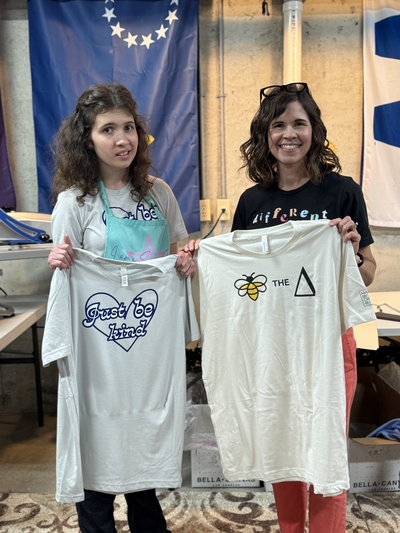
But Cheri Kulik, an Oldham County mother whose daughter, Charlotte, 18, has autism and gets services through a program known as the Michelle P. Waiver, said even small changes can catch families unaware.
For example, the Michelle P. program serves more than 10,000 individuals but has nearly that many on a waiting list – a wait that can last months or years because the state limits the number of slots it funds.
Previously, individuals could remain on the waiting list indefinitely.
Under a change in HB 2, families or guardians must prove they are still eligible once a year to remain on the waiting list, Kulik said.
“If you’re on that list and you miss this form you have to send back, they can take you off,” said Kulik, who attended the listening session in Louisville.
Kulik, who works with a support group for parents in Oldham County, said she’s trying to alert them to the change the state has begun notifying people about by mail.
“I said, ‘Watch for this letter. It’s coming,” she said.
Kulik, who said getting and keeping Medicaid coverage already is difficult enough, worries families may miss the waiting list renewal notice or other possible changes ahead.
“For a parent with a child with a disability, it is already ridiculously hard,” she said. “I cannot emphasize that enough.”
She added: “I don’t know if we’ve seen the worst of what’s going to happen.”
Frankfort