White Kids Sued Kamehameha. Native Hawaiians Can’t Get In Either
Aug 24, 2026 | 6:01 am ET
Description
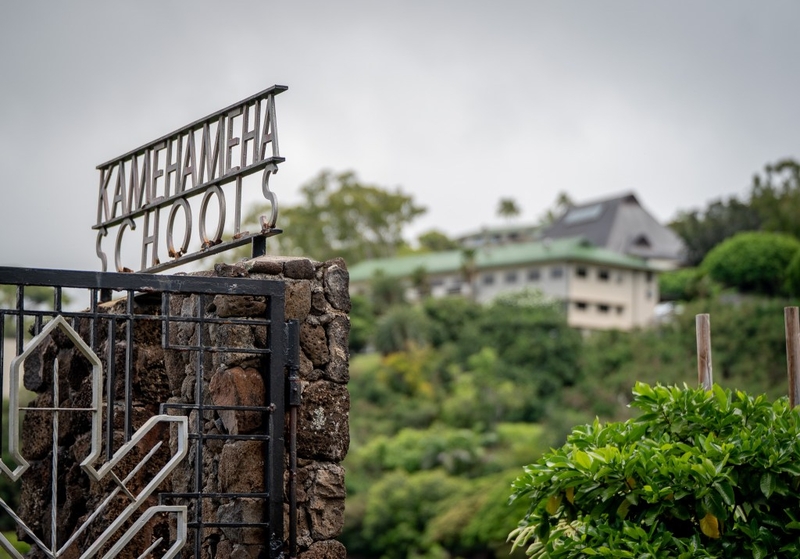
Photo courtesy of Honolulu Civil Beat
Ilima DeCosta remembers the pain her daughter went through after learning she would not be able to attend Kamehameha Schools.
The blonde-haired, blue-eyed girl, who is Hawaiian, already felt out of place because of her looks, DeCosta, a Kamehameha alumna, said. Getting put on a waitlist for a spot that never opened up “broke her,” she said. “It just broke her.”
Now, seeing a group of families who aren’t Hawaiian take the school to court over its admissions policy, even though some didn’t apply and others didn’t qualify to get in, irritates her.
There have been non-Hawaiians admitted to Kamehameha on rare occasions in the past, and the school allowed non-Hawaiian children of faculty to enroll about 70 years ago. Those instances didn’t bother DeCosta and her peers as much as the current lawsuit.
“What we complain about is when people try to be mahaoʻi (insolent) and push the issue when there's so many other people waiting,” she said.

Many fear the lawsuit from the Students for Fair Admissions could open the doors for even more students – including those who aren’t Hawaiian – to apply and inundate an already competitive process. But the latest legal battle over the admissions policy has resurfaced an uncomfortable truth: most Hawaiians don’t get into Kamehameha either.
“Their complaint about not getting in, this is a story that is normal for Hawaiians," said Jacob Aki, a Kamehameha alumnus whose son was not admitted for kindergarten. “Many, if not most, Hawaiian students don't get in.”
Kamehameha admits only a fraction of the thousands of students who apply each year. On average, there are 15 applicants competing for each coveted seat at the private school, with the Kapālama campus on Oʻahu being the most competitive. Some parents enroll their kids in tutoring and interview prep courses to better prepare them for the rigorous application process. Other families have moved zip codes to increase their chances of attaining what could be a life-changing admissions offer for their children.
The school, created through the estate of Princess Bernice Pauahi Bishop, a descendant of King Kamehameha I, is one of Hawaiʻi’s largest and most powerful landowners with an endowment valued at more than $15 billion.
Over the years, there have been calls for the school, with its vast wealth, to expand the number of campuses it has or open more seats. Since 2000, enrollment has more than doubled, from 3,530 K-12 students in the 2000 school year to more than 7,200 last year. The school has also supported Hawaiian students who did not gain admission through scholarships and other educational programs, although some of those programs helping students who attend other private schools are being phased out in favor of programs with a greater emphasis on Hawaiian culture.
The number of applicants to Kamehameha is anticipated to increase after the school went tuition-free earlier this year as part of a legal strategy to get the admissions lawsuit dismissed. School officials declined to be interviewed for this story, citing the ongoing lawsuit.
In a written statement provided by spokesman Sterling Wong, school officials said they continue to see strong interest in attendance from families and understand “the deep pain caused by our inability to serve more.”
“We are troubled that this legal challenge threatens to increase the anguish experienced in our community,” the statement said. “That is why we remain committed to vigorously defending our admissions policy.”
Only A Fraction Get In
When Bernice Pauahi Bishop died in 1884, she left her estate to the creation of the Kamehameha Schools.
Her will does not explicitly state that Kamehameha only allow Native Hawaiian students. The will provides for the establishment of two schools – one for boys, the other for girls – and directs the trustees to allocate a portion of the estate’s annual income to orphans “and others in indigent circumstances, giving the preference to Hawaiians of pure or part aboriginal blood.”
She left the regulation of admissions up to the trustees. From the outset, they have determined that the school should put its resources into educating Hawaiian children.
Between the 2016 and 2022 school years, the school received an average of about 5,300 applications each year, according to data reported to state courts. Invitations to attend grades K-12 were extended to between 13% to 19% of applicants each year.
Although specifics of testing have changed over time – applicants for kindergarten were once tasked with arranging blocks and other objects, whereas tests now take place on iPads – the admissions process has generally followed the same format.
Applicants are run through a series of tests, and they are also required to submit recommendation letters and teacher evaluations. Applicants for kindergarten are observed in a classroom setting, while middle and high school applicants submit writing samples and participate in interviews.
The application packets are scored by four-member committees of faculty and ranked against other applicants from each district.
An applicant's chances of getting in can change drastically depending on the district in which they reside. The school allocates a certain number of seats to each geographic region to achieve equitable representation across each island.
The number of openings depends on the population of each district and how many students from that district are already attending Kamehameha. It can make certain districts highly competitive.
For example, in the year Aki applied for the fourth grade in the early 2000s, he said the school accepted just five boys and five girls from the Kona district of Oʻahu – an area that goes from Salt Lake in the west to Hawaiʻi Kai in the east.
Now as a parent trying to get his son into Kamehameha, he’ll often swap tips with other parents on how to navigate the process.
“We try our best to prepare our kids based off of what we hear from other families who went through the test … what was your strategy?” he said.
'A Big Blessing'
Ruth Kau had shy kids.
They would make good applicants for Kamehameha – they had the grades, the recommendations from teachers, were involved in sports and extracurriculars.
“But shoot, the interview? They just have a hard time opening up,” she said. “They want you to talk a little bit more, not only give one-word answers.”
She practiced with her children at home, “but there’s only so much I could tell them,” she said.
Kau sought help from Astania Caputo, who had been teaching manners classes at E.B. deSilva Elementary School.
Caputo sees about two dozen clients a year. The majority of them are trying to get into Kamehameha. She said she keeps her rates affordable starting at $55 an hour, much lower than what other tutors charge, and she’s offered recurring clients a discount.
Caputo offers tutoring in reading comprehension, essay writing and also coaches kids in interview skills and etiquette. In the lead-up to the tests for her five children, Kau had them see Caputo for about an hour a week for three months.
“It starts the moment you get there, how do you greet people? How do you introduce yourself?” Caputo said.
Figuring out why a child wants to attend a certain school and what motivates them is key, but not always easy.
“One boy gave me the worst answer I ever heard. ‘Why do you want to go to Kamehameha?’” She recalled asking him during a mock interview. His reply: “Because the other school sucks.”
Caputo had him research the school more to find something he could connect to. He discovered they had a bowling team. It was a sport he was passionate about, and gave him something to relate to during his actual interview.
“It's more than helping a parent get their kids in,” she said. “It's helping the child discover what they want in life.”
Four of Kau’s five children were admitted to Kamehameha after going through interview prep classes with Caputo. Two have since graduated from Kamehameha. Kau’s oldest son, once shy, is a fire knife dancer in Kona preparing to go on a mission to Peru for the Church of Jesus Christ of Latter-day Saints.
Her youngest son was waitlisted in kindergarten and currently attends public school. She said it’s important for parents and their children to stay positive even if they don’t gain admission. It’s incredibly competitive, and not getting in “doesn’t mean your child is not great or not smart,” she said.
“I think it’s pretty rare to get multiple kids into the school,” she said. “It’s been a big blessing for us.”
Non-Hawaiians Attended Before
This latest admissions lawsuit isn’t the first time the policy has been challenged.
During the 1930s, it was the Bishop Estate trustees themselves who considered admitting non-Native Hawaiians. The proposal was heavily criticized by alumni and ultimately never adopted, according to newspaper accounts at the time.
In the early 2000s, Kamehameha prevailed in two other admissions challenges, settling the first as it was pending before the U.S. Supreme Court.
During that time, DeCosta’s daughter, Elizabeth, applied to Kamehameha for middle school. DeCosta said she scored well, but was waitlisted and not offered a spot. After inquiring with the school, officials told her Elizabeth “would do well anywhere she goes,” according to a letter DeCosta read from.

But the experience was devastating for her. She didn’t want to apply again.
“She internalized that for many years,” DeCosta said of her daughter, who died in 2015. “She thought she was not kanaka enough, when really it was just a difficult system.”
Shortly after Elizabeth didn’t get into Kamehameha, Brayden Mohica-Cummings, a non-Native Hawaiian student on Kauaʻi, sued to get into the school. He was initially granted entry, but that was yanked after school officials determined his mother, whose hanai father was Hawaiian, could not prove Mohica-Cummings had Hawaiian ancestry.
A federal judge later ruled that he had to be granted entry, a decision that was heavily criticized at the time as taking a spot from a Hawaiian student.
Non-Hawaiians have been admitted at other points too. Kamehameha’s Maui campus admitted a non-Hawaiian student in 2002 and did so again in 2010 after exhausting the list of qualified applicants.
DeCosta believes the school could put more of its vast trust resources, to fund educational programs for all students in Hawaiʻi, even those who are not Native Hawaiian, as a means of fending off lawsuits challenging the admissions policy.
Would Expanding Help?
How the school should change and how it could reach more students was a major topic at a forum for trustee candidates last year. Some of the candidates suggested expanding the number of campuses to reach more Hawaiian students.
But expansion could come at a cost. The school already spends more than $450 million on its educational mission annually, and the trustees are required to ensure that the trust remains solvent in perpetuity.
In the 2025 school year, Kamehameha enrolled 7,226 students across its three campuses and preschools. There are more than 38,000 Native Hawaiian children in the state’s public school system, according to state data. Native Hawaiian students in public schools have lower rates of proficiency in reading and math compared to other students. They also lag behind their peers in college enrollment.
Kamehameha and federal appellate courts have pointed to those disparities as reasons for keeping the school’s admissions policy intact.
Kamehameha reported reaching more than 82,000 students in Hawaiʻi last year through its Kaiaulu programs, which partner with organizations to offer various culturally-based education and stewardship opportunities.
Aki, a Kamehameha graduate, points to preschool and college scholarships funded by Kamehameha, as well as other programs such as the Hoʻomākaʻikaʻi summer program for students entering the sixth grade. The weeklong program is intended to ground students in their cultural identity.
He said attending Kamehameha was life changing and helped lift him out of poverty, and he believes graduates have a responsibility to contribute to the Hawaiian community.
Aki plans to have his son apply again later in elementary, but “in case he doesn’t get in, Pauahi has done her job with me.”
“But,” he said, “I hope he gets in at some point. Fingers crossed.”
Honolulu, HI