Where is screwworm in Texas? Track cases here.
Jun 12, 2026 | 6:28 pm ET
Description
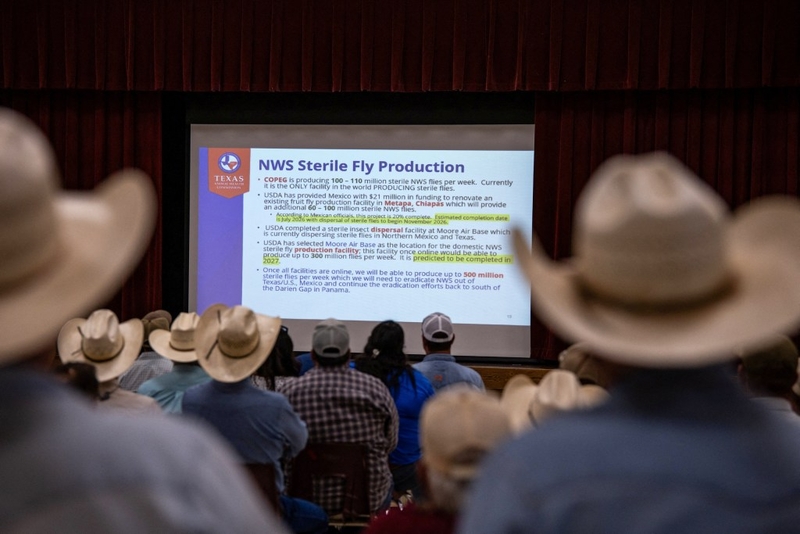
People attend an informational meeting hosted by the Texas Animal Health Commission two days after the U.S. Department of Agriculture confirmed that New World screwworm was detected in a Texas calf in Zavala County, at Cotulla High School in Cotulla, Texas, U.S., June 5, 2026. REUTERS/Kaylee Greenlee (REUTERS/Kaylee Greenlee)
Subscribe to The Y’all — a weekly dispatch about the people, places and policies defining Texas, produced by Texas Tribune journalists living in communities across the state.
A small fly has the potential to impart a big impact on Texas’ beef and agricultural industry.
On June 3, the New World screwworm was detected in a three-week-old calf in Zavala County by the U.S. Department of Agriculture. Since then, the agency reported more screwworm infestations in Texas.
The fly poses a multibillion-dollar crisis for the state’s cattle industry, which generates $41 billion a year. It could also increase already record-high beef prices nationwide.
It’s unclear how many cases could hit Texas. Nearly 28,000 cases have been detected in Mexico since November 2024, according to Mexican officials.
State and federal officials are working together to stop the northern migration, which they have tracked since 2023. In response to the cases, USDA and the Texas Animal Health Commission have ramped up animal surveillance of animals near the confirmed detections by setting up zones around each infestation. Animals are not allowed to leave infested areas without being properly inspected.
Officials are also increasing fly traps, surveillance of wildlife and releasing sterile flies, which are used to break the reproduction cycle of the parasitic screwworm fly.
What is New World Screwworm?
New World Screwworm is a parasitic fly that is attracted to living tissue, burrowing their larvae into open wounds. After they hatch, the maggots then feed off that living flesh, causing damage to the animal. If untreated, the damage can even cause the animal to die.
Screwworm can also burrow through openings in the skin, such as the corner of an eye or through the nose.
From a biological standpoint, all mammals are vulnerable to screwworm, including pets and humans. However, livestock and wildlife tend to be the most susceptible because they spend their entire lives outdoors.
Dogs and cats are vulnerable through small wounds or scratches that break the skin. Health officials recommend pets be medicated for fleas and ticks year-round, said Casey Locklear, veterinarian and parasiticides lead for Elanco Animal Health.
“As a pet owner, if you were to notice that your dog or cat had a wound, especially if it’s foul smelling, it’s enlarging, you may actually see the maggots,” Locklear said. “If you see a wound, get treatment early. Whether that’s for yourself or your pet, early treatment is key.”
Austin, TX