What people and computers say about the Northwest power supply
Oct 22, 2026 | 6:29 pm ET
Description
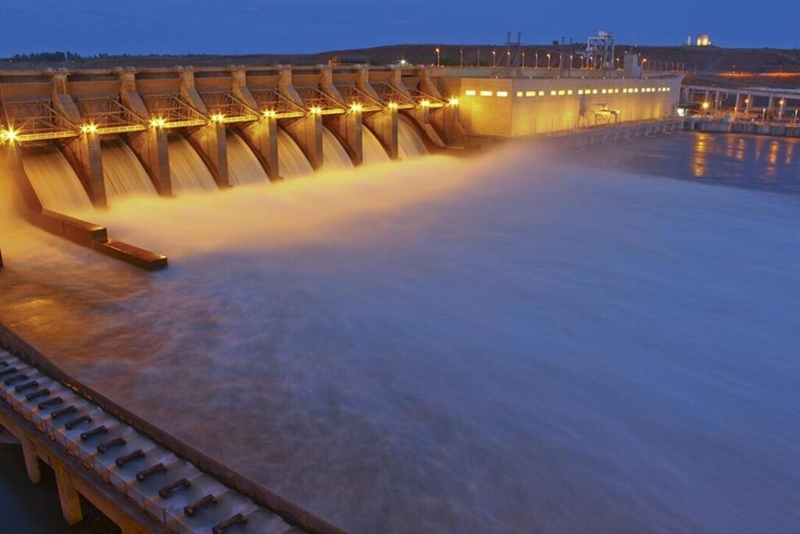
The possibility of removing four Snake River dams — Ice Harbor Dam, Lower Monumental Dam, Little Goose Dam and Lower Granite Dam — has long been a contentious one that has generally split along party lines. Shown is the Ice Harbor Lock and Dam, the first of four dams constructed as part of the Lower Snake River Project, authorized in the Rivers and Harbors Act of 1945. (Photo by Columbia River System Operations EIS)
When you use an artificial intelligence system like ChatGPT, what it gives you depends on the prompt you enter. The answer is likely to be most useful if the prompt is carefully crafted.
This underlies a concern recently raised at the Northwest Power and Conservation Council. That regional planning agency uses computer modeling (think AI-adjacent) to analyze data to help develop its proposals and policies for matching electric power resources with need. But some of the outputs raise questions about inputs.
The council’s computer tools include the GENESYS (Generation Evaluation System) model, as well along as OptGen/SDDP, AURORA and Itron. Use of such tools is likely to become much more common soon in government and corporate planning and management.
And the council, based in Portland, describes its latest power and conservation plan (its ninth) as “a regional strategy for new, cost-effective resource additions to meeting growing power needs over the coming years … recommending new conservation, demand response, voltage regulation, renewables, storage, and natural gas to the system.”
There’s a lot at stake here: Power bills, water supply, economic development, power outages, fish runs.
The plan went public earlier this year and comment on it closed Oct. 16.
At the Portland public hearing on Sept. 9, Margaret Hoffmann, a council member from Oregon who chaired the meeting, said the plan “does put forward a mix of demand-side resources. … Renewables are key to the strategy, particularly combined with storage that can provide energy and capacity while meeting the clean goals. The draft plan does include new natural gas that can provide energy to the system, particularly in times of low hydro conditions where there’s just less water coming down the system. And all of these are supported by some additional recommendations around how to think about transmission.”
The council’s longstanding goals have been to plan for adequate power for the region while also protecting the environment, notably including salmon runs. That second element seems a little downplayed in the new plan.
One of the speakers at the hearing suggested how this might have happened.
Patti Kramer with the Climate, Energy and Environment Team of the Consolidated Oregon Indivisible Network, a coalition of left-leaning activist groups, was concerned that the plan didn’t engage with calls for breaching the four lower Snake River dams in Washington state.
“I am concerned that there is no explicit reference to dam breaching in the text of the plan,” Kramer said. “The Northwest Power Plan requires the council, as we know, to provide an analysis of cost-effective methods to provide electric power at the lowest cost. It also mandates the council to develop the power plan while taking into account fish and wildlife impact. The council uses the computer modeling tool, GENESYS, to simulate the operation of the regional power system to assess the adequacy of the power supply, given uncertain future conditions.”
It could have been used to fully calculate the various costs and advantages of various dam options, but “It has not been used to do this, however.”
She said the issue also arose during development of plan eight about five years ago, but then too “it is our understanding that the — this analysis was not carried out. We respectfully request that the council run GENESYS models without the four lower Snake River dams and include plans for this analysis in the 9th Power Plan.”
The request was not to avoid using the tools, but to expand the data and parameters fed into them.
Council staff have acknowledged the need for adjustments. A March 3 memo from a system analyst to the council, for example, said that “as part of final testing and preparation for the OptGen analysis, staff identified a need to reconfigure the GENESYS setup to further align model assumptions. The resulting change focused on updating balancing reserve alignments, and it required rerunning the needs assessment to calculate new adequacy reserve margins for all sensitivities included in the Ninth Plan.”
Using these computer-driven models makes sense. The mass complexity of the Northwest power system, its inputs and outflows, make new ways of tracking and analyzing immense amounts of data become necessary.
But it also highlights the role of the humans involved in overseeing the system, who have an even larger responsibility and a harder task in watching the inputs, assumptions and directions given to the programs, so the region gets the end result it wants.
And as other governments (and private entities too) move in the direction of getting help from computer models, AI and otherwise, as they will, they should start developing human guidelines to ensure the models don’t run off in directions unwanted or unforeseen by the people who will have to live with the policy results that emerge from them.
Salem, OR