What does mismanagement of the Iran war teach us about Trump-Rollins farm policy? Everything.
Aug 12, 2026 | 4:33 am ET

Description
U.S. Agriculture Secretary Brooke Rollins, speaks at a Future Farmers of America event Aug. 18, 2025 at the Tennessee State Fair. (Photo by John Partipilo/Tennessee Lookout)
“They want to make a deal,” President Donald Trump announced. “There’s a good chance that something could happen.”
He has made more than 50 such uncorroborated declarations of Iran’s intent to negotiate ending his war, and countless discordant statements of his goals.
When Agriculture Secretary Brooke Rollins asked Congress for $11 billion for another farm rescue, she followed the boss’s lead — into the fantastical. She said it is just a patch, needed until “the burgeoning market access” she claims the administration has negotiated yields increased overseas sales.
She has also made that same wishful pronouncement 50 times and counting. The United States is poised to lose its place as the world’s preeminent farm exporter.
The defense secretary sat next to her while she made the request, an inconsonant image to the casual observer. War fighters and farmers? But the connections ran deep.
Beyond a shared objective — more money — both presentations were rooted in Trumpian disregard for the truth and obeisant capitulation to the president’s reckless, careening policies. That’s the string theory explaining the Trump administration, decoding its chaotic policy making for both farmers or fighters.
In this administration — for agriculture or defense secretary alike — untruthfulness doesn’t disqualify. It’s expected. It’s required. Questioning the war, tariffs, “the affordability,” the Reflecting Pool embarrassment: not allowed.
It starts with election denial. Refusing to answer truthfully the simple question of who won the 2020 election? It’s the price of admission to earn and stay in Trump’s good graces. Cabinet members and legislators have eagerly paid.
Though she didn’t and can’t acknowledge it, Rollins’ request implicitly conceded the stunning failure of the administration’s farm policy. It’s the second bailout in less than one year.
In December, Rollins announced $13 billion to compensate farmers for the catastrophic consequences of the April 2025 tariffs. A “bridge program to see quick relief,” she promised. Now she wants another handout, stemming from the same cause.
It totals a $24 billion tab for “temporary” help. When Congress approves the bailout — and it will — USDA will have spent a staggering $55 billion in one year attempting to backfill the gaping losses of Trump-Rollins farm policy. That’s more than outlays for the CDC, Coast Guard, FBI, FDA, National Park Service, National Weather Service, plus research on Alzheimer’s and lung diseases, combined.
The military has futility spent billions in the Iran war, guided by an unqualified secretary of defense who hasn’t leveled with either the public or the commander in chief — himself unmoored from dispassionate, realistic geopolitical strategy. The country’s munitions stockpile is depleted. Thousands of innocent civilians and hundreds of American members of the military have been injured. So far, 160 schoolchildren and 18 U.S. soldiers have died.
The agriculture secretary has peddled fictive talking points instead of producing definitive, signed-sealed-and-delivered trade pacts. Market losses have deepened, exports to China alone dropping nearly $15 billion, sapping agriculture’s balance sheet. “Tremendous harm” and “widespread collapse” stalk farm country. The Treasury hemorrhaged farm subsidies.
Hope and deceit are not a national security policy. Nor are they farm trade policy. Not usually.
Unvarnished analysis would have warned that Iran might close the Strait of Hormuz, refuse to succumb to the U.S. aerial campaign, strike U.S. and allied assets in the neighborhood, and then that U.S. energy prices would skyrocket. Trump ignored it all, his defense secretary didn’t challenge him, and congressional Republicans acquiesced.
Any rational examination of the Trump tariff scheme would have predicted disastrous consequences. It played out exactly like the tariffs in his first term: the same retaliation, the same collapse of exports, the same multibillion make-up payments. Rollins ignored all those lessons. She still denies them. So do congressional Republicans.
The agriculture secretary could have counseled against the tariffs, or suggested alterations, but Rollins didn’t buck Trump. And neither have Republicans, including those in the Kansas congressional delegation. They have abandoned their Constitutional responsibility to oversee and check the executive.
Elected but not yet sworn in, Sen. Roger Marshall said his election was fair but argued, in the very same interview, that President Biden’s victory, in the very same election, wasn’t. Reps. Ron Estes and Tracey Mann voted against certifying Biden’s election, as did then-Rep. Jake LaTurner, and of course Marshall. The price of admission: paid.
All of them, along with Rep. Derek Schmidt after he took the LaTurner seat and Sen. Jerry Moran, have supported the trade policies devastating Kansas farmers, voting multiple times to keep them in place.
None of them has opposed the Iranian war. None of them has crossed the president, either. Marshall said he can’t think of a single mistake Trump has made.
Instead of rolling back the export-tanking tariffs, congressional Republicans — Kansans fully on board — capitulate to the mirage that the Trump-Rollins policies are succeeding. They have cocooned into legislative abdication.
When Congress returns from summer vacation, in September, the Senate will be in session 12 days and the House 14 days before the Farm Bill ends — the expiration of the third consecutive extension. The House narrowly passed a sharply partisan Farm Bill. Senate action ground to a halt over similar divisions. Marshall blames Democrats.
In 2023, 2024 and 2025, when Congress failed to pass a new Farm Bill, Republicans were in charge, just as they are in charge today. How could it possibly be the fault of Democrats that Congress will likely miss the deadline a fourth consecutive year? But as the president himself said, “there is a chance that something could happen.”
Indeed, especially the unserious: Trump just declared imported tubas, trumpets, and trombones national security threats. The same day she asked for the new bailout, Rollins launched a TikTok account. That, she said, is how she is fighting for farmers.
Greg Frazier was USDA chief of staff and USTR chief agriculture negotiator. He lives In Kansas City. Through its opinion section, Kansas Reflector works to amplify the voices of people who are affected by public policies or excluded from public debate. Find information, including how to submit your own commentary, here.
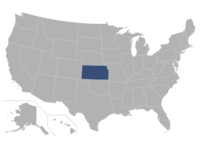
Topeka, KS