What Alaska can teach us when it comes to dealing with data centers
Oct 13, 2026 | 2:20 pm ET
Description
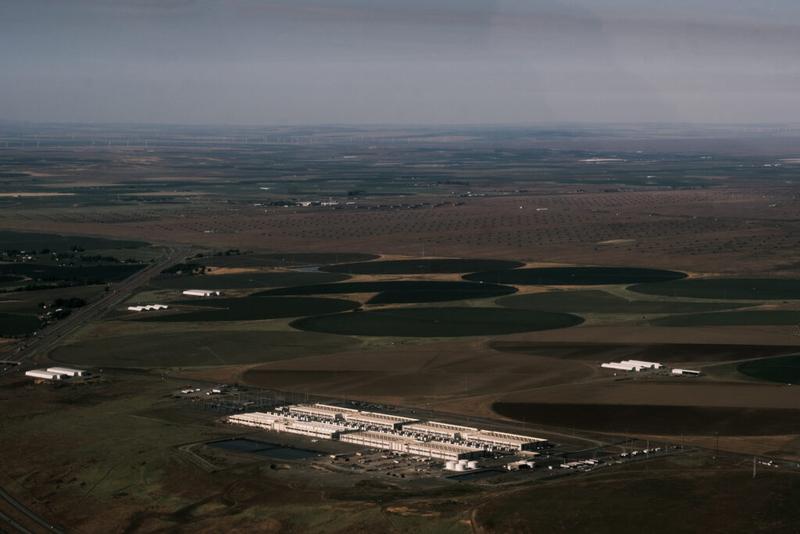
Data center facilities dot the farm landscape in northeast Oregon on May 18, 2026. Many have been built along the Columbia River Gorge during the last few years. (Photo by Jordan Gale/Oregon Capital Chronicle)
Oregonians want a word with their leaders about data centers. That reminds me of what another state’s residents and their elected leaders succeeded in doing when another deep-pocketed industry came for their resources.
In the 1970s, when Alaskans faced the challenges and opportunities that arose from the onset of oil drilling on public lands, they responded by enacting a claim on the gusher of oil company revenues that would follow, dedicating the state’s share of those revenues to create a lifetime of economic benefits for their people.
Can state government leaders in Oregon, now facing a similar moment from the surge of massive data centers laying claim to our lands, learn from the foresight and approach that created the successful Alaska Permanent Fund?
If so, what would that approach look like at this moment, when the issues involve not just environmental impacts for local communities but energy costs passed on to consumers statewide, the fragmentation of our land use system, and, as end products, the threat of job losses throughout our economy and an out-of-control technology disrupting our lives?
Most relevant from the experience in Alaska is the tax question. Can we expect to meet the challenges of this moment by continuing to rely on a tax structure that subsidizes the development of data centers without seeking greater public benefits from their private gains? After all we are not dealing with startups here. The data center industry and its AI affiliates are now driving the largest infusion of private capital ever experienced in our national economy.
We can’t find the answers to those questions in the recent report of the Governor’s Prosperity Council, which never once mentions data centers and makes only a passing reference to the need for “training and upskilling” in response to the changes that AI will bring to our lives.
The Prosperity Council did deliver a critique of our tax system. But its criticisms of our business tax structure focused on the need to extend the benefits that now advantage large, capital-intensive enterprises to smaller, more labor-intensive businesses as well.
It’s good to see attention paid to the ecology of our diverse businesses, large and small, as well as their workers. But this approach ignores the many plantation-sized forests of new capital-intensive data centers that threaten to transform the financial and physical landscape in which existing businesses compete for capital and resources.
One lesson from the Alaska experience is that the state didn’t stand pat when a new industry was poised to transform the state’s economy. In 1976, its voters approved a constitutional amendment that dedicated 25% of the new revenues from the state’s land and mineral leases to provide an annual dividend to its residents, support for the state budget and a “sovereign wealth” savings fund for future generations.
Under Oregon’s tax system, we’re being short-changed in public revenues from the build-out of data centers, primarily because of the lack of a sales tax on the capital equipment purchases they require. We do better than some states in the revenue to be gained once a data center is up and running and generating profits, thanks to our state income tax. But, according to the Tax Foundation, a fully-operational data center in Santa Clara, California, generates about two-thirds more state and local tax revenue than a comparable facility located here in Hillsboro.
Beyond the tax question, there are other possibilities for demanding a more expansive social compact from the data centers and the big tech companies that are funding them.
Here in Oregon and other states, we have seen catch-up efforts to require data centers to cover the costs they’ve imposed on our electrical grid. But that leaves more issues to address.
Economists Jared Bernstein and Ron Bloom have offered a menu of community benefit options, including reduced electric and water rates for the surrounding communities, that could become quid-pro-quo demands for the location of data centers.
Another economist, Noah Smith, details these approaches in a blog post that is bullish on the potential for securing public benefits from the huge amount of capital that is flowing to this industry. His arguments won’t please those who want to hold a hard line against data center expansion. But, given the broad opposition to data centers among the public nationwide, this could be an Alaskan moment, when the people and their leaders in Oregon and other states reject the “open for business” mentality of economic development and take on a juggernaut industry with demands for putting their people and communities first.
Perhaps the most important lesson from Alaska can be seen in how the state approached the issue of oil drilling on public land — with foresight, transparency and consultation with their citizens. The recent history in Oregon of non-disclosure agreements forced on local governments by the industry is not only shameful, it has forced Oregonians to play catch up with powerful interests.
The moratorium announced by Gov. Tina Kotek and endorsed by Sen. Christine Drazan, her opponent in this year’s election, buys us some time. But that still leaves the question of what do to next. Doing nothing more is no longer an option
Salem, OR