Western South Dakota legal aid nonprofit faces budget shortfall
Jun 18, 2026 | 5:37 pm ET
Description
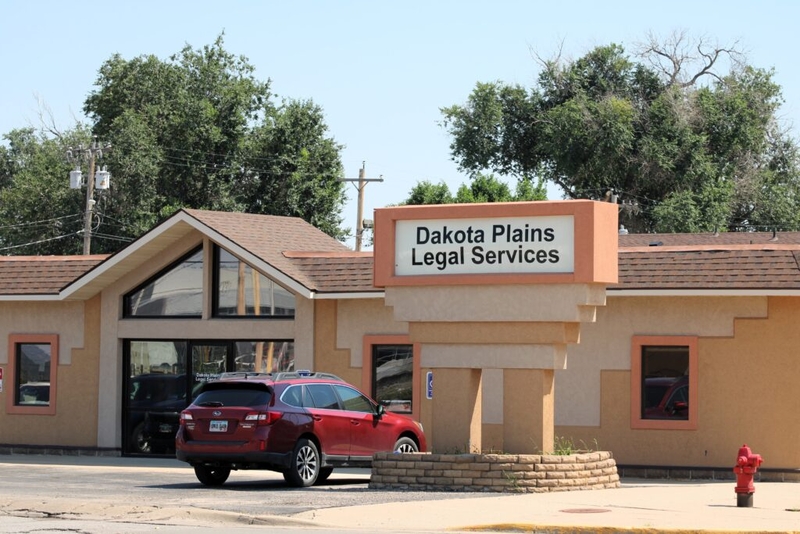
The Dakota Plains Legal Services office in Rapid City, pictured on Aug. 14, 2025. (Photo by Seth Tupper/South Dakota Searchlight)
A nonprofit providing legal aid to low-income South Dakotans is facing a $176,000 budget deficit that is affecting its services and staffing, its leader told a state commission Thursday.
William Sulik is the interim director for Dakota Plains Legal Services. The organization depends largely on state and federal grants to operate.
“In response, we have been cautious about filling vacancies and are reviewing operations carefully to preserve services and maintain stability,” Sulik told the Commission on Equal Access to Our Courts.
South Dakota’s legal aid landscape is split between East River Legal Services on the east side of the state, and Dakota Plains Legal Services covering the western half and serving Native Americans on and off tribal lands across the state. The nonprofits help with civil cases, including housing and evictions, applying for protection orders, and family law. Dakota Plains also takes on criminal cases when appointed by a court.
Dakota Plains received about $76,000 less this year from the national Legal Services Corporation, while East River received about $25,000 less — a 3.8% decrease in grants for each. Funding from the Legal Services Corporation accounts for about 73% of Dakota Plains’ operating budget.
Western South Dakota legal aid group survives assessment and keeps its funding
Sulik told South Dakota Searchlight the Dakota Plains board also overestimated the amount of state grant funding that would be available for the year, contributing $100,000 to the budget shortfall.
Three staff members left Dakota Plains recently. The organization is not planning to fill those positions and is “scrambling and looking for other funds,” Sulik said. Lea Wroblewski, executive director for East River Legal Services, told commissioners her organization is seeking to fill two staff positions, which “limits the number of extended services we’re able to provide representation in.”
The funding challenge could continue next year.
The Trump administration has recommended eliminating the Legal Services Corporation, while requesting $21 million from Congress “to conduct an orderly closeout” of the organization “as part of the administration’s plans to move the nation towards fiscal responsibility and to redefine the proper role of the federal government.”
Congress appropriated $540 million for the Legal Services Corporation this year, below the $2.1 billion the organization requested.
South Dakota Attorney General Marty Jackley, who won the Republican primary on June 2 for the state’s U.S. House seat but will continue to serve as attorney general until January, issued a press release last week urging Congress to continue funding the Legal Services Corporation.
“Everyone, regardless of their income level, is entitled to equal justice under the law,” Jackley said. “Continued federal funding for LSC helps ensure our justice system works for everyone.”
According to Law360, legal aid organizations funded by the corporation already turn away nearly half of eligible applicants due to resource constraints — roughly 1.8 million people each year.
“If that goes through, it means some cases won’t get handled in South Dakota,” Sulik told South Dakota Searchlight after the meeting. “It’s going to mean longer wait times to see an attorney. We’re trying the best we can.”
Dakota Plains launched a mobile legal aid clinic with funding from the commission last year, meant to increase legal aid accessibility in areas of South Dakota considered legal deserts — communities with little to no access to legal services.
Sulik told commissioners the Justice Bus is working toward appearing at recurring locations in rural and tribal areas to ensure community members know “when and where services will be.”
But funding and staffing struggles have slowed its outreach, he said.
“I’m not sure that it’s fully living up to what was promised,” Sulik said. “It is providing access in remote communities that have difficulty reaching services. That’s something we really want to do, and it was the outreach that the commission intended.”
Dakota Plains Board Chairman Craig Lafferty said initiatives like the Justice Bus are needed in tribal communities.
“They’re like, ‘When can you bring that bus here?’” said Lafferty, a member of the Rosebud Sioux Tribe.

Pierre, SD