Utah files criminal charges against Kalshi over operations within the state
Oct 29, 2026 | 7:02 am ET
Description
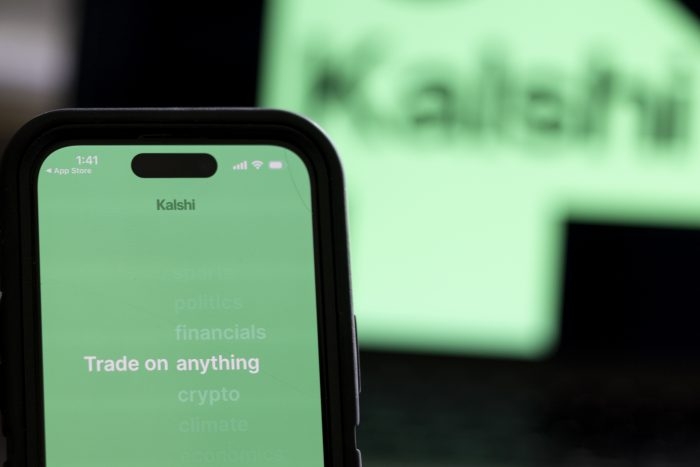
(Photo by Anne-Marie Caruso/New Jersey Monitor)
New felony charges against Kalshi and a new federal lawsuit against Utah joined the litigation maze between the prediction market platform and the state this week.
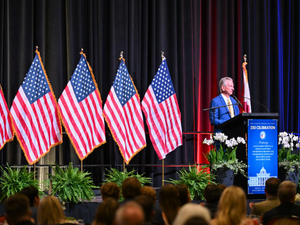
Kalshi and its co-founders, Tarek Mansour and Luana Lopes Lara, are now facing 12 online gambling promotion felony charges, one count of pattern of unlawful activity, also a felony, and a misdemeanor charge for general gambling promotion, according to charging documents filed by Utah Attorney General Derek Brown on Wednesday.
“Gambling is illegal in Utah, whether you place the bet, run the game, or promote it. Calling it a ‘prediction market’ doesn’t change what it is, and being federally registered doesn’t put a company above the law,” Brown said in a statement about the charges. “A federal court has already ruled that Utah’s gambling laws apply to Kalshi. Kalshi kept taking bets from Utahns anyway. That is illegal, and we’re putting a stop to it.”
However, Kalshi is ready to fight the state on the challenge, Jacki McGavick, a spokesperson for the company said on Wednesday.
“This is a crazy overreach; Utah is clearly playing politics. We look forward to putting a stop to this in court, just like we did in Arizona,” McGavick said in a statement referring to similar charges the company has avoided in Arizona courts.
At the same time, officials in Washington, D.C., argue that prediction markets should exclusively be regulated by the federal government.
Utah sues Kalshi for ‘brazen pattern’ of violating state’s gambling ban
Just days after Brown filed a civil lawsuit against Kalshi, accusing the company of a “brazen pattern of unlawful conduct,” the Commodity Futures Trading Commission, or CFTC, filed a legal challenge against Utah, aiming to block the state’s ban of derivatives markets.
“Utah’s efforts to prevent a CFTC-regulated (designated contract market) from offering CFTC-approved financial products intrude on the exclusive federal scheme Congress designed to oversee United States commodity derivatives markets,” the commission said in its complaint.
“Utah, however, is attempting to block the operation of exchanges that the Commission has expressly approved, as well as event contracts that have been self-certified to the Commission and that the Commission has permitted to be listed,” the complaint says. “These consequences directly harm the federal government’s sovereign, legally protected interest in enforcing federal law.”
Utah has anti-gambling provisions ingrained in its constitution and this year passed legislation to ensure that prediction markets were explicitly banned in the state. The issue has unleashed a series of legal and social media clashes between state and federal leaders, with Gov. Spencer Cox sending public messages via social media to CTFC chair Mike Selig.
“These prediction markets you are breathlessly defending are gambling — pure and simple. They are destroying the lives of families and countless Americans, especially young men. They have no place in Utah,” Cox said in February. “Let me be clear, I will use every resource within my disposal as governor of the sovereign state of Utah, and under the Constitution of the United States to beat you in court.”
The state prevailed in a federal lawsuit Kalshi filed challenging a 2026 state law that included proposition bets in the definition of banned gambling, allowing state officials to prohibit prediction market companies’ operations within state limits. The platform appealed, and while its emergency request for an injunction also failed, that litigation isn’t over.
According to Utah’s charging documents against Kalshi, despite the court decision allowing the state to enforce its anti-gambling laws, an undercover agent with Utah geolocations was able to place wagers on multiple sports events.
But criminal charges against the platform haven’t done well in the past. Another federal judge permanently blocked Arizona from criminally prosecuting Kalshi, deciding that federal law preempts the state from enforcing anti-gambling laws against prediction market companies because they are exclusively regulated by the CFTC. The state is seeking to revive the case.
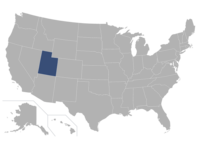
Salt Lake City, UT