Westchester Is Home to Dozens of Diplomats. Good Luck Getting Them To Pay Overdue Tax Bills
Nov 20, 2026 | 5:00 am ET
Description
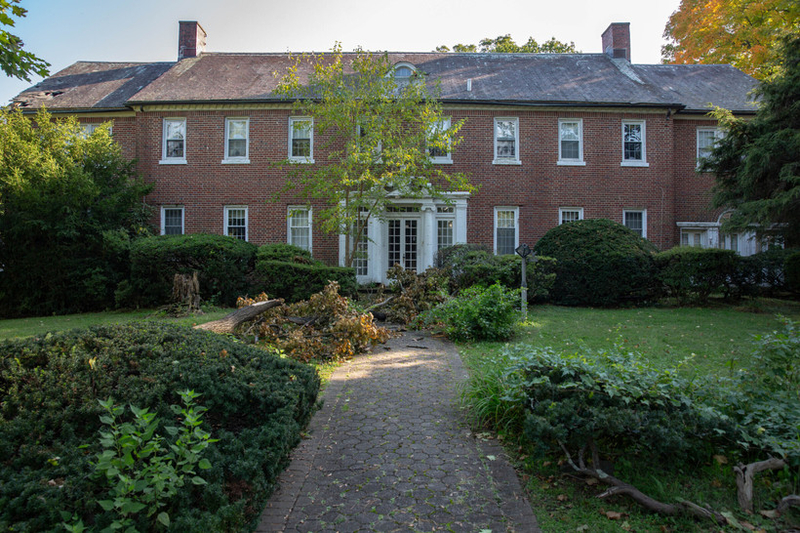
A decaying mansion owned by Tanzania is one of dozens of homes that belong to foreign countries in Westchester County. / Wesley Parnell / New York Focus
At the top of a rolling hill in Mount Vernon stands an abandoned mansion whose owner, the sovereign country of Tanzania, has accumulated more than $330,000 in taxes the city determined it didn’t pay.
The home, with 25 windows on its facade, takes up half the block and is surrounded by sweeping maple trees. It has two cratering holes in the shingles and a downed tree in the front yard.
According to neighbors, turkey vultures and squirrels often dive through the holes in the roof and school kids sometimes sneak into the building to hang out. Two weeks after a powerful nor’easter battered the area in September, a fallen tree trunk still lay strewn across the front yard and entrance to the house.
“They are like zombie homes. It’s terrible. It’s been like this for almost two decades,” said Toni Gamil, 70, on a walk with her two grandkids and the family dog, Lucy. “No one pays taxes for it. It just kind of sits there and chews up resources from our beautiful neighborhood.”
The home is one of dozens that belong to foreign countries and dignitaries in Westchester County, an ideal retreat away from Manhattan’s bustling center. Some of these homes are empty year-round, others for months at a time. Many of the homes host permanent missions to the United Nations and receive generous tax privileges. Several countries also own extra lots and vacant acreage in the county.
An examination of data compiled by New York Focus from tax assessor roles, delinquent lists, and property tax databases showed that many of those countries have infrequently paid taxes or simply stopped paying them at all on their Westchester properties — even in instances where local assessors had found they were not eligible for tax exemptions under New York state law.
While Tanzania owned the abandoned mansion, it also owned two empty lots in Mount Vernon that owed a combined $7,672.59 in unpaid taxes, according to city records last updated in December 2024 and still listed in the city’s most recent inventory of delinquent taxes. The African country also owned tax-exempt property in Greenburgh, including a home worth about $2 million.
The permanent secretary of Tanzania’s Ministry of Information and the Ministry of Foreign Affairs did not respond to requests for comment.

New York Focus identified 73 properties owned by foreign governments in Westchester County, and another 20 in Nassau County on Long Island.
Under New York law, the homes avoid most taxes as long as they are their nation’s official permanent mission to the United Nations, belong to the chief ambassador, or are used to house delegates. But there are carveouts. Municipalities are allowed to collect for services like trash, sewage, and water, or infrastructure upgrades related to those services.
But collecting the money is hard, and some governments have racked up tax bills in the tens — if not hundreds — of thousands.
Most of the properties sit on the southern border of Westchester County, with easy access to New York City. In Mount Vernon and New Rochelle, which unlike many localities in the county make tax delinquencies public, New York Focus identified roughly $1.85 million in unpaid taxes and service bills across 29 properties. A modest suburban house owned by Ghana racked up more than a million dollars in arrears, including nearly $800,000 in late payment penalties.
The city of Mount Vernon did not respond to multiple requests for comment.
According to assessors and municipal leaders in Westchester, the houses are nearly impossible to foreclose upon under federal law, and many localities simply leave them off tax rolls entirely rather than deal with the headaches of collecting fees from them for municipal services.
If a country won’t pay their bills, few enforcement mechanisms are available, they say.
“Anytime someone gets a tax break, everyone else pays for it in that taxing jurisdiction,” said Teresa Stegner, tax assessor for the town of Somers. “All exemptions begin with good intentions going toward a targeted group, and unfortunately, all of them have been somewhat abused. People find an angle.”
In 2014, Stegner led a push to move a vacant parcel of land belonging to the country of Angola back onto the tax roll.
Angola had purchased 196 acres of land across nine parcels in Yorktown and Somers in 1980. While its UN ambassador lived in a mansion on a five-acre lot in Yorktown, the other parcels remained empty, including a 23-acre parcel in Somers.
“This is a vacant parcel that no one is using, no one is going to use, and why do they get a tax break on that? So I just challenged it,” said Stegner. “I felt like I was within my rights under the law.”
Stegner billed Angolan authorities for roughly $8,900, she said. Shortly after, she received a notice from the US Department of State telling her to stand down.
According to Stegner, federal authorities were willing to grant Angola the tax exemption because the country had purchased the empty parcel at the same time as it had purchased its UN home.
In Stegner’s eyes, the exemption for the empty lot was unusual under state law, but federal authorities superseded her ability to tax the property.
In a statement to New York Focus, a spokesperson for the State Department said that properties are periodically evaluated for their tax exemption status, but that “it is the Department’s expectation that a foreign mission meets its financial duties.”
Stegner believes the case had a chilling effect around the county, since assessor offices often communicate with one another.
“I got slapped down by the State Department and told to keep it exempt, so of course no one was going to try it,” said Stegner. “Especially since you saw it happen to me.”
The assessor of Yorktown, Gary Edward Link, contends empty lots could be taxed under state law, but the difficulty of trying to tax them could outweigh any potential benefit.
In addition to Angola’s UN mission in Yorktown, the country also owns multiple vacant lots, including a lot along Boone Road with 130 vacant acres.
“They are like zombie homes.”
—Toni Gamil, Westchester Resident
“I know that there were challenges out there that came to naught for a lot of properties,” said Link, nodding to Stegner’s failed efforts. “We have a number of these properties and we have not tried to tax them.”
According to Link, the issue could be easier to tackle if the assessors’ offices operated in unison. But they are already overloaded with more pressing business. The Yorktown assessor’s office had nearly 500 non-diplomatic cases to review and examine this year, with an immediate bearing on revenue collection.
It wasn’t worth spending the resources to put vacant land on the tax roll. After all that, what if the countries still didn’t pay?
“They could by all rights just say: ‘We’re of course not paying,’” said Link. “I mean, then what would you do?”
At least 15 nations had late payments owed in Westchester, including Indonesia, Mozambique, Equatorial Guinea, and Eswatini. Some of those debts were as small as $649, while others were in the tens of thousands, according to tax records.
Nigeria owns 10 properties across seven municipalities and owed Mount Vernon $11,671.77 in arrears for a building that houses employees of its consulate. When a New York Focus reporter rang the doorbell of the three-story colonial style home, a Nigerian official, who identified himself as “Freddy,” said the reporter was trespassing on foreign soil.
“You are not allowed to just come to the house,” said the diplomat, speaking through a phone. “Even the police cannot come in here unless they are called. You cannot even knock on the door. It’s not allowed.”
New York City has faced similar travails and tried to push back. In 2003, it sued India and Mongolia arguing that they owed taxes for buildings that were not wholly used for tax-exempt purposes. The case filtered its way to the Supreme Court. While New York won the case, the city also conceded that it did not have power to foreclose on foreign properties, only to tax them.
Without the power to seize the properties, the power to tax is nearly impossible to enforce.
Paul Feiner, the supervisor of Greenburgh — home to some of Tanzania’s real estate — said that properties in that town are supposed to pay for water but that it excluded foreign diplomat housing from water billing because of how difficult it was to collect.
“Diplomatic residences are harder because of federal government policies and that we can’t evict them,” said Feiner. “We can’t foreclose on their homes. It would be very difficult.”
“They are living in homes that many folks in Westchester can’t afford ... ultimately everybody else is subsidizing them.”
—Paul Feiner, Greenburgh supervisor
That hasn’t stopped some towns from trying. According to city records, Mount Vernon moved in 2024 to foreclose a set of four properties owned by Equatorial Guinea. The properties, located along Millington Street, collectively owe the city $310,902 according to tax records.
A white Mercedes GLE 350 in the driveway has been advertised for sale for over a year, according to a neighbor. When a reporter called the number listed on the for sale sign in the SUV’s window, a woman who identified herself as the mission manager said that there was a mistake and the country was appealing to the State Department to reverse the foreclosure.
“They can’t legally do that. We have documents that we are sending. We are in contact now with the Office of Foreign Mission of the United States. We are working on that,” said the woman, who refused to provide her name before hanging up. “We are tax-free payers. We are diplomats, we are not like any company that pays taxes.”
Mike Coker, 74, who has lived on Millington Street for 20 years, said that various families of dignitaries had moved into the units over the years, then rotated out.
“They don’t pay their taxes, and what they are doing is screwing the local guy who is eating bread and water, like me, and meanwhile they are high on the hog,” said Coker. “It’s not surprising. They come here, work, and then go back to their country. They pretty much say, ‘I have have a house back home so I’ll leave you to pay the taxes here.’”
According to Feiner, the state could pass legislation or guidance that allowed municipalities to act, such as limiting services to properties that don’t pay service bills.
Feiner also said that he would revisit the issue with Greenburgh officials and look into charging the countries.
“My feeling is that we are providing a lot of municipal services. You have the police, the garbage, the water — they are getting benefits so they should really pay,” he said. “They are living in homes that many folks in Westchester can’t afford, they are not paying the taxes, they are not paying the water bills but they are getting all the services, and ultimately everybody else is subsidizing them.”
Albany