Study shows high cognitive impairment rates in Hartford unhoused seniors
Nov 19, 2026 | 7:18 pm ET
Description
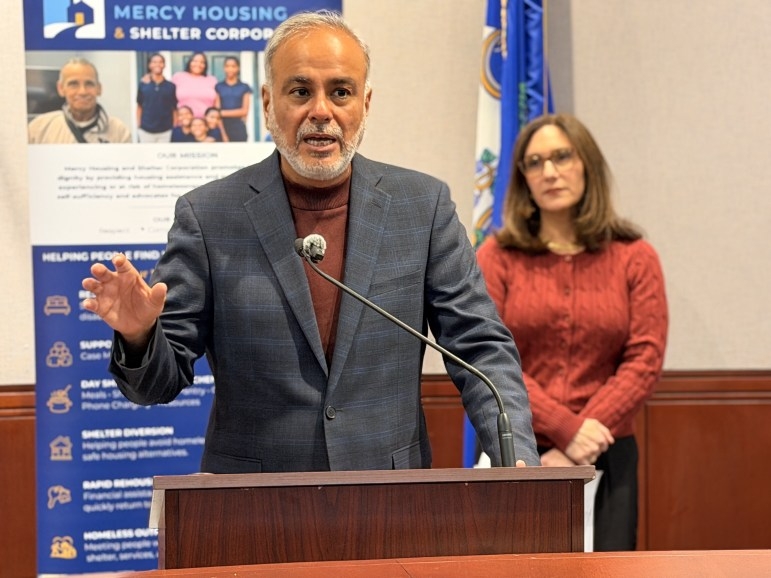
Photo courtesy of CT Mirror
A pilot study recently completed by a Hartford shelter for people experiencing homelessness and housing instability found that 82% of people age 53 and older surveyed were experiencing cognitive impairment.
The study was conducted by the Mercy Housing and Shelter Corporation at The Friendship Center in Hartford, in partnership with the Nursing Practice Program at the University of Saint Joseph. The research found that 26% of the 72 people screened, all aged 53 to 78, demonstrated moderate to severe cognitive impairment while 56% showed mild cognitive impairment. The findings were especially pronounced in older respondents, with 94% of people 62 and older demonstrating some form of cognitive impairment.
“This was flabbergasting for us, it was something that we knew but we certainly didn’t understand the full extent,” said Kara Capone, CEO of Community Housing Advocates and Mercy Housing, in a press conference held on Thursday.
According to the state’s annual point-in-time count, a census of the unhoused population, the population of people 65 or older who were unhoused saw the biggest increase between 2025 and 2026, jumping from 281 to 320. Since 2024, the elderly homeless population has increased by 51%.
The study conducted on cognitive impairment used the Montreal Cognitive Assessment, a 10-minute test that checks memory, visuospatial reasoning, language, attention and more through prompts like drawing a clock with a particular time and naming animals.
Capone said the growing share of older people among the unhoused has raised concerns about whether cognitive impairments might present new challenges. People who seem disengaged or unmotivated to receive help may in fact have a cognitive impairment.
“Programs have historically been designed for younger working-age adults who probably don’t have any of these issues we’re talking about, but we can’t expect that type of approach to work for everybody who is coming through our doors,” she said.
Housing insecurity is far from the only challenge that the unhoused face, said Julian Pierce, deputy commissioner of the Connecticut Department of Housing.
“Cognitive impairment can make it significantly harder to navigate complex systems, manage healthcare needs, complete housing applications, maintain appointments and ultimately achieve long-term housing stability,” he said.
Stronger partnerships are needed, speakers at the press conference said, between homelessness service providers and healthcare agencies, along with supports to secure housing. Those with cognitive impairments — which the study indicates likely represents a large share of the population — will need additional supports even once they are housed.
Capone said staff should be equipped to screen for cognitive impairments, especially for those 62 and older, and staff should be trained to respond once those impairments are identified.
Sen. Saud Anwar, D-South Windsor, who is a physician, said there are various causes behind cognitive impairment, which range from dementia to uncontrolled diabetes. “The sad part is, in ideal circumstances in a society, that individual would get the care and be able to be in a safe environment,” he said.
He said the study raised a range of new questions, from whether Connecticut’s patterns differ from other parts of the country, to what areas need investment. Because so many people in the study were experiencing mild cognitive impairment, it is also likely those cases will progress into more severe impairment as time goes on.
“Now we have numbers to show that this is a big deal, and we also have prediction models that tell us it’s going to be a far bigger deal,” Anwar said. “So today we are saying we are ready. Let’s start to work, ask more questions and work on the solutions.”
Anwar said many people have a bias that when the unhoused have cognitive impairments, it’s due to the use of alcohol or drugs. “I think that part of the important message is that that may not be true,” he said. “Uncontrolled hypertension causes vascular impact on the blood flow to the brain. Diabetes uncontrolled can do the same thing.”
Capone said that the study only included people who were “actively sober at the time” they participated.
Housing is essential to serving this population, Anwar said, which can be a challenge in Connecticut where experts have said the need for affordable housing is dire. But he said the state can successfully take on the challenge, in part because of its relatively small population.
Rep. Laurie Sweet, D-Hamden, co-chair of the End Homelessness Caucus, said that tenant protections must be passed to keep people housed, and zoning can also be changed to allow more housing to be built.
“The End Homelessness Caucus is going to be putting forth a pretty big human rights bill,” during the 2027 legislative session, Sweet said.
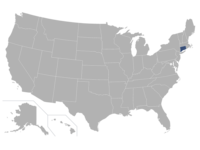
Hartford, CT