West Virginia lawmakers try to find compromise on controversial anti-child abuse bill
Sep 14, 2026 | 4:56 pm ET
Description
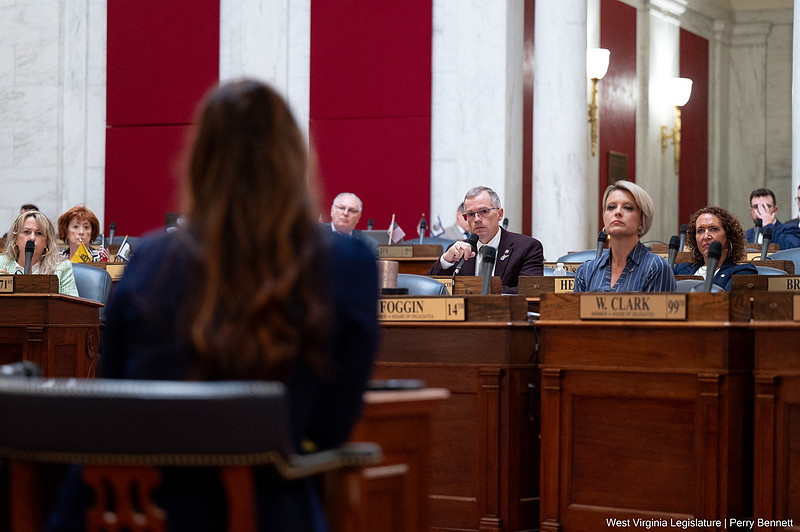
Sen. Eric Tarr, R-Putnam, asks questions during a meeting of the Joint Committee on Children and Families Sept. 14, 2026, about a measure meant to help students who may be removed public schools to shield abuse. (Photo by Perry Bennett | West Virginia Legislative Photography)
A group of West Virginia lawmakers spent the summer reworking a controversial piece of anti-child abuse legislation that sent the House of Delegates into chaos this year during debate over protecting children versus parents’ rights.
The proposed bill looks much different from what was before lawmakers in March. It could launch an immediate welfare check on a child leaving public school if there’s a past history of abuse or many missed school days.
This new version, discussed Monday at the state Capitol, still faced pushback from both homeschool defenders and others fearing it won’t do enough to protect children who are being moved from public schools to shield abuse.
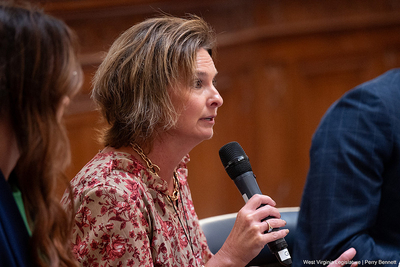
“If we can save one child with this with this legislation, it is definitely worth it,” said Kim Legg, lead social worker and attendance director for Kanawha County Schools.
West Virginia’s growing school choice options have resulted in families jumping from one school to another, according to Legg. In Kanawha County, she has already processed 123 new notices of students leaving public schools for homeschooling. Nearly 50% of those had chronic absenteeism, which doesn’t always equate to abuse but can signal issues at home.
“Sometimes I feel like they evade authorities, and we can’t locate them,” Legg said.
Members of the Joint Committee on Children and Families reviewed the draft legislation on Monday. Lawmakers are in Charleston for interim legislative meetings, which often give a preview of bills that will be considered for passage in the 2027 Legislative Session.
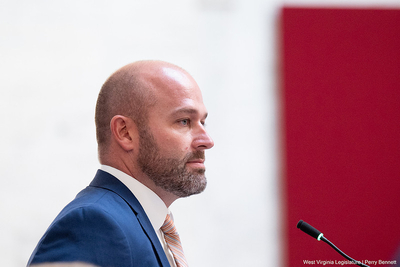
“My number one objective as a legislator, really even as a citizen, is that kids don’t die,” said Del. Adam Burkhammer, R-Lewis, who is co-chair of the Joint Committee on Children and Families. “Kids should never be subjected to some of the abuse and some of the torture, and some of the things that have happened to them over the years that we’ve heard about, and so I’m just looking for tools every way that I can to prevent that from happening.”
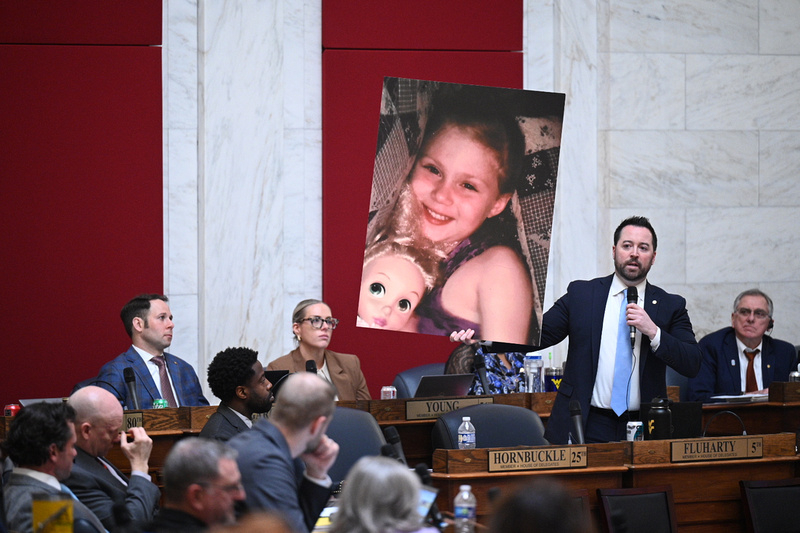
The bill is the latest iteration of what’s been known as “Raylee’s Law,” which is meant ot prevent child abuse by pausing or giving greater scrutiny to a parent’s request to homeschool or move to microschool or private school if there’s an active abuse and neglect investigation in the home.
The measure has been named for Raylee Browning, an 8-year-old girl who died of abuse and neglect in 2018 after her teachers notified CPS of potential abuse, prompting her abusers to move her to homeschooling.
“This proposal contains meaningful safeguards, but I also want to be clear: Raylee’s Law still isn’t law,” said Del. Sean Fluharty, D-Ohio, who was the original sponsor of Raylee’s Law. The measure previously passed the House in 2024 and 2025. “We have been fighting this fight for years. We have held hearings, debated different versions, watched bills die, and watched the clock literally run out last session. Meanwhile, the fundamental problem that led us here still exists.”
“While we can negotiate on the legislative mechanics, we should never compromise on protecting the child,” he added.
What’s in the new bill
Sen. Ryan Weld, R-Brooke, drafted the newest version of the bill, which isn’t referred to as Raylee’s Law. Weld led the charge to get the prior version through the Senate six months ago the night before it faced stress in the House. It didn’t make it to the governor’s desk by deadline earlier this year.
The newest version is a compromise, he said.
“I certainly was not happy how session ended,” Weld said. “I drafted some legislation that I think addresses the issue, but also meets the concerns that people who are on the other side of that particular bill, as well.”
“This legislation is more encompassing because it deals with not just kids that are being removed from school to be homeschooled, but also if they’re going to be transferred to a different public school or be transferred to a private school, parochial school,” he added.
If a child intends to withdraw from public school, the new version of the legislation would require a principal who is aware of substantiated abuse or neglect in the last 12 months to contact the Department of Human Services about the child. The principal would also have to share if the student has experienced chronic absenteeism.
The student’s local Child Protective Services Division would be required to treat the principal’s notification as “an allegation of imminent danger” to the child and conduct a face-to-fact interview with the child within 72 hours.
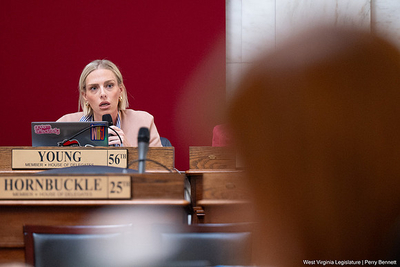
“As drafted I have serious concerns that the bill will further the goal of protecting children,” said Del. Kayla Young, D-Kanawha, told West Virginia Watch. “When working through the technical pieces with the panel, it became clear that school personnel do not have insight into CPS cases. We seem to be at an impasse of opinions between two distinct camps of lawmakers, and I hope the 2027 session will bring an opportunity to vote on some form of Raylee’s Law. Even one child’s death is far too many and we must exert the courage to make hard decisions to protect all children.”
Prinicpals currently receive a letter saying that a mandated reporter in the school has filed a report of child abuse or neglect regarding a student but don’t receive additonal information about a substantiated report or investigation.
Kendra Boley Rogers, deputy commissioner for the state Bureau of Social Services, said the legislation could trigger an unnecessary CPS visit for a family based on how it’s written with the required 12-month time frame, she said.
“I think it is really critical to ensure that we’re not showing up on someone’s doorstep in an imminent danger response when it’s not warranted, based on not really having all the information in the panic,” Boley Rogers said.
Homeschool defense still unhappy with legislation
Prior versions Raylee’s Law have faced fierce opposition from homeschooling advocates and parents, who argued it was infringement on parental rights and could potentially force their child to stay in an unsafe public school.
Kevin M. Boden, director of legal and legislative advocacy for the Home School Legal Defense Association, had issues with the newest version of the bill, including its reliance on past substantiated reports of abuse. Homeschooling has never been identified as a risk factor for child abuse, he said.
“The 72-hour provision, the triggering mechanism of simply choosing a different educational modality for the child, in our opinion, does not strike an appropriate balance between protecting vulnerable children and the fundamental right of parents, and also the fiscal responsibility and best and highest use of precious social service resources in our state,” Boden said.
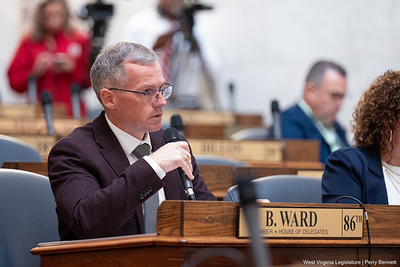
Sen. Eric Tarr, R-Putnam, noted that the Legislature shouldn’t ignore the reality of homeschooling sometimes being used as a way to shield abuse.
“If a person is willing to abuse or neglect a child, they are also willing to pull that child away from eyes that are mandatory to others,” he said.
The bill could see more changes before lawmakers convene in January for the 2027 Legislative Session.
“I think today shows that we still have some work to do to work through that complexity, the confidentiality portions and the communication between agencies,” Burkhammer told West Virginia Watch. “I think we’re all on the same page that we want to protect kids, and we shouldn’t see kids dying like we have in the past.”
Fluharty, who is running for the state Senate, said he looks forward to working with Weld on the draft legislation.
“It is clear that we now have bipartisan support that this dangerous loophole, which gets exploited by child abusers, needs closed,” Fluharty said. “We need to make sure the system cannot fail another child the way it failed Raylee. We have had enough versions and enough delays.”
Charleston, WV