Warrants for Flock searches? Kentucky lawmakers may add more rules for public cameras
Sep 03, 2026 | 3:25 pm ET
Description
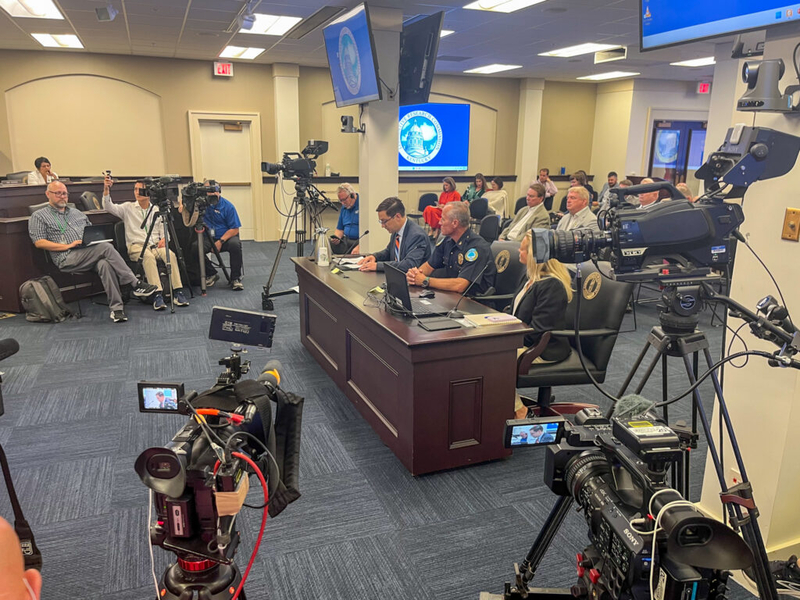
Kevin Kane, the director of governmental affairs for Flock Safety, speaks at a microphone during a Judiciary Committee meeting on Sept. 3, 2026. (Kentucky Lantern photo by McKenna Horsley)
FRANKFORT — Kentucky lawmakers may consider legislation to require law enforcement officers to get a warrant before searching Flock cameras in the future.
Lawmakers on the Judiciary Committee heard from supporters on Thursday about how Flock cameras can help police officers quickly find suspects, but also heard from opponents about how bad actors can misuse the devices.
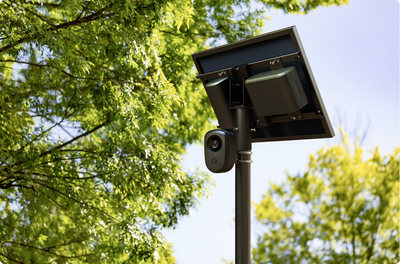
Flock cameras are a type of automatic license plate readers that have gained controversy in recent months. In Louisville, a detective was disciplined after allowing a federal agent to use the city police department’s Flock system for unauthorized immigration-related searches earlier this year, and is again under investigation for searching for a vehicle assigned to another employee. In southern Indiana, a sheriff deputy was charged with official misconduct after making more than 2,000 searches on Flock cameras for his ex-girlfriend’s car.
Several Northern Kentucky communities have ended Flock camera programs. Kentucky Republican U.S. Rep. Thomas Massie has filed legislation to prevent federal funds from being used to install and maintain Flock-style automated license plate readers, called the “Flock-Off Act.”
Kevin Kane, the director of governmental affairs for Flock Safety, told the committee on Tuesday Flock cameras are used by more than 6,000 law enforcement agencies in the country and that an average of 27 missing persons a day are found by police departments using Flock.
Elizabethtown Police Chief Jeremy Thompson said the technology has been a boon for his department, having aided in a search for a kidnapped child and finding cars originally stolen in another county. However, social media has “been toxic on this particular topic,” Thompson said.
“I understand the concerns, but I’m telling you, in nearly 30 years of law enforcement, this is the best piece of technology to assist law enforcement in real-time information to help solve crime, to make our citizens safer,” the chief said.
However, representatives from the progressive American Civil Liberties Union of Kentucky and the libertarian Cato Institute highlighted the reported cases of misuse of Flock cameras. They suggested lawmakers revisit and expand regulations in a recently passed law regarding the use of automatic license plate readers
Kate Miller, the advocacy director of the ACLU-KY, said the bill had “important guardrails,” but the organization suggests more changes, like pausing contracts for Flock cameras, reducing data retention further to 48 hours and having independent agencies annually audit use of the cameras.
Laura Bondank-Harmon, the manager of legal programs for Cato, pointed to a June U.S. Supreme Court decision that when police officers used a “geofence warrant” to get cell phone data of users near a specific place and time, it was a search under the 4th Amendment. She, too, praised the Kentucky law, but called it a “good start.”
Some policy changes she proposed included requiring officers to get a judicial warrant before searching a camera database with exceptions for situations like stolen cars and active Amber Alerts, establishing a cause of action for victims of illegal surveillance searches, giving members of the public a way to review audits for their license plates, shortening the data retention period and having Kentucky agencies review out-of-agency requests for database searches.
Rep. TJ Roberts, R-Burlington, told reporters after the meeting he would have more to say in the future on specific legislation, but he has concerns such as the “overextended retention of data” from cameras like Flock’s and the data being accessed without a warrant. The General Assembly returns to Frankfort for its next session in January.
“Most Kentuckians are law-abiding, peaceful citizens who are just looking to go to work, raise their family, and live a good life,” he said. “That said, we cannot render everyone a suspect because if you say that those who have nothing to hide have nothing to fear, that’s like saying you shouldn’t care about free speech because you have nothing to say.”
Republican House Whip Jason Nemes, of Louisville, said GOP lawmakers have not discussed the issue as a caucus yet, but he would be supportive of the idea of requiring a warrant for searches except in some emergency situations.
While Nemes praised Louisville Police Chief Paul Humphrey and his department’s policies regarding Flock, Nemes said “nobody can know what individual officers are doing all the time” pointing to the Indiana deputy situation.
“We just need more protections in place, and while at the same time, I know a lot of people want to get rid of Flock cameras, I don’t think that’s responsible either,” Nemes said.
During the meeting, some lawmakers expressed skepticism about the technology and said they’ve heard a myriad of concerns in their districts. Rep. Jennifer Decker, R-Waddy, said as the cameras advance, people are worried about living in a “surveillance state that George Orwell warned about in his dystopian novel, ‘1984.’”
“The question isn’t whether we trust the people now in charge,” Decker said. “That is one question many have, but the bigger question is that our constitutional system limits government power precisely because we don’t know who will possess the power tomorrow.”
Rep. Nima Kulkarni, D-Louisville, said that private companies like Flock Safety should not be responsible for regulating themselves because, but it is up to lawmakers to do so.
“We will need to make sure we, as a legislative body, work with you to make sure that those safeguards are put into place, balancing public safety with the privacy interests of our constituents,” she told Kane.
Frankfort