War, domestic strife, test Nevada’s economic resiliency again
Mar 24, 2026 | 8:00 am ET
Description
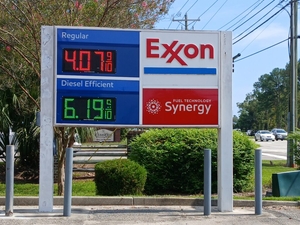
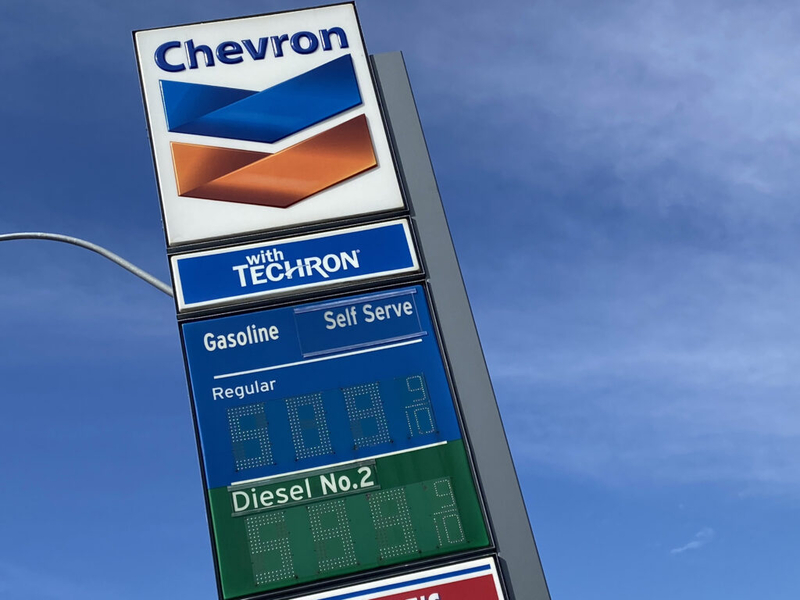
The price on Russel Road in Clark County on Monday, March 23, 2026. (Photo: Hugh Jackson/Nevada Current)
From the prospect of Immigration and Customs Enforcement agents patrolling airports, to long lines at TSA checkpoints, to the escalating price of jet fuel – planning a Las Vegas vacation by air, the method of choice for almost half of visitors according to tourism officials, can be daunting these days.
Opting for a road trip is no picnic, either. Gasoline prices are up by 30% on average since the U.S. and Israel waged war on Iran. The price of a gallon of gas, according to AAA, is averaging $5.79 in California, where most of Southern Nevada’s drive-in visitors originate. The average price in Las Vegas is $4.79, and the national average is $3.95.
Nevada, which is heavily reliant on hospitality to fund government services, is also ultra-sensitive to the economic well-being of the U.S., and in some cases, beyond.
“When the nation gets a cold, Nevada gets the flu,” is a common axiom invoked by officials to describe the state’s economic vulnerability.
The Dow Jones Industrial Average has fallen about 9%, causing concern for retirement and education accounts, after peaking in February at 50,512. On Monday, after President Donald Trump reported productive talks with Iran, the Dow gained 631 points. However, Iranian officials later said no talks took place.
“We’re closely monitoring consumer sentiment,” Nevada Resort Association President Virginia Valentine said Monday via email. “As demonstrated during past challenges, including the pandemic, the September 11 attacks and the Great Recession, Nevada’s resort industry has proven to be adaptive, resilient and well-positioned to navigate possible challenges ahead.”
Like the inflatable Romper Room clown, Nevada is never down for long. It always bounces back. But this latest test of the state’s resiliency comes amid an existing slump in tourism. Visitation to Southern Nevada, the state’s primary economic driver, was down 7.5% in 2025 from the previous year.
Visitation from residents of tariff- and threat-weary Canada, one of Southern Nevada’s primary sources of international tourism, dropped by approximately 20% in 2025, according to the Las Vegas Convention and Visitors Authority. Airline capacity between Las Vegas and Canadian destinations in the same year fell by about 35% to the lowest level since 2005.
Factors beyond Nevada’s control, such as “higher fuel costs, economic uncertainty, and ongoing geopolitical tensions… will continue to influence travel demand, and we’re always working to keep Las Vegas competitive and top of mind for visitors, regardless of the environment,” LVCVA CEO and President Steve Hill said via email. “What we can control is the travel experience itself. Right now, pressure on TSA staffing is creating unnecessary friction at airports, which is why fully funding TSA is so important. A well-staffed, efficient security process is fundamental to safe, reliable travel, and it strengthens the entire travel ecosystem and the economy that depends on it.”
Republican Gov. Joe Lombardo “has urged (Republican Leader) Senator (Chuck) Schumer to pass the DHS funding bill and end the partial government shutdown, which has caused unnecessary travel delays and put the security of Nevadans and the American people at risk,” a spokesman said.
Senate Republicans have repeatedly blocked a measure supported by Schumer and Senate Democrats to pay TSA workers while negotiating on overall DHS funding.
Beyond the partial DHS shutdown, Lombardo’s spokesman did not directly address threats to the tourism industry.
Asked earlier this month about the war with Iran, Lombardo said he supports “the federal government, whatever they’re trying to do to achieve that safe space for us. Any war, no matter what it entails, is going to have an effect on the economy. Unfortunately it benefits the defense industry instead of local businesses and industries, but it’s important to have a safe homeland,”
Travel Nevada, the state’s tourism office, did not respond to the Current’s questions about its plans to combat the domestic and global disruption to the hospitality industry.
‘Seamless experience’
Creating the perception of a ‘seamless’ trip through the Las Vegas airport has long been a priority for Las Vegas marketing officials and executives.
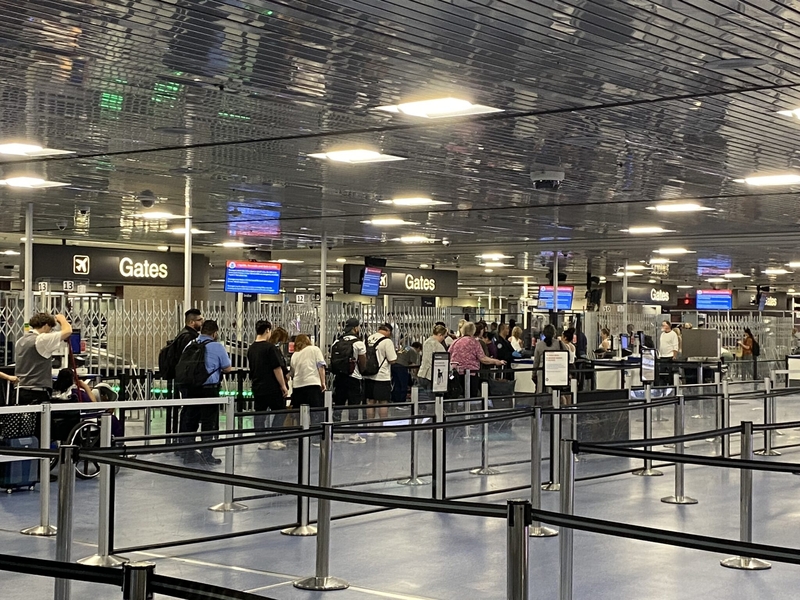
“Plan ahead for a seamless airport experience with our essential travel information and tips to navigate your pre-flight preparations,” says Harry Reid International’s website.
Travel publications reported that 180 flights were delayed and seven cancelled over the weekend at Reid International.
Airport spokesman Luke Nimmo said the disruptions appear to be “related to incoming flights from across the country being delayed due to the partial government shutdown. Keep in mind, our operations here at LAS have been normal, but we are still affected by other airports’ flights that were delayed; thus making our flights delayed.”
Unlike 14 other airports throughout the nation, Reid International was spared Monday from the presence of ICE agents, who were dispatched by President Donald Trump to assist as unpaid TSA workers stay home. Wait times at Reid International checkpoints are “normal,” Nimmo said.
Travelers headed to Las Vegas and elsewhere from some airports, such as George Bush Intercontinental in Houston, are being warned to expect security checkpoint waits of up to four hours.
Las Vegas marketing gurus Billy Vassiliadis and Pete Ernaut of R&R Partners did not respond when asked whether the ad agency, best known for its post-9/11 ‘What happens here, stays here’ campaign, has a plan for attracting tourists amid the uncertainty of this particular zeitgeist.
Erica Johnson, Director of Communications for R&R’s client, the Las Vegas Convention and Visitors Authority, said she’d look into the Current’s inquiries, but did not respond before publication.
Las Vegas, NV