As SC diesel prices rise, so do economic impact fears
Sep 18, 2026 | 4:22 pm ET
Description
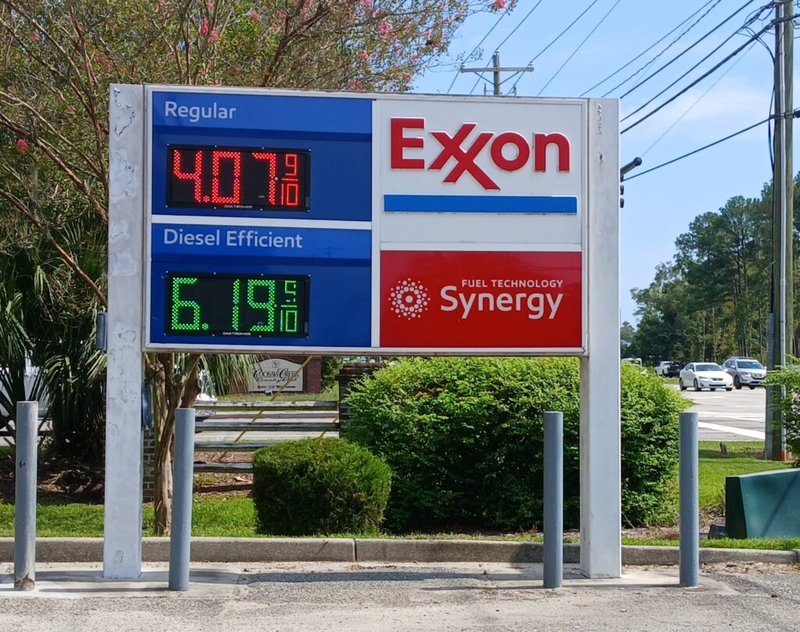
A sign at a North Charleston gas station shows the price of diesel fuel at nearly $6.20 per gallon on Friday. (Photo by David Wren/SC Daily Gazette)
The rising cost of diesel fuel is threatening the livelihood of South Carolina’s truckers, driving fears of inflation spikes and forcing operational changes at the Port of Charleston as the state’s economy confronts record pump prices that are expected to continue climbing.
“It’s painful everywhere,” said Rick Todd, president and CEO of the South Carolina Trucking Association. “Diesel fuel has been characterized as the workhorse fuel for the world. I mean, literally everything is driven by diesel.”
That includes the trucks that bring groceries and consumer goods to stores, industrial equipment used in factories and on farms, container ships that call on Charleston’s port and even the cranes that move containers through the terminal yards.
The statewide average for a gallon of diesel hit an all-time high of $6.17 this week, according to AAA, driven largely by the war in Iran and Middle East supply concerns. That’s a nearly 75% increase since the beginning of this year.
Prices aren’t expected to peak any time soon. Oil flow chokepoints in the Strait of Hormuz and the Bab el-Mandeb Strait between Yemen and the Arabian peninsula — along with reduced refining capacity in the U.S. — have created the potential for diesel shortages, although incidents so far have been isolated.
Joey Von Nessen, a research economist at the University of South Carolina, said higher transportation costs will translate to more expensive groceries and other goods, potentially forcing consumers to pull back on spending that’s been resilient so far, even in the face of rising inflation.
“The bottom line is this represents another economic headwind as we head into the fall months,” he said. “It will definitely have an impact on demand if diesel prices stay elevated at their current levels.”
SC governor celebrates new law aimed at reducing insurance costs for restaurants, businesses
Todd said independent truckers and small trucking firms will feel the most pain, while large freight-hauling companies can blunt higher diesel prices by buying in bulk. Nearly two-thirds of South Carolina’s 24,000 registered motor carriers operate a single truck.
“For the average owner-operator or small fleet that doesn’t have buying power, they’re pretty much paying retail,” Todd said.
He predicts some truckers might simply park their rigs and look for other work until prices improve. Some might get out of the business altogether, as rising fuel costs and spiking liability insurance rates combine to make the occupation unprofitable.
“It’s not sustainable,” Todd said of current diesel costs. “This is uncharted territory in a lot of ways.”
Elevated fuel costs are also impacting the Port of Charleston, which relies on diesel to power most of its equipment and where trucks carry more than three-fourths of the cargo moving through container terminals.
There is a balancing act between reducing the use of diesel-guzzling machinery while, at the same time, not forcing truckers to burn more time and fuel than normal picking up or dropping off cargo, said Micah Mallace, president and CEO of the S.C. State Ports Authority.
The port reduced the number of cranes used to move containers earlier this year to cut costs. But as the year wore on and cargo volumes ticked up, so did the amount of time truckers spent idling within the terminals.
Less cargo has SC Ports Authority cutting its way toward growth
In response, the authority is scheduling more workers and crane operators during busier hours, while pulling back during less intensive times. The maritime agency also buys fuel at bulk contract prices, and as often as possible, operates its handful of hybrid cranes that require less fuel by running on a combination of electricity and diesel power.
“Weve seen inflation in our underlying costs because of diesel, but we’ve been able to mute that impact internally,” Mallace said. “But it’s a more dramatic impact for motor carriers and shipping lines, where their No. 1 or No. 2 operating cost is fuel. We’ve seen our partners really hurt by this and we are trying to think through ways to help offset their cost impact.”
The average cost to move a container from the port to a warehouse is between $395 and $595, according to BlackBridge Logistics. While that is among the lowest cost of any major U.S. port, fuel surcharges are increasing bills as much as 55%– costs that are generally passed on to consumers.
“Higher prices are the biggest short-term threat to the economic outlook,” Von Nessen, the research economist, said. “Another factor that we’ve seen emerge in the last several months is that prices are rising faster than wages, due primarily to this uptick in energy costs.”
SC Ports temporarily halts Leatherman operations in face of high costs, waning demand
When consumers lose purchasing power, it can cause an overall pullback in economic activity, he said.
It won’t take long to see if that threat comes to pass.
Historically, consumers start to reduce their discretionary spending, such as entertainment and dining out, within just a few weeks of fuel-related inflation. Fixed expenses, like housing and groceries, can start to show up as higher credit card balances or decreased savings.
“The longer we see prices rising faster than wages, the more likely we are going to see consumer spending cool,” Von Nessen said.

Columbia